Managing diabetes isn’t about cutting out carbs entirely-it’s about knowing how much and when you’re eating them. If you’ve been told to count carbohydrates, it might feel overwhelming at first. But carb counting isn’t a diet. It’s a tool. A simple, flexible way to take control of your blood sugar without giving up your favorite foods.
Why Carbohydrate Counting Matters
Carbs turn into glucose-the main fuel your body uses. For people with diabetes, the body either doesn’t make enough insulin or can’t use it well. That means glucose builds up in the blood instead of being used for energy. Too much glucose over time damages nerves, kidneys, eyes, and the heart. Carb counting works because it gives you direct control over that glucose spike. Every gram of carb you eat affects your blood sugar. By tracking how many grams you eat, you can match your insulin dose (if you take it) to your food. That’s the key. No guesswork. No guessing if your blood sugar will spike after pasta or rice. Studies show people who count carbs consistently see their HbA1c drop by 0.5% to 1.0%. That’s not a small win. It means less risk of complications and more stable energy throughout the day.What Counts as a Carb Serving?
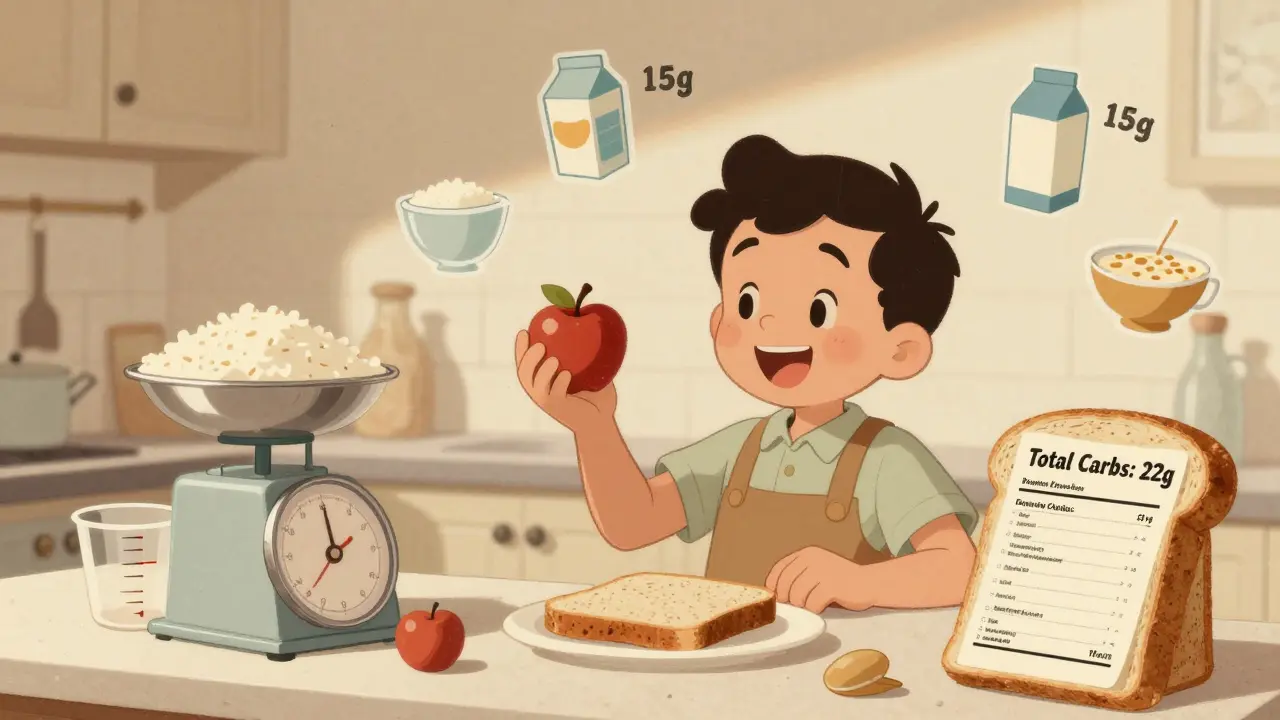
Carbs are measured in grams. One standard serving equals about 15 grams of total carbohydrates. That’s not a lot. But it adds up fast. Here’s what 15 grams of carbs looks like in real life:- One small apple (about the size of a tennis ball)
- One slice of whole grain bread
- 1/2 cup of cooked rice or pasta
- 1/2 cup of beans or lentils
- One cup of milk
- 1/3 cup of oatmeal
Reading Nutrition Labels Like a Pro
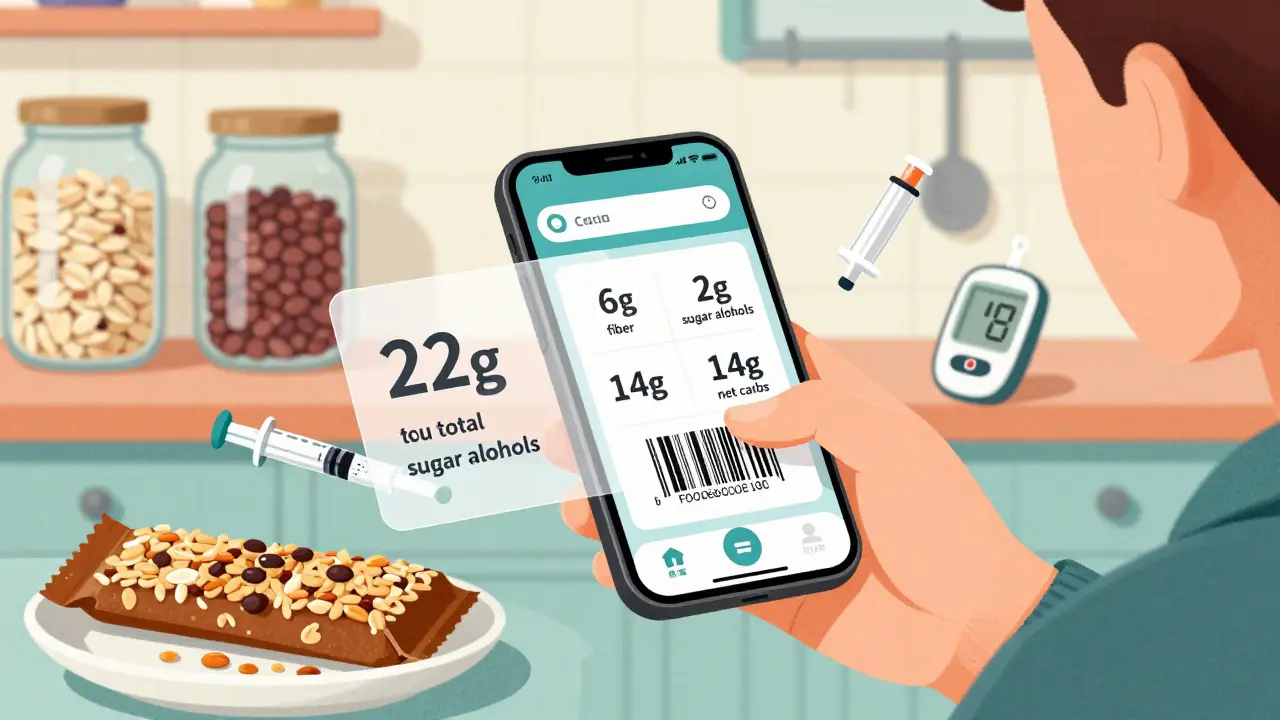
The first place to look? The nutrition label. Find the line that says “Total Carbohydrates.” That’s your number. It includes sugar, starch, and fiber-all of it. But here’s the trick: fiber and sugar alcohols don’t raise blood sugar the same way. So you can adjust. - If a food has 5 grams or more of fiber, subtract the full amount of fiber from the total carbs. - If it has sugar alcohols (like erythritol or maltitol), divide that number by two and subtract it from total carbs. Example: A granola bar has 22 grams of total carbs, 6 grams of fiber, and 4 grams of sugar alcohols. 22 - 6 = 164 ÷ 2 = 2
16 - 2 = 14 grams of net carbs You’d count this as 14 grams, not 22. That’s a big difference when you’re dosing insulin.
Your Carb-to-Insulin Ratio
If you take insulin, this is where carb counting gets powerful. Most people on insulin have a ratio that tells them how many units of insulin to take per gram of carbs. A common starting point is 1 unit of insulin for every 10 to 15 grams of carbs. But that’s not one-size-fits-all. Your ratio depends on:- How sensitive your body is to insulin
- What time of day it is (many people need more insulin at breakfast)
- Your activity level
- Your weight and metabolism
Carb Counting vs. Other Methods
You’ve probably heard of the plate method or the glycemic index. Here’s how carb counting stacks up. - Plate Method: Fill half your plate with non-starchy veggies, a quarter with protein, a quarter with carbs. Simple, but no numbers. You don’t know if you’re eating 30 or 60 grams of carbs. Great for beginners, but not precise enough if you’re on insulin. - Glycemic Index (GI): Focuses on how fast a carb raises blood sugar. Low-GI foods like lentils or apples are better than white bread. But GI doesn’t tell you how much you’re eating. A small serving of high-GI food might have fewer carbs than a large serving of low-GI food. Carb counting wins because it gives you exact numbers. You can combine it with GI if you want-but the grams matter most when you’re dosing insulin.What You Need to Get Started
You don’t need fancy gear. But these tools make it easier:- A food scale (for weighing meat, cheese, rice)
- Measuring cups and spoons
- A calculator or smartphone app
- A food diary or app to log meals
Common Mistakes Newbies Make
Most people think they’re doing it right… until their blood sugar spikes. Here are the top 3 mistakes:- Forgetting hidden carbs: Milk in coffee, fruit in yogurt, sugar in ketchup, potatoes in soup. These add up fast. About 25% of daily carbs come from unexpected sources.
- Estimating portions by eye: A “small” apple might be 20 grams of carbs. A “handful” of pasta? Could be 80 grams. Use measuring tools for the first 2-3 weeks.
- Ignoring insulin timing: Fast-acting insulin should be taken 15-20 minutes before eating. If you take it after, your blood sugar will spike.
How Long Until You Get Good at It?
It takes time. Most people need 4 to 8 weeks to feel confident. By day 30, you’ll likely be 85% accurate with portion estimates. That’s good enough. You don’t need to be perfect. You need to be consistent. The first week is the hardest. You’ll spend 30-60 minutes per meal measuring, logging, calculating. That’s normal. After a few weeks, it becomes second nature. A 2022 study found that people who stuck with carb counting for 6 months had better blood sugar control than those who gave up after 2 weeks.
What About Eating Out?
Restaurants are tricky. Portion sizes are bigger. Ingredients aren’t always listed. Carbs can be 20-30% higher than you expect. Here’s how to handle it:- Check chain restaurant websites-they often list full nutrition info.
- Ask for sauces on the side.
- Split an entree or take half home.
- Use an app to estimate based on similar foods.
- When in doubt, count conservatively. Better to take a little less insulin than too much.
When Carb Counting Isn’t for You
It’s not the only way to manage diabetes. If you have type 2 diabetes and manage with diet and pills-not insulin-carb counting might be overkill. The plate method or just reducing refined carbs might be enough. But if you’re on insulin, especially multiple daily shots or a pump, carb counting is the gold standard. According to the American Diabetes Association, 89% of insulin pump users and 76% of people on multiple daily injections use carb counting. Only 32% of those on oral meds do. It’s not about being “better.” It’s about matching your tool to your needs.Carbs Aren’t the Enemy
The latest guidelines from the ADA and European Association for the Study of Diabetes say: focus on quality, not just quantity. Choose:- Whole grains (oats, quinoa, brown rice)
- Fruits and vegetables
- Legumes (beans, lentils)
- Plain yogurt with no added sugar
- Sugary drinks
- White bread and pastries
- Processed snacks







Write a comment
Your email address will be restricted to us