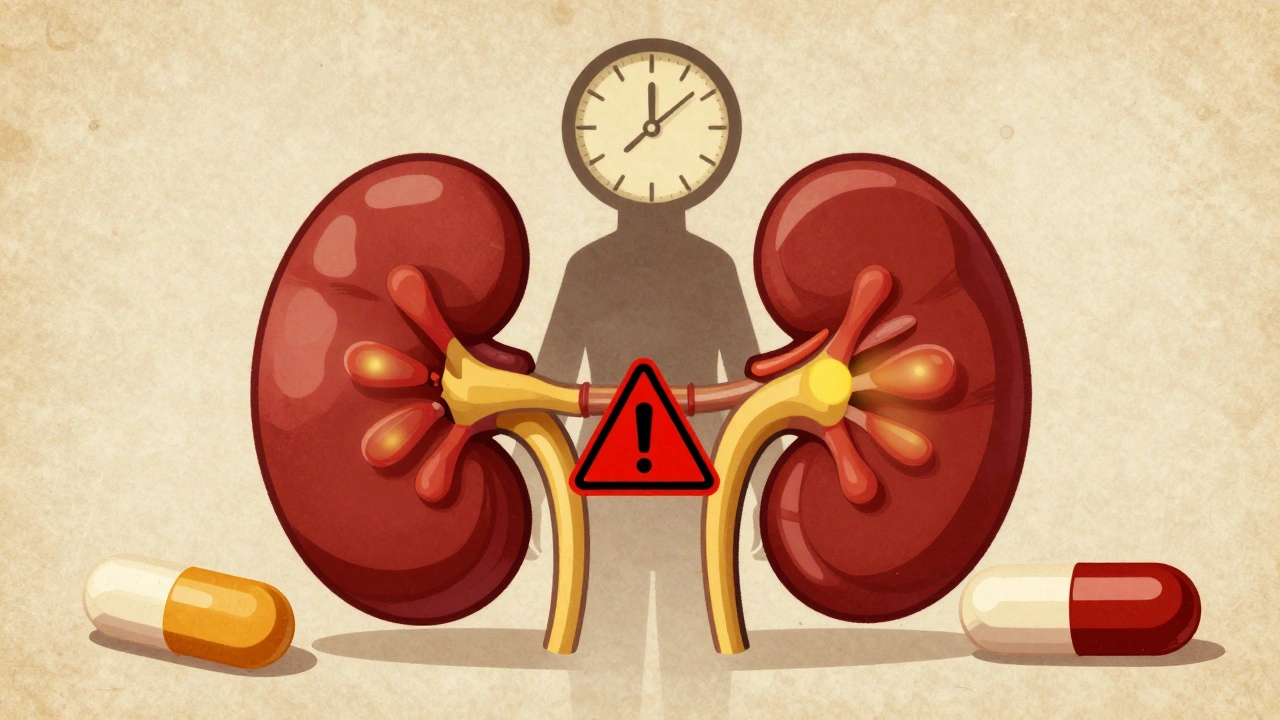
When you're managing rheumatoid arthritis with methotrexate, adding an NSAID like ibuprofen or naproxen for joint pain seems logical. But what if that combination is quietly raising your risk of kidney damage-or worse, life-threatening toxicity? This isn’t theoretical. In the U.S. alone, over 1.3 million people take methotrexate weekly for autoimmune conditions. And nearly half of them are also prescribed NSAIDs. The problem? These two drugs don’t just coexist-they interfere with each other in dangerous ways, especially when your kidneys are already under stress.
How Methotrexate Works and Why Your Kidneys Matter
Methotrexate isn’t just a painkiller. It’s a powerful drug that blocks folate metabolism, slowing down fast-growing cells-whether they’re cancerous or overactive immune cells. At low doses (5-25 mg weekly), it’s used for rheumatoid arthritis, psoriasis, and other autoimmune diseases. At high doses (over 150 mg), it’s used in chemotherapy. Either way, your kidneys are the main exit route.
After you take methotrexate, about 80-90% of it leaves your body through urine. It’s filtered by the glomeruli and then actively secreted by transporters in the kidney tubules. But here’s the catch: methotrexate doesn’t follow a simple, linear path. At higher concentrations, those transporters get saturated. That means small changes in kidney function can cause big spikes in blood levels. A 25% drop in kidney clearance can push methotrexate levels up by 50%. That’s not a minor fluctuation-it’s the difference between tolerable and toxic.
How NSAIDs Disrupt Methotrexate Clearance
NSAIDs-like ibuprofen, naproxen, diclofenac, and celecoxib-are designed to reduce inflammation by blocking enzymes called COX-1 and COX-2. But those same enzymes produce prostaglandins that help keep blood flowing to your kidneys. When NSAIDs shut down prostaglandin production, your kidneys get less blood. That’s a problem when you’re on methotrexate because less blood flow means less drug gets filtered out.
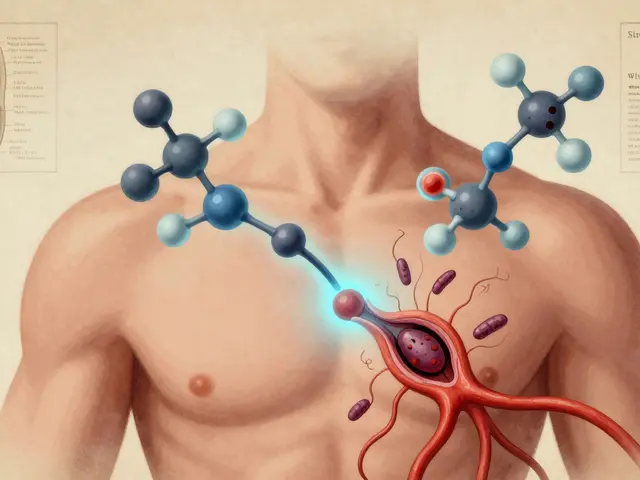
It’s not just reduced blood flow. NSAIDs also compete with methotrexate for the same transporters in the kidney tubules. Think of it like two cars trying to use the same narrow exit ramp at the same time. One (methotrexate) gets stuck. Studies show this competition can reduce methotrexate clearance by 25-40%. In some cases, especially with ketorolac, levels can spike by 50%.
And it gets worse. NSAIDs can also knock methotrexate off its protein-binding sites in the blood. Normally, about half of methotrexate is bound to proteins and inactive. When NSAIDs displace it, more free drug circulates-up to 30% more-increasing the chance of toxicity even before the kidneys are even involved.
High-Dose vs. Low-Dose: The Risk Difference
This interaction isn’t the same for everyone. The danger depends heavily on whether you’re on low-dose or high-dose methotrexate.
For high-dose methotrexate-used in cancer treatment-the risk is extreme. A 2022 meta-analysis found that combining NSAIDs with high-dose therapy increases the chance of severe toxicity by 4.7 times. There are documented cases of fatal kidney failure and bone marrow suppression linked to this combo. That’s why oncology guidelines like the NCCN require methotrexate levels to be checked at 24, 48, and 72 hours after infusion if NSAIDs are used.
For low-dose methotrexate (the kind most RA patients take), the data is more mixed. One large 2019 study of over 4,000 RA patients found no significant increase in serious side effects when NSAIDs were added-as long as kidney function was normal. But another study of 786 patients with mild kidney impairment (eGFR 45-59) showed a 3.5-fold increase in acute kidney injury requiring hospitalization. That’s the key: if your kidneys are already struggling, even a small NSAID dose can tip you over the edge.

Which NSAIDs Are Riskiest?
Not all NSAIDs are created equal when it comes to methotrexate interactions.
- Ketorolac is the worst offender. It’s a potent inhibitor of renal prostaglandins and can raise methotrexate levels by up to 50%. It’s rarely used long-term, but even a few days can be dangerous.
- Naproxen and diclofenac carry moderate to high risk, increasing levels by 30-35%.
- Ibuprofen is a bit safer, with a 25-30% increase-but still risky if taken daily or in high doses.
- Celecoxib (a COX-2 selective NSAID) shows the lowest interaction potential, raising methotrexate levels by only 10-15%. It’s not risk-free, but it’s the best option among NSAIDs if you must use one.
Why does this matter? Because if you’re on methotrexate and your doctor prescribes an NSAID without considering which one, you might be getting the most dangerous version. And many patients don’t know the difference.
Who’s at Highest Risk?
Some people are far more vulnerable than others:
- People over 65: Kidney function naturally declines with age. A 2021 European study found a 2.8-fold increase in mortality risk for older adults on this combo.
- Those with eGFR under 60: Even mild kidney impairment doubles the risk of toxicity.
- People with dehydration, heart failure, or diabetes: These conditions already reduce kidney perfusion. Add an NSAID, and you’re setting up for failure.
- Patients with the SLC19A1 80G>A gene variant: About 15% of Caucasians have this genetic quirk, which makes them absorb more methotrexate and clear it slower-especially when NSAIDs are involved.
Here’s the scary part: many of these risks are silent. A 2020 review found that 63% of kidney-related adverse events from this combo were only caught through routine blood tests. Patients often feel fine until their creatinine spikes or their white blood cell count crashes.
What Real Patients Are Saying
Online patient communities tell a story that clinical trials sometimes miss. On CreakyJoints, 62% of 1,437 respondents said they were prescribed NSAIDs with methotrexate without any warning. Nearly a third experienced side effects: severe fatigue, mouth sores, liver enzyme spikes. One Reddit user described how naproxen caused his white blood cell count to plummet to 1.8 × 10⁹/L-just weeks after his doctor prescribed it. He needed leucovorin rescue therapy to survive.
But not everyone has a bad experience. Another user reported taking 15 mg methotrexate weekly with occasional ibuprofen for eight years-no problems. The difference? Regular blood tests every four weeks. His doctor monitored him. That’s the pattern: the people who do well aren’t lucky-they’re being watched.
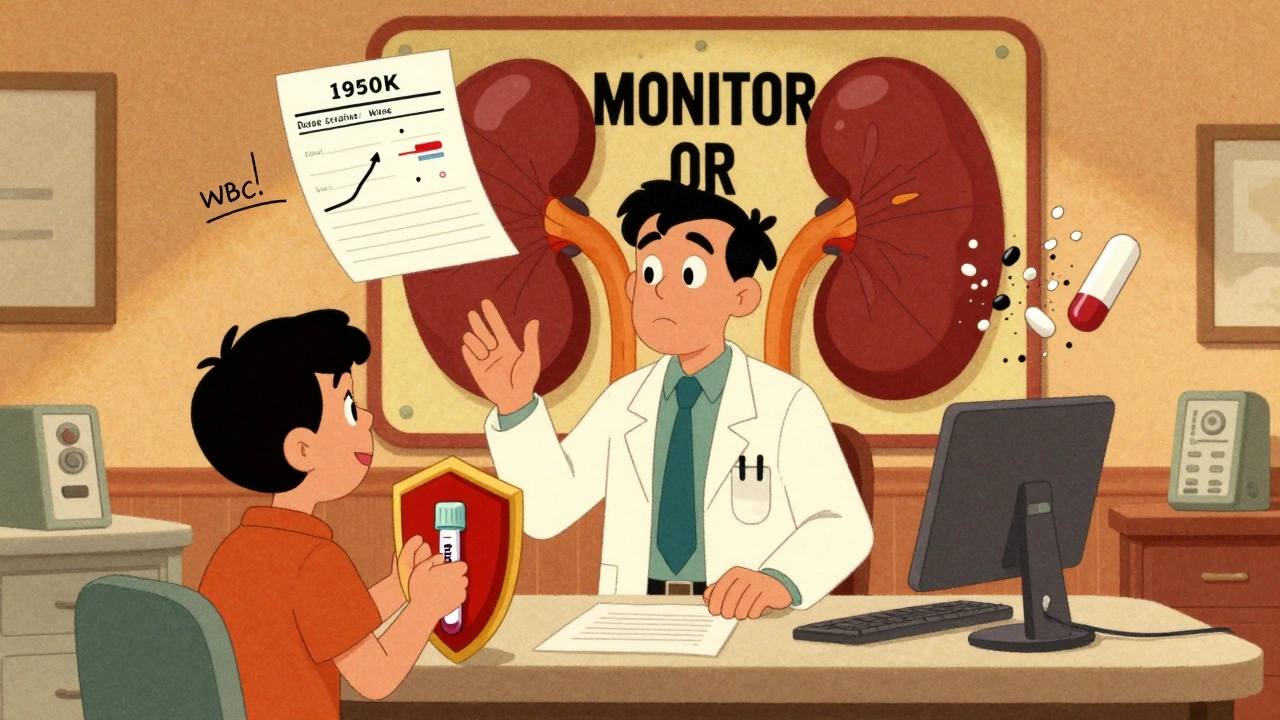
How to Stay Safe: Practical Guidelines
If you’re on methotrexate and need pain relief, here’s what works:
- Avoid NSAIDs if your eGFR is below 60. Period. Use acetaminophen (up to 3 g/day) instead.
- If you must use an NSAID, pick celecoxib or ibuprofen at the lowest effective dose. Avoid ketorolac and naproxen if possible.
- Space out doses. Take methotrexate on your designated day, and take NSAIDs at least 12 hours apart to reduce peak concentration overlap.
- Get blood tests before and after. Check serum creatinine and complete blood count 48-72 hours after starting an NSAID. That’s when toxicity signs often appear.
- Ask your pharmacist. A 2023 study showed pharmacist-led reviews reduced dangerous interactions by 63% in Medicare patients. They catch what doctors miss.
For chronic pain, consider alternatives: physical therapy, low-dose opioids (short-term), or adjusting your DMARDs to better control inflammation. Sometimes, the best pain relief isn’t a pill-it’s a better treatment plan.
The Bigger Picture: Regulation and Future Changes
The FDA updated methotrexate labels in 2023 to warn explicitly about NSAID interactions. The EMA went further in 2022, recommending NSAIDs be avoided entirely in patients on more than 10 mg/week of methotrexate unless absolutely necessary-and even then, drug levels must be monitored for 72 hours.
Research is moving fast. Scientists are now looking at genetic testing to identify patients at highest risk. A gene variant called SLC19A1 80G>A is already linked to higher methotrexate accumulation when NSAIDs are used. In the next few years, point-of-care blood tests for methotrexate levels may become routine-allowing real-time monitoring during NSAID use.
For now, the safest approach is simple: don’t assume it’s safe. Don’t assume your doctor knows. Don’t assume you’ll feel symptoms before it’s too late. This interaction is predictable, preventable, and still causing harm because it’s overlooked.
Can I take ibuprofen with methotrexate?
You can, but only under strict conditions. Ibuprofen increases methotrexate levels by 25-30%, so it’s not risk-free. Use the lowest dose for the shortest time possible. Never take it daily. Get your kidney function (eGFR) and blood counts checked before and 48-72 hours after starting. Avoid it entirely if your eGFR is below 60 or if you’re over 65.
What are the signs of methotrexate toxicity with NSAIDs?
Symptoms include extreme fatigue, nausea, vomiting, mouth sores, unexplained bruising or bleeding, fever, and dark urine. But many cases are silent-detected only by blood tests showing rising creatinine or dropping white blood cells. Don’t wait for symptoms. Regular monitoring is essential.
Is celecoxib safer than other NSAIDs with methotrexate?
Yes. Celecoxib, a COX-2 selective NSAID, increases methotrexate levels by only 10-15%, compared to 25-50% with other NSAIDs. It’s the safest option if you need an NSAID while on methotrexate-but it’s still not risk-free. Monitor kidney function and avoid long-term use.
How often should I get blood tests if I’m on methotrexate and NSAIDs?
Before starting an NSAID, get a baseline creatinine and complete blood count. Then repeat the tests 48-72 hours after the first NSAID dose. If you’re on it long-term, continue monthly monitoring. For high-dose methotrexate (cancer treatment), levels must be checked at 24, 48, and 72 hours post-infusion if NSAIDs are used.
Can I take acetaminophen instead of NSAIDs with methotrexate?
Yes. Acetaminophen (up to 3 grams per day) is the preferred pain reliever for people on methotrexate. It doesn’t affect kidney blood flow or methotrexate clearance. It’s safer for your kidneys and liver-though don’t exceed the daily limit, as acetaminophen can still cause liver damage at high doses.
What to Do Next
If you’re on methotrexate and currently taking an NSAID, don’t stop suddenly. Talk to your doctor. Ask: What’s my eGFR? When was my last blood test? Is this NSAID necessary? Is there a safer alternative?
If you’ve never had a kidney function test since starting methotrexate, request one. It’s a simple blood test. It takes five minutes. It could save your life.
This interaction is well-documented, predictable, and preventable. The fact that it’s still causing harm means we’re not paying attention. You don’t need to be one of the statistics. Know your numbers. Ask the questions. Push for monitoring. Your kidneys-and your life-depend on it.






Write a comment
Your email address will be restricted to us