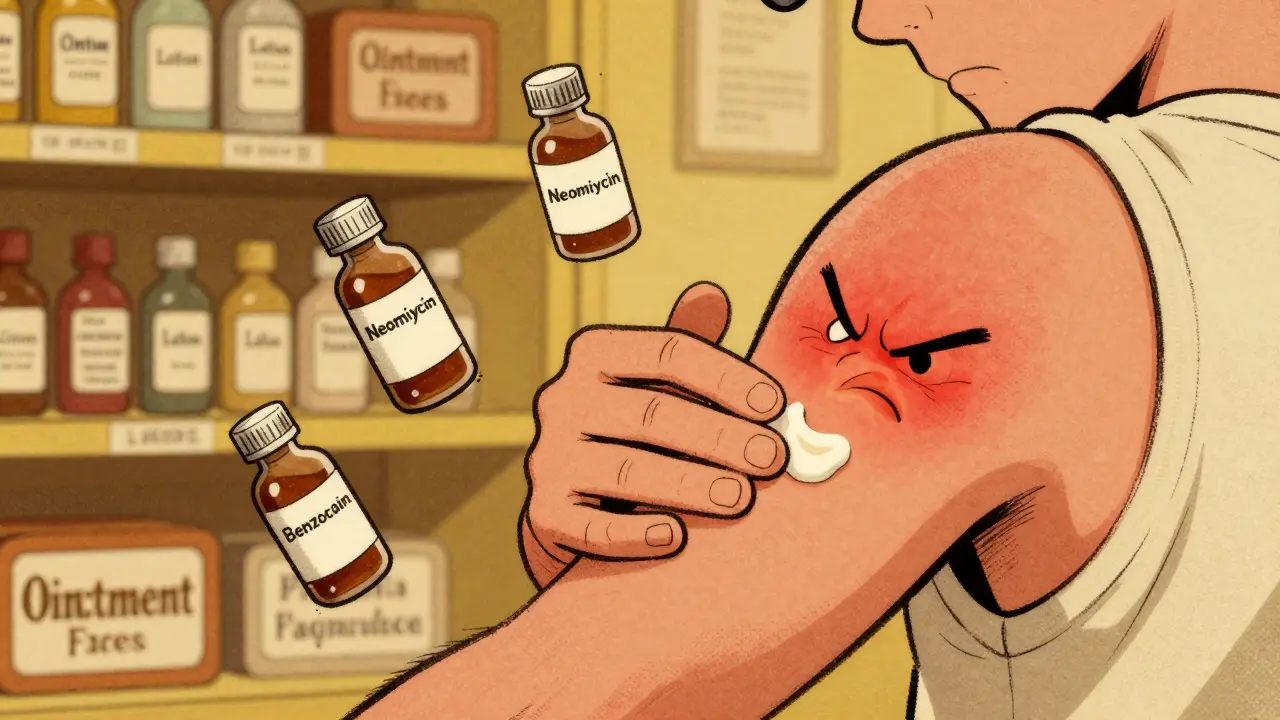
Ever used a cream or ointment for a rash, only to have the rash get worse? You’re not alone. Many people assume the treatment is helping - until their skin starts burning, itching, or blistering even more. What they don’t realize is that the very medication meant to heal could be the cause. This is topical medication allergy, and it’s more common than most doctors admit.
What Exactly Is Contact Dermatitis?
Contact dermatitis is a red, itchy, sometimes blistering rash that shows up after your skin touches something. It’s not contagious. It’s not caused by germs. It’s your skin’s reaction to a substance it doesn’t like. There are two types: irritant and allergic.Irritant contact dermatitis happens when something physically damages your skin - like soap, bleach, or even too much handwashing. It doesn’t involve your immune system. Allergic contact dermatitis is different. It’s a delayed reaction. Your immune system sees a substance as a threat, remembers it, and attacks the next time you touch it. This is the kind caused by topical medications.
Think of it like a silent trap. You apply hydrocortisone cream for eczema. It helps at first. Then, after a few weeks, your skin flares up worse than before. You increase the dose. It gets worse. You switch to another cream. Still no improvement. By the time you see a specialist, you’ve been dealing with this for months. That’s the pattern.
Which Medications Cause the Most Allergies?
Not all topical drugs are equal when it comes to triggering allergies. Some are far more likely to set off a reaction than others.Antibiotics top the list. Neomycin - found in many over-the-counter antibiotic ointments - is the number one culprit. About 1 in 10 people who get patch tested for skin rashes turn out to be allergic to it. Bacitracin and gentamicin are close behind. These are common in first-aid creams, wound dressings, and even some acne treatments.
Corticosteroids are another surprise. You’d think they’d treat the problem - but they can cause it. About 1 in 50 people using steroid creams end up allergic to them. Hydrocortisone (the mild stuff you can buy without a prescription) is a frequent offender. So are stronger ones like triamcinolone and clobetasol. It’s a cruel irony: the go-to treatment becomes the trigger.
Local anesthetics like benzocaine (used in numbing creams for sunburns or hemorrhoids) and NSAIDs like ketoprofen (found in some pain-relief gels) also show up often in patch tests. Even preservatives and fragrances in these products can play a role.
Here’s the kicker: 15-20% of people who think they’re allergic to a topical medication are actually just experiencing irritation. Their skin is too dry, too thin, or too damaged. They mistake the damage for an allergy. That’s why testing matters.
How Is It Diagnosed?
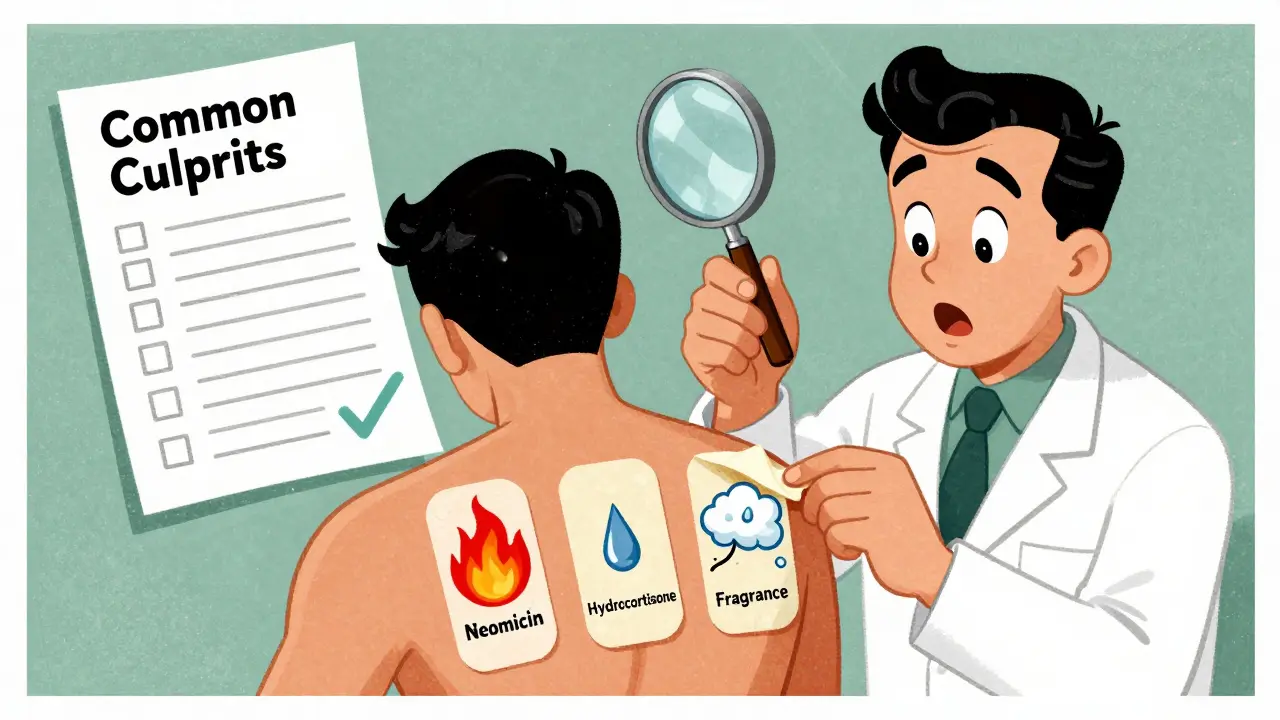
You can’t diagnose this by looking at your skin. A rash from a topical allergy looks a lot like eczema, psoriasis, or even infection. That’s why patch testing is the gold standard.Here’s how it works: small amounts of common allergens - including antibiotics, steroids, and anesthetics - are placed on patches and stuck to your back. You wear them for 48 hours. Then you return. The patches come off. The doctor checks for redness or swelling. You come back again at 96 hours. Sometimes reactions show up late.
This test catches the cause in about 70% of cases. But it only works if you bring everything you’ve used on your skin. That includes your shampoo, lotion, sunscreen, and even your partner’s moisturizer. Thirty percent of allergens come from products you never thought of as “medication.”
Doctors are getting better at this. In 2023, the European Society of Contact Dermatitis rolled out a new scoring system that improves diagnosis accuracy from 65% to nearly 90%. And researchers at Johns Hopkins found that diluting the medication by 10 times before testing helps spot allergies in people with damaged skin - where traditional tests often fail.
Treatment: Stop the Trigger, Then Soothe the Skin
The most important step? Stop using the allergen. No exceptions. Even if you’ve been using it for years, even if it helped at first, even if your doctor prescribed it. Keep using it, and your skin won’t heal.Once you remove the trigger, healing begins. For mild cases, over-the-counter 1% hydrocortisone can help reduce itching. But if you’re allergic to hydrocortisone? That won’t work. That’s why patch testing is so critical.
For moderate to severe cases, doctors prescribe stronger topical steroids - but carefully. On thick skin like elbows or knees, clobetasol or triamcinolone work well. On thin skin - eyelids, face, groin - they can cause thinning, stretch marks, or even visible blood vessels. That’s why desonide or other low-potency steroids are safer there.
But here’s the twist: if you’re allergic to one steroid, you might still be able to use another. Steroids are grouped into six categories based on chemical structure. If you’re allergic to group A (like hydrocortisone), you can often use group B (triamcinolone) or group D (methylprednisolone) without problems. This cuts down treatment options by less than a third - not half.
When the rash covers more than 20% of your body, oral steroids like prednisone are needed. Most people feel better within 24 hours. But the key is tapering - stopping too fast can make the rash come back worse.
For people who can’t use steroids at all - or who’ve had side effects - calcineurin inhibitors like pimecrolimus (Elidel) and tacrolimus (Protopic) are alternatives. They work about 60-70% of the time. They’re not FDA-approved specifically for allergic contact dermatitis, but dermatologists use them daily. The downside? A burning sensation when you first apply them. It fades after a few days.
What Happens If You Don’t Fix It?
Ignoring a topical allergy doesn’t just mean ongoing itchiness. It means chronic skin damage. Studies show that 89% of people with contact dermatitis fully recover within four weeks - if they stop using the trigger. Without that step, only 32% improve. That’s a huge difference.Long-term use of strong steroids on sensitive skin can lead to permanent thinning. Some people develop scarring. Others get infections because their skin barrier is too damaged to protect itself. And if you keep using the wrong product, you might end up with a rash that never goes away - even after switching treatments.
HealthUnlocked data shows that patients with undiagnosed topical allergies visit three doctors on average before getting the right diagnosis. Many wait over six months. That’s six months of unnecessary discomfort, wasted money, and worsening skin.
Prevention and Real-World Tips
The best treatment is prevention. Here’s how to avoid getting trapped:- Always check ingredient lists - even on “natural” or “hypoallergenic” products. Fragrance, lanolin, and preservatives like methylisothiazolinone are common hidden allergens.
- Bring all your creams, lotions, and ointments to your dermatologist appointment. Don’t assume they’ll know what’s in them.
- If you’re using a steroid cream for more than two weeks on your face or groin, ask if it’s still safe. Skin atrophy can happen quietly.
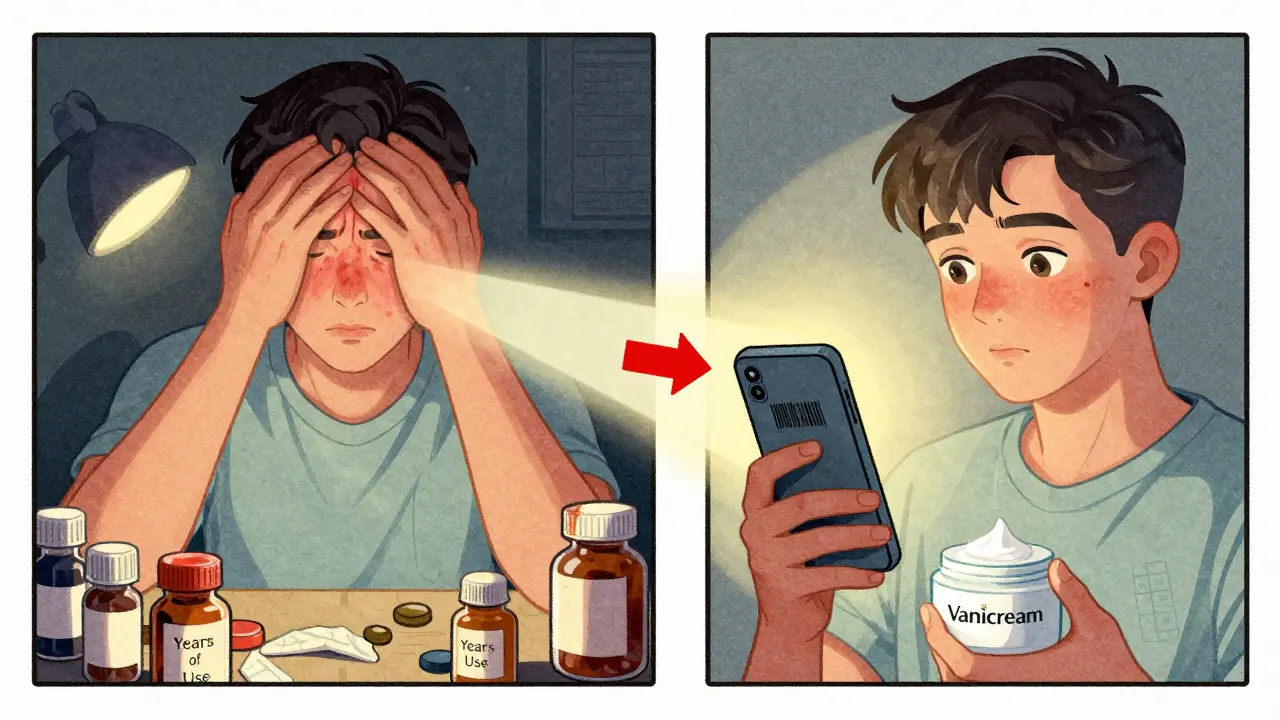
- Use fragrance-free, simple moisturizers like Cetaphil or Vanicream. Less ingredients = less risk.
- There’s a free mobile app from the American Contact Dermatitis Society that lets you scan product barcodes to check for allergens. It’s used by over 40% of patch-tested patients.
Healthcare workers are at higher risk. One study found 18% of nurses and doctors developed contact dermatitis from topical medications - often from the antiseptic creams they use daily. If you’re in healthcare, talk to your occupational health team about barrier creams and glove protocols.
The Future: Better Testing, Fewer Allergies
The field is moving fast. In 2023, the NIH funded $4.7 million to develop a blood test that could predict who’s likely to react to topical medications before they even use them. That’s not science fiction - it’s in early trials.Meanwhile, new barrier creams are in Phase 3 trials. They don’t treat the rash. They block allergens from penetrating the skin. In tests, they reduced allergen absorption by 73%. If approved, they could be game-changers for people with chronic reactions.
And regulatory changes are helping. Since 2021, the FDA requires full ingredient lists on all prescription topical products. That’s cut misdiagnosis by 15%. More transparency means fewer surprises.
Bottom line: if your skin isn’t improving - or it’s getting worse - don’t just add more medication. Ask: Could this be the problem?
Can you be allergic to hydrocortisone cream?
Yes. Hydrocortisone is one of the most common causes of allergic contact dermatitis from topical medications. It’s especially likely to trigger reactions when used long-term or on sensitive skin. If your rash gets worse after using hydrocortisone, stop it and see a dermatologist for patch testing.
How long does contact dermatitis take to heal?
If you avoid the allergen, most cases clear up in 2 to 4 weeks. Itching usually improves within 48 to 72 hours of starting treatment. But if you keep using the product causing the reaction, the rash can last months or become chronic.
Is patch testing painful?
No. The patches are applied to your back and left on for 48 hours. You might feel slight itching or tightness, but no needles or injections are involved. The test doesn’t cause the allergy - it just reveals what you’re already reacting to.
Can I use natural or organic creams if I have a topical allergy?
Not necessarily. Many natural products contain plant extracts, essential oils, or beeswax - all known allergens. Tea tree oil, lanolin, and balsam of Peru are common triggers. Just because a product is labeled “natural” doesn’t mean it’s safe for sensitive skin.
Why do some people react to steroids while others don’t?
It’s not fully understood, but genetics, skin barrier health, and prior exposure play roles. People with eczema, psoriasis, or damaged skin are more likely to develop allergies. Also, long-term use increases risk. The more you use a steroid, the more likely your immune system is to recognize it as a threat.





Write a comment
Your email address will be restricted to us