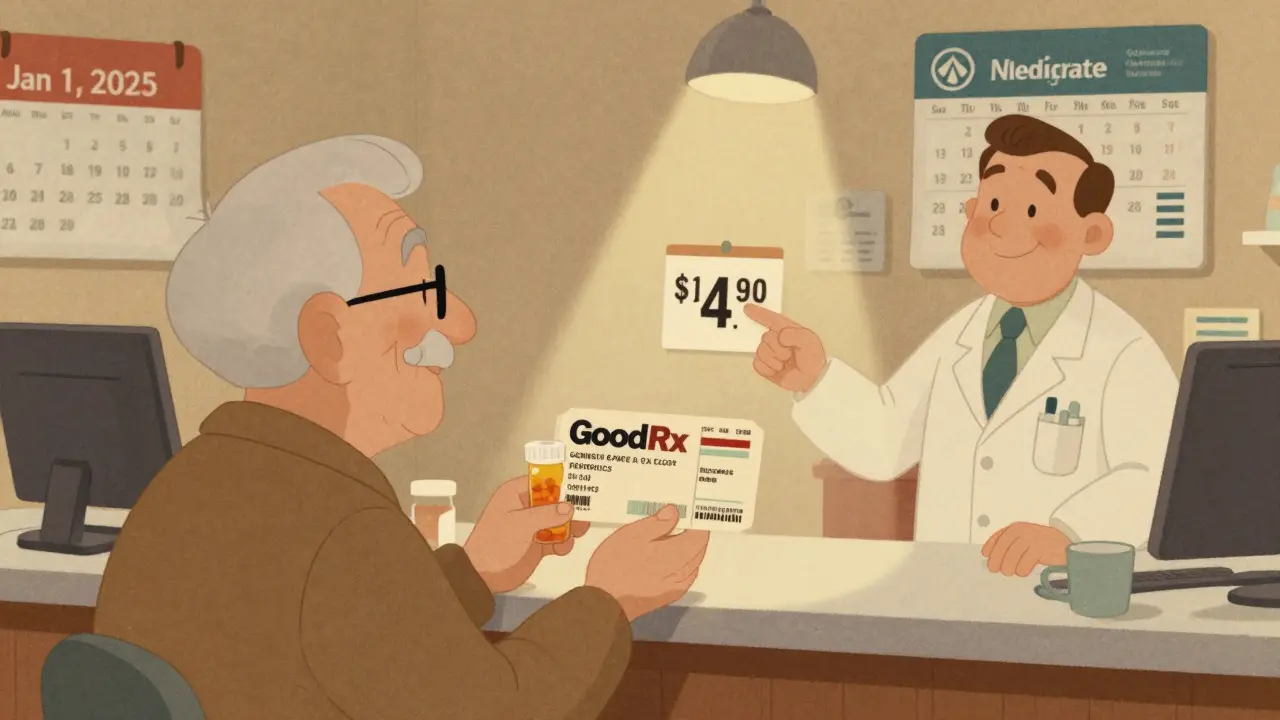
Many people think generic medications are automatically cheap-so cheap that no help is needed. But that’s not true. Even though generics cost 80-85% less than brand-name drugs, a $10 or $15 monthly copay adds up fast. For someone on fixed income, paying $30 a month for three different generics can mean skipping meals or choosing between medicine and heat in winter. The good news? Help exists. The bad news? It’s hidden, confusing, and often impossible to get if you don’t know where to look.
Why Generics Still Cost Too Much
Generic drugs aren’t free. They’re cheaper, yes-but not always affordable. Insurance plans put generics in Tier 1, meaning lower copays than brand names. But those copays still range from $5 to $15 per prescription. For someone taking five or six generics a month, that’s $75 to $90 just for pills. And if you’re on Medicare, those payments count toward your annual out-of-pocket limit-$8,300 in 2024, dropping to $2,000 in 2025. That means every dollar you pay for a generic helps you reach the cap faster. But until you hit that cap, you’re paying full price.Here’s the catch: while brand-name drug makers give out copay cards that can cut your cost to $0, generic manufacturers rarely do. Why? Thin margins. A pill that costs 20 cents to make might sell for $1. There’s no room for coupons. So the burden falls on you.
Medicare’s Extra Help Program: The Best Option for Seniors
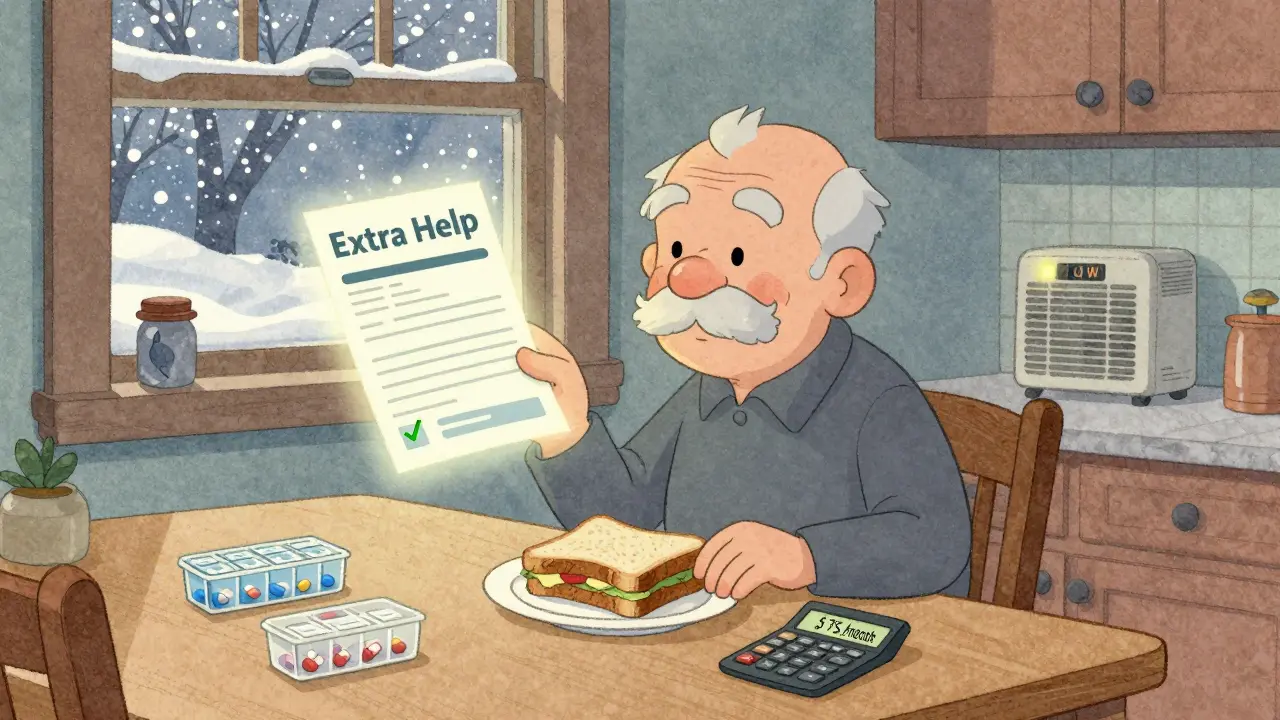
If you’re on Medicare and your income is low, Extra Help (also called the Low-Income Subsidy) is your strongest lifeline. Starting January 1, 2025, this program will pay exactly $4.90 for every generic prescription and $12.15 for brand names. No deductible. No coverage gap. Just flat, predictable costs.Eligibility? You must have income under $21,870 per year (for individuals) and assets under $17,220. If you get Medicaid, SSI, or a Medicare Savings Program, you’re automatically enrolled. No application needed. But if you’re just above those limits-even $300 above-you get nothing. That’s the assistance cliff. Thousands of people fall into that gap: working seniors, part-timers, people with small pensions. They earn too much for aid but too little to afford meds.
Pharmacy Discount Programs: Free, No Strings Attached
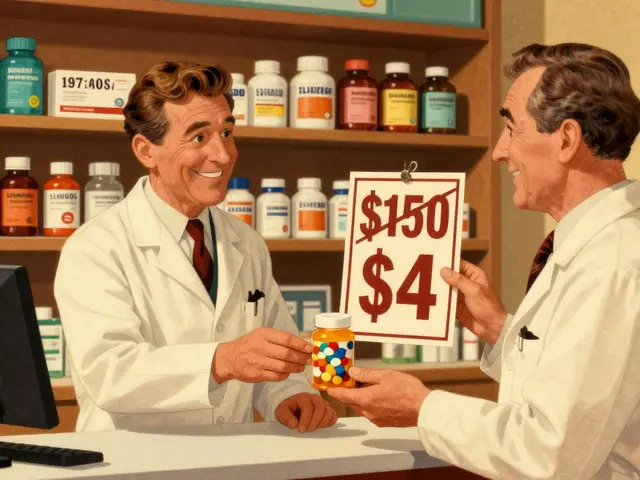
You don’t need insurance to use pharmacy discount cards. Walmart, Kroger, Costco, and independent pharmacies all run generic drug lists. Walmart’s $4/$10 list covers about 150 common generics-including metformin, lisinopril, levothyroxine, and atorvastatin. Kroger offers a $15 three-month supply on select meds. SingleCare and GoodRx give you printable or digital coupons that often beat insurance prices.Here’s how it works: walk into the pharmacy, hand them the coupon, and pay the discounted price. No enrollment. No paperwork. No income check. Even if you have insurance, you can ask the pharmacist to compare the cash price with your insurance copay. Sometimes, the discount card is cheaper. A 2024 American Pharmacists Association study found 62% of patients don’t even ask. They assume insurance always wins. It doesn’t.
Nonprofit Assistance: For Those Who Don’t Qualify for Government Aid
If you make too much for Extra Help but still can’t afford your meds, nonprofits like PAN Foundation, NeedyMeds, and the Patient Access Network offer help. But here’s the reality: only 17 of PAN’s 72 programs cover conditions treated mostly with generics-like high blood pressure, diabetes, thyroid issues. Most focus on cancer, autoimmune diseases, or rare conditions where brand-name drugs dominate.NeedyMeds approved 78% of applicants in 2023 who earned under 250% of the federal poverty level ($37,150 for one person). But only 12% of applicants between 250% and 400% got help. That’s the gap. You’re not poor enough for government aid. You’re not sick enough for a specialty program. You’re stuck.
The Inflation Reduction Act Changes Everything in 2025
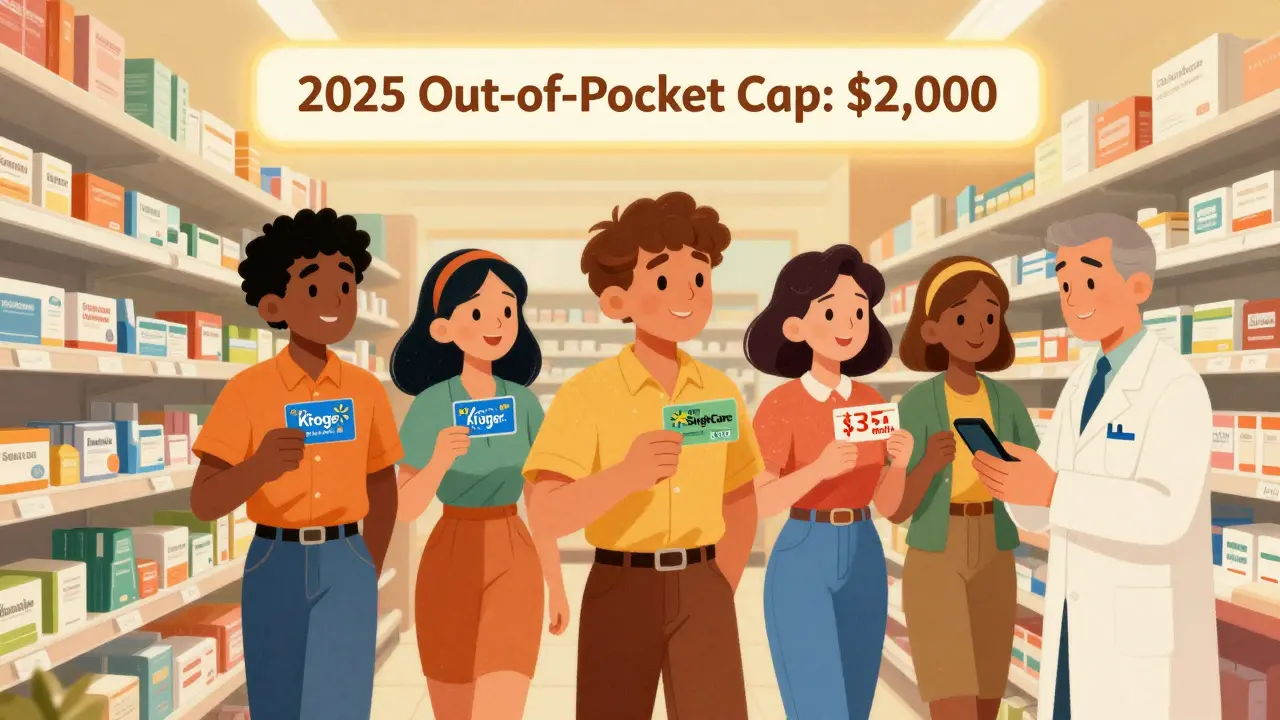
Starting January 1, 2025, Medicare Part D gets a major upgrade. The annual out-of-pocket cap drops from $8,300 to $2,000. That’s huge. For someone taking five generics a month at $10 each, that’s $600 a year-well under the cap. Once you hit $2,000, the rest is free for the year. That’s the biggest win for generic users.Also new: insulin costs capped at $35 per month, even for generics. And Extra Help recipients won’t pay any deductible anymore. If you’re on Medicare, this is the most important change in decades. Apply for Extra Help now-even if you think you don’t qualify. The rules changed in 2024, and more people are eligible than before.
What You Can Do Right Now
1. Check your Medicare eligibility for Extra Help-go to SSA.gov or call 1-800-MEDICARE. You can apply online in 10 minutes. 2. Ask your pharmacist for cash prices-use GoodRx or SingleCare to compare. Print or show the coupon. Don’t assume insurance is cheaper. 3. Apply to NeedyMeds-even if you think you earn too much. They sometimes make exceptions. 4. Call your local SHIP counselor-State Health Insurance Assistance Programs offer free, personalized help. Find yours at shiptacenter.org. 5. Don’t skip doses-a 2023 study in the Annals of Internal Medicine found 38% of people who couldn’t afford generics skipped pills. That leads to ER visits, hospital stays, and higher costs down the road.Why So Many People Miss Out
The system is designed for extremes: the very poor get help. The very rich pay full price. The middle? Forgotten. You’re not lazy. You’re not careless. You’re caught in a gap no one talks about.Pharmacies don’t advertise discount cards. Insurance companies don’t tell you to compare prices. Government forms are confusing. And generic drug makers? They can’t afford to help. So you’re left to figure it out alone.
But you’re not alone. In 2023, over 1.2 million people called SHIP just to ask about generic drug costs. That’s 1.2 million people wondering how to pay for their medicine. You’re one of them. And help is out there-if you know where to look.
What’s Coming Next
Pfizer announced in late 2024 it’s expanding its patient assistance program to include more generic medications in 2025. That’s rare-and potentially a sign of things to come. Industry analysts predict generic assistance programs will grow 6.2% a year through 2028, mostly because of Medicare reforms, not new manufacturer programs.The real fix? Policy change. The HELP Copays Act, introduced in 2023, would force insurers to count copay assistance toward out-of-pocket limits. Right now, that doesn’t matter for generics because there’s no assistance to count. But if it passes, it could open the door for future programs.
For now, your power lies in knowing your options. Use discount cards. Apply for Extra Help. Talk to your pharmacist. Don’t wait until you’re out of pills to act.
Can I use a discount card with my Medicare Part D?
Yes, but only if the cash price is lower than your insurance copay. Medicare Part D doesn’t allow you to combine discounts with your plan’s copay. So you must choose: use your insurance, or pay cash with a coupon. Always ask your pharmacist to compare both prices before you pay.
Do generic drug manufacturers offer copay cards?
Almost never. Generic manufacturers operate on very thin profit margins-sometimes just pennies per pill. They can’t afford to offer discounts like brand-name companies do. Any assistance for generics comes from pharmacies, nonprofits, or government programs, not the drug makers themselves.
Why do my generic copays count toward my Medicare out-of-pocket limit?
Medicare counts every dollar you pay for covered drugs-including generics-toward your annual out-of-pocket maximum. That’s true even if your copay is $5. Before 2025, that limit was $8,300. Starting January 1, 2025, it drops to $2,000. Once you hit that, your generics will be free for the rest of the year.
What if I make too much for Extra Help but still can’t afford my meds?
Apply for help through NeedyMeds or PAN Foundation. Even if you earn above the income limit, some programs make exceptions. Also, use pharmacy discount cards-Walmart, Kroger, and SingleCare offer prices that are often lower than your insurance copay. Don’t assume you’re ineligible. Ask.
Is it worth applying for Extra Help if I’m not sure I qualify?
Yes. The application takes less than 10 minutes. You won’t be penalized if you’re denied. And the rules changed in 2024-more people qualify now than before. Even if you’re just slightly over the limit, you might still get partial help. It’s free to try.
Can I get help for insulin if it’s a generic?
Yes. Starting January 1, 2025, all insulin-including generic versions-will cost no more than $35 per month for Medicare Part D beneficiaries. This applies regardless of income. You don’t need to apply separately. Just fill your prescription.


Write a comment
Your email address will be restricted to us