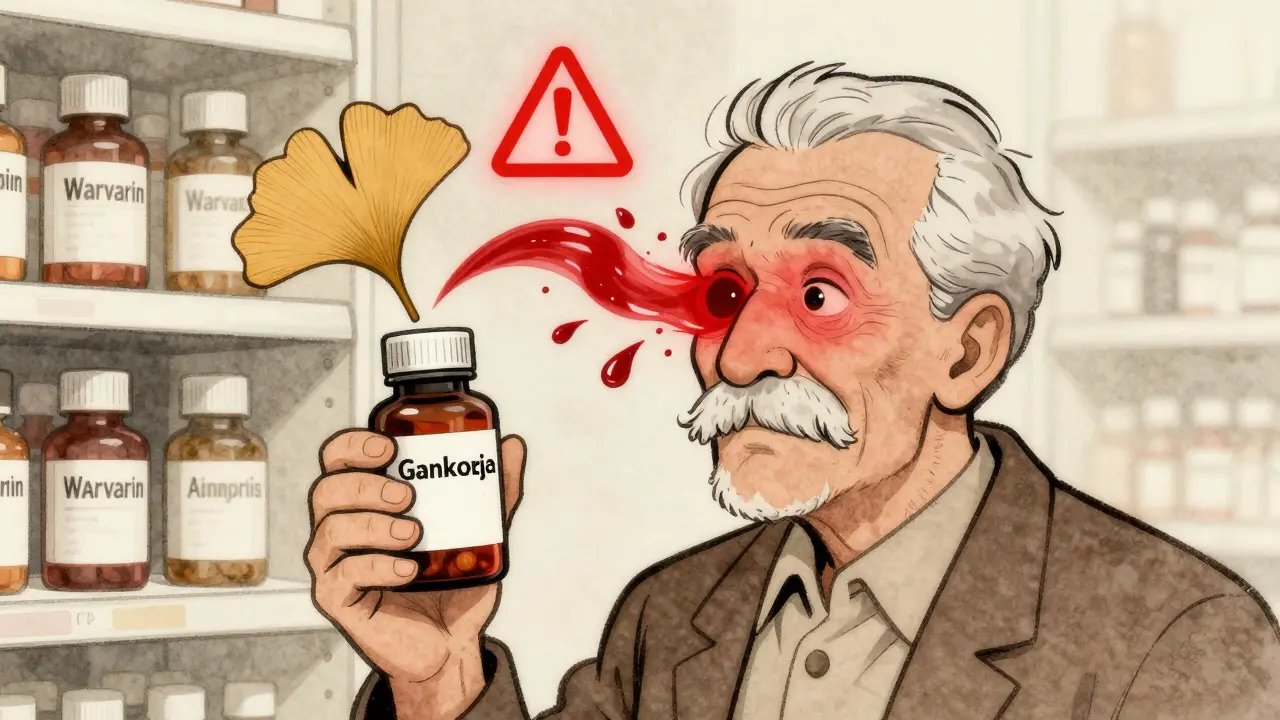
Many people take Ginkgo Biloba hoping to boost memory or improve circulation. It’s one of the most popular herbal supplements in the U.S., with over 1.5 million Americans using it regularly. But if you’re on blood thinners - whether prescription or over-the-counter - you could be putting yourself at risk. This isn’t speculation. Real cases have happened. A man in his 60s started taking Ginkgo Biloba for brain health and, within a week, suffered spontaneous bleeding in his right eye. He was also on low-dose aspirin. Another woman, who’d been taking Ginkgo for years without other medications, developed a dangerous brain bleed. These aren’t rare stories. They’re warnings.
How Ginkgo Biloba Affects Blood Clotting
Ginkgo Biloba comes from the leaves of an ancient tree native to China. The extracts used in supplements are standardized to contain 24% flavonoid glycosides and 6% terpene lactones. These compounds are believed to improve blood flow, which is why some people take it for memory or leg pain. But here’s the catch: they also interfere with platelet function and slow down clotting. That’s fine if you’re healthy. Not fine if you’re already on something that does the same thing.
Think of your blood like a team of workers trying to stop a leak. Platelets are the first responders. Clotting factors are the repair crew. Ginkgo Biloba doesn’t stop them completely - but it slows them down. It’s like telling half the team to take a coffee break right when a pipe bursts. The result? More bleeding, slower healing.
Which Blood Thinners Are Dangerous to Mix With Ginkgo?
Not all blood thinners are the same. Some are stronger. Some interact more. Here’s what the evidence shows:
- Warfarin (Coumadin, Jantoven): Ginkgo can raise your INR - the number doctors use to measure how long your blood takes to clot. A higher INR means higher bleeding risk. Case reports show INR levels jumping from 2.5 to over 5 after adding Ginkgo.
- Clopidogrel (Plavix): This antiplatelet drug is often prescribed after heart attacks or stents. Combining it with Ginkgo increases the chance of bruising, nosebleeds, and internal bleeding.
- Aspirin (80-325 mg): Even low-dose aspirin, taken daily for heart protection, can become risky when paired with Ginkgo. Studies show a clear link between this combo and abnormal coagulation.
- Ibuprofen, Naproxen, Celecoxib: These common painkillers are OTC, but they thin the blood too. Add Ginkgo? You’re stacking three blood-thinning effects.
- Ticagrelor, Etoricoxib, Nifedipine: These are less common, but research shows they also interact. Nifedipine, a blood pressure drug, is especially risky when combined with Ginkgo.
Even if you’re not on prescription meds, you might still be at risk. Many people take daily aspirin without realizing it. Or they use ibuprofen for arthritis. Or they’re on omeprazole (Prilosec) for heartburn - and that’s another red flag. The NIH found that Ginkgo combined with omeprazole led to abnormal coagulation tests, even when no bleeding occurred. That’s a silent warning sign.
The Evidence Is Mixed - But the Risks Are Real
You might read studies that say Ginkgo doesn’t affect clotting. And yes, some lab tests on standardized extracts like EGb 761 showed no changes in 29 different clotting parameters. But here’s what those studies don’t tell you: they were done in healthy volunteers. Not in older adults. Not in people on multiple medications. Not in people with liver or kidney issues.
Real-world data tells a different story. A 2023 study in PLOS ONE analyzed over 12,000 patient records. It found a clear increase in bleeding incidents when Ginkgo was taken with clopidogrel, aspirin, or warfarin. The odds of abnormal clotting went up by nearly 50%. That’s not a small risk. That’s a red flag.
And then there are the case reports: spontaneous eye bleeds, brain hemorrhages, unexplained bruising. These aren’t outliers. They’re signals. Science doesn’t always catch every interaction in controlled trials. But when real people start bleeding - we listen.

Who Should Avoid Ginkgo Biloba Entirely?
Some people should never take Ginkgo Biloba. Period.
- People on blood thinners - prescription or OTC
- Those with bleeding disorders like hemophilia or von Willebrand disease
- Pregnant women - Ginkgo may increase the risk of bleeding during delivery
- People over 65 - aging liver and kidneys process supplements slower, increasing risk
- Anyone scheduled for surgery - even minor procedures like a colonoscopy or dental extraction
The American Society of Anesthesiologists says stop Ginkgo 2 to 3 weeks before surgery. That’s not a suggestion. It’s a safety rule. Some studies suggest 36 hours might be enough, but why gamble? A single drop of bleeding during surgery can turn a routine procedure into a life-threatening emergency.
What About Other Supplements or Medications?
Ginkgo doesn’t just mess with blood thinners. It can also:
- Reduce the effectiveness of antidepressants like fluoxetine (Prozac)
- Lower the effectiveness of statins like simvastatin (Zocor) and atorvastatin (Lipitor)
- Interact with seizure medications, making seizures more likely
- Boost blood pressure when taken with decongestants like phenylephrine
And here’s something most people don’t know: never eat raw or roasted Ginkgo seeds. They contain a toxin called ginkgotoxin, which can cause seizures, vomiting, and even death in children. Supplements are made from leaves - but the seeds are a different story. If you’re foraging or using home remedies, avoid them completely.

What Should You Do?
If you’re taking Ginkgo Biloba - or thinking about it - here’s what to do:
- Check your meds. Look at every pill, capsule, or OTC product you take. Don’t forget aspirin, ibuprofen, or fish oil.
- Talk to your pharmacist. They see all your prescriptions. They know what interacts. Ask them directly: “Could Ginkgo Biloba interact with anything I’m taking?”
- Stop Ginkgo before surgery. Even if your doctor doesn’t mention it, take the initiative. Tell them you’ve been taking it.
- Don’t assume “natural” means safe. Herbal doesn’t mean harmless. Ginkgo is a powerful substance with documented risks.
- Report side effects. If you notice unexplained bruising, nosebleeds, or dark stools, stop Ginkgo and see a doctor. These could be signs of internal bleeding.
There’s no magic number for safe Ginkgo use when you’re on blood thinners. The safest dose? Zero.
Bottom Line
Ginkgo Biloba isn’t dangerous for everyone. But if you’re on blood thinners - even a low-dose aspirin - it’s not worth the risk. The science isn’t perfect. Some studies say it’s fine. Others show clear danger. But when real people bleed - we don’t wait for perfect data. We act.
There are better ways to support brain health: walking daily, sleeping well, managing blood pressure, eating vegetables. You don’t need a supplement for that. And if you’re thinking of Ginkgo for memory? The evidence is weak. The risks? Real.
When in doubt, skip it. Your body will thank you.
Can I take Ginkgo Biloba if I’m on warfarin?
No. Ginkgo Biloba can significantly raise your INR levels, increasing the risk of dangerous bleeding. Even small doses have been linked to spikes in INR. If you’re on warfarin, avoid Ginkgo completely. Talk to your doctor about safer alternatives.
How long should I stop Ginkgo before surgery?
Stop Ginkgo Biloba at least 2 to 3 weeks before any surgical procedure, including dental work or colonoscopies. The American Society of Anesthesiologists recommends this timeframe to ensure your blood can clot properly during and after surgery. Don’t rely on shorter timelines - the risk isn’t worth it.
Is Ginkgo Biloba safe if I’m not on any medications?
For healthy adults not taking blood thinners or other medications, Ginkgo Biloba at standard doses (120-240 mg/day) is generally considered low-risk. But it’s not risk-free. Some people still experience headaches, dizziness, or digestive upset. Always start with the lowest dose and monitor for side effects.
Can Ginkgo Biloba cause brain bleeding?
Yes. There are documented case reports of spontaneous brain hemorrhages in people taking Ginkgo Biloba long-term - even without other blood thinners. The exact mechanism isn’t fully understood, but it’s linked to its effect on platelet function. This is why experts warn against using it without medical supervision.
Does Ginkgo Biloba interact with fish oil or vitamin E?
Yes. Both fish oil and vitamin E have mild blood-thinning effects. Combining them with Ginkgo Biloba can multiply the risk of bleeding. If you’re taking any of these supplements, especially together, talk to your doctor before continuing.
Are all Ginkgo Biloba supplements the same?
No. The FDA doesn’t regulate herbal supplements like prescription drugs. Some products contain too little Ginkgo to work. Others have too much. Some are contaminated. Look for supplements labeled with “standardized extract (24%/6%)” and from reputable brands. But even then, don’t assume safety - especially if you’re on other meds.







Write a comment
Your email address will be restricted to us