
You probably have a bottle of cough syrup in your medicine cabinet right now. It sits next to the ibuprofen and the allergy pills, looking completely harmless. But for a growing number of people, particularly teenagers, that bottle isn't just medicine-it’s a gateway to a dangerous high. This is the reality of dextromethorphan (DXM) abuse.
DXM is the active ingredient in dozens of over-the-counter (OTC) cold and flu remedies. It’s designed to stop you from coughing. When taken correctly, it works exactly as intended. But when taken in massive doses, it transforms into a dissociative drug that can cause hallucinations, loss of motor control, and even death. Understanding how this abuse happens, why people do it, and what the risks are is crucial for parents, educators, and anyone who cares about their community's health.
What Is Dextromethorphan and Why Is It So Popular?
To understand the abuse, you first need to understand the drug itself. Dextromethorphan (DXM) is a synthetic non-narcotic cough suppressant. The U.S. Food and Drug Administration (FDA) approved it back in 1958. It was created as a safer alternative to codeine because it stops the cough reflex in the brain without causing pain relief or physical addiction at therapeutic doses.
Today, DXM is found in more than 100 different OTC products. You’ve likely seen brands like Robitussin DM, NyQuil, Coricidin, or DayQuil. If a product label says "DM," "cough suppressant," or has "Tuss" in the name, it almost certainly contains DXM. Because these products are sold on open shelves in pharmacies and grocery stores, they are incredibly accessible. For many teens, this accessibility makes DXM known as "the poor man’s PCP." It offers a cheap, easy-to-get high compared to illicit street drugs.
| Brand Name | Type | Common Label Indicators |
|---|---|---|
| Robitussin DM | Syrup/Liquid | "DM", "Cough Suppressant" |
| NyQuil / DayQuil | Liquid/Capsule | "Nighttime Cold & Flu" |
| Coricidin HBP | Tablets | "Cold & Allergy" |
| Triaminic DM | Syrup | "Children’s Formula" |
| Drixoral | Capsules | "Nasal Decongestant" |
The Methods: How People Abuse DXM
Abusing DXM isn’t just about taking one extra pill. It involves consuming extremely large quantities of the drug to achieve psychoactive effects. Users often refer to this as "robo tripping" or "dexing." The goal is to bypass the medicinal effect and hit the brain hard enough to alter perception.
There are several distinct methods users employ, ranging from simple consumption to complex chemical extraction:
- Direct Consumption: The most common method involves drinking multiple bottles of cough syrup at once. Users might consume an entire 4-ounce or 8-ounce bottle in a single sitting. This is risky because the syrup also contains other ingredients like antihistamines (e.g., doxylamine) or decongestants (e.g., phenylephrine), which can cause severe side effects like extreme drowsiness or heart palpitations.
- The "Robo Shake": This is a more sophisticated and dangerous technique. The user drinks a large amount of cough syrup and then intentionally induces vomiting. The idea is that the DXM absorbs quickly through the stomach lining before being vomited up, while the other ingredients that cause nausea and bad taste are expelled. This method increases the risk of choking, aspiration pneumonia, and severe electrolyte imbalances.
- Chemical Extraction: Some experienced abusers use online guides to isolate pure DXM from the syrup using chemicals like bleach or baking soda. This removes the other ingredients but introduces toxic byproducts. The resulting powder or liquid is much more potent and unpredictable, significantly increasing the risk of overdose.
- Pure Forms: Recently, DXM has become available in pure powder, capsule, and pill forms online. These can be swallowed or snorted. Because there are no filler ingredients, users can ingest much higher doses of pure DXM more easily, making accidental overdose far more likely.

The "Plateaus": What Users Are Chasing
DXM abuse follows a predictable pattern of effects based on dosage, often referred to as "plateaus." Users aim for specific levels of intoxication, but the line between a desired high and a medical emergency is dangerously thin. According to data from Westchester County Public Safety and the University of Rochester Medical Center, illegal users may take between 240 mg and 1,500 mg of DXM at a time. Compare this to the recommended therapeutic dose of 15-30 mg every 4-8 hours.
- Plateau 1 (Low Dose): Users feel mild euphoria, slight distortion of colors and sounds, and increased energy. This is close to the upper limit of therapeutic use but starts to cross into recreational territory.
- Plateau 2 (Moderate Dose): Effects intensify. Users experience visual distortions, slurred speech, loss of physical coordination, and a sense of detachment from reality. Nausea and abdominal pain often begin here.
- Plateau 3 (High Dose): This is where serious danger begins. Users report "out-of-body" experiences, complete loss of motor control, and vivid visual hallucinations. Confusion, paranoia, and excessive sweating are common. The user may not recognize family members or their surroundings.
- Plateau 4 (Extreme Dose): Often called the "robotripping" zone. Users lose all connection to reality. They may experience seizures, hyperthermia (dangerously high body temperature), coma, or death. At this stage, the body’s vital functions are severely compromised.
The Health Risks: More Than Just a Bad Trip
The short-term effects of DXM abuse are alarming. Beyond the psychological distress of hallucinations and paranoia, the physical toll is severe. Common immediate symptoms include:
- Dizziness and double or blurred vision
- Slurred speech and loss of coordination
- Nausea, vomiting, and abdominal pain
- Irregular heartbeat and high blood pressure
- Dry, itchy skin and facial redness
However, the most lethal risk comes from mixing DXM with other substances. Combining DXM with alcohol is particularly deadly; both depress the central nervous system, leading to respiratory failure and death. Mixing DXM with MDMA or other stimulants increases the risk of hyperthermia, which can cause brain damage, seizures, and organ failure. The Mount Sinai Health Library warns that these combinations can lead to a coma or death rapidly.
Long-term abuse also carries significant consequences. While some government reports state DXM is not physically addictive, treatment centers like Greenhouse Treatment report cases of dependence and addiction. Chronic users may develop tolerance, requiring higher doses to achieve the same effect, which pushes them closer to overdose. Psychological dependence can lead to anxiety, depression, and cognitive impairment even when not under the influence.
Who Is at Risk and Why?
DXM abuse is predominantly a youth issue. Data from the National Institute on Drug Abuse (NIDA) shows that approximately 3% of teens admit to abusing OTC cough medicines to get high. Among high school seniors, this number rises to nearly 5%. Why are teens turning to cough syrup?
It comes down to accessibility and cost. Unlike marijuana or prescription opioids, DXM is available without a prescription, without age restrictions in many stores, and without parental knowledge if bought with cash. It’s perceived as safe because it’s medicine. Many teens don’t realize that "natural" or "OTC" doesn’t mean harmless. The slang terms-"candy," "drank," "robo," "C-C-C"-help mask the activity from adults, creating a subculture around the abuse.
Prevention and Intervention
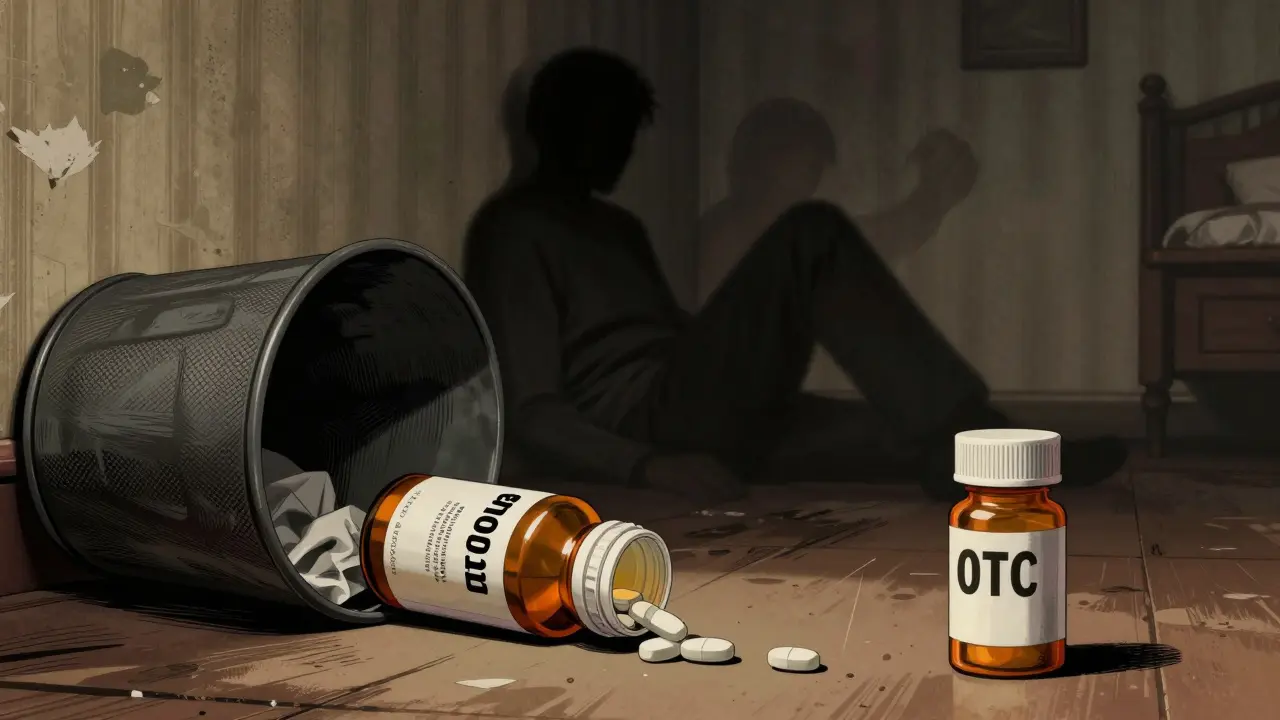
If you suspect someone is abusing DXM, look for specific signs. Physical clues include empty or partially consumed bottles of cough syrup hidden in trash or bedrooms. Behavioral changes such as sudden social withdrawal, erratic mood swings, slurred speech, or unexplained visits to the bathroom (to induce vomiting) are red flags. Chemical smells from extraction attempts may also be present.
Prevention starts with education. Talk to young people about the dangers of OTC drug abuse. Explain that just because something is legal and over-the-counter doesn’t mean it’s safe to misuse. Store medications securely, even OTC ones, to limit impulsive access.
If an overdose is suspected, seek immediate medical attention. Survival depends on how quickly a person receives help at a hospital. Symptoms of overdose include difficulty breathing, seizures, unconsciousness, and blue-tinged skin. Do not wait for symptoms to pass; DXM toxicity can escalate rapidly.
Is dextromethorphan addictive?
While official government reports often state that DXM is not physically addictive, clinical evidence suggests otherwise. Regular abuse can lead to psychological dependence and tolerance, meaning users need higher doses to achieve the same effect. Treatment centers report cases of DXM addiction requiring professional intervention, contradicting the notion that it is entirely non-addictive.
What is the difference between DXM and codeine?
Codeine is an opioid pain reliever that also suppresses coughs. It has a high potential for physical addiction and overdose. DXM is a synthetic non-narcotic cough suppressant. While DXM does not relieve pain, it produces dissociative effects at high doses. Both can be abused, but DXM is widely available over-the-counter, whereas codeine requires a prescription.
Can you die from drinking too much cough syrup?
Yes. Overdose on DXM can lead to seizures, coma, respiratory failure, and death. The risk is significantly higher when DXM is mixed with alcohol or other drugs. Pure powder forms of DXM are especially dangerous because it is easier to consume a lethal dose accidentally. Immediate medical attention is critical in case of overdose.
What are the signs of DXM abuse?
Signs include slurred speech, loss of coordination, dilated pupils, confusion, and hallucinations. Physically, you might notice empty cough syrup bottles, frequent trips to the bathroom (to induce vomiting), or chemical smells. Behaviorally, users may become withdrawn, paranoid, or exhibit erratic mood swings.
Why is DXM called "the poor man's PCP"?
At high doses, DXM acts as a dissociative anesthetic, similar to phencyclidine (PCP). It causes detachment from reality, hallucinations, and loss of motor control. Because DXM is cheap, legal, and easily accessible in OTC cough syrups, it serves as a readily available substitute for illicit dissociative drugs like PCP, earning it this nickname among users and researchers.