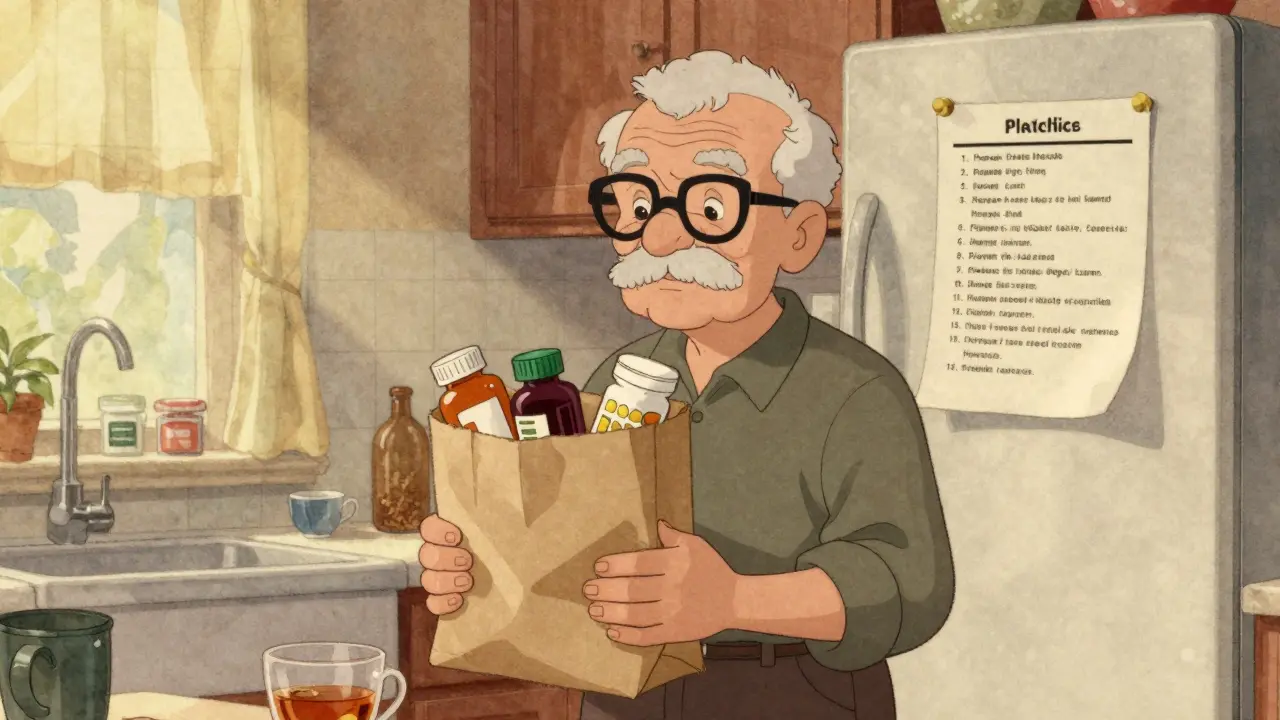
Every year, thousands of people in the U.S. end up in the hospital-not because their condition got worse, but because someone gave them the wrong pill, the wrong dose, or a drug that clashed with something else they were already taking. These aren’t rare mistakes. They’re common, preventable, and often happen because no one had a clear, up-to-date list of what the patient was actually taking.
It’s not just about prescription drugs. That daily aspirin. The turmeric supplement you started for your knees. The antacid you grab when your stomach acts up. The herbal tea your sister swears helps with sleep. All of it matters. And if your doctor doesn’t know about it, they can’t protect you from a dangerous interaction.
Keeping a medication list isn’t just a good idea-it’s a safety habit. And it’s one you can start today, no tech skills needed.
What Goes on a Medication List?
A good medication list isn’t just a scribble on a napkin. It needs to be detailed enough for a pharmacist or nurse to spot a problem in seconds. Here’s exactly what to include for every medication:
- Drug name-both brand (like Lipitor) and generic (atorvastatin)
- Strength and dose-e.g., 10 mg, 250 mg, 5 mL
- How often-once daily, twice a day, every 6 hours
- How to take it-by mouth, under the tongue, applied to skin, injected
- Why you’re taking it-for high blood pressure, for arthritis pain, for sleep
- When you last took it-helps avoid double-dosing
- Who prescribed it-Dr. Patel, Urgent Care, Pharmacy X
Don’t forget over-the-counter meds like ibuprofen, cold pills, or antacids. Same goes for vitamins, supplements, and herbal products. People often leave these out because they think, “It’s not a real drug.” But ginger can thin your blood. St. John’s wort can make your antidepressant useless. These aren’t harmless.
Also list any allergies or bad reactions you’ve had-rash, swelling, trouble breathing, nausea. Write down what happened and which drug caused it. That’s just as important as the list of what you take.
Choose Your Format: Paper, Phone, or Both
You don’t need an app to keep a safe medication list. But you do need a format you’ll actually use and update.
Paper lists are still the most reliable for many people-especially older adults. The FDA’s free My Medicines template is simple, clear, and printable. You can keep it in your wallet, purse, or taped to the fridge. The downside? It gets outdated fast. A 2022 study found that nearly half of paper lists were out of date by the time they reached the doctor’s office.
Smartphone apps like Medisafe, MyTherapy, or CareZone can send reminders, track refills, and even share your list with family or providers. They’re great if you’re already comfortable with your phone. But if you don’t use apps often, they can become another thing you ignore. Only 35% of people over 65 regularly use them, according to Pew Research.
The smartest approach? Use both. Keep a printed copy you can hand to any provider. Then use an app to track doses and get alerts. If your phone dies, your paper list still works.
Update It Like Clockwork
Here’s the biggest mistake people make: they make a list once and forget it.
Every time your meds change-whether you start something new, stop something, or change the dose-you update the list that same day. Don’t wait until your next appointment. Don’t rely on memory.
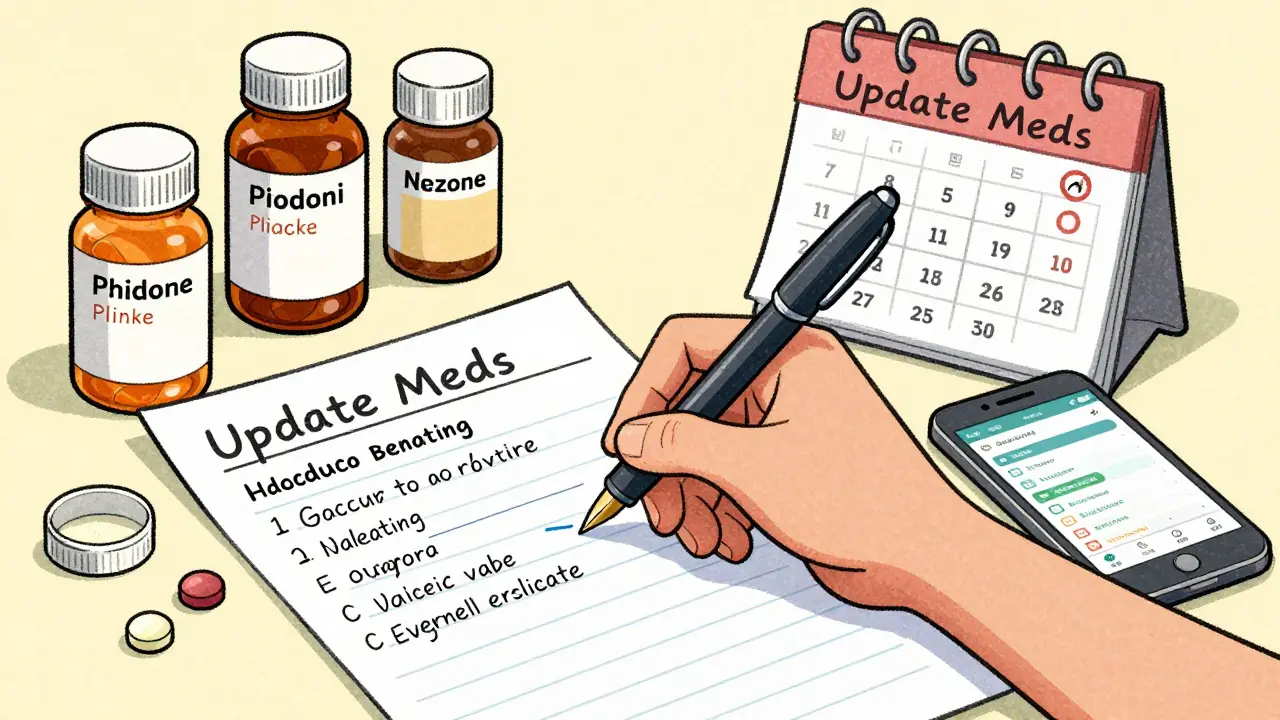
Set a monthly reminder on your phone: “Check my meds.” When it goes off, do this:
- Look at your pill bottles or blister packs.
- Compare them to your list.
- Check off what’s still active.
- Strike through anything you stopped.
- Add anything new.
Do this right after you organize your weekly pill box. It takes five minutes. But those five minutes could stop a deadly interaction.
Also update your list after:
- Going to the ER
- Being discharged from the hospital
- Seeing a new specialist
- Getting a new prescription from a different doctor
And if you’re on five or more medications? Do it weekly. Polypharmacy patients are at the highest risk-and the most likely to benefit from a tight system.
Use the Brown Bag Method
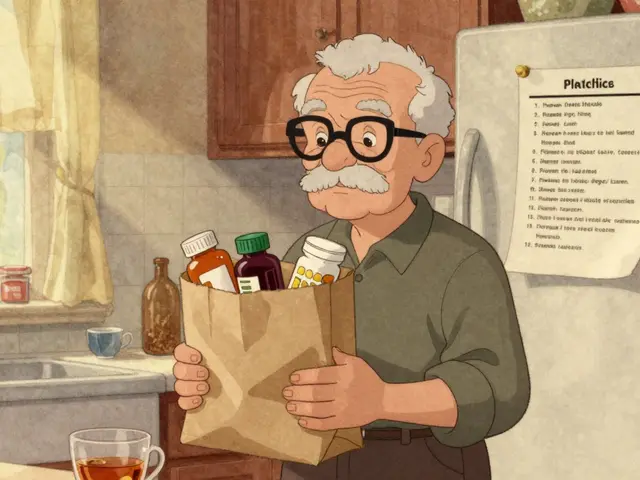
One of the most effective tricks doctors use? The brown bag method.
Before every doctor’s visit, especially if you’re seeing a new provider, gather every pill bottle, capsule, patch, and liquid you’re taking. Put them all in a brown paper bag. Bring it with you.
At the appointment, the provider will look at the actual bottles. They’ll see the real names, strengths, and expiration dates. They’ll spot duplicates, outdated prescriptions, or pills you’ve stopped but forgot to remove from your list.
This isn’t embarrassing. It’s smart. And it’s how most medication errors get caught.
Pharmacists love this method. In a 2023 survey, 82% of geriatric pharmacists recommended it to their patients. Why? Because it’s real. It’s physical. It doesn’t rely on memory.
Share It With Your Care Team
A medication list is useless if no one sees it.
Hand it to your primary doctor at every visit. Give a copy to your pharmacist. Leave one with a family member who might help you in an emergency. If you’re admitted to the hospital, give it to the nurse at the front desk.
Many hospitals now use electronic health records (EHRs) like Epic or Cerner. But even if your doctor uses digital charts, don’t assume they have your full list. A 2021 study found that over half of patient-reported medication lists had at least one critical error-like missing a supplement or misremembering the dose.
Ask: “Can you confirm my list matches what’s in your system?” If they say yes, ask them to show you. If they say no, hand them your paper copy.
Some patient portals, like MyChart, let you view and edit your own medication list online. If yours does, use it. But still keep a printed version. Digital access doesn’t mean accurate access.

Why This Matters More Than You Think
Medication errors are the third leading cause of death in the U.S.-after heart disease and cancer. That’s not a typo. The FDA estimates 7,000 deaths a year come from preventable drug mistakes.
And it’s not just about dying. It’s about avoiding hospital stays, falls, confusion, kidney damage, and bleeding. A 2023 review in the Annals of Internal Medicine found that when pharmacists reviewed medication lists, they cut adverse drug events by over 31%. When doctors did it alone, the drop was less than half that.
It’s also about time and stress. One doctor told me, “I used to spend 15 minutes just asking patients what they take. Now I ask them to show me their list. Saves me 10 minutes per visit. And I know I’m not missing something.”
And for you? A clear list means fewer phone calls to the pharmacy. Fewer trips to urgent care. Fewer “I didn’t know you were taking that” moments.
Start Today-Here’s Your Action Plan
You don’t need to wait for your next appointment. Do this now:
- Grab a piece of paper or open a note on your phone.
- Go through every medicine cabinet, drawer, and purse. Write down everything you take, even if you think it’s unimportant.
- Include dosages, frequencies, and why you take each one.
- Print it out or save it as a photo.
- Give a copy to your primary care doctor or pharmacist.
- Set a recurring calendar reminder: “Update meds” every Sunday.
That’s it. No apps required. No cost. Just a few minutes of honesty with yourself.
Medication safety isn’t about technology. It’s about attention. It’s about remembering that every pill you swallow has an effect-and that effect changes when others are added. Your list is your shield. Keep it sharp. Keep it current. And don’t let anyone tell you it’s too much trouble. Because the alternative? It’s not worth the risk.
Do I need to list vitamins and supplements on my medication list?
Yes. Vitamins, herbal remedies, and supplements can interact with prescription drugs. For example, vitamin K can reduce the effect of blood thinners like warfarin. St. John’s wort can make antidepressants, birth control pills, and even some heart medications less effective. Many people don’t think of these as "medications," but doctors need to know about them to keep you safe.
What if I forget to update my list after a change?
It happens to everyone. The key is to make updating easy. Set a weekly reminder on your phone. Do it right after you organize your pill box. Or use the "brown bag" method before every doctor visit-just bring all your bottles. Even if your list is outdated, showing the actual pills helps your provider spot what’s missing or wrong.
Can I use a mobile app instead of paper?
Apps like Medisafe or MyTherapy are great for reminders and sharing, but they’re not foolproof. If your phone dies, you lose access. Many older adults find them confusing. The best approach is to use an app for tracking and reminders, but always carry a printed copy to show your doctor. Paper is reliable when tech fails.
Why does my doctor ask for my list every time I visit?
Because your list changes. A new prescription, a stopped medication, or a supplement you tried last week could change your treatment plan. Even if your doctor has your records, they might not have the full picture-especially if you saw another provider or filled a prescription at a different pharmacy. Your list fills in the gaps.
Is it worth it if I only take one or two medications?
Yes. Even one medication can cause problems if it interacts with something else you’re taking-even if it’s just ibuprofen or a daily vitamin. And if you ever go to the ER or get hospitalized, they’ll check your list anyway. Having one ready saves time and stress. Plus, if your health changes and you start taking more meds later, you’ll already have the habit in place.
Next Steps and Troubleshooting
If you’ve never kept a list before, start small. Pick one day this week to gather your meds and write them down. Don’t aim for perfection-aim for completion.
If you’re overwhelmed by too many pills, ask your pharmacist for a medication therapy review. Many pharmacies offer this for free under Medicare Part D. They’ll help you sort through what you really need.
If you’re caring for an older relative, help them make the list. Go with them to their next appointment. Bring the brown bag. You’re not overstepping-you’re preventing a crisis.
And if you’re a caregiver or a patient with complex needs, consider asking your doctor about a care coordinator. Some clinics now assign someone to help manage medication lists, especially for people taking five or more drugs.
Medication safety isn’t a one-time task. It’s a habit. And like brushing your teeth, it only takes a few minutes a day-but it keeps you healthy for years.




Write a comment
Your email address will be restricted to us