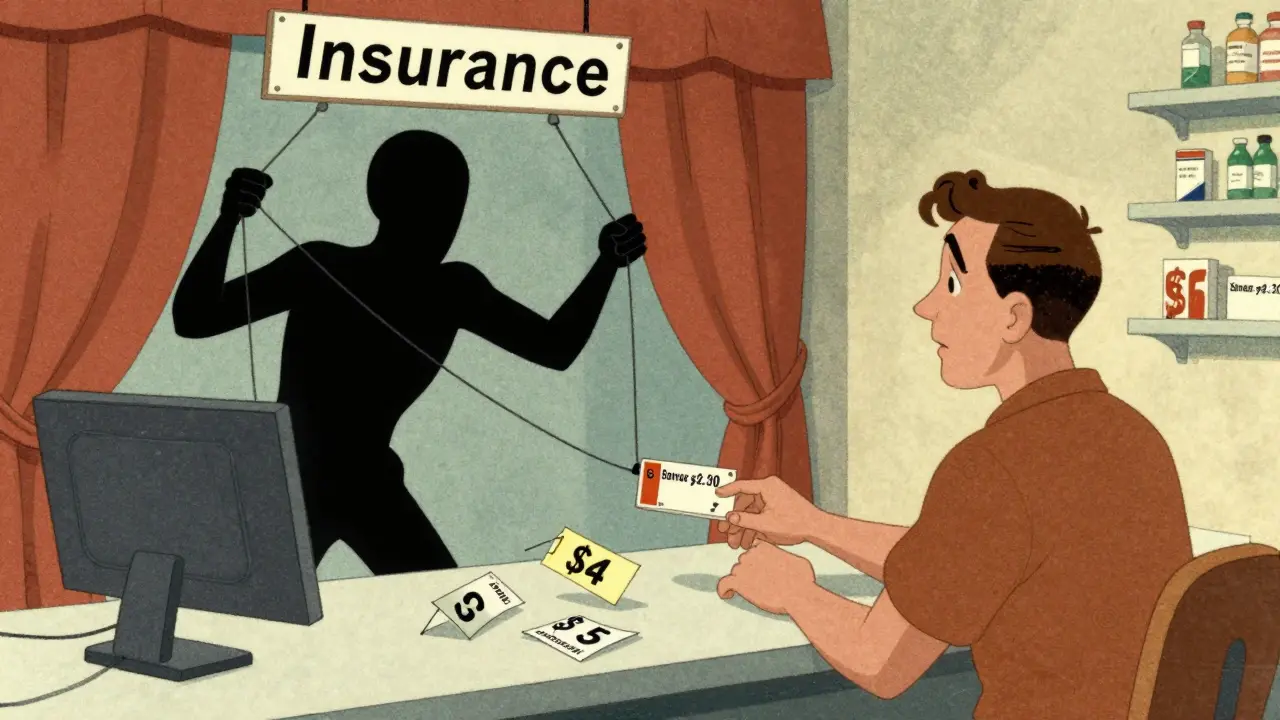
Every time you fill a prescription for a generic drug, you’re caught in a hidden negotiation you never see. It’s not your doctor, not your pharmacist, and definitely not the drugmaker setting the price. It’s Pharmacy Benefit Managers-PBMs-working behind the scenes for your insurer. These middlemen control how much you pay at the pharmacy counter, and their system is broken. For many, the price listed as "covered by insurance" is higher than what someone pays cash. That’s not a mistake. It’s by design.
Who Really Sets the Price of Generic Drugs?
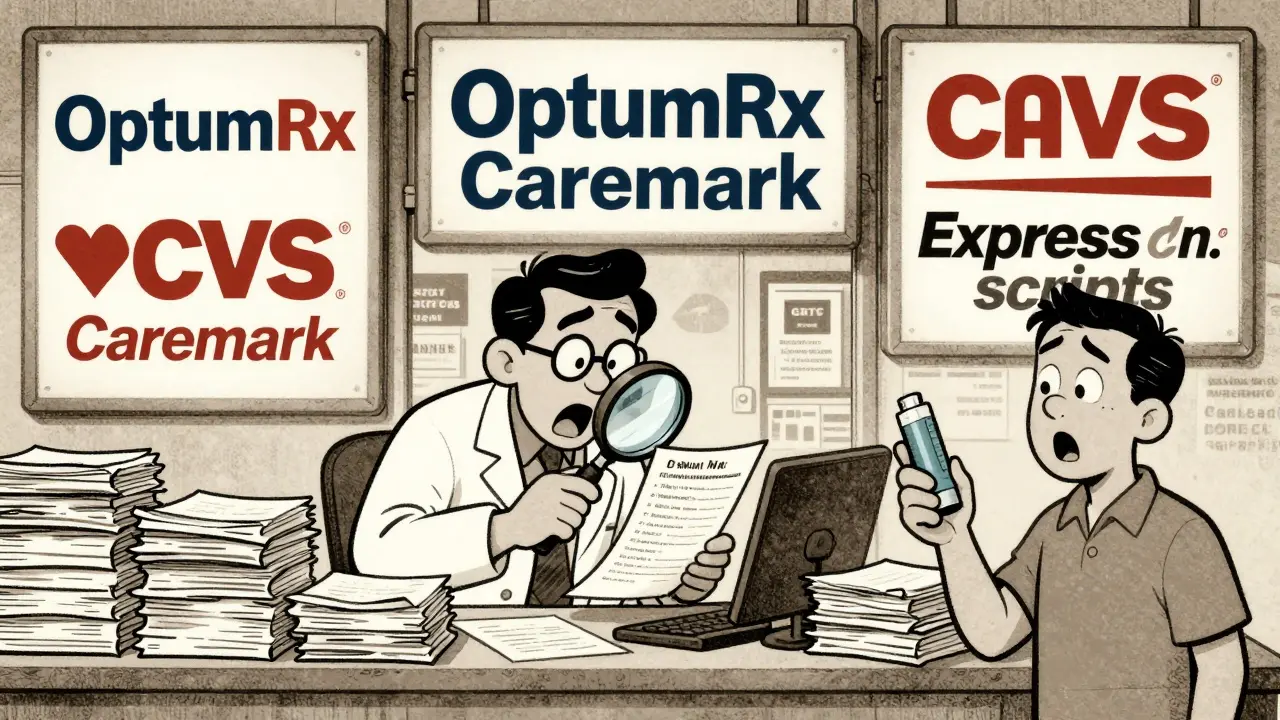
Generic drugs make up 90% of all prescriptions filled in the U.S., but they only account for 23% of total drug spending. That sounds like a win-until you look at how the price is decided. PBMs like OptumRx, CVS Caremark, and Express Scripts handle about 80% of all prescription drug claims. They don’t make drugs. They don’t run pharmacies. But they decide what pharmacies get paid and what patients pay.
Here’s how it works: PBMs negotiate with drug manufacturers for bulk discounts. They then create a "Maximum Allowable Cost" (MAC) list-the highest amount they’ll reimburse a pharmacy for a generic drug. That number isn’t based on what the pharmacy actually paid for the drug. It’s based on a formula using outdated benchmarks like Average Wholesale Price (AWP) or National Average Drug Acquisition Cost (NADAC). And even then, they add a dispensing fee on top. But here’s the catch: the price they charge your insurance plan is often higher than what they pay the pharmacy. That difference? That’s called spread pricing.
How Spread Pricing Lets PBMs Profit from Your Prescriptions
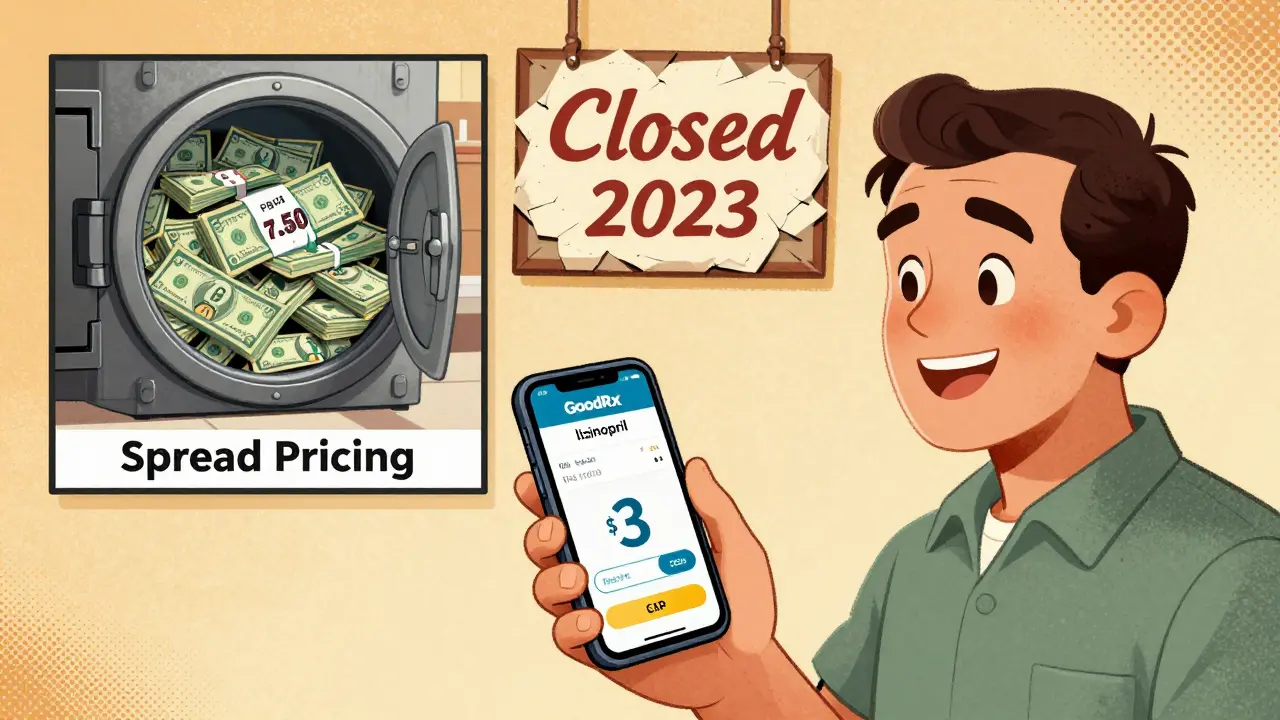
Spread pricing is the hidden profit engine of the PBM system. Let’s say a pharmacy buys a 30-day supply of generic metformin for $2.50. The PBM tells the pharmacy they’ll be reimbursed $4.50. But when the insurer is billed, the PBM charges $12. That’s a $7.50 spread. The pharmacy gets $4.50. The insurer pays $12. You, the patient, pay your $5 copay. The PBM pockets $7.50-and you never know it.
That’s not an outlier. In 2024, Evaluate Pharma estimated PBMs made $15.2 billion in undisclosed profits from spread pricing alone, and 68% of that came from generic drugs. These aren’t small margins. They’re systemic. And they’re hidden by gag clauses-contract terms that prevent pharmacists from telling you that the cash price is lower. According to CMS, 92% of PBM contracts include these clauses. So even if you walk into the pharmacy and ask, "How much would this cost without insurance?"-they’re legally barred from telling you the truth.
Why Your Insurance Copay Is Sometimes Higher Than Cash
It’s not just a myth. In 2024, a Consumer Reports survey of 2,300 insured adults found that 42% had paid more out-of-pocket for a generic drug through their insurance than they would have if they’d paid cash. One Reddit user reported paying $45 for a generic asthma inhaler through insurance-while the cash price was $4. Another shared that their $5 copay for generic lisinopril was more than the $3.75 they saw on GoodRx.
Why does this happen? Because your copay isn’t tied to the actual cost of the drug. It’s tied to your plan’s formulary tier. If your insurer’s PBM has set the MAC for a drug at $10, and your plan has a $10 copay for Tier 1 generics, you pay $10-even if the pharmacy paid $1.50 for it. The PBM keeps the rest. In some cases, your insurer even sets copays higher than the MAC to push you toward more expensive brand-name drugs that give them bigger rebates.
Dr. Joseph Dieleman from the Institute for Health Metrics and Evaluation put it bluntly: "Higher list prices mean bigger rebates. Bigger rebates mean higher patient cost-sharing." That’s the perverse incentive. PBMs and insurers make more money when drug prices are high, not low.
The Human Cost: Pharmacies, Patients, and the System’s Collateral Damage
The fallout isn’t just financial. Independent pharmacies are being squeezed out. Between 2018 and 2023, over 11,300 independent pharmacies closed-many because PBMs slashed reimbursement rates and added clawbacks. A clawback is when a PBM pays a pharmacy $5 for a drug, then later demands $3 back because the "true cost" was lower. It’s retroactive. It’s unpredictable. And it’s common: 63% of independent pharmacies reported clawbacks in FTC filings in 2023.
Pharmacists now spend 200 to 300 hours a year just trying to decode PBM contracts. They need specialized software to handle different MAC lists, reimbursement rules, and prior authorization requirements. Setup costs average $12,500 per pharmacy. Many hire PBM specialists for $100,000 a year just to keep from going under.
And patients? They’re left confused. A 2023 CMS Ombudsman report found 78% of complaints about drug pricing involved "surprise billing"-where the final cost was 200% to 300% higher than expected. People think they’re protected by insurance. Instead, they’re paying more than ever.
What’s Changing? New Rules and a Shifting Landscape
Things are starting to crack. In September 2024, President Biden signed an executive order banning spread pricing in federal programs like Medicare and Medicaid-effective January 2026. The Inflation Reduction Act’s Medicare Drug Price Negotiation Program is expanding, with 20 drugs now under negotiation. If it works, it could set a new standard for private insurers.
Forty-two states have passed or are considering PBM transparency laws. Some require PBMs to disclose MAC lists. Others ban gag clauses. The Pharmacy Benefit Manager Transparency Act of 2025, currently in Congress, would force PBMs to pass 100% of manufacturer rebates to insurers-removing the incentive to inflate list prices.
But the industry isn’t giving up. McKinsey & Company warns that drugmakers might raise list prices to compensate for lost rebates. And UnitedHealth’s 2024 acquisition of Change Healthcare gave them control over 45% of all prescription transactions. Consolidation isn’t slowing-it’s accelerating.
What You Can Do Right Now
You don’t have to wait for Congress to fix this. Here’s what works:
- Always ask: "What’s the cash price?" Even if you have insurance. Use apps like GoodRx, SingleCare, or RxSaver. Many generic drugs cost less than your copay.
- If your pharmacist says they can’t tell you the cash price, ask why. Gag clauses are illegal in many states now. You have the right to know.
- Switch to a pharmacy that doesn’t rely on PBM contracts. Some independents and mail-order services offer flat-rate generics.
- If you’re on Medicare, check if your drug is in the new negotiation program. You might pay less next year.
- Call your insurer. Ask for a copy of your formulary and the MAC list for your medications. Most won’t give it to you-but asking puts pressure on them.
The system is rigged to benefit PBMs and insurers-not patients. But you have more power than you think. The price you pay isn’t fixed. It’s negotiated. And you can negotiate too.
Why is my generic drug more expensive with insurance than without?
Your insurance plan’s Pharmacy Benefit Manager (PBM) charges your insurer more for the drug than they pay the pharmacy. The difference-called spread pricing-is kept as profit. Your copay is based on that inflated price, not the actual cost. Meanwhile, cash prices reflect what the pharmacy paid, which is often far lower. This is why paying cash can be cheaper than using insurance.
What is spread pricing and how does it affect me?
Spread pricing is when a PBM charges your insurer a higher price for a drug than what they reimburse the pharmacy. The gap between those two numbers is their profit. For example, if your drug costs the pharmacy $3, but the PBM charges your insurer $15 and pays the pharmacy $5, they pocket $10. You pay your $5 copay, and you never know the drug only cost $3. This practice inflates your out-of-pocket costs and hides the true price of medication.
Can my pharmacist tell me the cash price of my prescription?
Legally, they should be able to-but many can’t because of "gag clauses" in PBM contracts. These clauses prohibit pharmacists from telling you that paying cash would be cheaper. However, 42 states now ban gag clauses, and federal rules under the No Surprises Act are tightening restrictions. If your pharmacist refuses, ask why. You have the right to know your options.
Are there alternatives to using my insurance for generic drugs?
Yes. Use discount apps like GoodRx, SingleCare, or RxSaver-they often list prices lower than your insurance copay. Some pharmacies, especially independents, offer flat-rate generics (e.g., $4 for 30 days). Mail-order services like CVS or Walmart also offer low-cost generics. If you’re paying more than $10 for a common generic, you’re likely overpaying.
Is the government doing anything to fix this?
Yes. Starting January 2026, spread pricing will be banned in federal programs like Medicare and Medicaid. The Inflation Reduction Act allows Medicare to negotiate prices for 20 drugs, with more coming. Forty-two states have passed PBM transparency laws requiring disclosure of rebates and MAC lists. The Pharmacy Benefit Manager Transparency Act of 2025, if passed, would require PBMs to pass all rebates to insurers, removing their incentive to inflate prices.



Write a comment
Your email address will be restricted to us