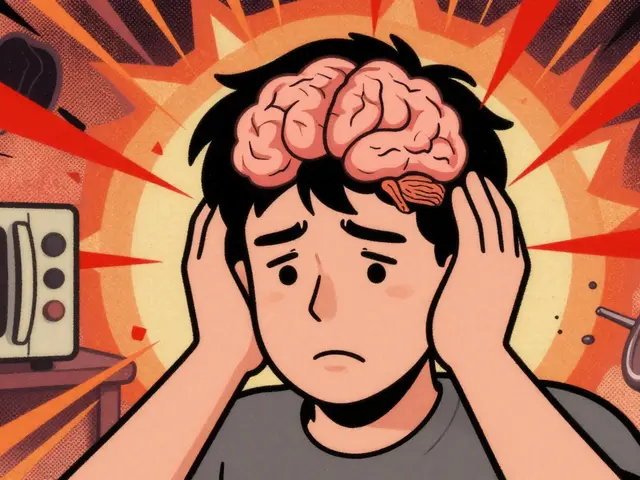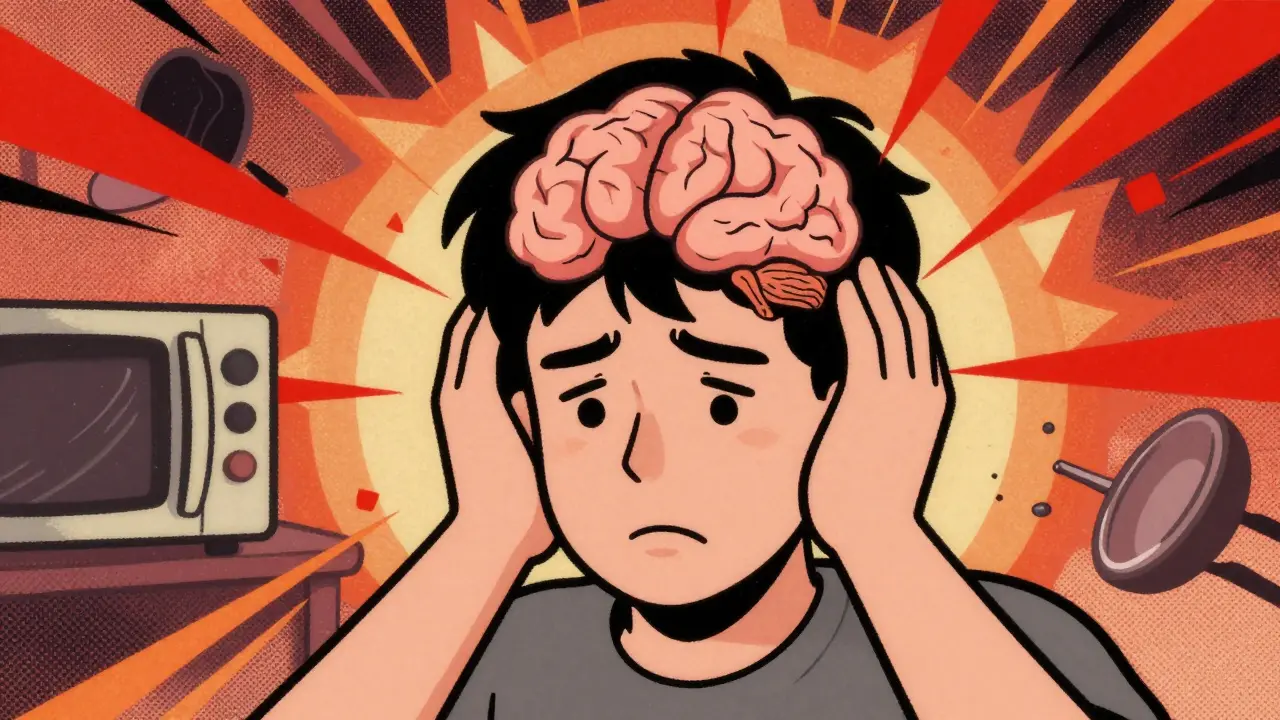
Imagine the sound of a microwave beeping feels like a drill hitting your eardrum. Or that the clatter of dishes in a busy café sends you into a panic attack. This isn't anxiety alone; it is hyperacusis, a condition where ordinary sounds become painfully loud or intolerable. For millions, this invisible barrier isolates them from daily life. But there is a proven path back to normalcy through desensitization therapy, a methodical approach to retraining your brain's response to noise.
Hyperacusis affects roughly 1-2% of the population, though up to 15% experience some degree of sound sensitivity. It is not just about hearing things louder; it is a neurological misfire where the brain’s limbic system-the emotional center-flags safe sounds as threats. The good news? You can fix this wiring issue without surgery or heavy medication. This guide breaks down exactly how desensitization works, why avoidance makes it worse, and how to start your recovery today.
Understanding Hyperacusis: More Than Just Sensitive Ears
To treat hyperacusis, you first need to understand what it actually is. Many people mistake it for simple hearing loss or anxiety, but it is distinct. Hyperacusis is an auditory processing disorder characterized by abnormal loudness growth. In a healthy ear, volume increases gradually. In a hyperacusic ear, perceived intensity spikes rapidly, often reaching pain levels at volumes others find comfortable.
Here is the crucial part: Hearing thresholds are often normal in 60-70% of hyperacusis cases. You might pass a standard hearing test perfectly yet still suffer from debilitating sound sensitivity. This happens because the issue lies in the central nervous system, specifically the auditory pathway and its connection to the limbic system. When the brain perceives sound as a threat, it triggers a fight-or-flight response. Over time, this creates a vicious cycle: you avoid sound, which makes the brain even more sensitive to it, leading to greater distress.
The condition was formally described in the early 20th century, but modern understanding comes from the Jastreboff Neurophysiological Model, developed in 1990. This model explains that hyperacusis involves both physiological (neural) and psychological (emotional) components. Treating only one side rarely works. You must address the neural hypersensitivity while calming the emotional fear response.
What Is Desensitization Therapy?
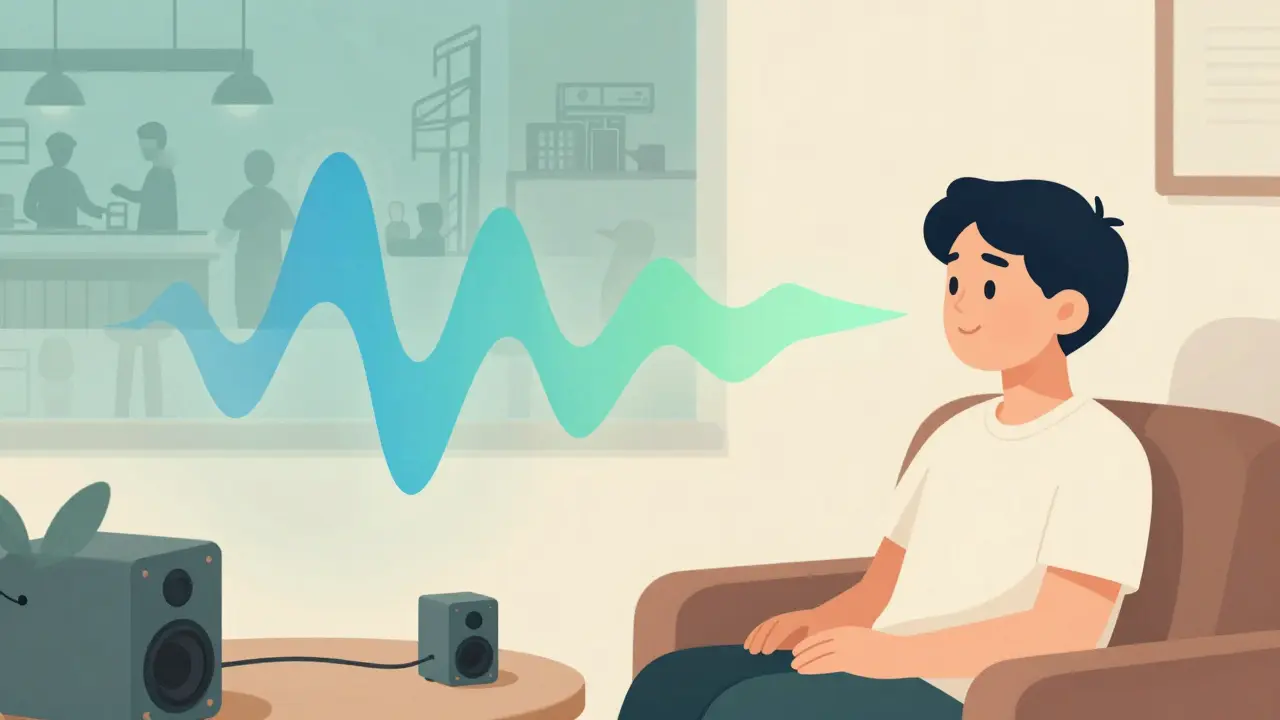
Desensitization therapy is the gold-standard non-pharmaceutical treatment for hyperacusis. Also known as sound therapy, it works on the principle of neuroplasticity-the brain’s ability to rewire itself. By exposing the auditory system to controlled, low-level sounds, you teach the brain that these noises are harmless. Gradually, the "danger" signal turns off, and tolerance returns.
This is not about blasting music until you get used to it. That would be harmful. Instead, it is a precise, slow process:
- Starting Point: Sounds begin at 10-15 dB above your hearing threshold or 20-30 dB below your discomfort level. Often, this means starting with barely audible white noise.
- Daily Exposure: Patients listen to this background sound for 2-8 hours a day using specialized devices or apps.
- Gradual Increase: Every week or two, the volume is increased by tiny increments (1-2 dB). This keeps the brain engaged without triggering pain or anxiety.
- Duration: Full treatment typically takes 6-18 months, with an average of 12.7 months for significant improvement.
The goal is to expand your dynamic range-the gap between what you can hear and what hurts. In hyperacusis, this range shrinks dramatically. Desensitization stretches it back out.
Why Avoidance Makes Hyperacusis Worse
Your instinct when sound hurts is to plug your ears or leave the room. While this provides immediate relief, it actively worsens hyperacusis over time. Studies show that complete sound avoidance can increase symptom severity by 30-40%. Here is why:
When you block out all environmental noise, your auditory system enters a state of deprivation. Without input, the brain’s "gain" (amplification) turns up automatically to try to detect signals. This is similar to turning up the brightness on a dark TV screen. The result? Your ears become even more sensitive to the slightest sound. This phenomenon is called auditory deprivation.
Furthermore, avoiding sound reinforces the fear association. If you always flee from noisy places, your brain learns that those environments are dangerous. Desensitization therapy breaks this cycle by forcing gentle, repeated exposure in a safe context. It proves to your nervous system that sound = safety, not danger.
Desensitization vs. Other Treatments
Not all treatments are created equal. Many patients try various methods before finding success. Here is how desensitization compares to other common approaches:
| Treatment Method | Effectiveness Rate | Timeframe | Key Limitation |
|---|---|---|---|
| Desensitization Therapy | 60-80% | 6-18 months | Requires daily consistency; slow progress |
| Cognitive Behavioral Therapy (CBT) | 50-60% | 8-12 sessions | Addresses anxiety but not neural sensitivity directly |
| Medication Only | 25-35% | Variable | Side effects; limited long-term efficacy |
| Sound Avoidance/Earplugs | Negative Impact | Ongoing | Worsens sensitivity by 30-40% |
Note that combining desensitization with CBT yields the best results-up to 35% better outcomes than sound therapy alone. CBT helps manage the emotional reaction, while desensitization fixes the neural wiring. Using both addresses the full scope of the disorder.
How to Start Desensitization Therapy Safely
Starting desensitization requires precision. Doing it wrong can exacerbate symptoms. Follow these steps under professional guidance:
- Get a Comprehensive Audiological Assessment: Standard hearing tests aren't enough. You need Loudness Discomfort Levels (LDLs) measured across frequencies. This establishes your baseline comfort zone.
- Choose the Right Sound Source: Use broadband noise (white, pink, or brown noise) or nature sounds. Music is less effective due to its varying frequency peaks. Specialized sound generators cost $200-$800 and offer precise control. Free apps exist but lack calibration accuracy.
- Start Extremely Low: Begin at a volume so low it is barely noticeable. If you feel any tension or pain, you are too high. The sound should be a subtle background presence, not a focus.
- Track Progress Daily: Keep a log of your volume settings, duration, and subjective comfort levels. Small gains (even 1-2 dB per week) add up significantly over months.
- Expand Environments Gradually: Once comfortable at home (45-55 dB), introduce moderate noise environments like quiet libraries or parks (65-75 dB). Avoid crowded malls initially.
Patience is critical. About 60% of patients report initial symptom worsening in the first 4 weeks. This is normal as the brain adjusts. Do not quit during this phase. Stick to the protocol, and consult your audiologist if symptoms spike severely.

Success Rates and Realistic Expectations
Can desensitization cure hyperacusis? For most, yes. Clinical studies show 60-80% effectiveness when properly administered. Success varies by cause:
- Noise-induced hyperacusis: 75-85% success rate
- Post-acoustic trauma: 70% success rate
- Neurological causes (e.g., Ramsay Hunt syndrome): 40-50% success rate
However, completion rates are lower. Only 54% of patients finish the full 12-month protocol due to frustration with slow progress. Those who work with a hyperacusis-specialized audiologist have an 89% completion rate versus 52% for self-managed patients. Professional support is invaluable.
Real user experiences reflect this journey. On forums like Tinnitus Talk, many share stories of regaining social freedom after 9-12 months. One user noted, "After 11 months of daily sound therapy... I can now tolerate grocery stores without earplugs." Others struggle with the monotony. Be prepared for a marathon, not a sprint.
New Developments in Sound Therapy
The field is evolving. Recent advancements include:
- Bimodal Neuromodulation: Devices like Lenire combine sound therapy with mild electrical stimulation to the tongue or neck. A 2023 trial showed 67% improvement in 320 patients.
- AI-Driven Personalization: MIT prototypes use machine learning to adjust sound parameters in real-time based on physiological feedback, potentially speeding up recovery by 23%.
- Telehealth Integration: Virtual therapy platforms have grown 40% year-over-year since 2020, making expert care more accessible.
Despite these innovations, core desensitization principles remain unchanged. Controlled, gradual exposure is still the foundation. New tools simply enhance precision and engagement.
Frequently Asked Questions
How long does desensitization therapy take to work?
Most patients see significant improvement within 6-18 months, with an average of 12.7 months for full tolerance restoration. Initial changes may be subtle, occurring weekly, but cumulative effects build over time. Consistency is key-skipping days resets progress.
Can I do desensitization therapy without an audiologist?
While possible, it is strongly discouraged. Self-managed patients have a 52% completion rate compared to 89% with professional guidance. Audiologists provide precise LDL testing, calibrated equipment, and emotional support to prevent abandonment during difficult phases.
Does hyperacusis go away on its own?
Rarely. Without intervention, hyperacusis often worsens due to sound avoidance and neural sensitization. Spontaneous remission is uncommon. Active treatment like desensitization therapy is necessary to reverse the condition.
What type of sound is best for desensitization?
Broadband noise (white, pink, or brown) is ideal because it covers all frequencies evenly. Nature sounds like rain or waves are also effective. Avoid music initially, as its dynamic range can trigger discomfort. Use specialized sound generators for accurate volume control.
Is desensitization therapy painful?
No, it should never be painful. If you feel pain or sharp discomfort, the volume is too high. Therapy starts at barely audible levels and increases incrementally. The goal is neutral perception, not endurance of pain. Adjust downward immediately if discomfort arises.
Can hyperacusis be cured completely?
For 60-80% of patients, desensitization therapy restores near-normal sound tolerance. While some residual sensitivity may remain, it no longer interferes with daily life. Complete "cure" depends on the underlying cause, but functional recovery is highly achievable.
What if I have tinnitus and hyperacusis?
These conditions often coexist and share similar neural mechanisms. Desensitization therapy benefits both. Tinnitus Retraining Therapy (TRT) combines sound therapy with counseling to address ringing and sensitivity simultaneously. Consult an audiologist specializing in both disorders.
Are there medications for hyperacusis?
Currently, no FDA-approved drugs specifically treat hyperacusis. Medications may help manage comorbid anxiety or depression but show only 25-35% efficacy for sound sensitivity itself. Desensitization therapy remains the primary evidence-based treatment.