
Going abroad doesn’t just mean seeing new places-it means facing new health risks. Every year, over 1.4 billion people travel internationally. Of those, nearly two-thirds visit a doctor before departure. But too many still get sick. Why? Because they skip the basics: vaccines, malaria pills, and food safety. This isn’t about fear. It’s about facts. And the facts are clear: if you do these three things right, your chance of getting sick drops by more than 70%.
Get the Right Vaccines-Before You Go
You don’t need every vaccine under the sun. You need the ones that match your destination. The CDC says Hepatitis A is the most common vaccine-preventable illness among travelers. It’s not rare. It’s not exotic. It’s in tap water, ice cubes, and street food in places like Mexico, India, and Thailand. One dose gives you 95% protection. Two doses? That’s lifelong. And it’s simple: just two shots, six to twelve months apart.
Then there’s typhoid. The old injectable vaccine? It only lasts three years and isn’t very reliable. The newer typhoid conjugate vaccine (TCV) works better-87% effective for three years-and it’s safe for kids as young as six months. If you’re heading to South Asia or sub-Saharan Africa, this isn’t optional. It’s essential.
Don’t forget the basics either. Are your MMR, Tdap, and varicella shots up to date? If not, get them before you leave. Many people think, “I had those as a kid.” But immunity fades. A single booster can make the difference between a smooth trip and a hospital visit.
And yes, some countries require proof of yellow fever vaccination to enter. The certificate is valid for life after one dose. But if you don’t have it, you might be turned away-or quarantined for six days. That’s not a risk worth taking.
Malaria Prophylaxis: Not Just a Pill, But a Plan
Malaria isn’t just a tropical disease. It’s a silent killer. And it’s preventable. But only if you take the right pill, at the right time, every day.
There are four main options:
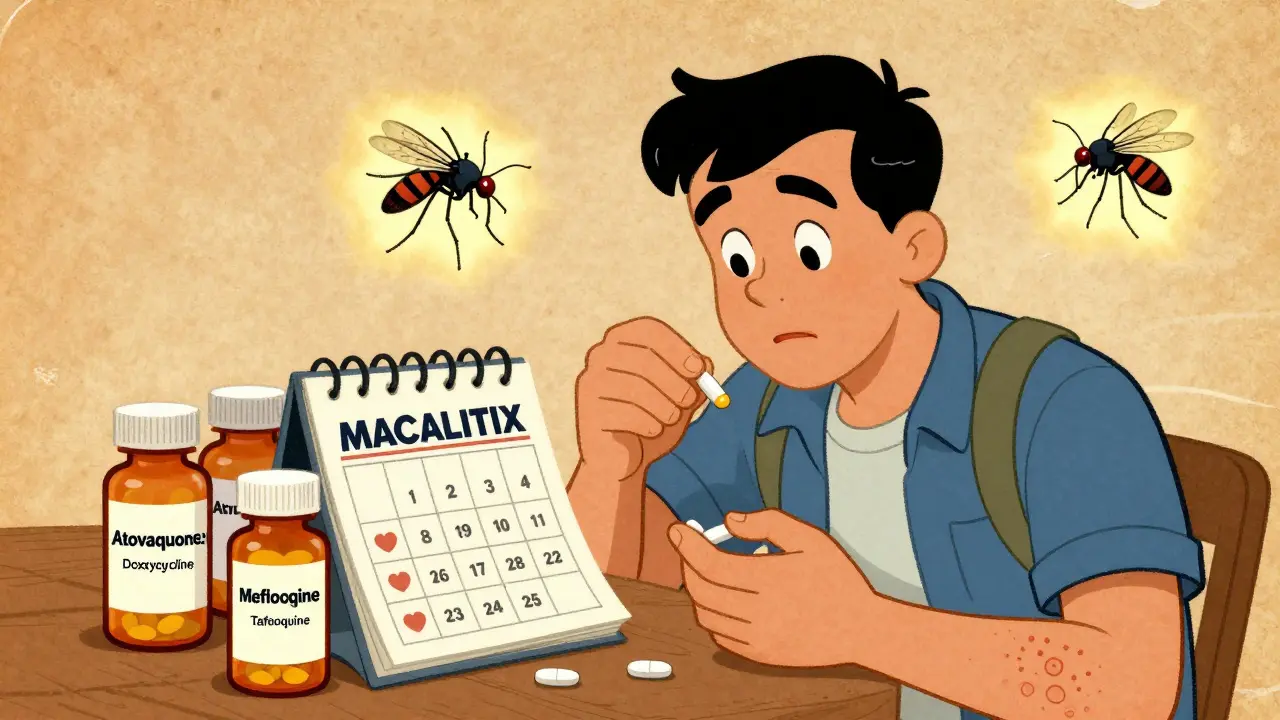
- Atovaquone-proguanil (Malarone): Take one daily, starting one to two days before travel. It’s 95% effective. Side effects? Mild-stomach upset, maybe a headache. But it costs about $220 for a three-week trip.
- Doxycycline: A cheaper option-just $45 for the same period. Take one daily, starting two days before. But it makes your skin burn in the sun. Thirty percent of users get bad sunburns. And it can mess with your stomach.
- Mefloquine (Lariam): One pill a week. Start three weeks before. Sounds easy. But it’s been linked to severe anxiety, hallucinations, and even panic attacks. One Reddit user in Thailand ended up in the ER after taking it. It’s not for everyone.
- Tafenoquine (Krintafel): Newer, approved for kids over 16 in 2025. One pill a week. Start three days before. But you must be tested for G6PD deficiency first. If you have it, this drug can destroy your red blood cells. One in ten people in malaria zones has this condition.
Here’s the hard truth: only 62% of travelers take their malaria pills correctly. That’s why 3,000 to 5,000 cases of imported malaria hit the U.S. every year. It’s not the bug. It’s the person who forgot to start the pills early-or skipped doses.
And climate change is making it worse. Since 2020, malaria zones have expanded by 15%. That means more travelers are now at risk in places they never thought were dangerous-like highland areas in Ethiopia or parts of southern Europe.
Safe Food Practices: The Simple Rules That Save Lives
Travelers’ diarrhea affects 30% to 70% of people depending on where they go. Eighty percent of cases? Caused by bacteria-mostly E. coli. And it’s almost always from food or water.
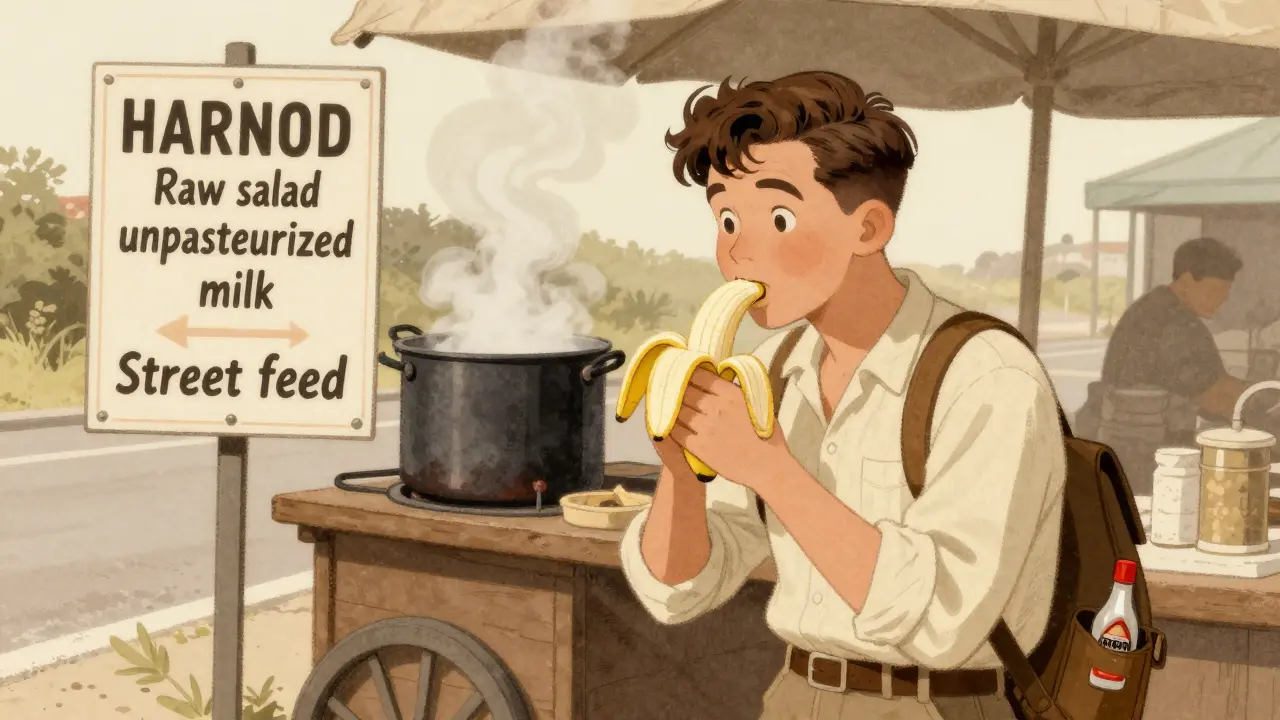
The CDC’s rule? Boil it, cook it, peel it, or forget it.
- Boil it: Drink only bottled water or water boiled for one minute (three minutes at high altitudes). Avoid ice unless you know it was made with safe water.
- Cook it: Food must be hot-steaming hot. Not warm. Not lukewarm. 165°F (74°C) for poultry, 160°F (71°C) for ground meat, 145°F (63°C) for fish. If it’s not piping hot, don’t eat it.
- Peel it: Bananas, oranges, mangoes? Fine. But only if you peel them yourself. Don’t let someone else handle the peel.
- Forget it: Raw salads, street food with unpeeled veggies, unpasteurized dairy, and raw shellfish? Skip them. Even if it looks clean.
There’s one more trick: bismuth subsalicylate (Pepto-Bismol). Take two tablets four times a day. It cuts your risk of diarrhea by 65%. It’s not a cure. But it’s a shield. Many travelers swear by it. One nurse on a three-month trip through Southeast Asia said it cut her diarrhea episodes by 70%.
And here’s a warning: antibiotics like azithromycin are the go-to treatment. But resistance is rising. In Southeast Asia, over 30% of E. coli strains no longer respond to it. That means the drug you packed might not work. Always carry a backup plan.
Timing Matters-Start Early
Most people wait until the week before departure to think about health. That’s too late. Vaccines need time. Hepatitis A needs two shots. Malaria pills need to be started days before you leave. Some vaccines take weeks to build immunity.
Studies show 73% of travelers consult a doctor less than two weeks before leaving. That’s why so many get sick. You need 4 to 6 weeks. If you’re leaving in ten days, get what you can. But don’t assume you’re safe.
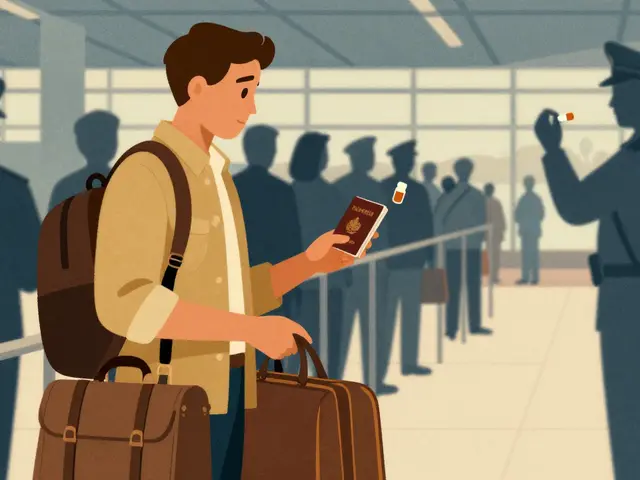
And don’t forget your meds. If you’re on regular prescriptions-like blood pressure pills or ADHD meds-carry them in original bottles with a doctor’s note. Some countries ban common U.S. medications. You don’t want to be detained because your pills look suspicious.
What’s New in 2026?
The CDC’s Yellow Book 2026, released April 23, 2025, added new guidance. It now covers high-altitude malaria risks. Yes, malaria can happen even in mountain towns if the mosquitoes are still there. It also updated food safety rules to reflect how climate change is increasing contamination in crops and water supplies.
Tafenoquine is now approved for teens over 16. That’s a big deal. It means more teens can now travel safely to malaria zones without daily pills.
And digital tools are catching up. Over 127 countries now use digital health passports. Some apps even scan your itinerary and tell you exactly which vaccines you need. But don’t rely on apps alone. The CDC Yellow Book is still the gold standard. 92% of U.S. travel clinics use it. No app beats that.
Final Word: It’s Not Complicated
You don’t need a medical degree to stay healthy while traveling. You just need three things:
- Get the right vaccines-early.
- Take your malaria pills-every day.
- Follow the food rules-strictly.
That’s it. No magic. No expensive gadgets. Just smart choices. And if you do them right, you’ll come home not just with great photos-but with your health intact.
Do I need a yellow fever vaccine if I’m only transiting through a country?
Yes, if you’re transiting through a country with yellow fever risk, even for a few hours, you may need proof of vaccination. Some countries require it for entry-even for layovers. Check the destination’s official entry rules before booking. The certificate is valid for life after one dose.
Can I get all travel vaccines at my local GP?
Many can, but not all. Routine vaccines like MMR and Tdap are usually available. But travel-specific ones like typhoid, Japanese encephalitis, or rabies often require a travel clinic or public health department. Call ahead. If your doctor says they don’t stock them, ask for a referral. Time matters-don’t wait until the last minute.
Is it safe to take malaria pills if I’m pregnant?
Avoid travel to malaria zones if you’re pregnant. If you must go, atovaquone-proguanil (Malarone) is the safest option during pregnancy. Doxycycline and tafenoquine are not recommended. Mefloquine can be used in the second and third trimesters, but only if benefits outweigh risks. Always consult a travel medicine specialist.
What should I do if I get travelers’ diarrhea?
Stay hydrated. Drink clean water or oral rehydration salts. Avoid anti-diarrhea drugs like loperamide if you have fever or bloody stool-they can trap the infection. Use azithromycin if you have it, but know it may not work everywhere. If symptoms last more than 48 hours, or if you’re vomiting, febrile, or dehydrated, seek medical help immediately.
Are there alternatives to pills for malaria prevention?
Yes-but they’re not as reliable. Use insect repellent with DEET (at least 30%), sleep under a permethrin-treated bed net, and wear long sleeves at dusk. These help, but they’re not substitutes for medicine in high-risk areas. If you’re traveling to a place with high malaria transmission, skip the pills at your own risk.
Next Steps
If you’re planning a trip in the next few months:
- Check the CDC Yellow Book 2026 for your destination’s risk level.
- Call a travel clinic at least 6 weeks before departure.
- Ask for a written list of vaccines and medications you need.
- Carry your prescriptions in original bottles with a doctor’s note.
- Bring Pepto-Bismol tablets and a backup antibiotic if your doctor approves.
Travel medicine isn’t about paranoia. It’s about preparation. Do the three things right, and you’ll spend your trip enjoying the world-not lying in a hotel room with a stomachache.






Write a comment
Your email address will be restricted to us