
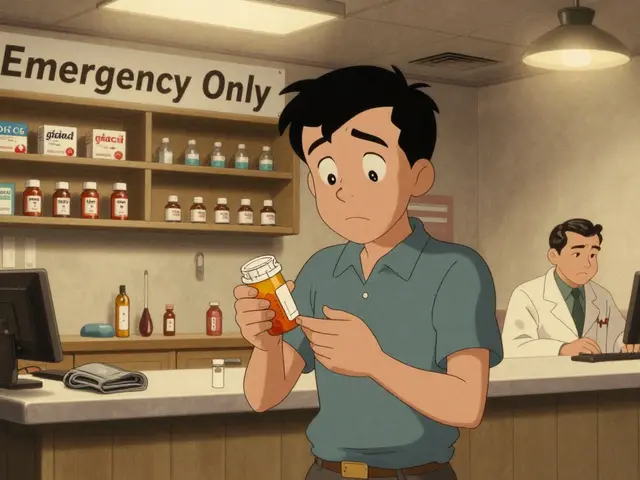
Running out of medication while traveling isn’t just inconvenient-it can be dangerous. If you’re on blood pressure pills, insulin, thyroid medication, or any daily prescription, a missed dose can lead to hospitalization. According to the Journal of Travel Medicine, 23% of travel-related hospitalizations happen because someone ran out of their meds. That’s not a small risk. But here’s the good news: with the right planning, you can avoid it entirely.
Start Early-At Least 30 Days Before You Leave
Don’t wait until the last week to think about your meds. The clock starts ticking the moment you book your trip. Contact your pharmacy 30 days before departure. Most pharmacies can process early refills if you’re traveling for more than a week. Insurance companies call this a “vacation override,” and 92% of major U.S. insurers now allow it. But each plan is different. UnitedHealthcare lets you refill 7 days early. Blue Cross Blue Shield of Michigan allows 14 days. Some even let you get a 90-day supply if your doctor approves it. Ask your pharmacist to check your plan’s rules. Bring your travel dates with you-some insurers require proof of your trip.Get a 90-Day Supply When You Can
If your doctor says it’s safe, ask for a 90-day supply instead of 30. This cuts your refill needs in half. A Kaiser Permanente study of 45,000 travelers showed that people who got 90-day supplies had 67% fewer refill emergencies. It’s simpler, cheaper, and less stressful. But check your insurance first. Some plans charge the same copay for 90 days as they do for 30. Others require prior authorization. Your doctor can help you fill out the paperwork. If you’re on a controlled substance like Adderall or oxycodone, you’re out of luck-federal rules still limit you to 30-day supplies, and most states require 28 days between refills. You can’t get a 90-day supply for these unless you’re in a state with special exceptions.Know the Rules for Controlled Substances
If you take opioids, stimulants, or benzodiazepines, you’re dealing with stricter rules. In 48 states, pharmacy boards enforce the “28-day rule”-you can’t refill a 30-day prescription until 28 days have passed since the last fill. That means if your last refill was on the 1st, you can’t get another until the 29th. If you’re leaving on the 25th, you’re stuck. Talk to your doctor ahead of time. Some will write a second prescription with a later fill date. Others may adjust your dosage so you can stretch your current supply. Don’t try to hide this from your pharmacist. They’re trained to spot this. If you’re caught trying to refill early, you could be flagged for misuse.Carry Medications the Right Way
TSA allows medically necessary liquids over 3.4 ounces-like insulin or liquid antibiotics-as long as you declare them at security. You don’t need a doctor’s note, but it helps. Keep your meds in their original bottles with your name and the prescription label. Don’t dump pills into pill organizers for your carry-on. If TSA asks, you need to prove they’re yours. Put your daily meds in your carry-on, not your checked bag. Bags get lost. People have missed flights because their insulin was in a suitcase that never arrived. Pack extra in your checked luggage, but never rely on it alone. The CDC recommends a dual-container strategy: keep one set in your carry-on, another in your checked bag. If one disappears, you still have backup.
International Travel? Check Each Country’s Rules
This is where things get tricky. Over 78 countries require a doctor’s letter or notarized prescription to bring in medication. Thailand limits opioid prescriptions to 30 days. Japan bans many ADHD meds. Australia requires permits for antidepressants. You can’t assume your U.S. prescription works abroad. Visit the embassy website of every country you’re visiting-including layovers. The International Air Transport Association says 63 nations have strict quantity limits. Some require you to apply for a permit weeks in advance. Get a letter from your doctor on official letterhead. It should list your name, diagnosis, medication names, dosages, and that it’s for personal use. Translate it into the local language if possible. Bring printed copies. Don’t rely on your phone.What If You Lose Your Meds?
If you lose your pills, don’t panic. In the U.S., most major pharmacies (CVS, Walgreens, Rite Aid) can give you a 3-day emergency supply if you still have refills left. You don’t need to see a doctor. Just show your prescription bottle or ID. This is called a “Kevin’s Law” refill. It’s legal under federal rules if 75% of your last refill is gone. Outside the U.S., it’s hit or miss. In Europe, you might find a pharmacy that fills it. In Southeast Asia? Probably not. That’s why you need your doctor’s letter and a backup supply. If you’re really stuck, use telehealth. Services like Teladoc and Amwell helped over 1.2 million people get emergency refills in 2022. They can fax a new prescription to a local pharmacy if you’re in a country with U.S.-friendly medical systems.Time Zones and Your Med Schedule
Don’t try to adjust your meds to local time right away. If you’re flying from New York to Tokyo, don’t suddenly start taking your pill at 8 a.m. local time if you normally take it at 8 a.m. New York time. Your body needs time to adjust. The American Academy of Sleep Medicine recommends sticking to your home time zone schedule for the first 24 to 48 hours after arrival. Then slowly shift your dose by one hour per day until you match local time. This is especially important for insulin, blood pressure meds, and seizure drugs. A 3-hour shift in timing can cause dangerous spikes or drops. Use your phone’s alarm to remind you of your home time schedule until you’re settled.
Use Technology to Stay on Track
Set reminders on your phone. Use apps like Medisafe or MyTherapy to track doses and get alerts. Some pharmacies now offer digital refills. UnitedHealthcare’s app lets you verify your prescription and request early refills without calling. CVS Health’s MinuteClinic now allows one-time renewals for 95% of maintenance meds-no doctor visit needed. You can walk in, show your ID, and get a 30-day refill if you’re out of refills. It’s saved 79% of users in CVS’s own survey. Use GoodRx to compare prices if you’re paying out of pocket. A 90-day supply of metformin might cost $10 at one pharmacy and $80 at another.What to Pack in Your Travel Medication Kit
Here’s what to include:- Original prescription bottles with labels
- Doctor’s letter on letterhead (for international trips)
- Printed copy of your medication list (name, dose, frequency)
- Extra pills for 5-7 days beyond your trip
- Travel-sized pill organizer (for carry-on only)
- Hand sanitizer and disinfectant wipes (clean surfaces before handling meds)
- Emergency contact info for your pharmacy and doctor
Don’t forget to pack your prescriptions for over-the-counter meds too-like pain relievers or antihistamines. Some countries ban common U.S. brands. Ibuprofen is fine in most places, but pseudoephedrine is controlled in Japan and Australia.
What to Do If Your Insurance Denies a Vacation Override
If your insurer says no, ask for a written denial. Then call your doctor. They can file a medical necessity appeal. Many insurers reverse their decision after a doctor explains why the refill is essential. If that fails, ask your pharmacy if they offer a cash discount. Sometimes paying out of pocket is cheaper than waiting. CVS and Walgreens often have $4 generic lists. You can buy a 30-day supply of lisinopril for $4 even if your insurance won’t cover it. Don’t skip doses. Talk to your pharmacist. They’ve seen this before and can help you find a solution.Final Checklist Before You Go
- ☑ Confirmed vacation override with your insurer
- ☑ 90-day supply ordered (if allowed)
- ☑ Controlled substances reviewed with doctor
- ☑ Medications packed in original bottles
- ☑ Backup supply in checked luggage
- ☑ Doctor’s letter and translated copies for international travel
- ☑ Embassy medication rules checked for every destination
- ☑ Travel alerts set on your phone
- ☑ Emergency refill plan in place (telehealth, local pharmacy contacts)
- ☑ Extra pills packed for delays or lost luggage
Traveling with medication isn’t about luck. It’s about preparation. The people who manage it well don’t wing it. They plan. They double-check. They pack backups. And they never assume everything will go as planned. With the right steps, you can travel confidently-knowing your health won’t be left behind.





Write a comment
Your email address will be restricted to us