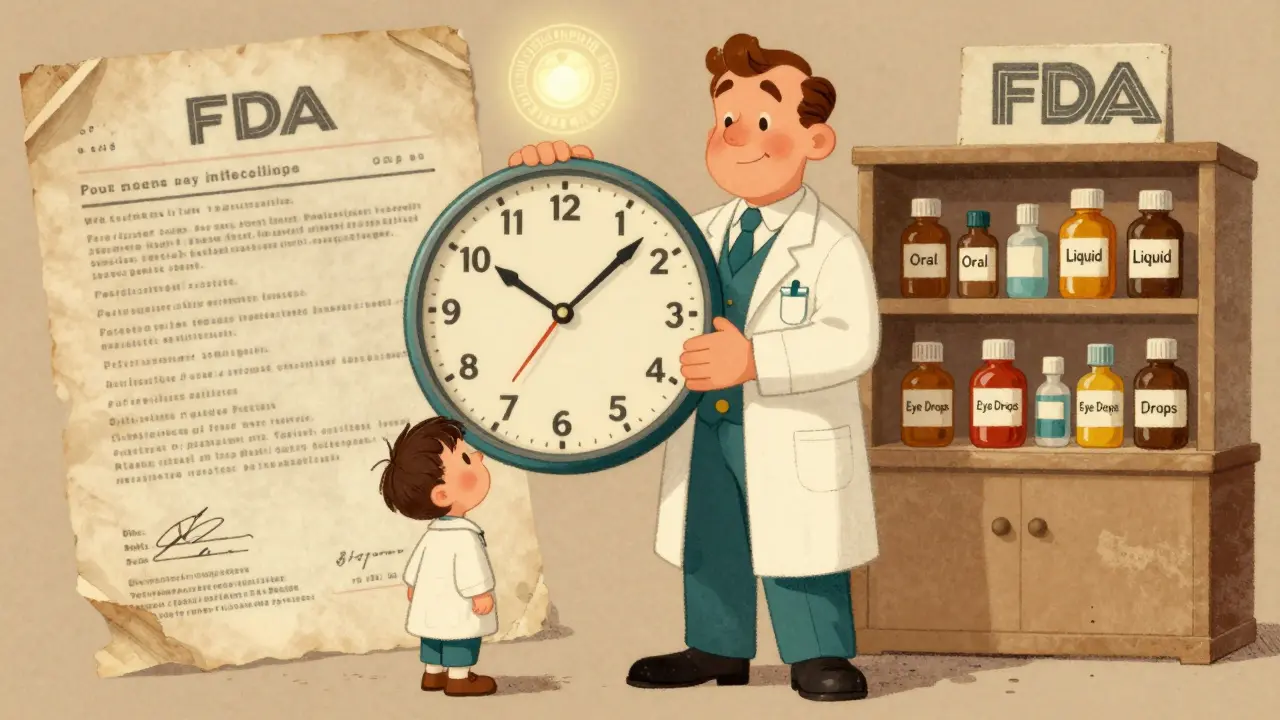
When a drug company finishes testing a new medicine for adults, they don’t automatically get to sell it to kids. Even if the drug works well in adults, doctors often have to guess the right dose or safety profile for children. That’s dangerous. And for decades, most drugs didn’t have proper pediatric labeling-until the FDA created a powerful incentive to fix it. Enter pediatric exclusivity: a six-month clock that delays generic versions from hitting the market, not because the patent got longer, but because the FDA is legally blocked from approving them.
How pediatric exclusivity actually works
Pediatric exclusivity isn’t a patent. It’s a regulatory delay. The FDA doesn’t extend the life of a patent. Instead, it pushes back the date when generic drugmakers can get final approval to sell copies. This happens under Section 505A of the Federal Food, Drug, and Cosmetic Act, which was made permanent in 2002 after being tested under the 1997 FDA Modernization Act.
Here’s how it kicks in: the FDA sends a written request to the drug company asking for specific studies in children. These aren’t just any studies-they have to be scientifically sound, cover the right age groups, and answer real clinical questions. The company then spends millions to run those trials. If they submit the results and the FDA says they’re good, the company gets six months of extra market protection.
That six months doesn’t just apply to the one drug they studied. It covers every version of that same active ingredient-oral pills, liquid suspensions, creams, eye drops-even if they were approved years ago. So if a company has a blockbuster drug in three forms, and they complete pediatric studies for one, all three get the six-month delay on generic entry.
It extends more than patents
Here’s where it gets tricky: pediatric exclusivity doesn’t care if the patent is still active. It attaches to whatever regulatory protection is already in place. That includes:
- Five-year new chemical entity (NCE) exclusivity
- Three-year exclusivity for new clinical studies
- Orphan drug exclusivity (seven years for rare diseases)
But there’s a catch. The existing protection must have at least nine months left when the FDA grants pediatric exclusivity. If your patent expires in three months, you’re out of luck. But if you’ve got a year left? Boom-six more months get tacked on.
In the FDA’s Orange Book (the official list of approved drugs and their patents), you’ll see the same patent listed twice: once with the original expiration date, and again with the pediatric exclusivity extension. Generic companies have to check both.
Why it’s not a patent extension
Many people think pediatric exclusivity means the patent lasts longer. It doesn’t. The patent clock keeps ticking. What changes is the FDA’s ability to approve generics.
Generic manufacturers file applications that say, “We’re ready to sell this drug, and here’s why we don’t infringe your patent.” One common filing is a Paragraph II certification: “The patent has expired.” But if pediatric exclusivity is active, the FDA can’t approve that application-even if the patent is dead.
This is where the real power lies. After a patent expires, generics usually rush in. But pediatric exclusivity creates a legal wall. The FDA can’t approve any ANDA (Abbreviated New Drug Application) during those six months, even if the patent is gone. That’s why it’s called “regulatory exclusivity,” not patent extension.
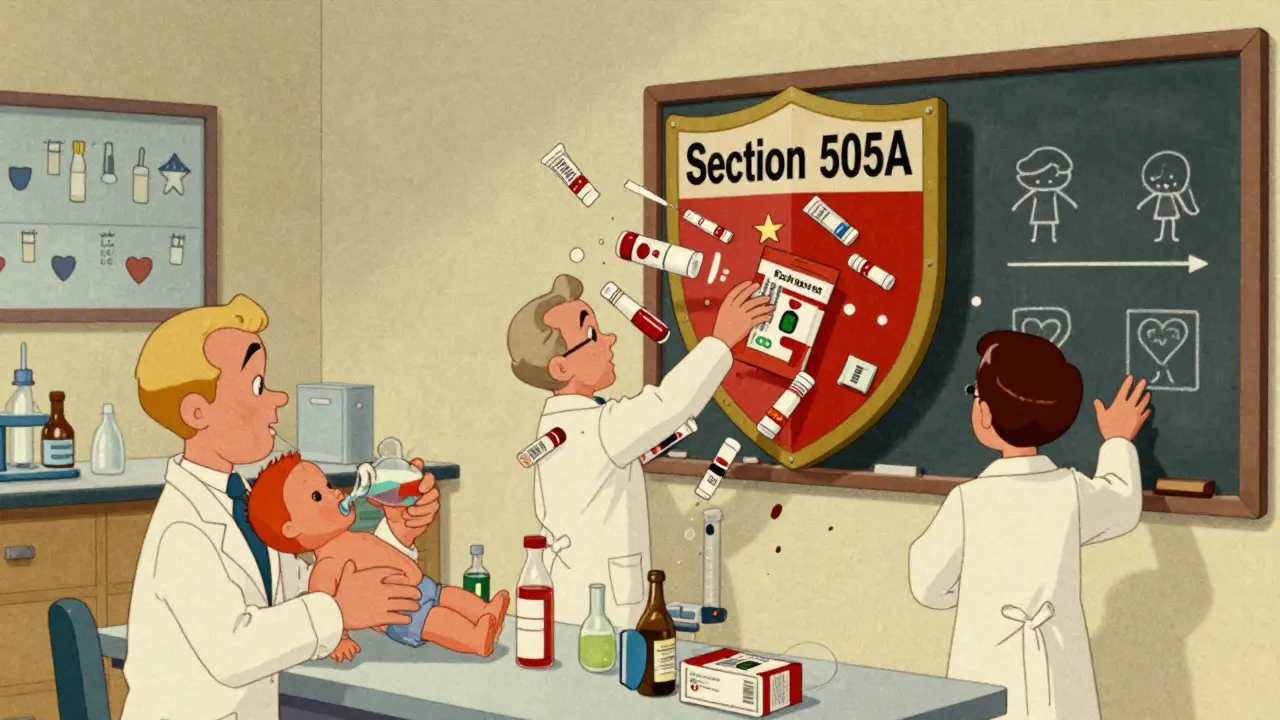
When pediatric exclusivity blocks generics
For generic companies, getting approval during the exclusivity window is nearly impossible unless one of these happens:
- The brand company gives a waiver
- A court rules the patent is invalid or not infringed
- The brand company doesn’t sue within 45 days of the generic filing
- The civil lawsuit gets dismissed
And even then, the FDA requires unambiguous legal proof. No guesswork. No loopholes. If you’re a generic company and you file too early, your application gets shelved until the exclusivity period ends.
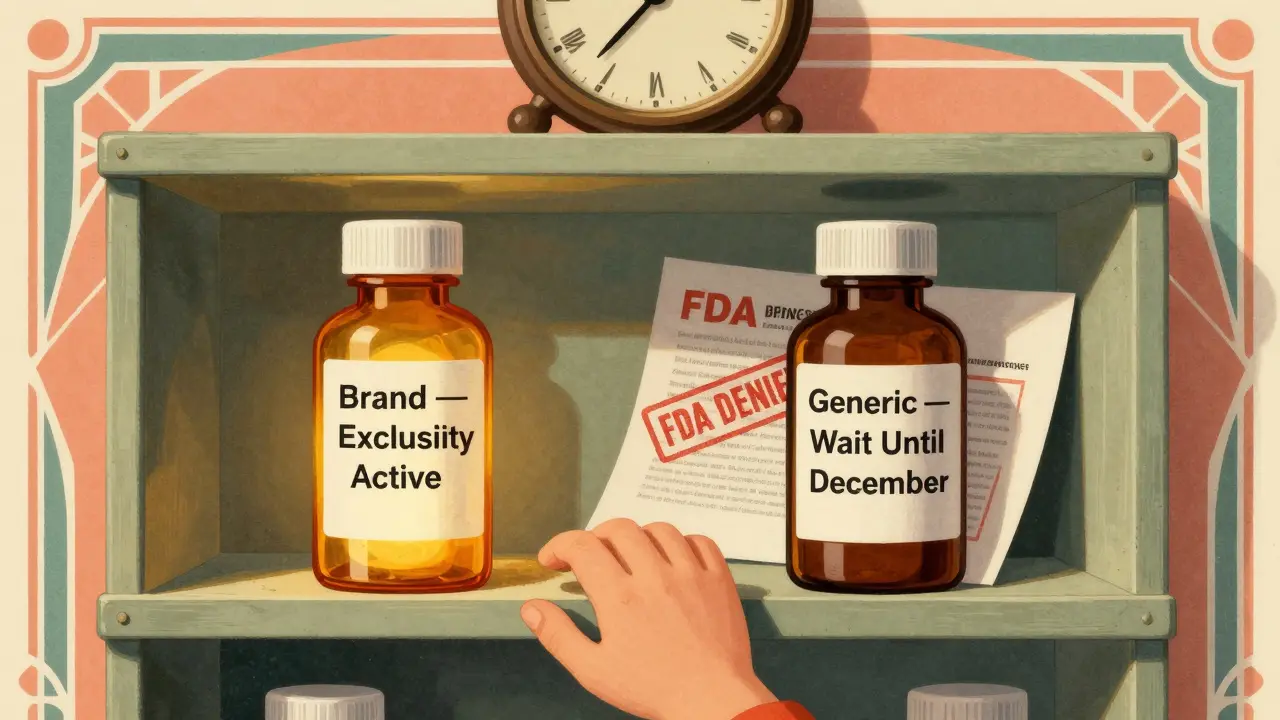
One real-world example: a drug with a patent expiring in June 2025. The company completes pediatric studies in January 2025 and gets exclusivity. Even though the patent expires in June, the FDA can’t approve any generic until December 2025. That’s six months of no competition-even though the patent is gone.
What doesn’t qualify
Pediatric exclusivity doesn’t apply to biologics. That’s a big gap. Biologics-like insulin, monoclonal antibodies, or vaccines-are regulated under a different law (BPCIA), and they don’t have the same patent-linkage system as small-molecule drugs. So even if a biologic company does pediatric studies, they get no extra exclusivity.
Also, if a drug has no patent or exclusivity left, pediatric exclusivity won’t kick in-unless the company is seeking a new pediatric indication. For example, if a drug was only approved for adults and the company now wants to add a pediatric use, and the FDA requires new clinical data for that, then pediatric exclusivity can be granted even if the original patent expired years ago.
The financial stakes
Six months might sound short, but in pharma, it’s huge. A blockbuster drug like a childhood asthma inhaler or epilepsy medication can generate over $1 billion a year in sales. Six months of exclusivity could mean $500 million in extra revenue. That’s why companies invest millions in pediatric studies-even if they don’t expect to sell more to kids.
It’s not about pediatric care. It’s about protecting revenue. The system was designed to fix a public health problem-lack of pediatric data-but it became a strategic tool for lifecycle management. And it works. Over 200 drugs have received pediatric exclusivity since 1997. Many of them were already on the market for decades.
What happens after the six months?
Once the exclusivity period ends, the FDA can approve generic versions immediately. No more delays. No more legal hurdles. The market opens up. Prices drop. Patients benefit.
But the system isn’t perfect. Critics say companies sometimes do the bare minimum to qualify-running small, low-cost studies just to lock in the six months. Others argue the FDA should be stricter about what counts as a “meaningful” pediatric study. Still, the data gap has shrunk dramatically. More drugs now come with pediatric dosing instructions. More children get safer, evidence-based treatments.
Pediatric exclusivity isn’t about fairness. It’s about leverage. The FDA used a financial incentive to fix a dangerous gap in medical knowledge. And it worked. The patent didn’t change. The law did. And in the end, kids got better medicine-even if the drugmakers got a little extra time to profit.
Why this matters for patients and generics
If you’re a parent, this system means your child’s medicine is more likely to have clear dosing instructions based on real studies-not just guesses from adult data. That’s a win.
If you’re a generic manufacturer, it means you have to wait. And wait carefully. One wrong filing date, one missed legal document, and you lose six months of market entry. It’s a high-stakes game.
If you’re a policymaker, it’s a reminder that regulatory tools can be more powerful than patents. You don’t need to extend intellectual property rights to encourage good behavior. Sometimes, you just need to delay competition long enough to make the right thing profitable.




Write a comment
Your email address will be restricted to us