
Obesity isn’t just about eating too much or moving too little. It’s a chronic disease - one that affects your heart, your metabolism, your mood, and your lifespan. And like hypertension or diabetes, it needs ongoing medical care, not just a diet plan you quit after two weeks. Medical weight management is the structured, science-backed approach that treats obesity as a condition requiring long-term oversight, not a quick fix.
What Medical Weight Management Actually Means
Medical weight management isn’t a gym membership or an app that tracks calories. It’s a clinical program led by doctors, dietitians, and behavioral specialists who work together to address the biological, psychological, and environmental factors behind weight gain. The goal? Lose at least 5% of your body weight - enough to lower blood pressure, improve insulin sensitivity, and reduce liver fat. But the real win comes when you hit 10% or more. That’s when many people see type 2 diabetes go into remission, or their sleep apnea disappear.
The American College of Cardiology’s 2025 guidelines made this official: obesity is a chronic disease that needs continuous treatment. That means regular check-ins, adjustments to your plan, and ongoing monitoring - not a 12-week program and then you’re on your own.
Clinics That Actually Work
Not all weight loss programs are created equal. Commercial apps and mail-order meal plans average about 5.1% weight loss after a year. Medical clinics? They hit 9.2%. Why the difference?
Real medical clinics start with a full assessment. Your BMI is checked (usually ≥30, or ≥27 if you have high blood pressure or prediabetes). Then comes a detailed review of your health history, medications, mental health, and even your sleep patterns. Many clinics, like the one at West Virginia University, require you to complete a pre-recorded orientation and fill out a digital questionnaire before your first visit. This isn’t bureaucracy - it’s how they tailor your plan.
These programs include regular sessions with a registered dietitian (45-60 minutes the first time, then 15-30 minutes every 2-4 weeks). You’ll get personalized meal plans based on your food preferences, cultural habits, and budget - not a one-size-fits-all shake diet. Behavioral coaching helps you identify triggers, manage stress without food, and build sustainable routines. And unlike commercial programs, you have a doctor overseeing everything - adjusting meds, ordering labs, and catching problems early.
The Medications That Are Changing the Game
Medication isn’t a shortcut. It’s a tool - and a powerful one. The two most effective drugs now are semaglutide (Wegovy®) and tirzepatide (Zepbound®). Both are GLP-1 receptor agonists, originally developed for type 2 diabetes. But in clinical trials, semaglutide led to an average 14.9% weight loss over 72 weeks. Tirzepatide? 20.2%. That’s not just weight loss - it’s disease reversal.
These drugs work by slowing digestion, reducing appetite, and making you feel full longer. They don’t make you sick or jittery. Side effects are usually mild - nausea or stomach upset at first, which fades. And they don’t just help you lose weight. They lower your risk of heart attack, stroke, and death in people with heart disease or diabetes.
There’s a new player on the horizon: retatrutide. It’s a triple agonist - targeting GLP-1, GIP, and glucagon receptors. Early trials showed 24.2% weight loss in just 48 weeks. It’s not FDA-approved yet, but it’s coming fast.
But here’s the catch: insurance coverage. Only 68% of commercial insurers cover these drugs - and Medicare Advantage plans cover them in just 12% of cases. Many patients wait 3 to 8 weeks just to get approval. That’s why some clinics help you navigate appeals or connect you with patient assistance programs.

Monitoring: It’s Not Optional
Monitoring isn’t just weighing yourself every Monday. It’s tracking your blood pressure, waist circumference, fasting glucose, and HbA1c. The American Diabetes Association says these should be checked at least every 3 months during active treatment. Why? Because weight loss affects your entire body.
For example, if your HbA1c drops from 7.8% to 6.2% in 6 months, that’s not just good weight loss - that’s diabetes improvement. If your waist size shrinks by 4 inches, your liver fat is likely dropping. These numbers matter more than the scale.
Many clinics now use electronic health record templates that automatically flag changes in your vitals. If your blood pressure spikes or your cholesterol worsens, your care team gets an alert. That’s proactive care - not reactive.
Cost vs. Value
Medical weight management isn’t cheap. Monthly costs range from $150 to $300. Commercial programs? $20 to $60. So why pay more?
Because the long-term savings are massive. Every $1 spent on medical weight management leads to $2.87 in reduced healthcare costs over five years - mainly from fewer diabetes medications, hospital visits, and heart-related emergencies. One study found that people who lost 10% of their weight cut their risk of heart failure by 40%.
And if you have type 2 diabetes? Losing 10% can mean ditching insulin. That’s not just money saved - it’s freedom from daily injections, finger pricks, and constant worry.
Employers are catching on. Nearly half of Fortune 500 companies now offer medical weight management as part of their health benefits. Why? Because healthier employees miss fewer days, have lower insurance claims, and are more productive.
Why Most Diets Fail - And Why This Doesn’t
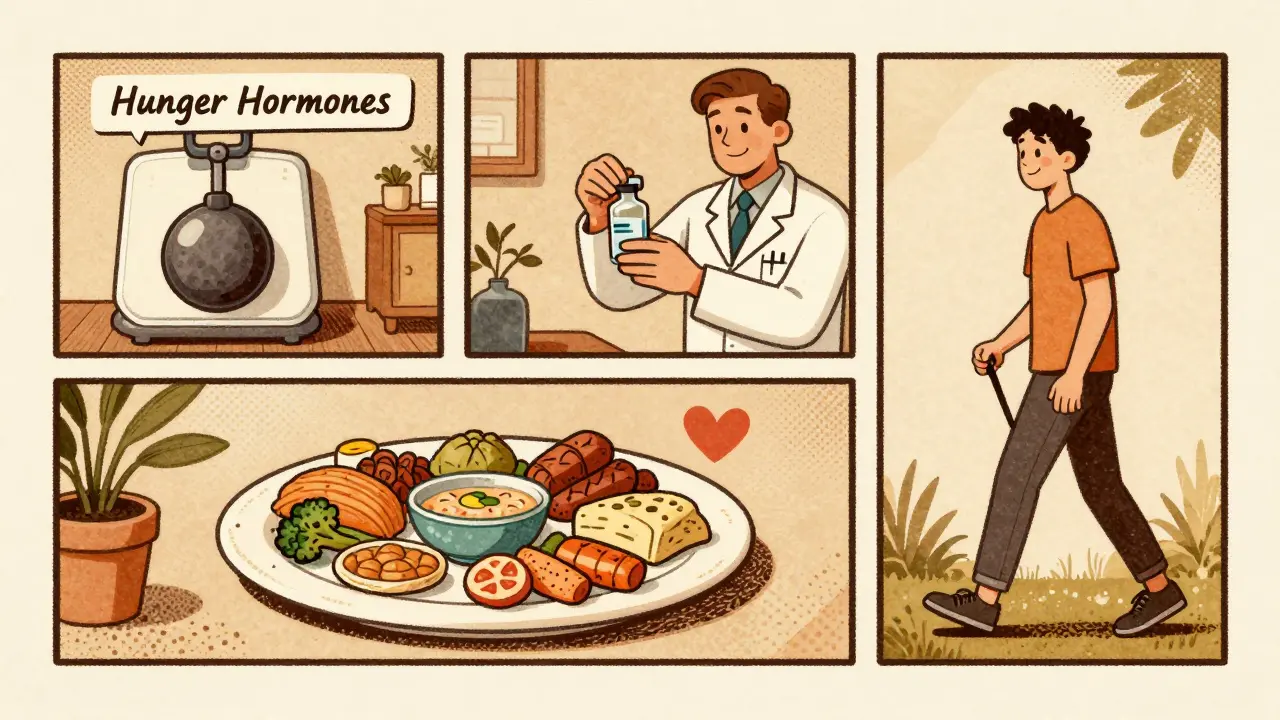
Diets fail because they ignore biology. When you lose weight, your body fights back. Hunger hormones rise. Metabolism slows. Stress increases cravings. That’s not weakness - that’s evolution.
Medical weight management works because it doesn’t ask you to fight your biology alone. Medications help reset your appetite. Behavioral therapy teaches you how to cope with cravings. Dietitians help you eat in a way that’s satisfying, not punishing. And your care team adjusts your plan as your body changes.
One-size-fits-all approaches have an 80% failure rate. Personalized, multidisciplinary care? Success rates jump to 70% or higher at 12 months - especially when patients feel heard, not judged.
Barriers and Bias
Access isn’t equal. Black and Hispanic patients are 43% less likely to be offered weight-loss medication - even when they meet the same BMI and health criteria. That’s not just unfair. It’s dangerous.
Many clinics are now training staff to reduce weight bias. That means using chairs without armrests, offering blood pressure cuffs in multiple sizes, and avoiding phrases like “you just need to try harder.” Language matters. So does representation.
Another barrier? Time. A full program takes 2-4 hours a month for appointments and tracking. That’s a lot if you work two jobs or care for kids. But even less intensive programs - 1-2 hours a month - still help. The key is consistency, not perfection.
What Comes Next
By 2030, experts predict weight management will be as routine in diabetes care as checking HbA1c. That’s how far we’ve come. The science is clear. The tools are better than ever. And the evidence shows that when you treat obesity as a medical condition - not a moral failing - people get healthier, live longer, and feel better.
If you’ve struggled with weight for years, you’re not broken. You’re just trying to solve a complex medical problem with outdated tools. Medical weight management gives you the right ones.
Who qualifies for medical weight management?
You typically qualify if your BMI is 30 or higher, or 27 or higher with at least one obesity-related condition like high blood pressure, prediabetes, sleep apnea, or high cholesterol. Some clinics may consider lower BMIs if you have a strong family history of heart disease or type 2 diabetes. Insurance requirements vary, but most follow these guidelines.
Are weight-loss medications safe?
Yes, when used under medical supervision. Drugs like semaglutide and tirzepatide have been studied in tens of thousands of people over years. Common side effects are mild nausea or digestive upset, especially at first. Serious risks are rare. These medications are not for people with a personal or family history of medullary thyroid cancer or multiple endocrine neoplasia syndrome type 2. Your doctor will screen you before prescribing.
How long do I need to stay on medication?
Obesity is a chronic condition, so treatment often is too. Stopping medication usually leads to weight regain - often within months. That doesn’t mean you’ll be on it forever, but many people stay on it long-term, just like someone with high blood pressure stays on their pill. Your care team will help you decide when, or if, you can reduce or stop based on your progress, health goals, and tolerance.
Can I do this without medication?
Yes - but it’s harder. Lifestyle changes alone (diet, exercise, behavior) can lead to 5-7% weight loss. That’s meaningful, especially for early-stage diabetes or high blood pressure. But for people with a BMI over 35 or multiple health conditions, adding medication typically doubles the results. Many patients start with lifestyle changes and add meds later if progress stalls.
How do I find a real medical weight management clinic?
Look for programs tied to hospitals, academic medical centers, or clinics with board-certified obesity medicine physicians. The Obesity Medicine Association has a provider directory. Avoid clinics that promise rapid weight loss, sell supplements, or don’t include a doctor or dietitian. Ask if they follow the ACC or ADA guidelines - if they don’t know what those are, walk away.
Will insurance cover this?
It depends. Most private insurers cover the doctor visits and behavioral counseling if they’re billed as medical services. Coverage for medications like Wegovy or Zepbound is spotty - only 68% of commercial plans cover them. Medicare Part B covers intensive behavioral therapy, but not the drugs. Medicare Advantage plans cover them in just 12% of cases. Always call your insurer and ask: "Do you cover anti-obesity medications under my plan?" and "What’s my prior authorization process?"







Write a comment
Your email address will be restricted to us