New Antidepressant Comparison Tool
Select Medication
Click a medication to view its detailed profile.
Esketamine (SPRAVATO)
NMDA Receptor Antagonist| Feature | Details |
|---|---|
| Mechanism | Blocks NMDA receptors (Glutamate pathway) |
| Time to Effect | Rapid: 24–48 Hours |
| Administration | Clinic Supervision (Nasal Spray) |
| Sexual Dysfunction | Low (<5%) |
| Weight Impact | Minimal / Neutral |
| Key Side Effects | Dissociation (wears off in ~2 hours), Dizziness |
| Ideal For | Treatment-resistant depression, Acute crisis |
| Cost Estimate | ~$880 per dose (Insurance coverage varies) |
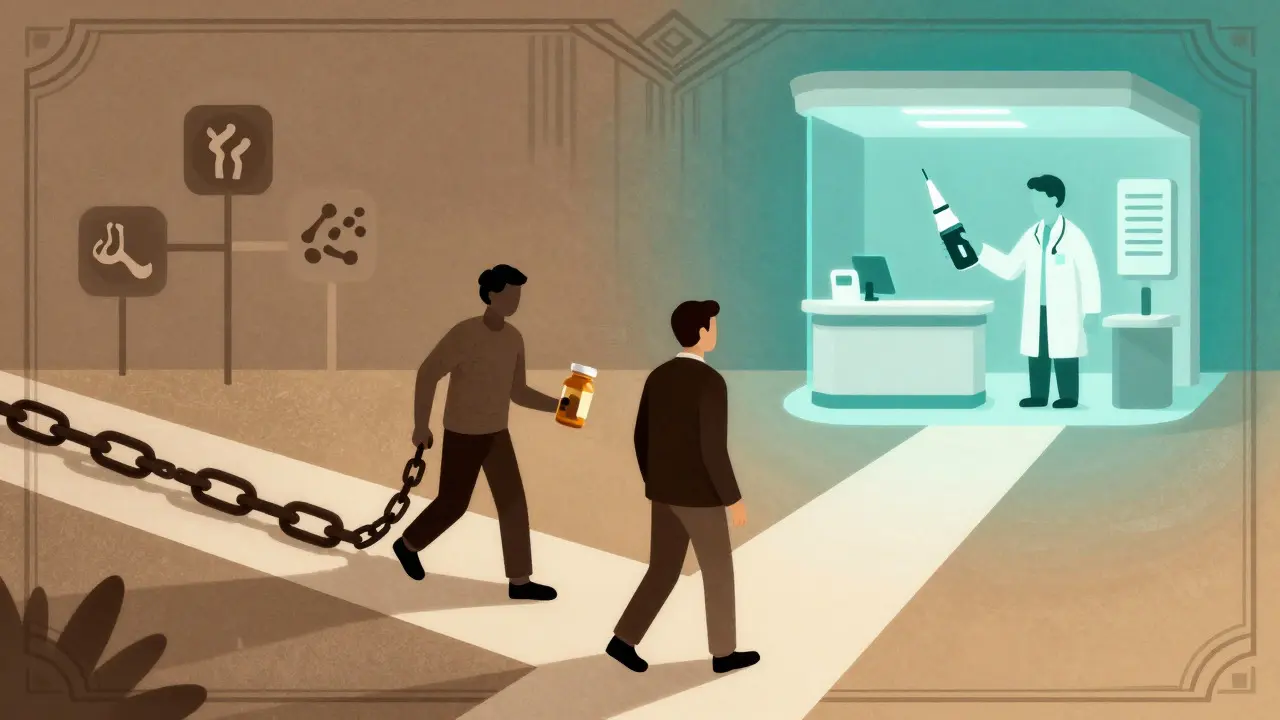
For decades, treating depression meant picking your poison. You could finally feel better, but you’d likely pay the price with weight gain, sexual dysfunction, or a stomach that never settled down. Traditional medications like SSRIs worked for many, but the side effects drove millions off their meds within the first few months. That dynamic is shifting fast. As of mid-2026, a new wave of antidepressants is hitting the market and clinical practice, promising faster relief with significantly fewer lifestyle-altering side effects.
We are moving past the era where "wait four weeks and hope for the best" was the standard advice. Newer agents target different brain pathways-glutamate, neurosteroids, and multi-receptor systems-to work in days, not weeks. But these drugs aren’t just faster; they’re designed to spare you the specific burdens that made older treatments so hard to tolerate. Here is what is emerging, how it works, and what you need to know before talking to your doctor.
The Shift from Serotonin to Glutamate and GABA
To understand why the new options are different, you have to look at what the old ones did. Selective serotonin reuptake inhibitors (SSRIs) like Zoloft (sertraline) and fluoxetine block the reabsorption of serotonin. It’s a blunt instrument. It raises serotonin levels broadly, which helps mood but also messes with digestion, sleep, and libido. About 30% to 70% of users report sexual side effects, and weight gain affects up to 15% of patients over six months.
The new generation targets other chemical messengers. The biggest breakthrough has been focusing on glutamate, the brain’s primary excitatory neurotransmitter, rather than just serotonin. This shift allows for a more precise adjustment of neural circuits involved in mood regulation without the systemic fallout seen with SSRIs. Think of it as fixing a leaky pipe instead of flooding the whole house.
| Feature | Traditional SSRIs/SNRIs | New Agents (e.g., Esketamine, Zuranolone) |
|---|---|---|
| Primary Target | Serotonin/Norepinephrine Reuptake | NMDA Receptors / GABA-A Receptors |
| Time to Effect | 4-8 Weeks | Hours to Days |
| Sexual Dysfunction Rate | 30-70% | <5% (for most new agents) |
| Administration | Daily Oral Pill | Clinic Nasal Spray / Short Course Oral |
| Weight Impact | Neutral to Gain (avg 10-15%) | Minimal to Neutral |
Key Emerging Medications and Their Profiles
Several specific drugs are leading this charge. They are not all the same, and each comes with its own set of trade-offs. Understanding these differences is crucial because "better side effects" doesn't mean "no side effects." It means the side effects are often transient, manageable, or less impactful on quality of life.
Esketamine (SPRAVATO): Approved in 2019, this nasal spray remains the gold standard for rapid action in treatment-resistant depression. It works by blocking NMDA receptors. In clinical trials, patients saw symptom improvement within 24 to 48 hours. The catch? It causes dissociation-a feeling of being detached from reality-in about 50% of users. However, this wears off within two hours. Crucially, it rarely causes sexual dysfunction or long-term weight gain. The downside is access: you must take it in a certified clinic under supervision, and insurance often requires prior authorization.
Zuranolone (Zurzuvae): Originally approved for postpartum depression, this oral medication gained broader approval for major depressive disorder in late 2025. It’s a neuroactive steroid that modulates GABA-A receptors. Unlike benzodiazepines, it doesn’t cause significant sedation or addiction risk. A typical course lasts only 14 days. Users report high effectiveness, though dizziness and somnolence (sleepiness) occur in about 20-25% of cases. It must be taken with food to ensure proper absorption.
Auvelity: This combination of dextromethorphan and bupropion is an oral pill that hits both NMDA receptors and dopamine/norepinephrine pathways. It achieves steady state in just 4-5 days. It’s particularly notable for having a lower risk of weight gain compared to SNRIs like duloxetine and minimal sexual side effects. It’s easier to administer than esketamine since it’s taken at home, making it a strong middle-ground option.
Gepirone (Exxua): Approved in late 2023, this is the first new chemical entity for depression in over a decade. It’s a partial agonist at serotonin receptors but differs from SSRIs by not inhibiting reuptake. Clinical data shows a sexual dysfunction rate of only 2-3%, compared to 30-50% for SSRIs. It takes a bit longer to work than esketamine (about 1-2 weeks), but it avoids the heavy sedation and cognitive fog associated with some older meds.

Who Benefits Most? Identifying the Right Candidate
These new drugs aren’t necessarily first-line treatments for everyone yet. Insurance companies and guidelines still favor generic SSRIs for initial episodes due to cost and familiarity. However, you might be a prime candidate for newer agents if:
- You have treatment-resistant depression, meaning you’ve tried at least two SSRIs or SNRIs without success.
- You experienced intolerable side effects on previous meds, specifically sexual dysfunction, severe weight gain, or emotional blunting.
- You need rapid relief due to acute crisis or suicidal ideation, where waiting four weeks is dangerous.
- You have postpartum depression, where zuranolone has shown exceptional efficacy (70% response rate in Phase 3 trials).
If you are stable on a current medication and happy with it, there is no urgent reason to switch. The goal of these new treatments is to rescue those who fell through the cracks of traditional therapy.
Cost, Access, and Practical Hurdles
The biggest barrier isn’t efficacy; it’s logistics. Let’s talk money. Generic fluoxetine costs about $4 for a month’s supply. SPRAVATO costs roughly $880 per dose, and you need multiple doses. A 14-day course of Zuranolone averages around $9,450. While insurance covers much of this, the out-of-pocket costs and administrative headaches are real.
Access is another issue. Only 1,243 clinics nationwide are certified to administer esketamine as of late 2025. If you live in a rural area, you might face a long drive. Zuranolone and Auvelity are easier to prescribe remotely, but finding a psychiatrist comfortable with these newer protocols can be challenging. Only 38% of primary care physicians feel confident prescribing zuranolone, according to recent surveys.
Insurance prior authorization is a common hurdle. For SPRAVATO, 92% of commercial plans require prior auth. Be prepared to provide documentation of failed previous treatments. Your doctor’s office usually handles this, but it adds weeks to the process.

Safety Considerations and Long-Term Data
Newer doesn’t always mean safer in every dimension. While sexual and metabolic side effects are down, other risks emerge. Esketamine carries a Risk Evaluation and Mitigation Strategy (REMS) due to dissociation and potential abuse liability. Zuranolone can cause dizziness, so driving immediately after dosing isn’t recommended.
There is also a lack of long-term data. Most trials run for 8-12 weeks. We don’t yet know what happens when someone uses esketamine monthly for five years. Dr. Prasad Nishtala warns that short-term studies may miss cumulative risks. Additionally, cardiovascular monitoring is becoming a focus. Some antidepressants, including older TCAs and even some newer agents, can slightly elevate blood pressure. The FDA now requires cardiovascular monitoring for new antidepressant approvals.
However, for many, the trade-off is worth it. Avoiding lifelong sexual dysfunction or obesity is a massive quality-of-life win. The key is personalized medicine. As Dr. Dervla Kelly notes, the future isn’t about one best drug, but matching the right mechanism to your specific biology and risk factors.
What to Ask Your Doctor
If you’re considering switching, come prepared. Don’t just ask for "the new stuff." Ask specific questions:
- "Given my history of [sexual side effects/weight gain], would a glutamate-based agent like esketamine or a multi-target agent like Auvelity be appropriate?"
- "What is the expected timeline for relief with this medication, and what side effects should I monitor in the first week?"
- "Does my insurance cover this, and do we need to document previous failures for prior authorization?"
- "If I start this, how long do we keep it? Is it for maintenance or acute episodes only?"
The landscape of depression treatment is evolving rapidly. For those who struggled with the side effects of the past, these emerging options offer genuine hope. They are not magic bullets, but they are smarter tools. With careful selection and realistic expectations, they can restore mood without stealing your vitality.
Are new antidepressants covered by insurance?
Coverage varies widely. Many insurers cover SPRAVATO and Zuranolone but require strict prior authorization, often proof of failure on two or more traditional antidepressants. Auvelity is increasingly covered as a second-line treatment. Always check with your provider and pharmacist for specific plan details, as out-of-pocket costs can range from $50 to several hundred dollars per month.
Do new antidepressants cause weight gain?
Most new agents have a neutral impact on weight. Exxua (gepirone) and Auvelity are associated with minimal weight change. Zuranolone’s short 14-day course limits exposure time, reducing long-term weight risks. This is a significant improvement over SSRIs and tricyclics, which commonly cause 5-15% weight gain over six months.
How quickly do new antidepressants work compared to SSRIs?
Speed is a major advantage. Esketamine (SPRAVATO) can show effects within 24-48 hours. Auvelity typically works within 4-5 days. Zuranolone shows significant improvement by day 7-14. In contrast, traditional SSRIs like sertraline or escitalopram usually take 4-8 weeks to reach full therapeutic effect.
Can I take new antidepressants at home?
It depends on the drug. SPRAVATO (esketamine) must be taken in a certified clinic due to dissociation risks. Zuranolone and Auvelity are oral medications taken at home. However, Zuranolone requires taking it with food and monitoring for drowsiness, while Auvelity has fewer administration restrictions.
Are there sexual side effects with new antidepressants?
Sexual side effects are drastically reduced. Exxua reports only 2-3% incidence of sexual dysfunction, compared to 30-70% for SSRIs. Auvelity and Esketamine also show significantly lower rates. This makes them ideal for patients who discontinued previous meds due to libido loss or erectile dysfunction.