Phenytoin-Warfarin Interaction Simulator
Simulation Settings
Adjust the patient's baseline status to see how the interaction curve changes.
Timeline Phases
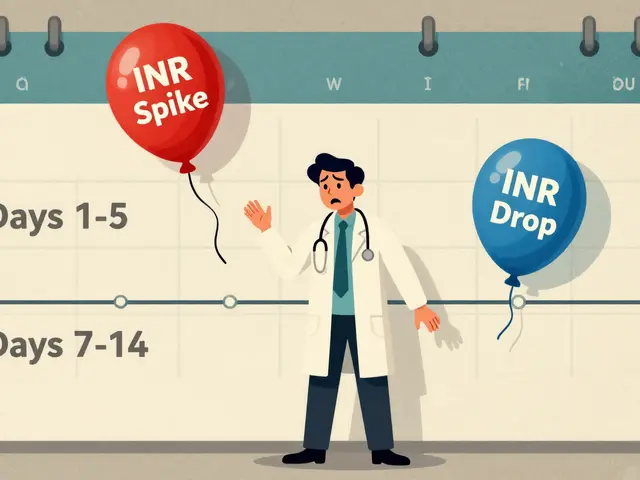
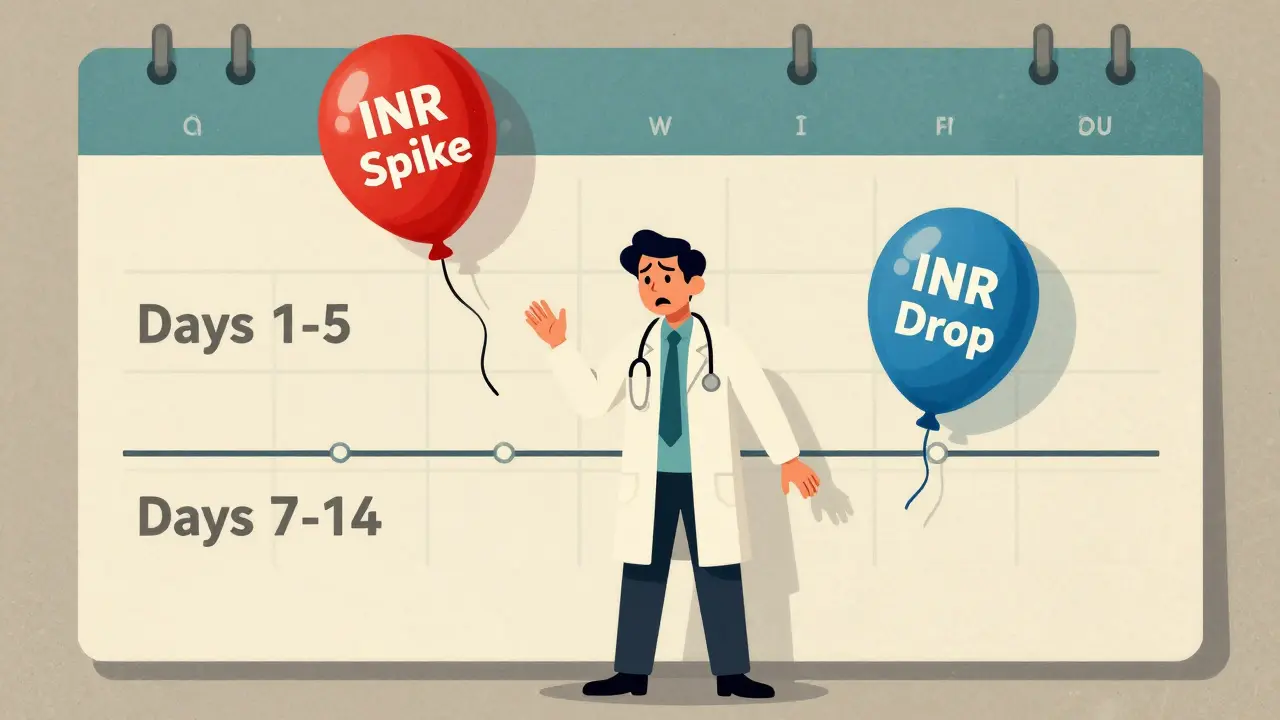
Phase 1: The Spike
Days 1–5Protein-binding displacement causes immediate rise in free warfarin.
Phase 2: The Drop
Days 7–14Enzyme induction (CYP2C9/3A4) accelerates metabolism, crashing INR.
Phase 3: New Normal
Week 3+Equilibrium reached. Warfarin dose often needs 2-5x increase to maintain effect.
Projected INR Trajectory
Simulated DataPrescribing Phenytoin to a patient already taking Warfarin is one of those clinical moments that makes pharmacists and doctors break out in a cold sweat. It isn’t just a simple "watch out" interaction. It’s a chaotic, two-stage event that can swing a patient’s blood clotting levels from dangerously high to dangerously low within the same month. If you miss the timing, you risk serious bleeding or a stroke.
This guide breaks down exactly what happens in the body when these two drugs meet, why the effects change over time, and how to manage the dosing so your patients stay safe. We’ll look at the science behind the chaos and give you a practical checklist for monitoring.
The Biphasic Trap: Why Timing Is Everything
The core problem with this combination is that it doesn’t behave consistently. Most drug interactions go in one direction-they either increase or decrease the effect of the other drug. The interaction between phenytoin and warfarin does both, but at different times. This is called a biphasic response.
Imagine you start a patient on phenytoin today. Here is the timeline of what usually happens to their INR (International Normalized Ratio):
- Days 1-5 (The Spike): The INR goes up. The patient is at higher risk of bleeding. This is caused by protein-binding displacement.
- Days 7-14 (The Drop): The INR crashes down. The patient is now at risk of clotting. This is caused by enzyme induction.
- Week 3+ (The New Normal): The INR stabilizes, but it requires a much higher dose of warfarin than before-often 2 to 5 times the original amount.
If you only check the INR once a week, you might see the spike, think the dose is too high, and lower it. Then, when the crash happens, you’ll raise it back up, only to overshoot again. You need to anticipate this curve, not just react to it.
Mechanism 1: Protein Binding Displacement (The Immediate Effect)
To understand the first phase, we have to look at how drugs travel in the blood. Both phenytoin and warfarin are highly bound to Albumin, a protein in the plasma. Think of albumin as a bus. Only the passengers standing outside the bus (the "free" drug) can get off and do work (pharmacological effect). The ones inside the bus are inactive.
Under normal conditions, about 99% of warfarin is stuck on the albumin bus. Phenytoin has a stronger grip on the bus seats than warfarin does. When you introduce phenytoin into the bloodstream, it kicks warfarin off the albumin. Suddenly, there is a lot more free, active warfarin floating around.
This causes a transient but significant rise in anticoagulant effect. Your patient’s INR will jump up within 24 to 72 hours. This effect is temporary because the body eventually clears the excess free warfarin, and the equilibrium shifts. However, in patients with low albumin levels (hypoalbuminemia), such as those with liver disease or malnutrition, this effect is even more pronounced and dangerous because they have fewer "bus seats" available from the start.
Mechanism 2: Enzyme Induction (The Delayed Effect)
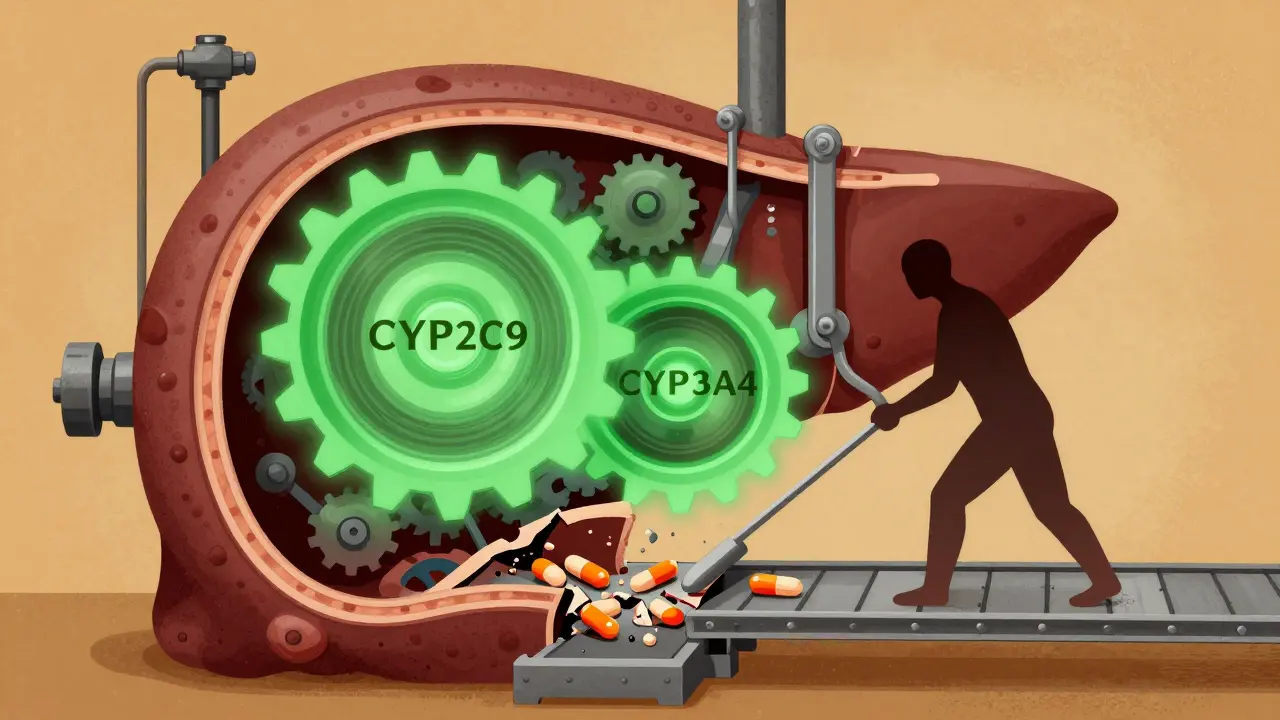
While the protein displacement is happening, a slower, more powerful process is kicking in. Phenytoin is a potent inducer of hepatic cytochrome P450 enzymes, specifically CYP2C9 and CYP3A4.
Here is the breakdown:
- CYP2C9 is responsible for metabolizing S-warfarin, which is the more potent enantiomer (about 5 times stronger than R-warfarin).
- CYP3A4 helps metabolize R-warfarin.
Phenytoin activates the pregnane X receptor (PXR) in liver cells, telling them to produce more of these enzymes. This doesn’t happen overnight. It takes 7 to 10 days for the enzyme levels to ramp up significantly. Once they do, the liver starts breaking down warfarin much faster-clearance can increase by 50% to 100%.
As the warfarin gets destroyed faster than it can act, the INR drops. This is why the initial spike is followed by a steep decline. To maintain therapeutic anticoagulation during this phase, clinicians often need to increase the warfarin dose by 200% to 500%. That is a massive adjustment compared to most other drug interactions.

Genetic Factors: Why Patients React Differently
Not every patient reacts the same way. Genetics play a huge role here. Variations in the CYP2C9 gene and the VKORC1 gene determine how fast someone metabolizes warfarin and how sensitive they are to its effects.
Poor metabolizers (those with variants like CYP2C9*2 or *3) already struggle to clear warfarin. When you add phenytoin, which tries to force the metabolism, the interaction becomes unpredictable. Some studies suggest these patients may experience more extreme fluctuations in INR. While pharmacogenetic testing can help predict baseline warfarin doses, it is less useful for predicting the dynamic changes caused by adding an enzyme inducer like phenytoin. This means clinical monitoring remains non-negotiable, regardless of genetic profile.
Management Strategy: A Step-by-Step Protocol
So, how do you handle this in practice? Empirical dose adjustments (guessing the new dose based on averages) are risky. Instead, follow this monitoring protocol:
- Baseline: Ensure the patient’s INR is stable on warfarin before starting phenytoin if possible.
- Initiation: Start phenytoin. Do not preemptively lower the warfarin dose. Lowering it now might cause a clot when the enzyme induction hasn’t kicked in yet.
- Days 1-5: Check INR every 2-3 days. Expect it to rise. If it rises dangerously high (e.g., >4.5), hold warfarin or reduce slightly, but remember this is temporary.
- Days 7-14: Continue checking INR every 2-3 days. Expect it to fall. Be prepared to increase the warfarin dose gradually. Do not chase the target aggressively; small increments are safer.
- Stabilization: Once the INR has been stable for two consecutive checks, switch to weekly monitoring. Accept that the maintenance dose will likely be 2-5 times higher than pre-phenytoin levels.
If you are stopping phenytoin in a patient on warfarin, reverse the logic. The enzyme induction will wear off over 10-14 days. The warfarin will stop being cleared quickly, and the INR will rise. Reduce the warfarin dose by 25-50% immediately upon stopping phenytoin, and monitor closely to prevent bleeding.
| Timeframe | Expected INR Trend | Action Required |
|---|---|---|
| Days 1-5 | Increase (Bleeding Risk) | Monitor every 2-3 days. Hold/reduce warfarin if supratherapeutic. |
| Days 7-14 | Decrease (Clotting Risk) | Monitor every 2-3 days. Gradually increase warfarin dose. |
| Week 3+ | Stable (High Dose Needed) | Weekly monitoring. Maintain 2-5x baseline warfarin dose. |
Are There Safer Alternatives?
In many cases, yes. If a patient needs seizure control and anticoagulation, consider using antiepileptic drugs that do not induce liver enzymes. Levetiracetam, Gabapentin, and Pregabalin are excellent alternatives. They have minimal impact on CYP450 enzymes and do not displace warfarin from protein binding sites to a clinically significant degree.
What about switching from warfarin to a Direct Oral Anticoagulant (DOAC) like apixaban or rivaroxaban? Unfortunately, no. DOACs are also metabolized by CYP3A4 and P-glycoprotein. Phenytoin induces these pathways, leading to significantly reduced levels of the DOAC. This makes DOACs ineffective and unsafe for patients on enzyme-inducing antiepileptics. For patients with mechanical heart valves or specific thrombophilias who must stay on warfarin, managing the interaction is unavoidable.
Key Takeaways for Clinicians
Managing the phenytoin-warfarin interaction requires patience and vigilance. The biphasic nature of the response-initial displacement followed by delayed induction-is the key concept to master. Never assume the interaction is static. Always monitor frequently during the first three weeks of any change in therapy. And whenever possible, choose alternative antiepileptics to avoid this complexity entirely.
How long does it take for phenytoin to affect warfarin levels?
Effects begin within 24-72 hours due to protein binding displacement, causing an INR spike. The major enzyme induction effect takes 7-10 days to fully manifest, leading to a subsequent INR drop.
Can I use a DOAC instead of warfarin with phenytoin?
No. Phenytoin reduces the effectiveness of DOACs like apixaban and rivaroxaban by inducing their metabolic pathways. Warfarin is generally the only viable oral anticoagulant option in this scenario.
What should I do if I stop phenytoin in a patient on warfarin?
You must reduce the warfarin dose by 25-50% immediately. As phenytoin leaves the system, warfarin metabolism slows down, causing INR to rise over 10-14 days. Monitor closely to prevent bleeding.
Which antiepileptics are safer to use with warfarin?
Levetiracetam, gabapentin, and pregabalin are preferred alternatives as they have minimal interactions with warfarin metabolism or protein binding.
Does genetics affect this interaction?
Yes. Variants in CYP2C9 and VKORC1 genes can alter how severely a patient responds to the interaction, making individual monitoring essential rather than relying on standard dosing algorithms.