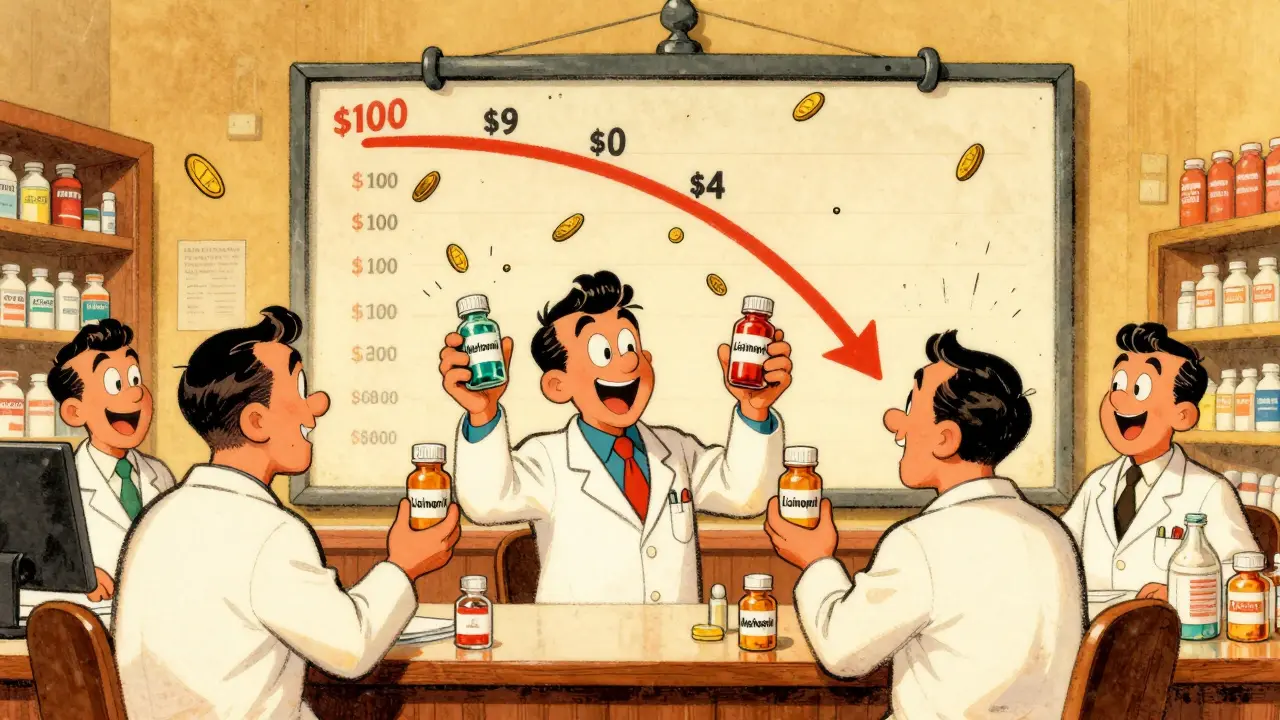
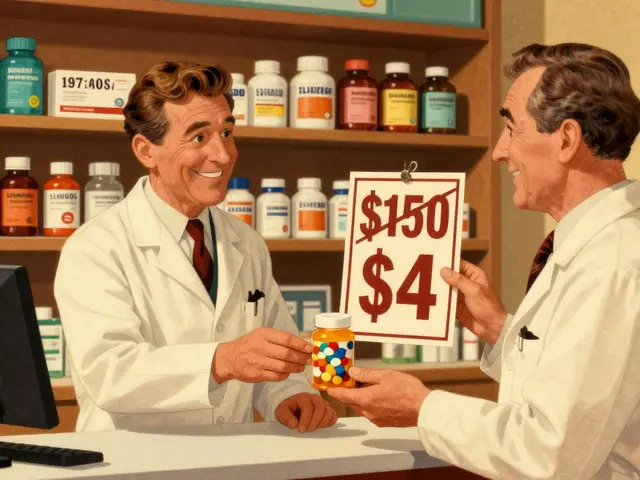
When you pick up a prescription for a generic drug like metformin or lisinopril, you probably don’t think about how its price got so low. You just see the $4 copay and move on. But behind that simple number is a complex system of regulations, competition, and market forces-not government price setting. Unlike brand-name drugs, which can cost hundreds or even thousands of dollars, generic drugs typically cost less than 15% of the original price. And that’s not because of a law that says generic drug pricing must be capped. It’s because the system was built to let competition do the work.
Why Generic Drugs Are So Cheap
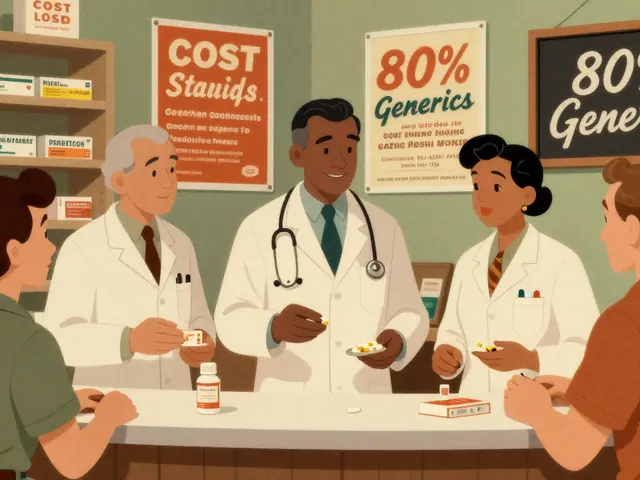
Generic drugs aren’t cheap because the government told manufacturers to lower prices. They’re cheap because the law lets them enter the market without repeating expensive clinical trials. The Hatch-Waxman Act of 1984 created the Abbreviated New Drug Application (ANDA) pathway. This means a generic company doesn’t need to prove a drug is safe or effective again. They just need to show their version works the same as the brand-name drug. That cuts development costs from $2.6 billion down to $2-3 million. With lower costs, companies can undercut each other-and they do.Once the first generic hits the market, prices drop fast. A 2022 FDA analysis found that within six months, prices fall by 75%. By two years, if three or more companies are selling the same generic, prices drop 90% from the original brand price. In markets with five or more competitors, the price often stabilizes at just 10-15% of what the brand used to cost. No government agency sets that number. The market does.
How the Government Actually Helps
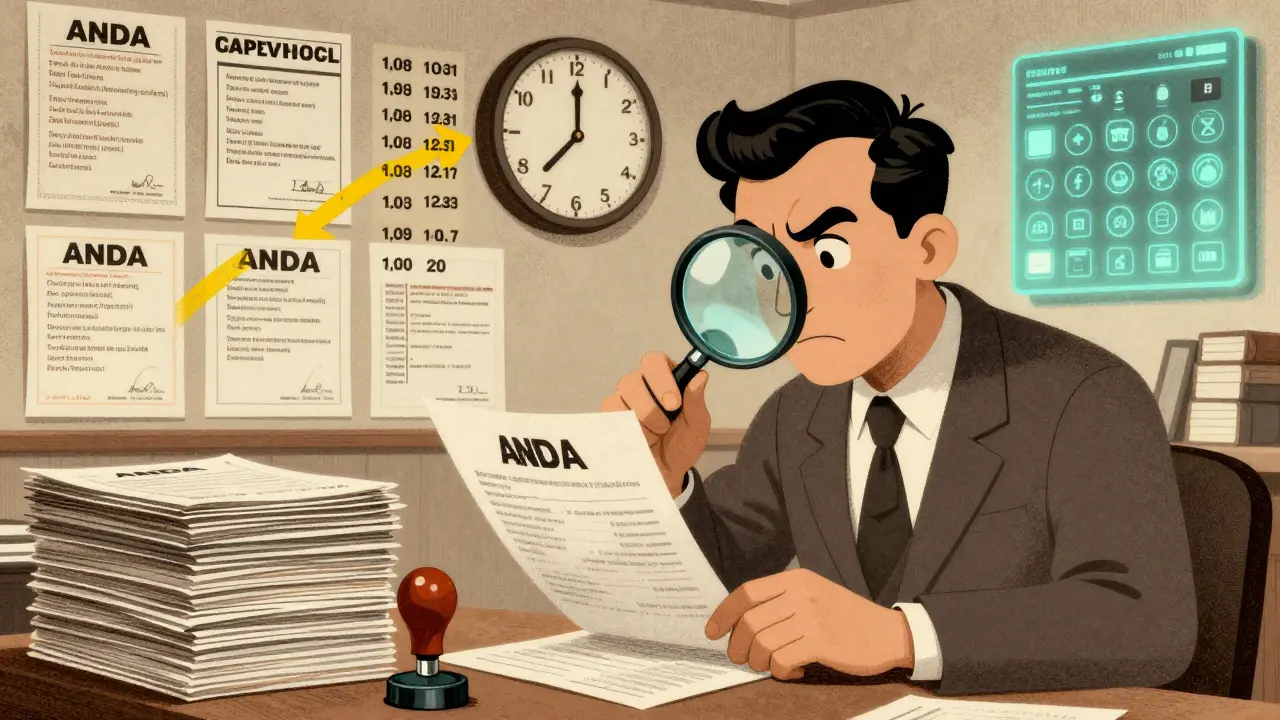
The government doesn’t set prices for generics. It removes barriers so more companies can compete. The FDA’s Generic Drug User Fee Amendments (GDUFA), renewed in 2022 with $750 million in industry fees through 2027, is a prime example. This isn’t a tax-it’s a fee paid by drugmakers to fund faster FDA reviews. Before GDUFA, it took an average of 18 months to approve a generic. Now, the FDA hits its 10-month target for 92% of standard generics. That’s 35% more approvals since 2017. In 2023 alone, 1,083 generic drugs were approved.For complex generics-drugs with tricky delivery systems like inhalers or injectables-the process is slower. Only 38% of those met the 10-month deadline in 2023. So the FDA created a special submission template in late 2023. Pilot programs using it cut review times by 35%. Real-time tracking is now public through the FDA’s Generic Drug User Fee Dashboard. You can check the status of any pending application. Transparency keeps pressure on the system.
Stopping Anti-Competitive Tactics
The real threat to low generic prices isn’t regulation-it’s collusion. Brand-name companies sometimes pay generic makers to delay entry. These are called "pay-for-delay" deals. In 2023, the FTC challenged 37 of them. One deal might delay a generic for five years. When blocked, consumers save an estimated $3.5 billion a year. The FTC also blocked the Teva-Sandoz merger in January 2024 because it would have reduced competition for 13 generic drugs. These aren’t abstract policy moves. They’re direct actions that keep prices low.Another tactic: product hopping. A brand company tweaks its drug slightly-changes the pill shape, adds a coating-and then markets it as "new and improved." The goal? To trick pharmacists and doctors into switching patients away from the generic. The FDA’s 2024 Generic Drug Implementation Plan specifically targets this. It’s now easier to approve generics for these tweaked versions, closing the loophole.
Why Medicare Doesn’t Negotiate Generic Prices
The Inflation Reduction Act of 2022 lets Medicare negotiate prices for 15 high-cost brand-name drugs by 2027. But generics? Excluded. Why? Because they’re already cheap. The Department of Health and Human Services says negotiation only makes sense for drugs with no competition. Generic drugs have plenty.Think about it: in 2024, Medicare Part D plans paid an average of 15% below the Average Manufacturer Price (AMP) for generics. They got rebates averaging 28% on preferred generics. That’s not because the government forced it. That’s because insurers and pharmacy benefit managers (PBMs) negotiated hard. And they had leverage-dozens of manufacturers competing to sell the same pill.
Studies back this up. The Congressional Budget Office found that applying international price controls to generics would save Medicare only $2.1 billion annually-0.4% of total generic spending. Compare that to $158 billion in savings from negotiating brand-name drugs. Stanford Medicine estimated extending negotiations to generics would save just $1.2 billion a year. That’s not worth the legal risk or administrative cost.
What About Price Spikes?
You’ve probably heard stories: a generic drug suddenly jumps from $4 to $45 a month. That’s real-but rare. The 2023 FDA Drug Shortage Report found that only 0.3% of generics had price increases like that. Most spikes happen because a manufacturer stopped making the drug. When supply drops and demand stays high, prices spike. The American Society of Health-System Pharmacists found that 18% of hospital pharmacists faced shortages of critical generics in 2024. Forty-three percent said manufacturers quit because prices fell below production costs.This is the flip side of competition. When too many companies chase the same low price, some can’t survive. That’s why the FDA and FTC focus on keeping enough players in the game. The Competitive Generic Therapy designation helps. If a drug has fewer than three manufacturers, the FDA fast-tracks new applicants. It’s not about setting a price. It’s about ensuring enough competition so prices don’t collapse to unsustainable levels.
How U.S. Generic Pricing Compares Globally
The U.S. doesn’t have the lowest generic prices in the world-but it has the most competition. The U.S. accounts for 42% of global generic drug volume but only 29% of value. Why? Because we have 14.7 manufacturers per drug on average. In Europe, it’s 8.2. In Japan, 5.3. More manufacturers mean more price pressure.Other countries use direct price controls. Canada sets maximum prices. The UK negotiates bulk deals. Germany uses reference pricing. But those systems often lead to shortages. The U.S. model-letting competition drive prices-works because it balances affordability with sustainability. Manufacturers still make money, even at 10% of the brand price, because they sell so many pills.
What Patients Actually Pay
The KFF Consumer Survey on Drug Pricing in 2024 found that 76% of people paid $10 or less for a generic prescription through Medicare Part D. For brand-name drugs? Only 28% paid that little. Eighty-two percent of generic users said their medications were affordable. Only 41% of brand-name users said the same.On Drugs.com, 87% of 12,450 generic drug reviews mentioned "affordable" or "cost-effective" as a top reason for satisfaction. Complaints about price? Just 5%.
That doesn’t mean the system is perfect. Some people still struggle. But the structure works. It’s not about government setting prices. It’s about government setting the rules so competition can.
What’s Next?
The FDA, FTC, and CMS aren’t looking to cap prices. They’re looking to remove bottlenecks. The CMS Interoperability and Prior Authorization Rule (April 2024) aims to stop Part D plans from blocking access to generics with unnecessary prior authorizations. That could save beneficiaries $420 million a year.Experts agree. Dr. Aaron Kesselheim of Harvard Medical School told the Senate Finance Committee in 2024: "Generic drugs have demonstrated the ability to achieve substantial price reductions through competition alone, making additional price controls unnecessary and potentially counterproductive." The FTC’s 2023 Pharmaceutical Competition Report says the same: "Generic drug markets generally function competitively without the need for price regulation."
The goal isn’t to make generics cheaper. It’s to make sure they stay available. And so far, the system is working.
Why don’t government agencies set prices for generic drugs?
Government agencies don’t set prices for generic drugs because competition among manufacturers already drives prices down effectively. The Hatch-Waxman Act allows multiple companies to sell the same drug after patent expiration, leading to rapid price declines. Studies show prices fall 75% within six months of generic entry and 90% within two years when multiple competitors are present. Direct price setting is unnecessary and could disrupt the market by reducing manufacturer incentives to enter or stay in the market.
How does the FDA help keep generic drug prices low?
The FDA lowers barriers to entry for generic manufacturers by speeding up approval times through the Generic Drug User Fee Amendments (GDUFA). By charging industry fees, the FDA funds faster reviews-cutting approval time from 18 months to 10 months for standard generics. In 2023, 1,083 generics were approved, a 35% increase since 2017. The FDA also created tools like the Complex Generic Drug Product Application Template to help manufacturers submit better applications, reducing review delays. Real-time tracking via the Generic Drug User Fee Public Dashboard increases transparency and accountability.
Do pay-for-delay agreements still happen with generic drugs?
Yes, but they’re being actively challenged. In 2023, the FTC filed 37 cases against pay-for-delay agreements, where brand-name drugmakers paid generic companies to delay launching cheaper versions. These deals can block competition for years. The FTC estimates blocking just these agreements saves consumers $3.5 billion annually. The FTC also blocks mergers that would reduce competition, like the blocked Teva-Sandoz deal in 2024.
Why are some generic drugs suddenly expensive?
Sudden price spikes usually happen when a manufacturer stops making a generic drug, causing supply shortages. The FDA’s 2023 Drug Shortage Report found only 0.3% of generics had major price increases, but those cases hurt patients. When only one or two companies produce a drug, they can raise prices. The American Society of Health-System Pharmacists reported that 43% of manufacturers discontinued generics because prices fell below production costs. The FDA now prioritizes approving generics for drugs with few competitors to prevent these shortages.
Does Medicare negotiate prices for generic drugs?
No, Medicare does not negotiate prices for generic drugs. The Inflation Reduction Act specifically excludes generics because they already face strong competition. The Department of Health and Human Services determined that generic markets are self-regulating. Medicare Part D plans negotiate rebates with manufacturers-averaging 28% for preferred generics-because they have leverage from multiple suppliers. Negotiating prices for generics would cost more than it saves.
How does the U.S. generic drug market compare to other countries?
The U.S. has the most competitive generic drug market in the world. With an average of 14.7 manufacturers per drug, compared to 8.2 in Europe and 5.3 in Japan, competition drives prices down. The U.S. accounts for 42% of global generic volume but only 29% of value, meaning Americans pay less per pill. Other countries use direct price controls, but those often lead to shortages. The U.S. model relies on competition, which keeps prices low while maintaining supply.


Write a comment
Your email address will be restricted to us