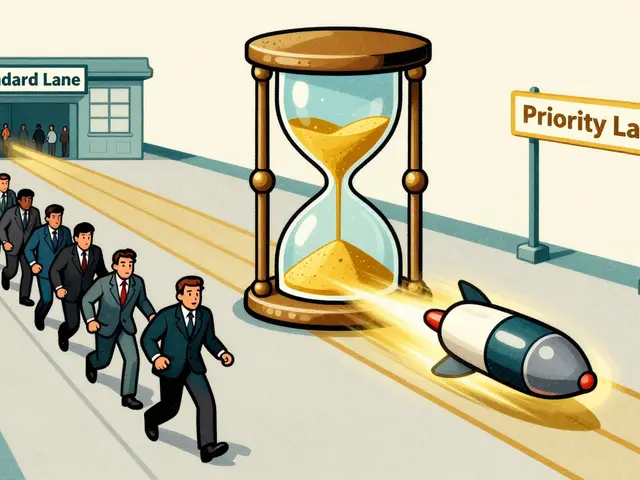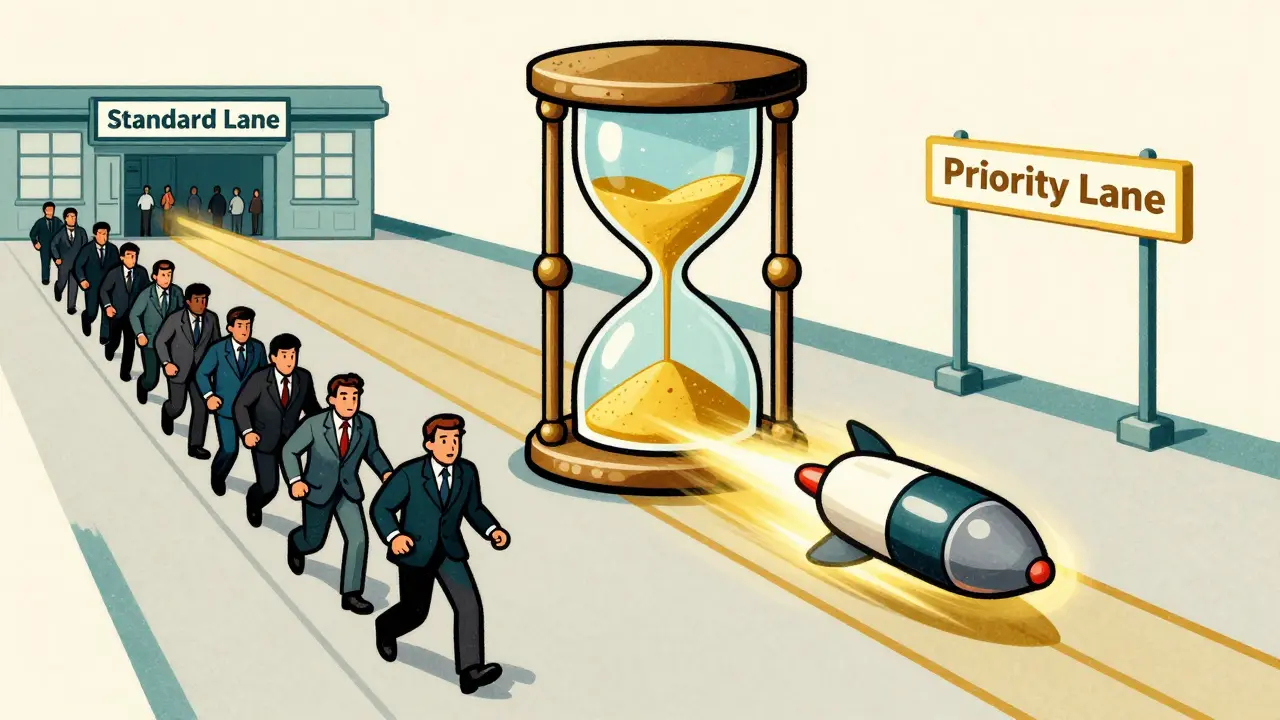
Getting a generic drug to market isn't just about having the right formula; it's a race against the clock. For pharmaceutical companies, a few months' difference in approval can mean the difference between capturing hundreds of millions in revenue or arriving too late to the party. This is where the FDA priority review is a specialized regulatory pathway that accelerates the evaluation of Abbreviated New Drug Applications (ANDAs) for drugs that meet specific public health needs. While most generics go through the standard lane, some get a "fast pass" that can shave months off the wait time.
The Clock: Standard vs Priority Timelines
If you're submitting an ANDA, you're operating under the rules of GDUFA III (the Generic Drug User Fee Amendments). This agreement sets the expectations for how long the FDA takes to act on an application. For the vast majority of generics, the standard review is the default. Under current goals, the FDA aims for a Target Action Date (TAD) of 10 months from the submission date.
Priority review, on the other hand, targets an 8-month window. While a two-month difference might seem small to a casual observer, in the world of pharma, it's massive. According to industry experts like Dr. John Jenkins, this acceleration can translate to $200-500 million in additional revenue for the first company to hit the market. It's a high-stakes incentive that pushes companies to prioritize drugs the government actually wants to see on shelves.
| Feature | Standard Review | Priority Review |
|---|---|---|
| Target Action Date (TAD) | 10 Months | 8 Months |
| Primary Criteria | General generic applications | First generics, shortages, complex generics |
| Goal Success Rate (FY22) | 72.3% | 83.1% |
| Primary Objective | Market competition | Addressing urgent public health needs |
Who Actually Gets Priority Status?
The FDA doesn't hand out priority status just because a company asks. You have to prove your drug fills a gap. One of the most common ways to qualify is by being a "first generic." This means you're the first company to submit a complete application for a brand-name drug after its patent expires. These winners often snag 180-day marketing exclusivity, which basically gives them a head start before other generics can enter.
Another major trigger for priority is a drug shortage. If the FDA identifies a critical medicine is unavailable, they'll fast-track any application that helps solve that problem. They also prioritize certain "complex generics"-think inhalers or topical creams-which are notoriously harder to manufacture and prove bioequivalent to the original.
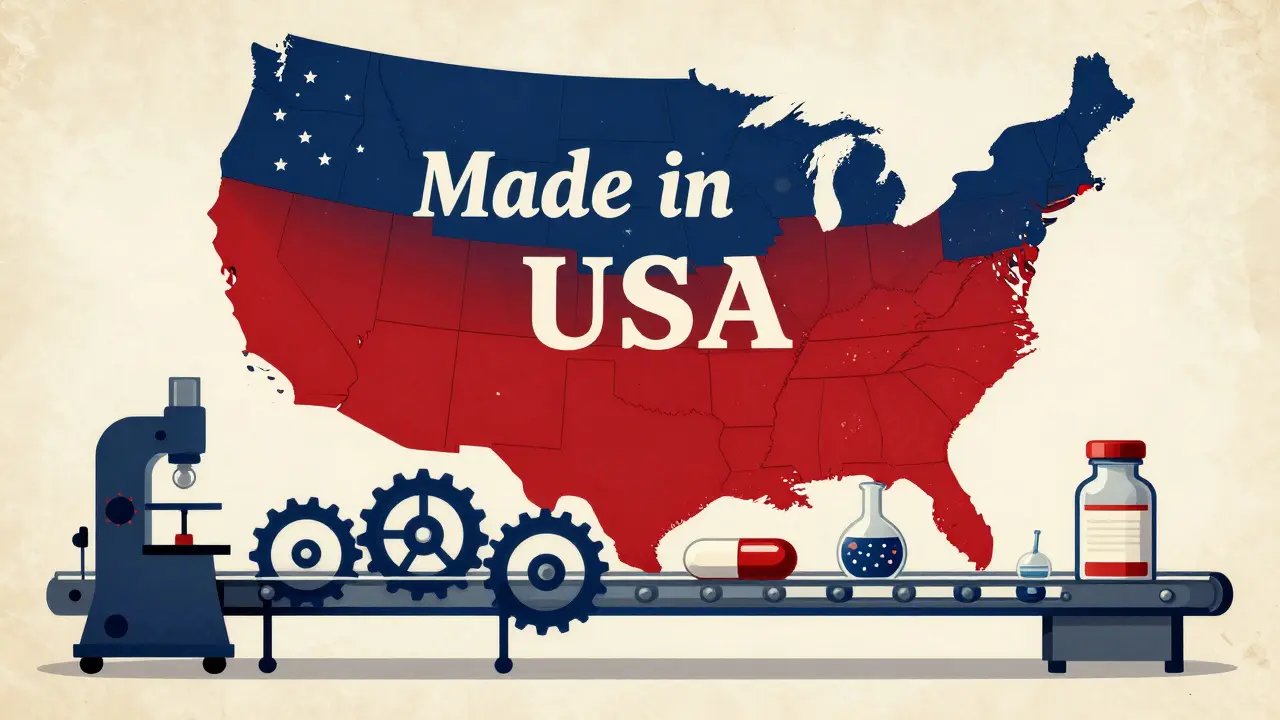
The New Push for "Made in USA"
In late 2023, Commissioner Robert Califf introduced a game-changer: the ANDA Prioritization Pilot Program. This isn't just about the drug itself, but where it's made. The government realized during the pandemic that relying on overseas factories was a huge risk-about 80% of active pharmaceutical ingredients (APIs) were coming from outside the U.S.
To fix this, the FDA now gives preferential treatment to companies that do three things: conduct their bioequivalence testing in the U.S., manufacture the final dosage form domestically, and source their APIs from U.S. suppliers. This is a bold move, but it's a tough climb. Legal experts note that only about 12.3% of sponsors currently meet all three criteria because so many specialized ingredients are only available in Europe or Asia.
The Hurdles: Why "Priority" Isn't Always Fast
Even if you have a priority designation, the process is far from a guaranteed sprint. Everything starts with a 74-day filing review. If the Division of Filing Review finds the application incomplete, they issue a Refuse-to-Receive (RTR) letter. That kills your momentum instantly, and you'll have to pay a hefty resubmission fee-roughly $164,880 for 2024.
Once you're in the system, the scientific review kicks in. The FDA looks at everything from chemistry, manufacturing, and controls (CMC) to labeling. If they find a problem, they send a Complete Response Letter (CRL). This effectively pauses the clock. In 2022, nearly 32% of original ANDAs hit at least one CRL, with CMC issues causing nearly half of those delays. On average, an application needs 1.7 review cycles to get approved, with each extra cycle adding about 4.2 months to the timeline.
Strategies for a Smoother Approval
Smart companies aren't just guessing; they're using a strategy of early engagement. More than 60% of generic sponsors now participate in pre-submission meetings with the FDA. By ironing out kinks before the official filing, these companies have seen their first-cycle approval rates jump from 24.1% to 38.7%.
For those dealing with the nightmare of complex generics, the FDA launched the Complex Generic Drug Product Pilot Program in early 2023. This provides early scientific advice for products like modified-release formulations. While complex generics only make up about 18% of pending applications, they represent a huge hurdle for many firms due to their technical difficulty.
The Future of Generic Approvals
We're moving toward a more automated era. The FDA is currently piloting AI-assisted review tools. Internal tests have already shown that these tools can cut review times by nearly 19% for straightforward applications. If this scales, the gap between standard and priority might shrink, or the entire process might just move faster across the board.
Looking ahead to 2026, analysts expect these optimizations to accelerate generic entry by over four months on average. This isn't just a win for the companies; it's a win for the healthcare system, with potential annual savings of around $18.7 billion for patients and providers.
What is the main difference between standard and priority ANDA review?
The primary difference is the timeline. A standard review has a Target Action Date of 10 months, while a priority review aims for 8 months. Priority review is reserved for drugs that address public health needs, such as drug shortages or the first generic version of a brand drug.
Can any generic drug apply for priority review?
No. To qualify, a drug must meet specific criteria: it must be a first generic, address an official drug shortage, be a complex generic, or meet the requirements of the domestic manufacturing pilot program (U.S. API, U.S. manufacturing, and U.S. bioequivalence testing).
What happens if an application is rejected during the filing review?
The FDA issues a Refuse-to-Receive (RTR) letter. This means the application was too incomplete to even begin a scientific review. The company must fix the deficiencies and resubmit the application, which involves paying a new filing fee.
Why do so many generic applications receive a Complete Response Letter (CRL)?
Most CRLs are triggered by deficiencies in Chemistry, Manufacturing, and Controls (CMC). These are technical failures in how the drug is made or stabilized, accounting for nearly 47% of review cycle interruptions.
What is the 180-day marketing exclusivity?
This is a reward for the first generic company to successfully challenge a patent or be the first to file a complete ANDA. It gives them six months of market exclusivity where no other generic versions of that drug can be sold, allowing them to capture a huge portion of the market share.