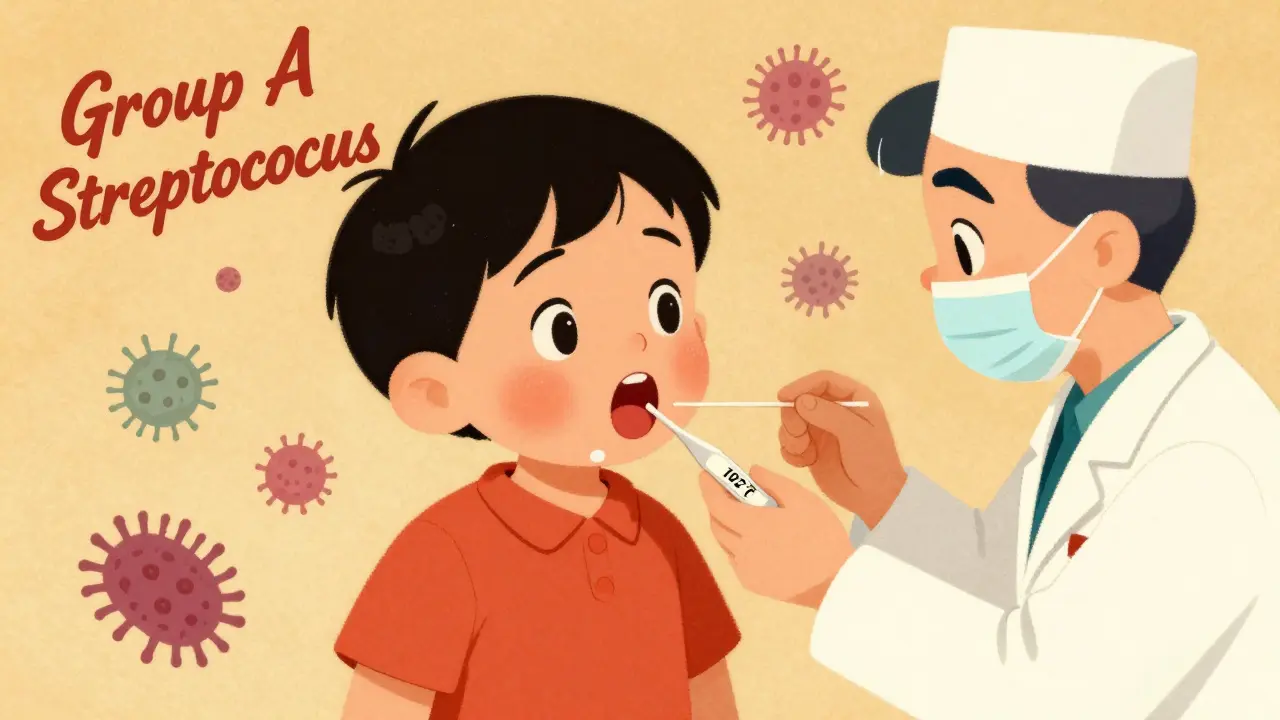
Strep throat isn’t just a bad sore throat. It’s a bacterial infection caused by Group A Streptococcus (a type of bacteria called Streptococcus pyogenes) that can turn a simple ache into something serious if ignored. Unlike a cold or flu, strep doesn’t come with a runny nose or cough - and that’s actually one of the biggest clues. If you or your child has a sudden, severe sore throat, fever over 100.4°F, swollen tonsils with white patches, and no cough, it’s time to get tested. Left untreated, it can lead to complications like rheumatic fever, which can damage heart valves - especially in kids. The good news? With the right diagnosis and antibiotics, most people feel better in just a couple of days and fully recover within a week.
How Doctors Tell Strep Throat From a Viral Sore Throat
Not every sore throat is strep. In fact, most are viral - caused by colds, flu, or even allergies. But here’s how to spot the difference: strep hits fast. You wake up with a throat that feels like it’s on fire. Swallowing hurts. Your tonsils look red and swollen, sometimes with streaks of white or yellow pus. You might have a fever, swollen lymph nodes under your jaw, and headaches. But here’s the key: no cough, no runny nose, no sneezing. If you’ve got those, it’s probably not strep.
Doctors use a scoring system called the Centor criteria (a clinical tool that assigns points for fever, swollen lymph nodes, tonsillar exudate, and absence of cough) to estimate the chance of strep. Each of these four signs gets one point. A score of 3 or higher means there’s a 40-60% chance you have strep - enough to justify testing. In kids, the threshold is lower because they’re more likely to develop complications. In adults, if your score is low and you have a cough, testing isn’t usually needed.
That’s why so many people get misdiagnosed. Many clinics skip testing and just prescribe antibiotics “just in case.” But that’s dangerous. Overusing antibiotics leads to resistance. The CDC (Centers for Disease Control and Prevention) says about 30% of outpatient antibiotic prescriptions are unnecessary - and sore throats are a top reason.
Testing: Rapid Test, Culture, or PCR?
If your doctor suspects strep, they’ll swab the back of your throat. There are three ways to test the sample:
- Rapid antigen detection test (RADT): This gives results in 10-30 minutes. It’s accurate - over 95% specific - but it can miss up to 15% of cases, especially in young kids. If it’s negative and you’re a child or teen, you’ll likely need a follow-up culture.
- Throat culture: This is the gold standard. It takes 18-48 hours, but it catches almost all cases (90-95% sensitive). It’s slower, but it’s reliable, especially when the rapid test is negative.
- PCR test: This molecular test is the most sensitive (95-98%) and detects the bacteria’s DNA. It’s becoming more common in urgent care centers and hospitals. Results take 24-48 hours, and it’s especially useful when the diagnosis is unclear.
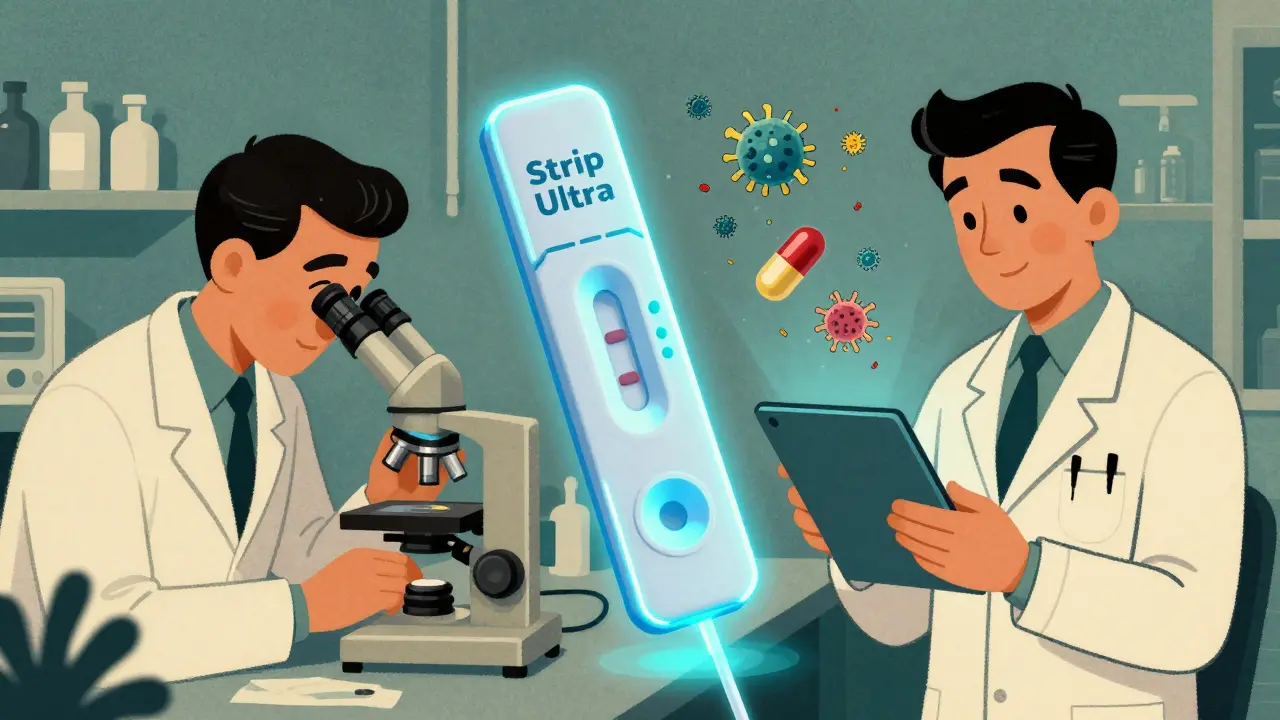
In 2024, the FDA approved a new rapid molecular test called Strep Ultra (a point-of-care test with 98% sensitivity and 15-minute turnaround). It’s starting to replace older rapid tests in many clinics. For now, though, most offices still use the standard RADT. If you’re a child, always ask if a culture will be done after a negative rapid test - it’s the only way to be sure.
Which Antibiotics Are Used - And Why Penicillin Is Still #1
Once strep is confirmed, antibiotics are essential. Not just to feel better faster - but to prevent serious complications. The Infectious Diseases Society of America (IDSA) (the leading authority on bacterial infection guidelines) recommends penicillin or amoxicillin as first-line treatments.
Why? Because after 70 years, Group A Streptococcus (the bacteria causing strep throat) still hasn’t developed resistance to penicillin. The resistance rate is less than 0.5%. That’s unheard of in modern medicine. Amoxicillin works just as well and tastes better - especially for kids. The standard course is 10 days, even if you feel fine after three.
For people allergic to penicillin, alternatives include:
- Cephalexin - a cephalosporin antibiotic, taken twice daily for 10 days.
- Clindamycin - used when there’s concern about resistance or if penicillin fails. Taken three times a day.
- Azithromycin - a 5-day course, but it’s less effective (85-90% success rate) and resistance is rising in some areas (up to 15%).
Don’t use leftover antibiotics from a previous illness. That’s a major reason why treatment fails. A 2023 CDC survey found 12% of adults have used old antibiotics for a new sore throat. That doesn’t just waste time - it helps bacteria become stronger.
How Long Until You Feel Better? The Real Recovery Timeline
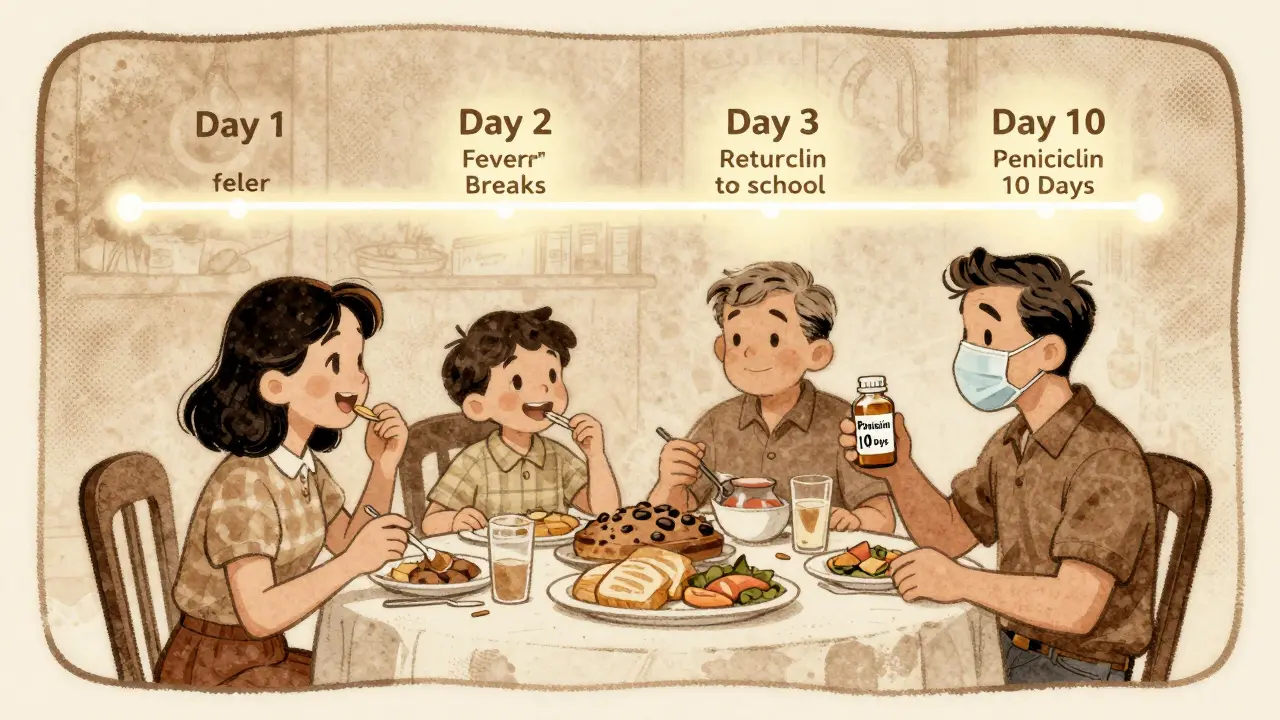
With antibiotics, most people start feeling better within 24-48 hours. The fever drops. Swallowing gets easier. The pain eases. But here’s what most people don’t realize: you’re still contagious - until you’ve been on antibiotics for 24 hours. That means no school, no work, no hugging your grandkids. Even if you feel fine, you can still spread the bacteria.
Here’s what to expect:
- Day 1-2: Symptoms peak. Fever, pain, swollen glands. Start antibiotics.
- Day 2-3: Fever breaks. Pain improves significantly. You can return to school or work after 24 hours of antibiotics - if you’re fever-free.
- Day 4-7: Most symptoms are gone. Throat may still feel slightly scratchy.
- Day 8-10: Full recovery. Complete the full course of antibiotics, even if you feel perfect.
Without antibiotics, symptoms last 7-10 days - and you remain contagious the whole time. Worse, you risk complications like peritonsillar abscess (a pus-filled pocket behind the tonsil, occurring in 1-2% of untreated cases) or, rarely, rheumatic fever.
When to Worry: Red Flags After Starting Antibiotics
Most people recover fine. But if you or your child doesn’t improve after 48 hours of antibiotics, something’s wrong. Call your doctor if:
- Fever returns or stays above 101°F after two days of treatment.
- Swelling in the neck gets worse or one side becomes noticeably larger.
- Difficulty breathing, swallowing, or opening the mouth.
- A rash appears - especially if it’s red, bumpy, or spreads quickly.
- Joint pain, swelling, or chest pain develops - these could signal rheumatic fever.
These signs point to complications. A peritonsillar abscess needs drainage. Rheumatic fever requires hospital care. Both are rare - but they’re preventable with timely treatment.
Why People Fail to Recover - And How to Avoid It
One in five people who get strep don’t fully recover - not because the antibiotics didn’t work, but because they didn’t finish them. A 2023 study in JAMA Pediatrics found that 40% of parents stop antibiotics once the fever’s gone. That’s a recipe for relapse. Up to 15% of incomplete courses lead to the infection coming back - and this time, it might be harder to treat.
Other common mistakes:
- Sharing antibiotics with siblings or friends - dangerous and illegal.
- Using leftover pills from last year’s cold - antibiotics don’t work on viruses.
- Ignoring the 24-hour contagious rule - going back to school too soon spreads it to others.
The best way to ensure full recovery? Take every pill. Even if you feel great on day four. The bacteria are still there - and they’re smarter than you think.
What’s Changing in Strep Treatment? The Future Is Here
Strep throat hasn’t changed much in decades - but it’s starting to. The new Strep Ultra test is already in use in some urgent care centers. It’s faster and more accurate than older tests. By 2026, 40% of clinics are expected to use this kind of molecular testing.
Doctors are also testing shorter antibiotic courses. A major clinical trial (NCT05678901) is comparing 5-day vs. 10-day regimens. Early results suggest 5 days might be enough for some patients - but we won’t know for sure until mid-2025.
There’s no vaccine yet. The M-protein vaccine (a potential vaccine targeting the surface protein of Group A Streptococcus) is in Phase II trials, but it’s complicated. There are over 200 strains of the bacteria, and each one looks different to the immune system. Creating a universal vaccine is like trying to build one umbrella that fits every rainstorm.
For now, the best defense is simple: get tested if symptoms fit, take the full course of antibiotics, and don’t share pills. It’s old-school - but it still works.
Can you get strep throat without a fever?
Yes, but it’s rare. Fever is present in about 85% of confirmed strep cases. If you have a sore throat with no fever, it’s more likely viral. Still, if you have swollen tonsils with pus and no cough, testing may still be warranted - especially in children.
Is strep throat contagious after 24 hours of antibiotics?
No. Once you’ve taken antibiotics for 24 hours and your fever is gone, you’re no longer contagious. You can return to school or work at that point - as long as you’re feeling better. But keep taking the full course of medicine.
Can adults get strep throat, or is it just a kids’ illness?
Adults can definitely get strep throat - about 5-15% of adult sore throats are bacterial. Kids aged 3-9 are most at risk (15-30% of their sore throats), but teens and adults still catch it, especially in close-contact environments like offices or households.
Why not just take antibiotics “just in case” if my throat hurts?
Because most sore throats are viral - and antibiotics don’t work on viruses. Taking them unnecessarily fuels antibiotic resistance, making future infections harder to treat. The CDC estimates 30% of outpatient antibiotics are prescribed without a clear bacterial cause. That’s why testing before treatment is critical.
What if I’m allergic to penicillin? Are there safe alternatives?
Yes. For penicillin allergies, doctors can prescribe cephalexin, clindamycin, or azithromycin. Cephalexin is often preferred because it’s effective and has low cross-reactivity. Azithromycin is less reliable and resistance is rising, so it’s usually a second choice. Always tell your doctor about any drug allergies before starting treatment.
Can strep throat come back after treatment?
Yes - but usually only if the full antibiotic course wasn’t taken. About 5-15% of cases relapse due to incomplete treatment. Rarely, someone can get reinfected from a carrier in their household. If symptoms return after finishing antibiotics, get tested again - it could be a new infection or a resistant strain.
How can I prevent spreading strep throat to others?
Stay home for 24 hours after starting antibiotics. Wash hands often, don’t share utensils or drinks, cover your mouth when coughing or sneezing, and replace your toothbrush after 24 hours of treatment - bacteria can linger on bristles. If someone in your house has strep, avoid close contact until they’ve been on antibiotics for a day.
Is strep throat more common in winter?
Yes. Strep throat peaks between November and April, with incidence rising 30% during winter months. Crowded indoor spaces, dry air, and school settings make transmission easier. Cases are dropping in summer, but climate change is causing more off-season outbreaks - a 12% increase was seen in 2023.


Write a comment
Your email address will be restricted to us