Every year, millions of people buy medicine online - some legally, others out of desperation. But how do you know that the pill you just received is real? In 2024, nearly 1 in 10 prescription drugs sold online were fake, according to the WHO. These counterfeit pills can contain no active ingredient, toxic chemicals, or the wrong dose. For patients relying on generic medications - often the only affordable option - this isn’t just a risk. It’s a life-or-death gamble.
Enter blockchain. Not as a buzzword, but as a working system quietly transforming how drugs move from factory to pharmacy. It’s not magic. It’s code. And it’s finally starting to work at scale.
What blockchain actually does for drug tracking
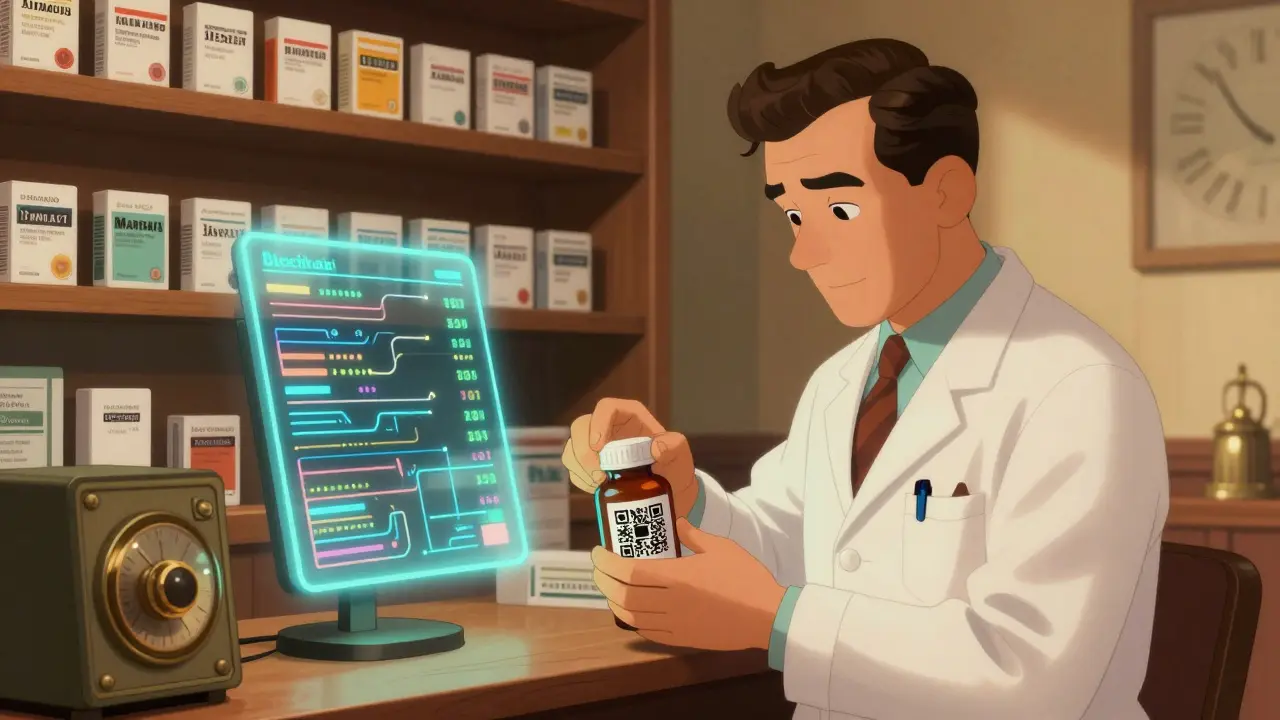
Blockchain isn’t about Bitcoin. In pharma, it’s a digital ledger that records every step a medicine takes before it reaches you. Think of it like a tamper-proof shipping receipt that updates itself automatically every time the drug changes hands - from the manufacturer, through distributors, to your local pharmacy.
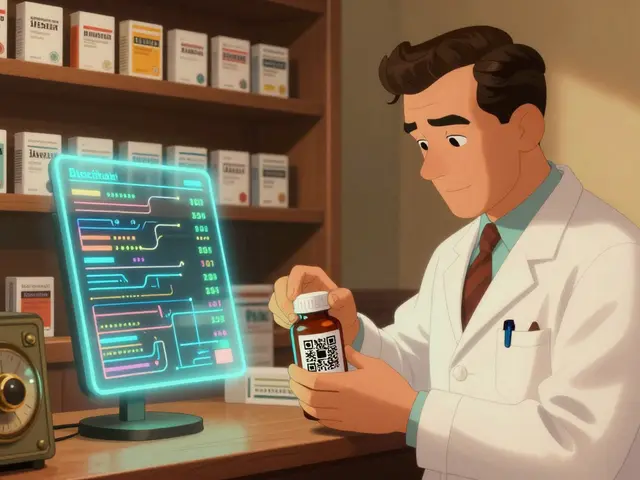
Each package gets a unique digital ID - a serial number tied to a QR code. When a pharmacist scans it, their app checks the blockchain in under two seconds. If the code matches the recorded history, the drug is verified. If not? The system flags it instantly. No guesswork. No paperwork. No delays.
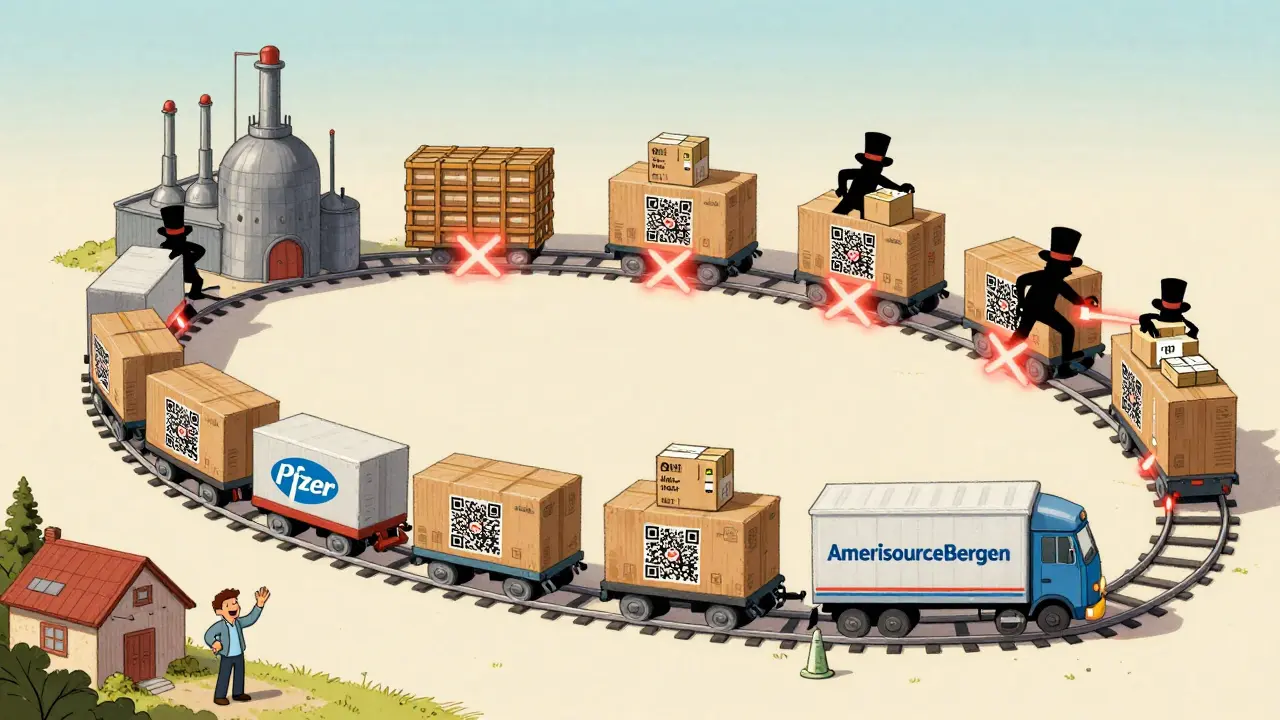
This isn’t theoretical. In 2022, the FDA ran a pilot with Pfizer, Genentech, and AmerisourceBergen. They tracked over 2 million drug units. The system verified 99.8% of them correctly. That’s not close to perfect. That’s near flawless.
Why traditional methods fail
For years, drug companies tried to stop fakes with holograms, color-changing ink, or sealed packaging. These are easy to copy. INTERPOL found that 38% of counterfeit drugs still passed visual inspection. Even centralized databases - where one company holds all the records - are vulnerable. Hack one server, and you break the whole chain.
Blockchain fixes this by removing the middleman. Instead of one company controlling the data, thousands of verified participants - manufacturers, shippers, pharmacies - each hold a copy. If someone tries to alter a record, the system notices. It doesn’t matter who’s lying. The truth is written in code, across many computers, and can’t be erased.
Compare that to 2020, when only 12% of pharmaceutical companies used any form of digital tracking. Today, 78% are running pilots. The shift isn’t slow. It’s accelerating.
The real cost of counterfeit drugs
Counterfeit medicines don’t just hurt patients. They cost the system billions.
In the U.S. alone, hospitals and pharmacies spend $20 billion a year keeping extra stock on hand - just in case a shipment turns out to be fake. With blockchain, that safety stock can shrink. Why? Because you know, with near-certainty, that every unit is real.
That’s why the HIMSS report found blockchain saves $183 million annually in labor costs alone. Pharmacists no longer need to manually check batches. Nurses don’t have to pause treatment to verify a drug’s origin. Time saved equals lives saved.
But the biggest win? Patient trust. When people know their generic metformin or insulin is traceable, they’re more likely to take it. And that matters. Non-adherence due to fear of fake drugs kills more people than car accidents in some countries.
Who’s using it - and who’s not
The biggest players are on board. Pfizer, Merck, and Johnson & Johnson all use blockchain. MediLedger, run by EY, powers over 47 major companies. Alibaba’s Ali Health tracks drugs across 200,000 pharmacies in China.
But here’s the gap: generic manufacturers. They make 90% of the world’s pills, yet only 31% have adopted blockchain. Why? Cost. Installing serialization equipment on a production line runs $150,000. Setting up a blockchain node? Another $2 million for mid-sized firms. For a small generic maker, that’s 12-15% of their profit margin.
That’s why India’s Apollo Hospitals story is telling. They partnered with a blockchain provider and rolled it out across 5,000 pharmacies. Within a year, counterfeit antimalarial drugs dropped by 94%. But Apollo had the scale and funding. Most small pharmacies don’t.
Regulations are helping. The U.S. Drug Supply Chain Security Act (DSCSA) now requires full electronic tracing by November 2023. The EU’s Falsified Medicines Directive is doing the same. But enforcement is uneven. In low-income countries, counterfeit rates still exceed 30%. Blockchain alone won’t fix that - but it’s the best tool we have.
What’s still broken
Blockchain doesn’t magically make a fake pill real. It tracks documentation - not the pill itself.
Dr. Sarah Wynn-Williams of the London School of Economics warned in 2023: “Blockchain gives you a paper trail. It doesn’t tell you if the active ingredient is there.” That’s true. A fake pill could still have the right barcode but the wrong chemical mix.
That’s why experts say blockchain must be paired with other tools - like portable spectrometers that scan a pill’s molecular signature. Some companies are already testing this. Pfizer’s 2024 pilot linked blockchain with IoT sensors that check temperature, humidity, and even light exposure during shipping.
Another issue? Connectivity. In rural America or parts of Africa, internet access is spotty. A pharmacist can’t verify a drug if their phone has no signal. Reddit users in r/Pharmacy reported 63% of rural clinics had delays in verification. That’s not a system failure - it’s a design flaw.
And then there’s training. Pharmacists aren’t coders. One pharmacist in Manchester told me: “I spent eight weeks learning how to use the scanner. My old system was slower, but I understood it.”
The future: What’s next?
By 2026, the FDA will enforce standardized blockchain verification protocols. That means every drug sold in the U.S. must use the same format - no more custom systems. This is huge. Interoperability is the missing link.
MediLedger’s 2024 update cut false alarms by 37% using AI. That’s a big deal. Fewer false positives means pharmacists stop ignoring alerts. They start trusting them.
By 2027, McKinsey predicts 75% of prescription drugs in developed countries will be blockchain-verified. By 2030? That number climbs to 95%.
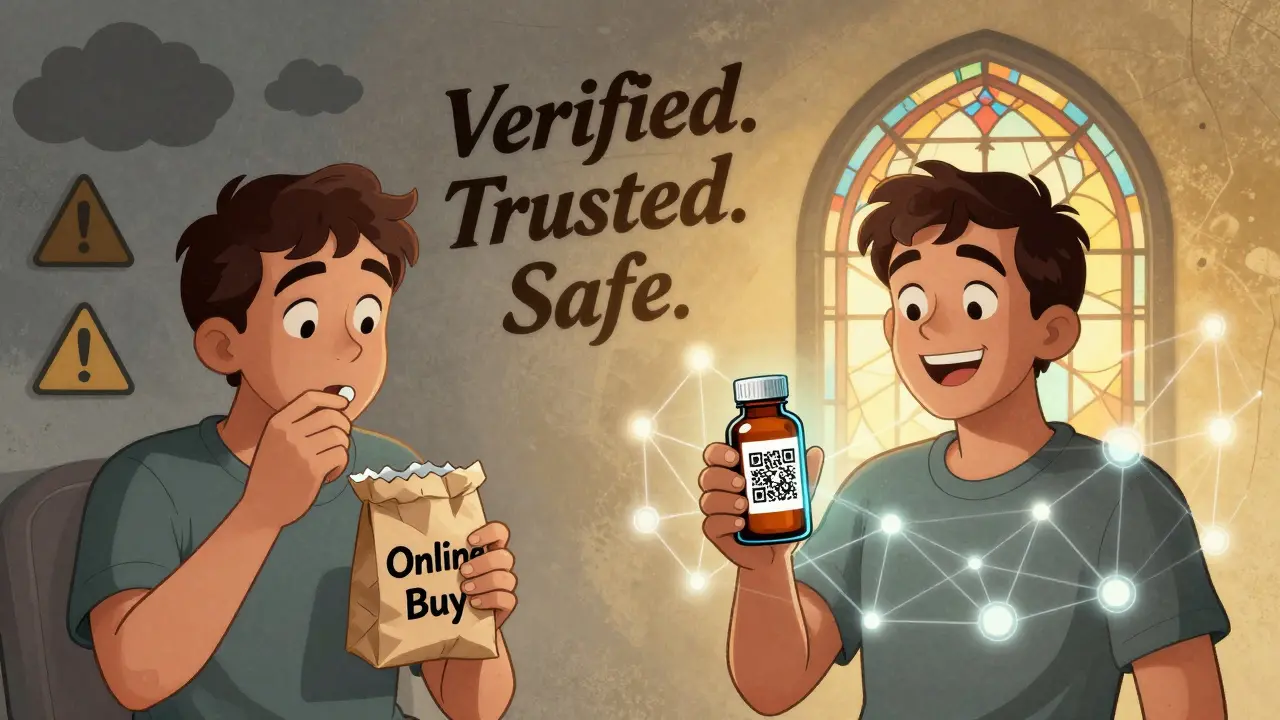
The real shift won’t be in technology. It’ll be in culture. Patients will start asking: “Is this on the blockchain?” Pharmacists will refuse to dispense unverified drugs. Insurance companies will only cover traceable medications.
And for the first time, buying generic medicine online won’t feel like a lottery.
What you can do today
If you’re a patient: Ask your pharmacy if they verify drugs using blockchain. If they don’t, ask why. Demand transparency.
If you’re a pharmacist: Start with DSCSA-compliant scanners. Train your team. Use the FDA’s free resource center. Don’t wait for perfection. Start with one drug line.
If you’re a generic manufacturer: Partner with a consortium like the Pharma Blockchain Consortium. Share costs. Pilot with one product. The ROI isn’t just financial - it’s ethical.
The tools exist. The data is clear. The deadline has passed. The question isn’t whether blockchain will fix drug safety. It’s whether you’re ready to use it.
How does blockchain prevent counterfeit drugs?
Each medicine package gets a unique digital ID tied to a QR code. Every time it changes hands - from factory to warehouse to pharmacy - that event is recorded on a shared, tamper-proof ledger. When you scan the code at the pharmacy, the system checks the entire history in seconds. If anything’s missing or altered, it flags the drug as suspicious. No manual checks. No guesswork.
Is blockchain better than holograms or special packaging?
Far better. Holograms and color-shifting ink can be copied by counterfeiters with basic tools. Studies show over a third of fake drugs still pass visual inspection. Blockchain doesn’t rely on appearance. It relies on data. If the digital record doesn’t match what’s in the system, the drug is blocked - no matter how good the packaging looks.
Can blockchain verify if a drug actually contains the right ingredients?
Not by itself. Blockchain tracks the journey of the drug - not its chemical makeup. A fake pill can still have a valid barcode. That’s why experts recommend combining blockchain with portable spectrometers or lab tests that analyze the pill’s composition. The two work together: blockchain says it came from the right place; the spectrometer says it’s the right substance.
Why aren’t all pharmacies using blockchain yet?
Cost and complexity. Installing serialization equipment and blockchain nodes costs over $2 million for a mid-sized company. Smaller pharmacies and generic makers can’t afford it. Internet access is also a problem - rural clinics often can’t scan codes reliably. Training staff takes weeks. These aren’t technical barriers. They’re logistical ones. But they’re being solved, slowly.
Is blockchain safe for patient privacy?
Yes. Blockchain systems in pharma don’t store personal data like names or prescriptions. They only track the drug’s serial number, location, and timestamp. No patient identifiers are added. This keeps it compliant with GDPR and HIPAA. The system knows the pill is real - not who bought it.
What happens if the blockchain system goes down?
Permissioned blockchains - the kind used in pharma - are designed for 99.99% uptime. They run on dozens of servers across different locations. If one node fails, others keep working. Still, failures have happened. In 2022, a Midwest pharmacy chain had a 3-day outage because they didn’t distribute nodes properly. Best practice: use multiple cloud providers and keep offline backup logs. Emergency overrides exist - but they’re rare and tightly controlled.
Will blockchain make generic drugs more expensive?
Not long-term. The upfront cost is high - but savings come fast. Hospitals save $20 billion a year by reducing safety stock. Pharmacists save hours on manual checks. Fewer fake drugs mean fewer lawsuits and recalls. Studies show the system pays for itself in under 18 months. For patients, it means safer, more reliable access - not higher prices.
Can I verify a drug myself as a patient?
Soon. Some systems already let patients scan a QR code on their prescription bottle with a smartphone app. The app shows the drug’s full journey - where it was made, when it was shipped, which pharmacy received it. It’s not widespread yet, but pilot programs in the U.S. and EU are expanding. By 2027, this will be standard for most prescription drugs.