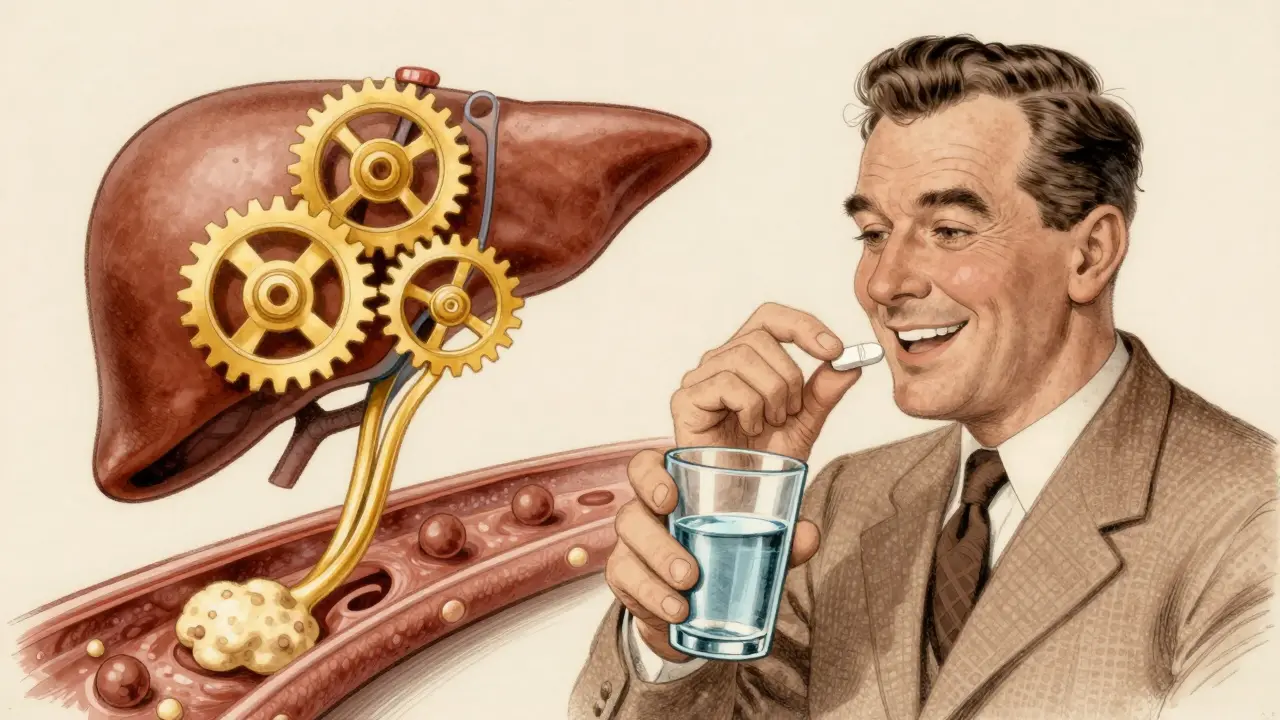
For millions of people, statins are a daily pill that keeps their heart healthy. But for others, the same pill brings aching muscles, fatigue, and doubt. If you’ve been prescribed a statin or are considering one, you’re not alone in wondering: are the benefits worth the risks? This isn’t just about numbers on a lab report-it’s about how you feel every day.
How Statins Actually Lower Cholesterol
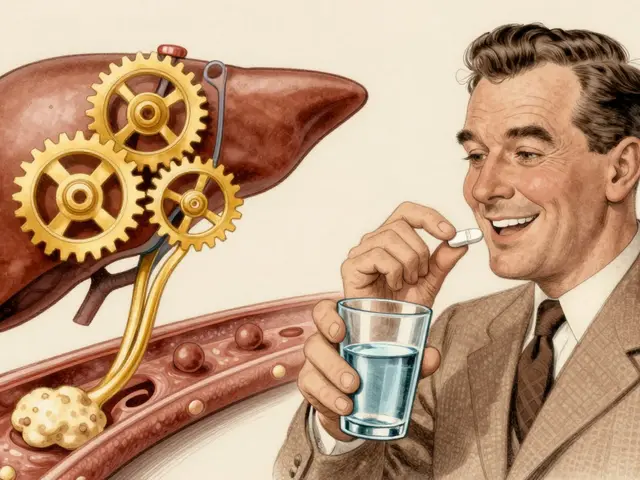
Statins don’t just "lower cholesterol"-they reprogram how your liver works. These drugs block an enzyme called HMG-CoA reductase, which your liver uses to make cholesterol. When that enzyme slows down, your liver starts pulling more LDL (the "bad" cholesterol) out of your blood to use as raw material. That’s why statins can drop LDL by 30% to 60%, depending on the type and dose.
It’s not magic. It’s physics. Your liver has receptors that grab LDL from your bloodstream. Statins turn up the volume on those receptors. The result? Less plaque buildup in your arteries. Over time, that means fewer heart attacks, fewer strokes, and fewer hospital stays.
Landmark studies like the Heart Protection Study and the 4S trial showed that people on statins had about a 30% lower risk of major heart events. For someone with a history of heart disease or diabetes, that’s not a small gain-it’s life-changing. One mmol/L drop in LDL equals a 22% lower risk of a heart attack or stroke. That’s not theory. That’s data from hundreds of thousands of patients.
The Real-World Impact: Who Benefits Most?
Not everyone needs a statin. But if you’ve had a heart attack, stroke, or have diabetes plus high LDL, the evidence is clear: statins save lives. In fact, guidelines from the American College of Cardiology and American Heart Association say statins should be first-line treatment for these groups.
But here’s what most people don’t realize: even if you’ve never had a heart problem, if your 10-year risk of a heart event is over 7.5%, statins can still help. That’s based on your age, blood pressure, cholesterol, smoking status, and whether you have diabetes. It’s not about being "sick." It’s about being at risk.
For example, a 62-year-old man in Manchester with high LDL, borderline blood pressure, and a family history of early heart disease might not feel sick-but his risk score could push him into the statin zone. That’s not alarmism. It’s prevention.
Muscle Pain: The Most Common Complaint
Now, the other side. Muscle pain. It’s the #1 reason people stop taking statins.
Studies show between 5% and 10% of users report muscle aches, stiffness, or cramps. That’s not rare. That’s common enough that every doctor who prescribes statins should expect it. But here’s the catch: many of those people would have had muscle pain anyway. Aging, inactivity, or other medications can cause the same symptoms.
True statin-induced muscle damage-called rhabdomyolysis-is extremely rare. Less than 1 in 1,000 people on statins develop it. That’s rarer than being struck by lightning. But mild muscle discomfort? That’s real, and it’s frustrating.
People describe it as soreness in the thighs, shoulders, or calves. Some say it feels like they’ve run a marathon without moving. Others wake up stiff, even after sleeping. It’s not always intense-but it’s persistent. And when you’re taking a pill to stay healthy, pain that feels like it’s coming from the pill itself? That’s hard to ignore.
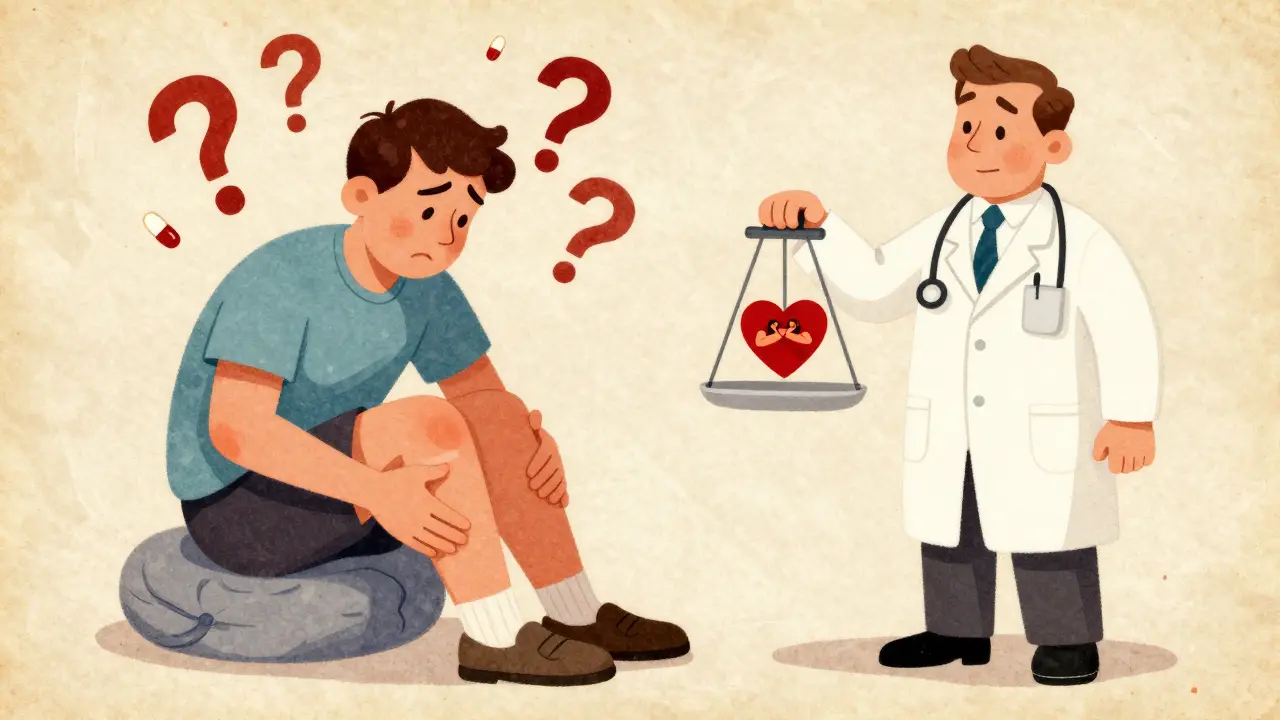
Is It Really the Statin? The Placebo Effect in Action
Here’s a surprising fact: in blinded studies where patients didn’t know if they were taking a statin or a sugar pill, about the same number reported muscle pain in both groups. That doesn’t mean statins don’t cause muscle pain-it means some of the pain people blame on statins might be psychological or coincidental.
But that doesn’t make the pain any less real. If you feel worse after starting a statin, your experience matters. The key is figuring out whether it’s the drug or something else.
Doctors often do a "statin challenge"-stop the drug for 4 to 6 weeks, then restart it. If the pain goes away and comes back when you restart it, there’s a strong chance the statin is the culprit. If the pain stays gone after restarting? Then it was probably something else.
What to Do If You Have Muscle Pain
You don’t have to suffer-or quit. There are options.
- Switch statins. Not all statins are the same. Simvastatin and lovastatin are more likely to cause muscle issues. Pravastatin and fluvastatin are less likely. Many people switch from atorvastatin to pravastatin and feel better.
- Lower the dose. Sometimes half a pill works just as well for heart protection, with fewer side effects.
- Try every other day. Some statins, like atorvastatin, last long enough in your body that taking them every other day still lowers cholesterol effectively.
- Check vitamin D and thyroid levels. Low vitamin D or an underactive thyroid can cause muscle pain that looks like statin side effects. Fix those first.
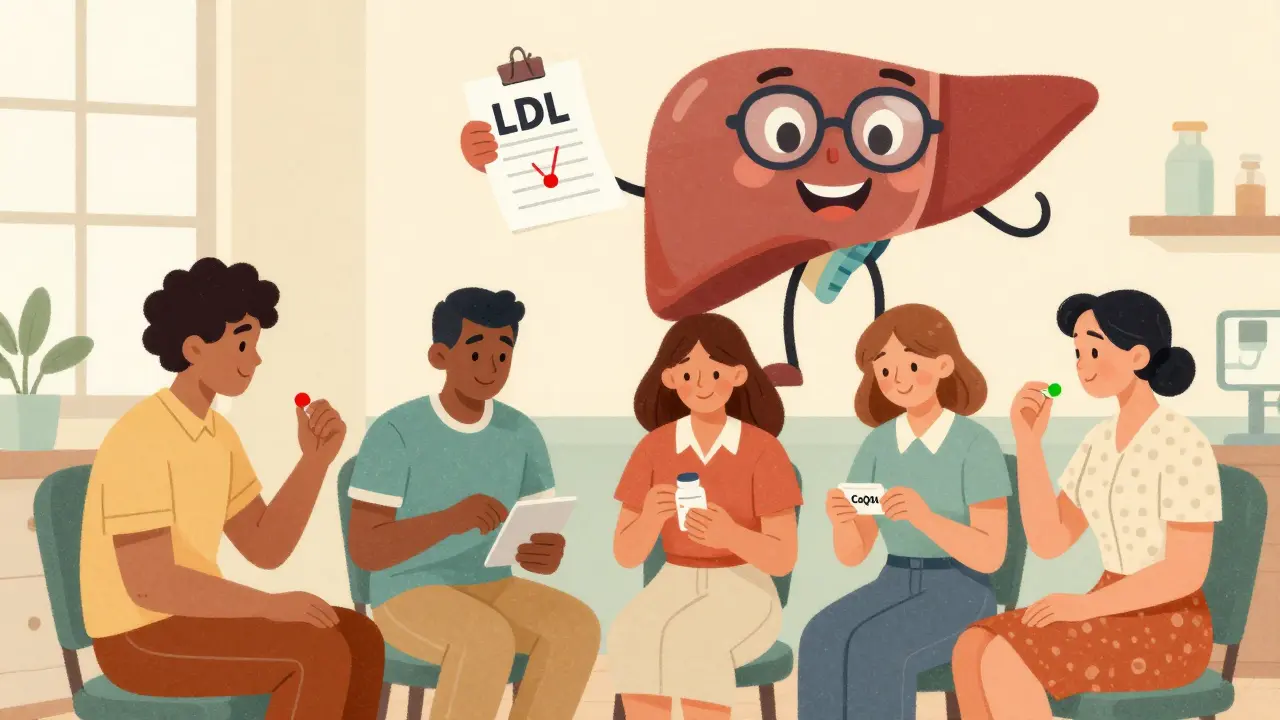
- Consider CoQ10. Statins lower CoQ10, a compound your muscles use for energy. Some studies show CoQ10 supplements help with muscle pain, though results aren’t universal. It’s low-risk, so many doctors suggest trying it.
One patient I know switched from rosuvastatin to pravastatin after six months of leg cramps that made walking hard. Within two weeks, the pain vanished. He didn’t lose his cholesterol control. He just found a statin his body tolerated.
What Happens If You Stop Taking Statins?
Stopping statins because of muscle pain is tempting. But here’s what you risk: your LDL climbs back up. Fast.
A study in JAMA Internal Medicine found nearly half of people quit statins within a year. Most did it because of side effects. But within months, their risk of heart attack or stroke returned to pre-statin levels. For someone with a history of heart disease, that’s dangerous.
Stopping statins doesn’t mean you’re "natural" or "holistic." It means you’re trading proven protection for uncertainty.
But here’s the good news: if you can’t tolerate a statin, there are other options. Ezetimibe lowers LDL by about 20%. PCSK9 inhibitors (injections) can drop it by 60%. They’re more expensive, but they work when statins don’t.
Long-Term Safety: Beyond Muscle Pain
Statins have been used for over 35 years. Millions of people have taken them. The long-term safety record is excellent.
Some worry about liver damage or diabetes risk. Yes, statins slightly raise blood sugar in a small number of people-but the heart protection they offer far outweighs that tiny risk. Liver enzyme changes? They happen, but serious liver damage from statins is almost unheard of.
And yes, statins can cause fatigue or brain fog in rare cases. But again, these effects are uncommon and often reversible when you stop the drug.
The real danger isn’t the statin. It’s the fear of the statin that keeps people from taking it.
Bottom Line: It’s About Balance
Statins aren’t perfect. But they’re one of the most effective tools we have to prevent heart disease. The muscle pain some people feel is real-but it’s not inevitable. It’s not a sign you’re "broken." It’s a signal to adjust, not abandon.
If you’re on a statin and feel fine? Keep taking it. You’re doing something powerful for your heart.
If you’re having muscle pain? Don’t quit. Talk to your doctor. Try a different statin. Adjust the dose. Test your vitamin D. Give it time. You might find a version that works.
And if you’re not on one but have high risk? Don’t let fear of side effects stop you from asking. The data is clear: for the right person, statins save lives.
Do statins really lower the risk of heart attacks?
Yes. Multiple large studies show statins reduce major heart events by about 30% over five years. For every 1 mmol/L drop in LDL cholesterol, the risk of a heart attack or stroke falls by 22%. This isn’t theoretical-it’s based on data from hundreds of thousands of patients.
Can statins cause permanent muscle damage?
Permanent muscle damage from statins is extremely rare. The most serious condition, rhabdomyolysis, affects fewer than 0.1% of users. Most muscle pain is temporary and goes away when you switch statins, lower the dose, or stop the drug. If you have severe muscle weakness or dark urine, seek medical help immediately-but this is not the norm.
Are generic statins as effective as brand names?
Yes. Generic statins like atorvastatin, simvastatin, and rosuvastatin are chemically identical to their brand-name versions. They work the same way and have the same side effect profile. Many are available for under £4 a month in the UK through NHS prescriptions or pharmacy discount programs.
Should I take CoQ10 with my statin?
It’s worth trying if you have muscle pain. Statins reduce your body’s natural CoQ10, which helps muscles produce energy. Some studies show CoQ10 supplements (100-200 mg daily) help reduce muscle discomfort, though results vary. It’s safe, inexpensive, and has no major side effects-so many doctors recommend it as a first step.
Can I stop statins if my cholesterol improves?
Not without talking to your doctor. Statins work by continuously blocking cholesterol production. If you stop, your liver will start making cholesterol again, and your levels will rise-often back to where they were before. Even if your cholesterol looks good now, it’s because the statin is working. Stopping doesn’t mean you’re cured-it means you’re back at risk.
What’s the best statin for minimizing muscle pain?
Pravastatin and fluvastatin are generally linked to the lowest risk of muscle side effects. Rosuvastatin and simvastatin are more likely to cause problems, especially at higher doses. Atorvastatin is in the middle. If you have muscle pain, switching to pravastatin is often the first step doctors recommend.
What Comes Next?
If you’re on a statin and feeling good, keep going. You’re protecting your heart in a way few medications can match.
If you’re having muscle pain, don’t assume it’s hopeless. Try switching statins. Adjust the dose. Check your vitamin D. Talk to your doctor about CoQ10. You might find a version that works without the pain.
If you’re not on one but have high risk, ask your doctor if you should be. The numbers don’t lie: for the right person, statins prevent heart attacks, strokes, and death. The muscle pain is real-but it’s manageable. The benefits? Lifesaving.




Write a comment
Your email address will be restricted to us