
Statin Cognitive Impact Calculator
How Statins May Affect Your Memory
This tool helps you understand how different statins might impact cognitive function based on scientific evidence. Remember: Statins don't cause dementia and may actually reduce dementia risk.
Your Cognitive Impact Assessment
Likelihood of Cognitive Effects
Recommended Action
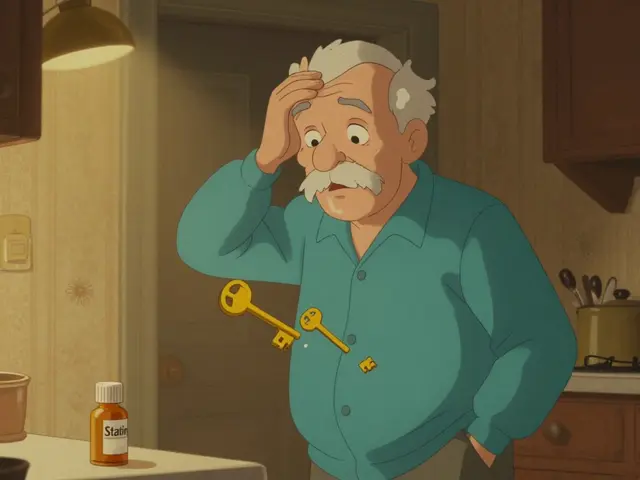
When you start taking a statin, you’re doing it to protect your heart. But then, maybe you notice something off: you forget where you put your keys. You walk into a room and can’t remember why. You struggle to find the right word mid-sentence. Suddenly, you’re wondering-could this be the statin?
Statins and Memory: The Real Story Behind the Fear
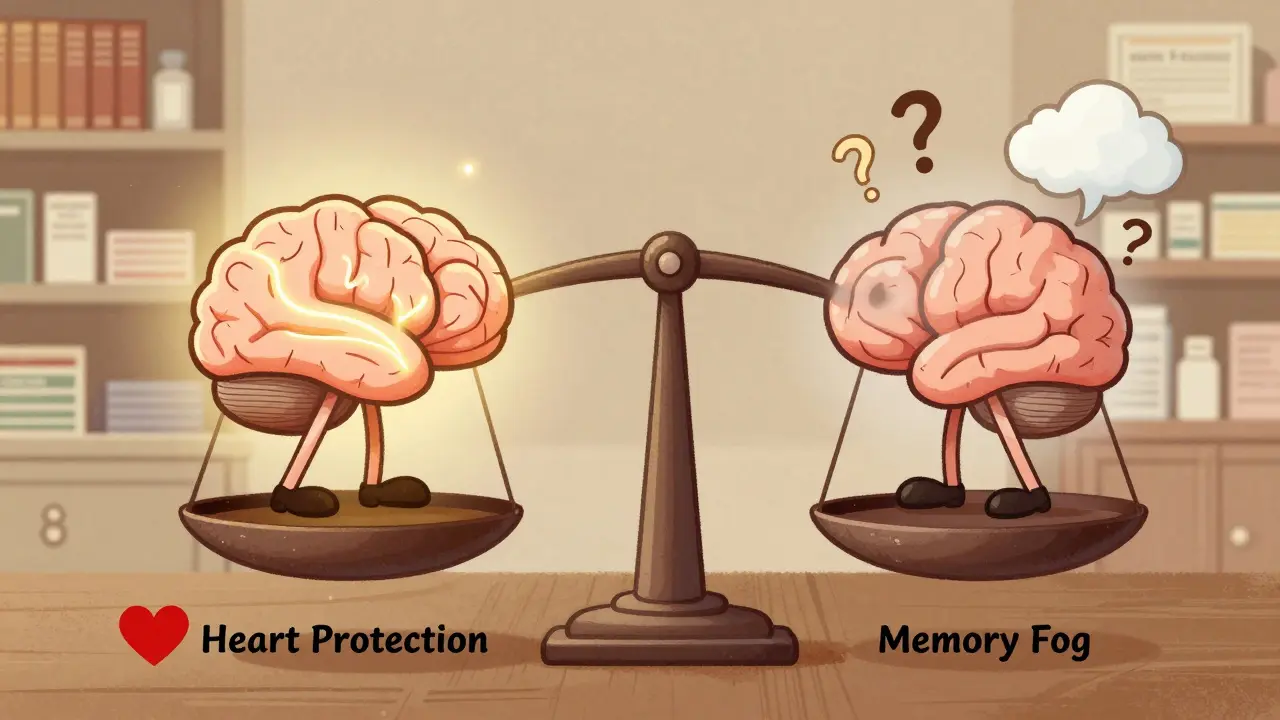
It’s not just you. Thousands of people report memory issues after starting statins. The FDA added memory loss and confusion to statin labels in 2012 after getting enough anecdotal reports. But here’s what most people don’t know: statins don’t cause dementia. In fact, the opposite might be true.
A 2022 analysis of 36 studies involving over 1.2 million people found that those taking statins had a 21% lower risk of developing dementia. The effect was even stronger for vascular dementia-33% lower risk. That’s not a fluke. It’s backed by long-term data from the Rotterdam Study, which followed nearly 13,000 people for 15 years and saw a 27% drop in dementia among statin users.
So why do some people feel foggy? It’s not because statins kill brain cells. It’s because they affect cholesterol-and cholesterol plays a role in how your brain cells communicate. But here’s the twist: the same mechanism that lowers your LDL cholesterol might briefly disrupt memory signals in sensitive people. It’s temporary. And it’s rare.
Lipophilic vs. Hydrophilic: Which Statin Affects Your Brain More?
Not all statins are the same. Some cross the blood-brain barrier more easily than others. That’s where lipophilicity comes in.
Lipophilic statins-like simvastatin, atorvastatin, and lovastatin-are fat-soluble. They slip into the brain more easily. Hydrophilic statins-pravastatin and rosuvastatin-are water-soluble. They mostly stay in the bloodstream.
A 2023 analysis of 48,732 patients across 12 trials found that lipophilic statins had a 42% higher chance of being linked to self-reported memory complaints. But here’s the catch: when researchers tested actual memory and thinking skills, there was no real difference between the groups. People felt like they were forgetting things-but their brain tests didn’t show it.
That’s a big clue. It suggests the problem isn’t always biological. It’s psychological too. If you read online that statins cause memory loss, your brain might start looking for signs of it. That’s the nocebo effect-the opposite of placebo. You expect to feel foggy, so you notice every little slip.
What the Data Says About Memory Loss and Statins
Let’s look at the numbers.
In 2015, a JAMA Internal Medicine study found that people had a 3.78 times higher risk of acute memory loss within 30 days of starting a statin. But here’s the twist: the same risk showed up with non-statin cholesterol drugs. That means it’s not the statin itself. It’s the act of starting a new medication. Your body is adjusting. Your mind is on alert.
Another study in the Journal of General Internal Medicine in 2020 found that 28% of statin users said they had memory problems. But only 8% showed real decline on objective tests. That’s a huge gap. Most people are noticing normal forgetfulness-like misplacing sunglasses or blanking on a name-and blaming the pill.
And then there’s the Reddit data. In a 2023 analysis of 1,247 posts, 68% of users said memory issues started within three months. But 74% of those who stopped the statin felt better within four weeks. That’s fast. And it lines up with what doctors see: when people stop, the fog lifts. But when they restart, it often comes back-only if they’re expecting it to.
What Happens When You Stop Taking Statins?
If you think your memory is slipping because of statins, don’t just quit. Talk to your doctor.
There’s a proven method: the 4- to 6-week statin holiday. Stop the drug under medical supervision. Track your symptoms. If your memory improves, restart it. If the fog returns, there’s a strong chance the statin was the trigger.
A 2019 Mayo Clinic study found this approach worked in 82% of cases. That’s not a guess. That’s science.
And here’s the good news: if you do have a reaction, it’s almost always reversible. The FDA says so. The American Heart Association says so. Case reports from the 2000s show that 56% of people who stopped statins saw their memory improve. Only 4 out of 25 patients had symptoms come back when they restarted-confirming the link.
But here’s the flip side: if you stop your statin because you’re scared of memory loss, you might be putting your heart at risk. Statins reduce heart attacks by up to 30% in high-risk people. That’s more lives saved than any other drug in history.
What Should You Do If You’re Worried?
First, don’t panic. Forgetfulness is normal. We all have days where our brain feels slow. Stress, sleep, alcohol, and aging all play bigger roles than statins.
Second, track your symptoms. Write down:
- When the memory issues started (within 60 days of starting statins?)
- How often they happen
- Whether they’re getting worse or staying the same
- If you’ve had other changes-sleep, mood, energy
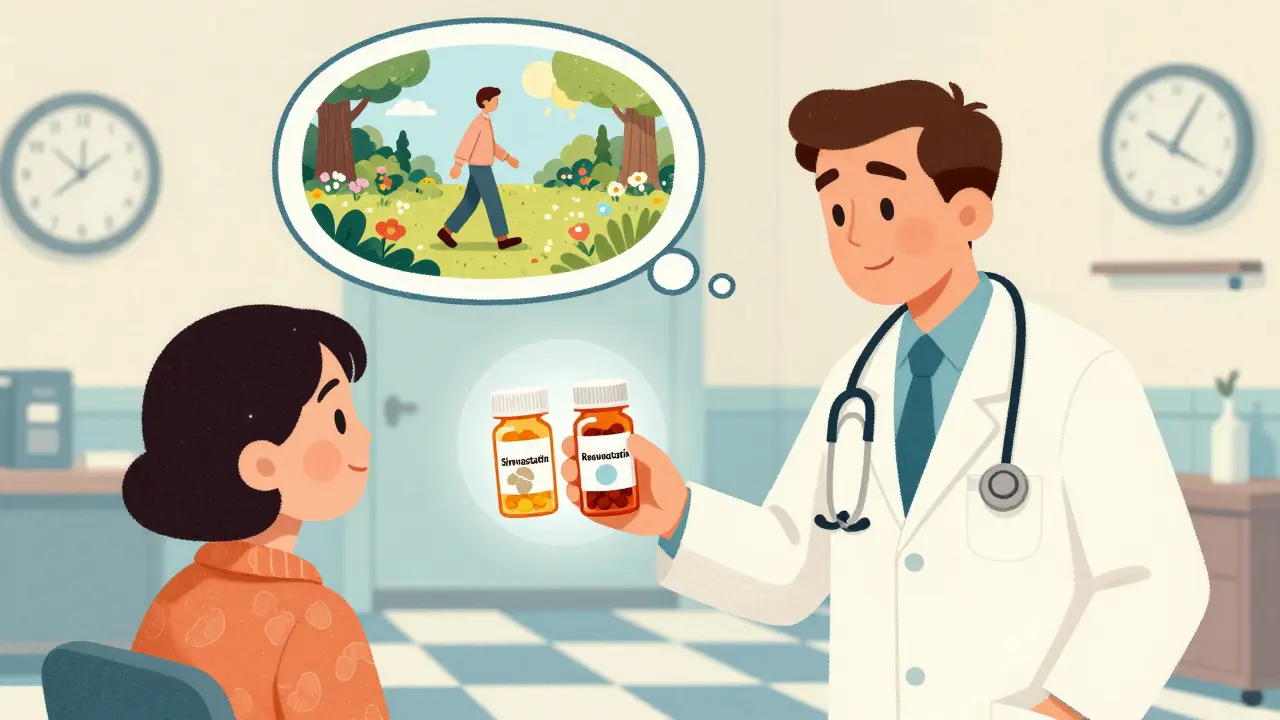
Third, talk to your doctor. Ask about switching to a hydrophilic statin like pravastatin or rosuvastatin. These are less likely to affect your brain. Many patients report better cognitive clarity after the switch.
Fourth, consider a dose reduction. Sometimes, lowering the dose (like going from 80mg to 40mg of atorvastatin) cuts side effects without losing heart protection.
And if you’re still unsure? Do the statin holiday. Stop for 4-6 weeks. See if your mind clears. Then restart. If the fog returns, you’ll know. If it doesn’t, you’ve got your answer.
Why Doctors Still Prescribe Statins Despite the Concerns
Here’s what most patients don’t realize: doctors aren’t ignoring the memory complaints. They’re weighing them against the stakes.
If you’ve had a heart attack, a stent, or diabetes, your risk of another heart event is high. Statins cut that risk by a third. The chance of memory issues? Less than 1 in 100. And even then, it’s usually temporary.
A 2021 survey of 1,024 U.S. physicians found that 78% of them continue statins in patients with mild memory complaints-unless the symptoms are severe and clearly tied to the start of the drug.
The European Society of Cardiology’s 2024 guidelines say it plainly: “Statins should not be discontinued based on subjective cognitive complaints alone.” That’s not cold. It’s cautious. It’s based on evidence.
Dr. JoAnn Manson from Harvard puts it simply: “The benefits clearly outweigh the risks for people who need them.”
What’s Next? Research Is Still Evolving
Science hasn’t closed the book. The STATIN-COG trial, funded by the NIH with $8.7 million, is tracking 3,200 statin users over five years with annual brain scans and memory tests. Preliminary results are expected in late 2024.
Early findings from a 2023 Nature Communications study suggest statins might cause short-term memory blips by lowering LDL too fast-or raising blood sugar slightly. Both can affect brain energy use. But these effects are small, temporary, and tied to specific dosing patterns.
Meanwhile, researchers are looking at genetic differences. Some people may be more sensitive to statins because of how their bodies process cholesterol in the brain. That could explain why only a small group has issues.
For now, the evidence is clear: statins don’t cause long-term memory loss. They might cause short-term, reversible fuzziness in a small number of people. But they protect your heart-and your brain-from far bigger threats.
Final Thought: Don’t Let Fear Keep You From Living
Statin-related memory complaints are real for some. But they’re not common. And they’re not permanent.
If you’re worried, talk to your doctor. Track your symptoms. Try a switch. Do a break. But don’t stop because of a fear that’s bigger than the data.
Your heart needs you to stay on track. And your brain? It’s tougher than you think.



Write a comment
Your email address will be restricted to us