Nausea Progress Tracker
How Your Dose Schedule Affects Nausea
Enter your current dose and escalation plan to see when nausea typically subsides based on clinical data.
More than 1 in 8 Americans are now taking a GLP-1 receptor agonist-drugs like Ozempic, Wegovy, or Mounjaro-for diabetes or weight loss. These medications work by slowing digestion, reducing appetite, and helping the body release insulin more effectively. The results can be life-changing: people often lose 15% or more of their body weight. But for many, the cost isn’t just financial-it’s physical. Nausea, vomiting, bloating, and constipation aren’t just side effects. For a lot of users, they’re the main reason people quit.
Why Do GLP-1 Drugs Make You Feel Sick?
It’s not a glitch. It’s the point.
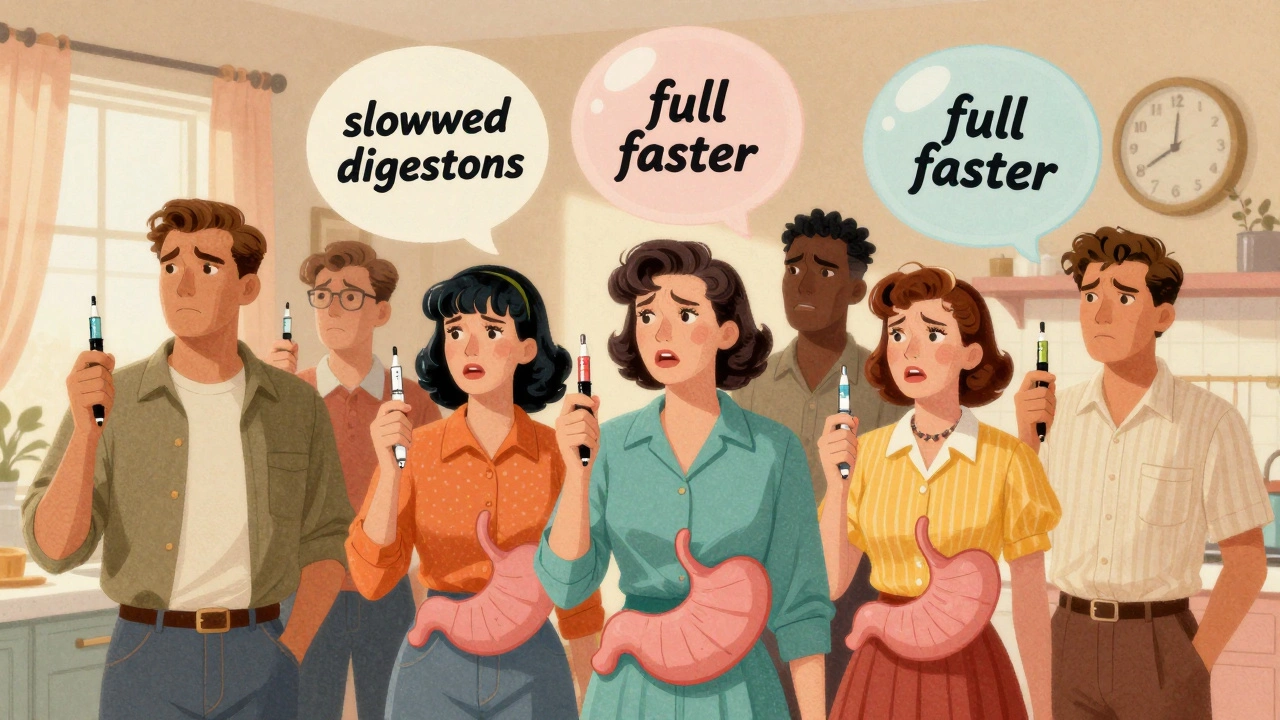
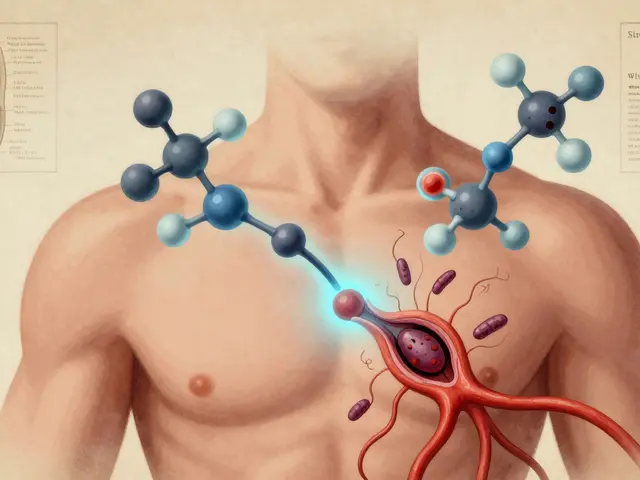
GLP-1 agonists mimic a natural hormone that tells your stomach to slow down after eating. That’s why you feel full faster and eat less. But that same effect also means food sits in your stomach longer. Your gut doesn’t move things along as quickly. That delay is what causes nausea, bloating, and sometimes vomiting.
It’s not about being sensitive. It’s not about eating the wrong thing. It’s the drug doing exactly what it’s supposed to do-slowing gastric emptying. That’s why nausea happens in up to 70% of users during the first few weeks. Studies show that 40% of people on semaglutide and 25% on liraglutide report nausea at maintenance doses. And it’s not just the brand. Every GLP-1 drug in this class does it.
When Does the Nausea Start-and When Does It End?
Most people don’t feel sick right away. The nausea hits during the dose escalation phase.
Doctors start patients on a low dose-like 0.25 mg of semaglutide weekly-and slowly bump it up every 4 weeks. That’s not random. It’s designed to let your body adjust. If you jump straight to the full dose, nausea becomes almost unavoidable.
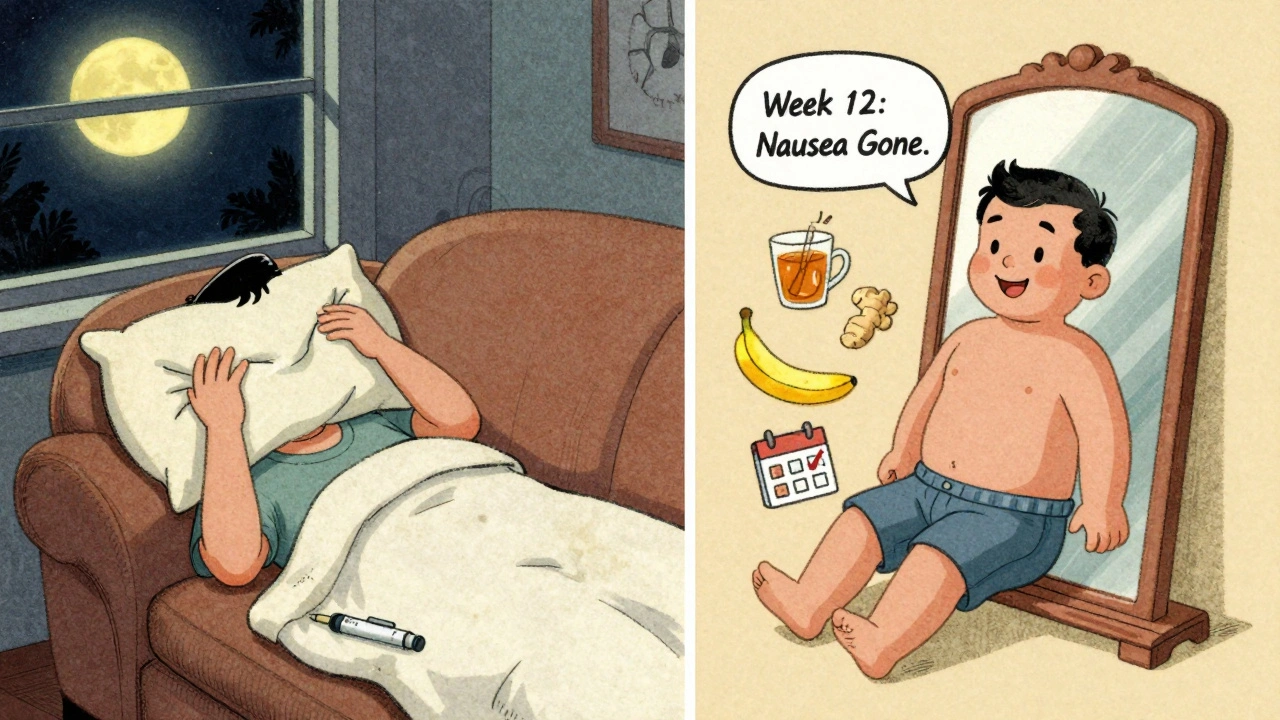
The good news? For most, it gets better. By the time you hit the maintenance dose (usually around week 16-20), nausea drops significantly. In clinical trials, about half the people who had nausea at the start no longer felt it after 12 weeks. Reddit users on r/Ozempic and r/Wegovy report the same pattern: the first 4-6 weeks are rough, but by week 8, things improve. Many say they barely notice it after 12 weeks.
That doesn’t mean it disappears for everyone. Some people have mild nausea for months. But for the majority, it fades enough to make the benefits worth it.
What Are the Real Risks Beyond Nausea?
Most GI side effects are annoying, not dangerous. But not all.
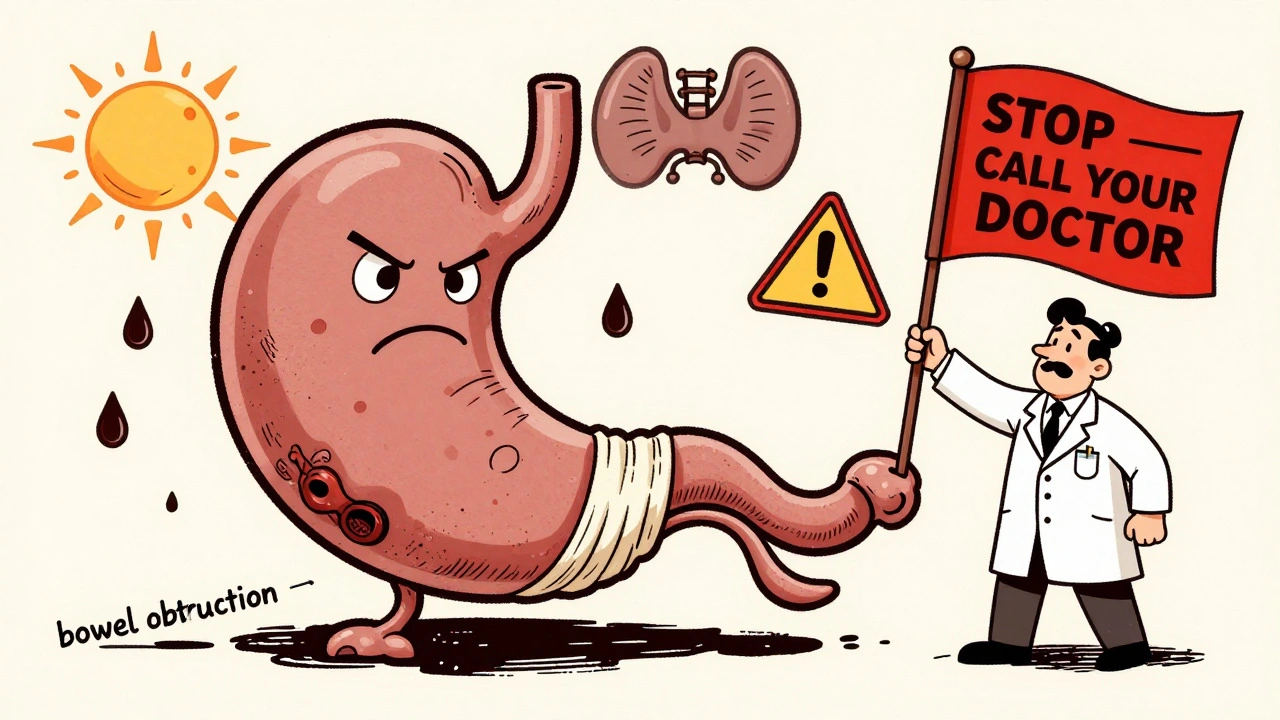
A 2023 JAMA study tracked over 5,000 people on GLP-1 drugs and found they had a 9 times higher risk of pancreatitis, 4 times higher risk of bowel obstruction, and 3.5 times higher risk of gastroparesis compared to people on other weight-loss meds. These are rare-but serious. Pancreatitis means severe, constant abdominal pain that doesn’t go away. Bowel obstruction means you can’t pass gas or have a bowel movement. Gastroparesis means your stomach stops emptying altogether.
The FDA also puts a black box warning on these drugs for thyroid C-cell tumors-based on animal studies. No proven cases in humans, but it’s why people with a personal or family history of thyroid cancer are told to avoid them.
Other red flags: yellowing skin or eyes (jaundice), severe vomiting or diarrhea, sudden sharp stomach pain, or not urinating for 12+ hours. These aren’t normal. Call your doctor immediately.
How to Reduce Nausea Without Stopping the Drug
If you’re feeling sick, you don’t have to quit.
Here’s what works, based on real patient reports and clinical advice:
- Go slow with the dose. Don’t rush the escalation. If your nausea is bad, stay on your current dose longer. Talk to your doctor about extending the ramp-up period.
- Eat smaller, simpler meals. Avoid fried foods, heavy sauces, and big portions. Stick to bland, low-fat options: toast, rice, boiled chicken, bananas, applesauce. Skip the dessert.
- Stay hydrated-but sip slowly. Chugging water makes nausea worse. Take small sips throughout the day. Ginger tea or peppermint tea can help calm the stomach.
- Avoid lying down after eating. Wait at least 2-3 hours before lying down. Gravity helps keep food where it belongs.
- Try taking the shot at night. Many people find nausea is worse during the day. Taking the injection before bed lets them sleep through the worst of it.
- Consider OTC help-carefully. Dramamine or Pepto-Bismol can ease nausea for some. But don’t self-treat without checking with your doctor. Some meds interact with GLP-1 drugs.
One woman in Manchester told me she kept her nausea under control by eating five tiny meals a day instead of three big ones. She swapped out her usual lunch of pasta with cream sauce for a salad with grilled chicken and olive oil. Within two weeks, the vomiting stopped.
When Should You Stop Taking It?
Not every side effect means you should quit.
But if you’re having:
- Severe, constant abdominal pain
- Repeated vomiting or diarrhea for more than 24 hours
- Dark urine or yellow eyes
- No bowel movement or gas for 3+ days
-then stop the drug and call your doctor. These aren’t normal side effects. They’re warning signs.
Also, if nausea is so bad you’re losing weight unintentionally, dehydrating, or can’t eat at all for more than a week, it’s time to reassess. The goal is better health-not starvation or exhaustion.
What’s Next for These Drugs?
Pharma companies know the side effects are holding back adoption. That’s why new versions are coming.
Some are testing oral GLP-1 drugs (instead of injections) to reduce stomach irritation. Others are combining GLP-1 with other weight-loss agents so lower doses can be used. Early results suggest these combos may cut nausea by 30-40%.
One new drug in development, retatrutide, combines GLP-1 with GIP and glucagon action. In early trials, it caused less nausea than semaglutide at similar weight-loss levels. It’s not approved yet, but it shows the industry is listening.
For now, the best strategy is patience and smart management. Most people who stick with it past the first 3 months find their nausea fades. The weight loss, energy boost, and blood sugar control become worth the discomfort.
Why Do So Many People Keep Taking It?
Because the results are real.
One study showed people on semaglutide lost nearly 15% of their body weight over 68 weeks. That’s 30 pounds for someone who weighs 200. Many say they can finally fit into clothes they hadn’t worn in years. Others say their type 2 diabetes went into remission.
One man in Manchester lost 47 pounds on Wegovy. He stopped needing insulin. His blood pressure dropped. His sleep apnea improved. He still gets mild nausea twice a week, but he says it’s a small price to pay.
These drugs aren’t magic. But for people who’ve tried everything else and failed, they’re the first real tool that works.
And if you’re struggling with nausea? You’re not alone. And you don’t have to quit. Just slow down, adjust, and talk to your doctor. Most people get through it.
How long does nausea last on Ozempic or Wegovy?
For most people, nausea peaks during the first 4-6 weeks while the dose is being increased. By the time they reach the maintenance dose-usually around week 16 to 20-nausea drops significantly. About half of users report it disappears entirely after 12 weeks. But some may have mild, occasional nausea for longer.
Can I take anti-nausea medicine with GLP-1 drugs?
Yes, but only under medical supervision. Over-the-counter options like Dramamine (dimenhydrinate) or Pepto-Bismol may help with mild nausea. Avoid herbal supplements like ginger pills without checking with your doctor-they can interact with other medications. Never use prescription anti-nausea drugs like ondansetron without approval.
Does taking GLP-1 drugs at night help with nausea?
Many users report less nausea when they take their injection at night. Sleeping through the first few hours after dosing helps avoid the peak nausea window. It’s not guaranteed to work for everyone, but it’s a simple, low-risk adjustment to try before changing your diet or stopping the medication.
Are GI side effects worse with higher doses?
Yes. Nausea, vomiting, and constipation are dose-dependent. The higher the dose, the more likely you are to experience side effects. That’s why doctors start low and increase slowly. Jumping to a higher dose too quickly almost always leads to worse symptoms. Stick to the prescribed ramp-up schedule.
Can GLP-1 drugs cause long-term stomach damage?
There’s no evidence that GLP-1 drugs cause permanent stomach damage in most people. However, they can worsen pre-existing conditions like gastroparesis or lead to rare complications like bowel obstruction or ileus. If you have a history of slow digestion, stomach surgery, or chronic GI issues, talk to your doctor before starting. These drugs aren’t safe for everyone.
Should I stop GLP-1 drugs before surgery?
Yes. Because these drugs slow stomach emptying, there’s a risk of food or acid entering your lungs during anesthesia. Most surgeons recommend stopping GLP-1 drugs at least 2 weeks before any procedure requiring sedation or general anesthesia. Always check with your surgeon and prescribing doctor.



Write a comment
Your email address will be restricted to us