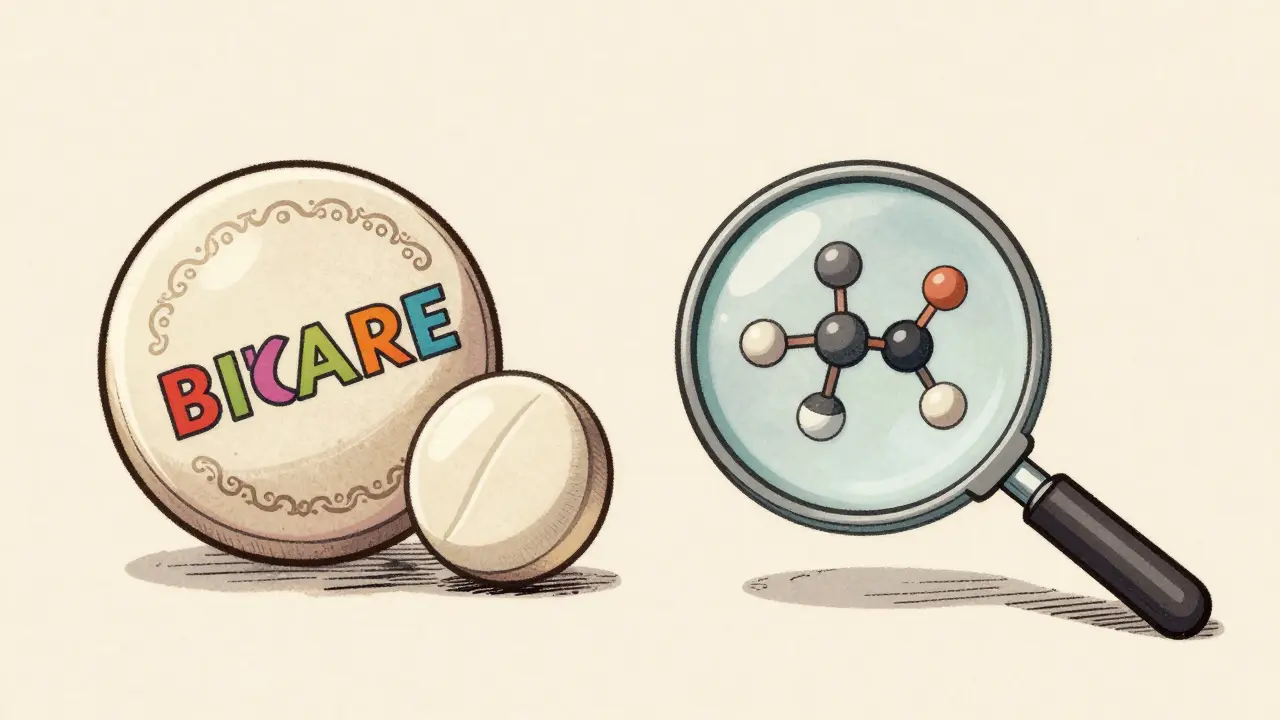
When you pick up a prescription, you might see a small, plain pill with no brand name on it. You might wonder: is this just a copy of the real thing? Are generic drugs cheap knockoffs? Do they work the same? These questions come up all the time - not because people are suspicious, but because they’ve heard confusing things. Some say generics are inferior. Others say they’re identical. The truth? It’s somewhere in between - and it’s not what most people think.
What Exactly Is a Generic Drug?
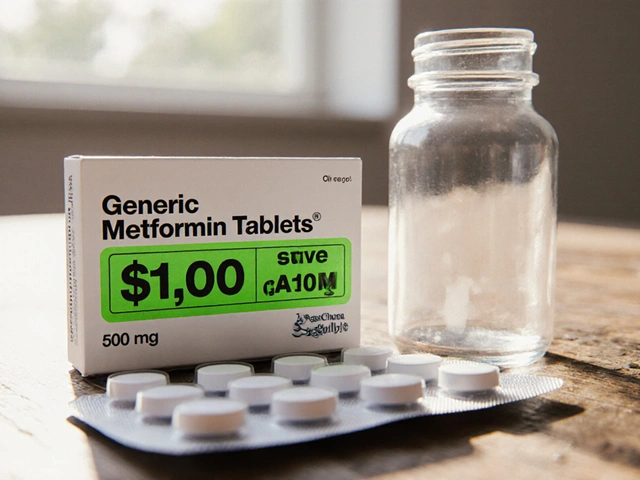
A generic drug isn’t a copy in the way a pirated movie or fake handbag is. It’s a scientifically approved version of a brand-name drug. By law, it must contain the same active ingredient, in the same strength, and in the same form - whether it’s a tablet, capsule, injection, or liquid. If your brand-name drug is 10 mg of lisinopril, the generic is 10 mg of lisinopril. No more, no less. The U.S. Food and Drug Administration (FDA) requires this.The FDA doesn’t approve generics based on trust. They require proof. Generic manufacturers must run tests showing their drug delivers the same amount of active ingredient into your bloodstream at the same rate as the brand-name version. This is called bioequivalence. The standard? The drug’s absorption must fall within 80% to 125% of the brand-name drug’s levels. That’s not a wide margin - it’s tight enough to ensure your body reacts the same way.
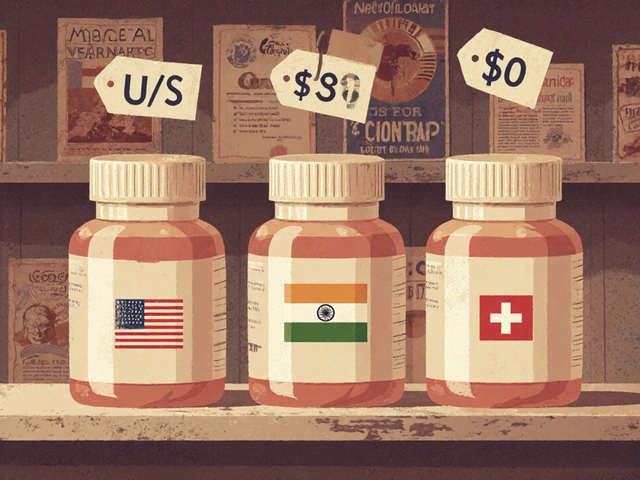
That’s why 90% of all prescriptions filled in the U.S. today are generics. And they make up only 23% of total drug spending. The average generic costs 85% less than the brand-name version. That’s not a coincidence. It’s the result of a 1984 law called the Hatch-Waxman Act, which created a smarter, faster path for generics to enter the market after patents expire.
Why Do Generics Look Different?
If generics are the same, why do they look different? Why is one blue and another white? Why does one have a different shape or taste?Because the law says they have to.
Trademark laws protect brand names and appearances. So, while the active ingredient must match exactly, the color, shape, flavor, and inactive ingredients - like fillers, dyes, and preservatives - can be different. These are called excipients. They help the pill hold together, dissolve properly, or taste better. But they don’t affect how the drug works in your body.
Some people notice side effects after switching to a generic - like a stomachache or dizziness. In most cases, it’s not the active ingredient. It’s the excipients. For example, someone allergic to a dye in the brand-name version might react to the same dye in a generic. Or a person with lactose intolerance might get bloated if the generic uses lactose as a filler, while the brand uses corn starch. These are rare, but they happen. That’s why pharmacists ask if you’ve had reactions to certain fillers before.
Do Generics Work as Well?
Yes. For the vast majority of drugs, generics work just as well.The FDA has reviewed over 1,800 reports of possible problems with generic drugs between 2018 and 2022. Only 5.5 cases per year were confirmed as actual failures - that’s 0.3%. Most of those were due to human error, storage issues, or patient non-adherence - not the drug itself.
Studies show patients on generic statins, blood pressure meds, and acid reducers do just as well as those on brand names. One Harvard study found that 25% of people stopped taking their brand-name drug because of cost. Only 8% stopped taking the generic. That’s not just about money - it’s about getting better. If you can’t afford your medicine, you won’t take it. And that’s worse than any theoretical difference.
On Drugs.com, over 1.2 million reviews show generics average a 7.2 out of 10 for effectiveness. Brand names? 7.5. The gap is tiny. And 82% of users say they notice no difference at all.
The Exception: Narrow Therapeutic Index Drugs
There’s one group where switching requires more caution: drugs with a narrow therapeutic index (NTI). These are medications where even a small change in blood levels can cause serious problems - either the drug stops working or becomes toxic.Examples include:
- Warfarin (a blood thinner)
- Levothyroxine (for thyroid conditions)
- Phenytoin and other antiseizure drugs
For these, the FDA and many doctors recommend sticking with the same version - brand or generic - unless there’s a clear reason to switch. That’s not because generics are unsafe. It’s because small variations in absorption, even within FDA limits, could matter more here.
Still, studies show 92% of patients on NTI drugs do fine after switching. The key? Monitoring. If you’re on warfarin, your doctor checks your INR levels regularly anyway. If you’re on levothyroxine, your TSH levels are tracked. That’s how you catch any issue early.
Some patients report breakthrough seizures after switching antiepileptic generics. But FDA analysis found most of those cases weren’t caused by the drug’s bioequivalence - they were linked to missed doses, stress, illness, or other factors.
What About Biosimilars? Are They the Same?
You might hear about “biosimilars” and think they’re just another kind of generic. They’re not.Traditional generics are made from chemicals. They’re exact copies. Biosimilars are made from living cells - like insulin, rheumatoid arthritis drugs, or cancer treatments. Because they come from biological sources, they can’t be *identical* copies. But they’re designed to be so similar that there’s no meaningful difference in how they work.
As of 2023, biosimilars make up less than 5% of the market for biologic drugs. But that’s changing fast. The FDA is speeding up approvals, and new biosimilars for drugs like Humira and Enbrel are hitting the market. They’re still expensive - but way cheaper than the original biologics.
Why Do People Still Doubt Generics?
A Kaiser Family Foundation survey found that 43% of people believe generics contain only 20% to 80% of the active ingredient. That’s not true. FDA testing shows generics contain 99.2% of the labeled active ingredient on average.Another reason? Marketing. Brand-name companies spend billions on ads telling you their drug is “better.” Generics don’t advertise. So it’s easy to assume they’re inferior. But the truth? They’re made in the same factories, often by the same companies that make the brand-name version. In fact, 50% of generic drugs are made by brand-name manufacturers themselves.
And pharmacists? They’re trained to explain this. But they only have about 3 minutes per prescription. That’s not enough time to fix years of misinformation.
What Should You Do?
Here’s the practical advice:- If your doctor prescribes a brand-name drug, ask if a generic is available. It’s almost always an option.
- If you’re switched to a generic and feel different, talk to your doctor or pharmacist. Don’t assume it’s broken.
- For NTI drugs like warfarin or levothyroxine, stick with the same version unless your provider advises otherwise.
- If cost is an issue, generics are the smartest choice - they’re safe, effective, and save you hundreds per year.
- Don’t let the color or shape fool you. The pill doesn’t need a logo to work.
Every time you choose a generic, you’re not just saving money. You’re helping the system work better. Lower drug costs mean more people get the medicine they need. And that’s the real win.
What About State Laws?
Forty-nine states let pharmacists substitute a generic for a brand-name drug without asking your doctor first. Mississippi is the only exception - it requires a note from your doctor.Twenty-eight states let you request the brand-name drug even if a generic is available - and pay the generic price. That’s called “brand substitution at generic cost.” You can ask for it. You just have to speak up.
And starting in 2026, Medicare Part D will automatically switch you to a generic unless your doctor says it’s medically inappropriate. That’s a big step - and it’s expected to save $156 billion over ten years.
Final Thought: It’s Not About Copies. It’s About Access.
Generic drugs aren’t copies. They’re replacements - smarter, cheaper, and just as effective replacements. The myth that they’re inferior doesn’t come from science. It comes from marketing, confusion, and fear of the unfamiliar.The data is clear: for 96% of prescriptions, generics work just as well. For the other 4%, we have systems in place to manage the risk. And for the millions who can’t afford their meds without generics? They’re not just saving money - they’re staying alive.
Next time you see a plain pill, don’t wonder if it’s real. Know that it’s been tested, approved, and trusted by millions. And it’s doing exactly what it’s supposed to do.
Are generic drugs less effective than brand-name drugs?
No. Generic drugs are required by the FDA to be bioequivalent to their brand-name counterparts. This means they deliver the same amount of active ingredient into your bloodstream at the same rate. Studies show they work just as well for the vast majority of medications. For example, 96% of non-NTI drug substitutions (like statins or blood pressure meds) show no difference in effectiveness.
Why do generic drugs look different?
Generic drugs must look different from brand-name versions because of U.S. trademark laws. While the active ingredient is identical, the color, shape, size, and inactive ingredients (like dyes or fillers) can vary. These differences don’t affect how the drug works - they’re just there to avoid copying the brand’s appearance.
Can generic drugs cause different side effects?
Sometimes, but not because of the active ingredient. Side effects from generics are usually linked to inactive ingredients - like lactose, dyes, or preservatives - which can differ between brands. For example, someone with a corn allergy might react to a generic that uses corn starch as a filler. These reactions are rare and usually mild. If you notice a change, talk to your pharmacist or doctor.
Are there any drugs where I should avoid generics?
Yes - drugs with a narrow therapeutic index (NTI), where small changes in blood levels can cause serious problems. Examples include warfarin, levothyroxine, and certain seizure medications like phenytoin. For these, your doctor may recommend sticking with one version (brand or generic) to avoid fluctuations. But even for NTI drugs, most patients switch safely with proper monitoring.
Do big pharmaceutical companies make generic drugs too?
Yes. About half of all generic drugs are made by the same companies that produce brand-name versions. For example, Pfizer and Johnson & Johnson both make generics under different labels. The difference isn’t who makes them - it’s the price. Generics cost less because they don’t need to recoup billions in R&D costs.
Is it safe to switch from a brand-name drug to a generic?
For most people, yes - and it’s often recommended. The FDA approves every generic before it hits the market. Switching is common and safe for over 90% of medications. If you’re on a high-risk drug like warfarin or an antiseizure medication, your doctor may monitor you more closely after the switch. But for blood pressure, cholesterol, diabetes, and most chronic conditions, switching is not just safe - it’s smart.
Why are generic drugs so much cheaper?
Brand-name drugs cost a lot because the manufacturer spent years and billions developing and testing them. Once the patent expires, other companies can make the same drug without repeating those expensive studies. They only need to prove bioequivalence - which costs far less. That’s why generics are typically 80-85% cheaper. The savings go to patients, insurers, and the healthcare system.
Can I ask for the brand-name drug even if a generic is available?
Yes. In 28 states, you can ask your pharmacist to give you the brand-name drug and pay the generic price - if the two are therapeutically equivalent. You’ll need to request it explicitly. In other states, your doctor can write “dispense as written” on the prescription to prevent substitution. Always speak up if you have a preference.



Write a comment
Your email address will be restricted to us