Comorbidity & Polypharmacy Risk Estimator
Patient Profile
Select Existing Conditions:
Estimated Risk Level
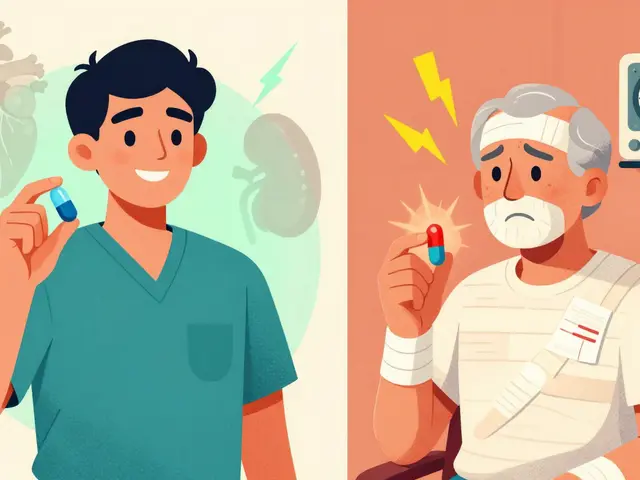
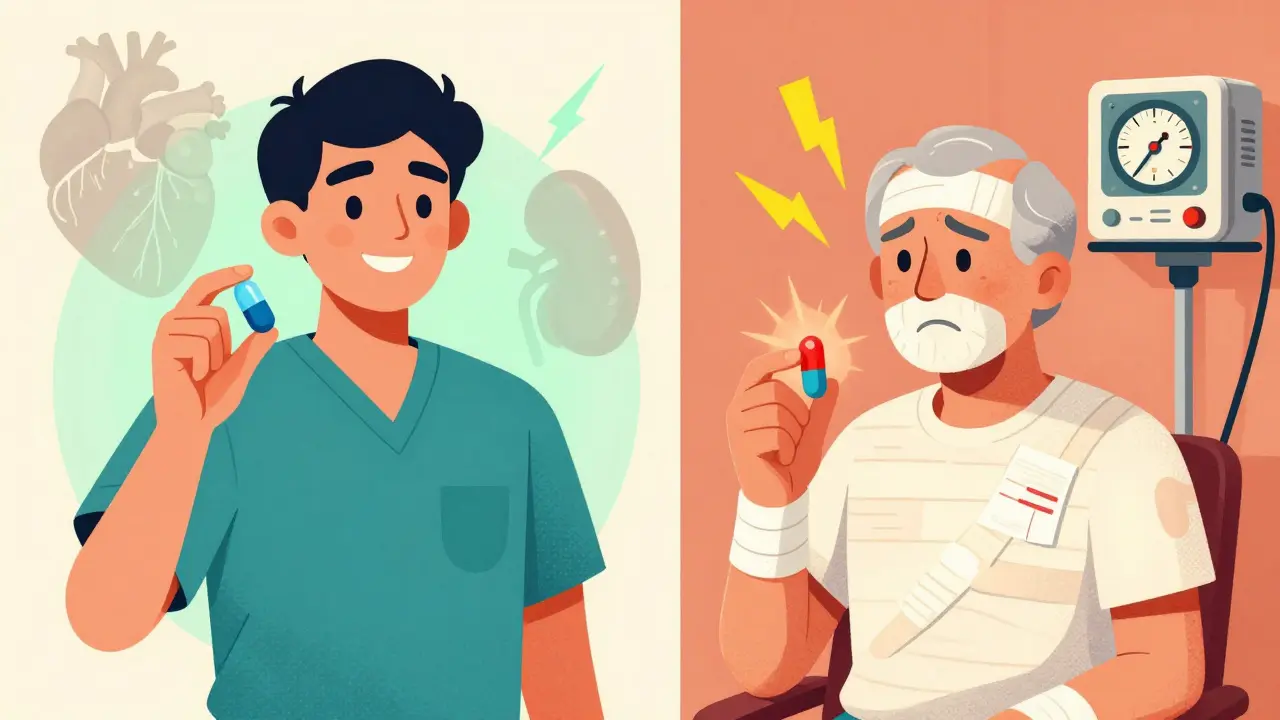
Take a standard painkiller. For a healthy twenty-year-old, it’s usually harmless. Now give that same pill to a seventy-year-old with high blood pressure, mild kidney disease, and diabetes. Suddenly, that simple dose can trigger a dangerous drop in blood pressure or stress the kidneys further. This isn’t just bad luck; it is biology at work. Your existing health conditions-what doctors call comorbidities are two or more chronic diseases or disorders occurring simultaneously in one person-fundamentally change how your body handles medication.
We often think of side effects as random bad luck. But research shows they are highly predictable when you look at the whole picture. A landmark study published in PMC found that patients with comorbidities were nearly three times more likely to suffer an adverse drug reaction (ADR) than those without them. The odds ratio was 2.96. That means if you have other health issues, your risk profile shifts dramatically. Understanding this link is no longer optional for safe healthcare; it is essential.
Why Your Body Reacts Differently
To understand why comorbidities increase risk, we need to look at pharmacokinetics-the science of what the body does to a drug. When you swallow a pill, it goes through four stages: absorption, distribution, metabolism, and excretion. Chronic diseases mess with every single step.
Consider liver disease. The liver is your body’s chemical processing plant. It uses enzymes, specifically the cytochrome P450 family, to break down medications. If you have liver damage, these enzyme activities can drop by 30% to 50%. The result? Drugs stay in your system much longer than intended. Their "half-life" extends, leading to toxic buildup even if you take the correct dose. Similarly, kidney impairment affects excretion. If your glomerular filtration rate (GFR) drops by 30% or more, drugs that rely on the kidneys to leave the body start accumulating. This creates a hidden danger where standard doses become overdose levels over time.
Then there is pharmacodynamics-how the drug affects the body. Pre-existing conditions lower your threshold for harm. For example, someone with Parkinson’s disease has a nervous system already struggling with movement control. Introducing an antipsychotic, which can cause movement disorders as a side effect, hits this patient much harder than a healthy person. The disease makes the tissue more sensitive to the drug’s impact. These "disease-drug interactions" are defined clinically as disease-associated effects on drug handling, and they are the primary reason why "one size fits all" prescribing fails older adults.
The Polypharmacy Trap
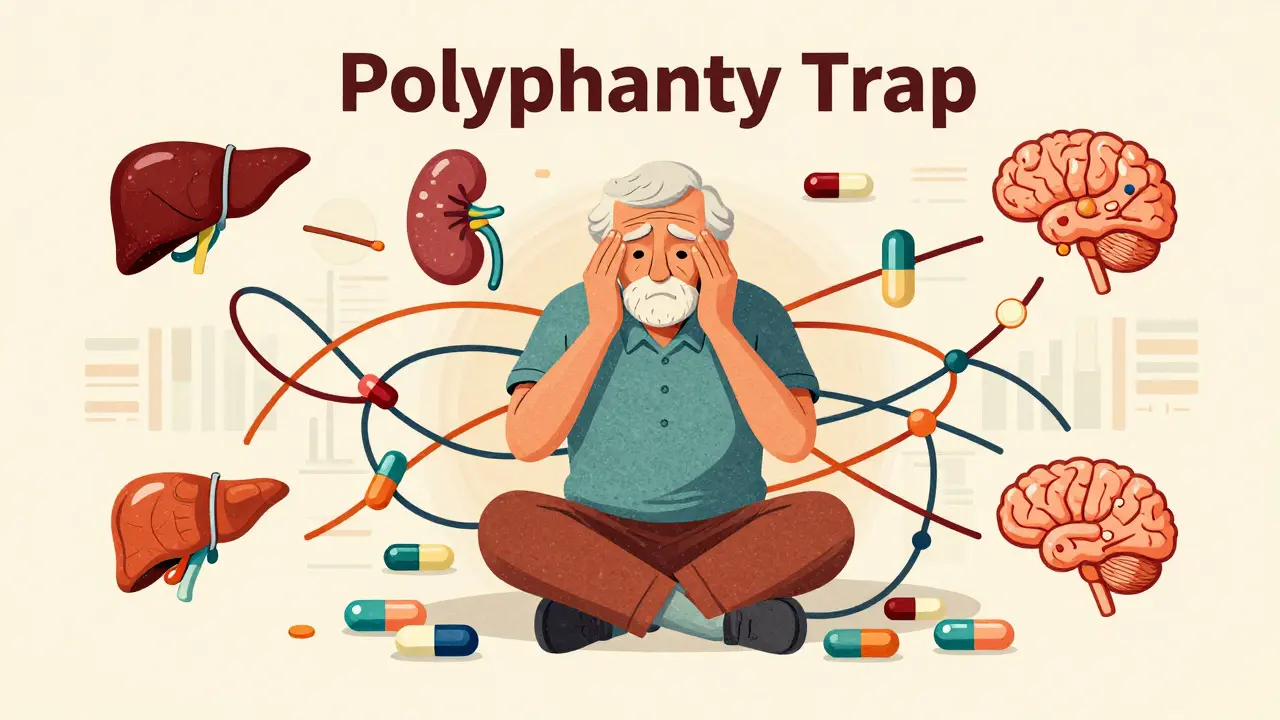
If comorbidities are the fuel, polypharmacy is the spark. Polypharmacy is the concurrent use of multiple medications by a single patient, typically defined as five or more drugs. In patients with multiple chronic conditions, taking many pills is the norm, not the exception. A cross-sectional study of elderly patients revealed an 85% multimorbidity rate. These individuals used an average of 4.26 medications daily, and 42% were on five or more drugs.
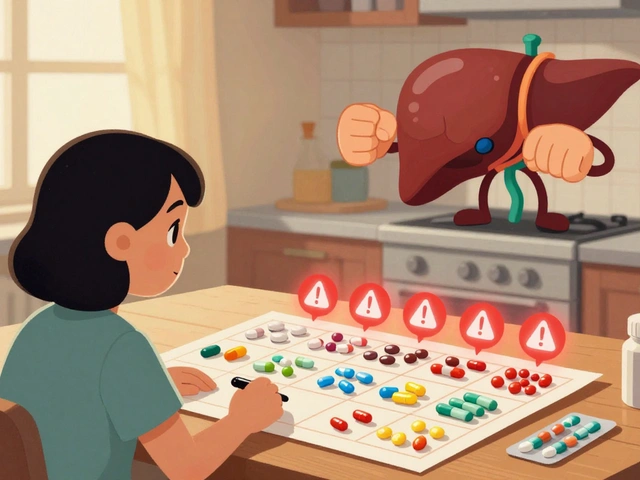
This creates a web of interactions. It’s not just about how your liver handles Drug A; it’s about how Drug A interacts with Drug B, which then interacts with your heart condition. Research shows that 47% of elderly patients on multiple meds experience potential drug-drug interactions. On average, each patient had 2.36 interactions. More alarmingly, 35.2% of these were classified as "major" interactions-meaning they could cause permanent harm or be life-threatening.
The risk follows a dose-response pattern. The more conditions you have, the more drugs you take, and the exponentially higher your risk of an adverse event. Patients prescribed five or more drugs are 3.20 times more likely to receive potentially inappropriate medications (PIMs) compared to those on single-drug regimens. It is a mathematical certainty that complexity breeds error.
| Risk Factor | Healthy Patient Profile | Comorbid Patient Profile |
|---|---|---|
| Average Medications | 1-2 | 4.26+ (Elderly) |
| ADRs Likelihood | Baseline (1x) | 3x Higher (Odds Ratio 2.96) |
| Major Interactions | Rare | 35.2% of cases (in polypharmacy) |
| Clinical Trial Representation | High | Low (70-80% excluded from trials) |
Specific Conditions, Specific Dangers
Not all comorbidities carry the same weight. Some create particularly volatile environments for medication. Cardiovascular diseases are a prime example. Substances like alcohol, cocaine, or even certain prescription stimulants independently increase cardiovascular risk. When a patient with existing heart disease takes these, the compounding effect can lead to sudden cardiac events. The interaction isn't additive; it's synergistic, meaning the combined effect is greater than the sum of its parts.
Chronic pain patients face a different vulnerability. About 10% of these patients misuse prescription opioids. Here, the treatment for the condition (pain) becomes a risk factor for a new adverse outcome (addiction or respiratory depression). Furthermore, the Beers Criteria-a guideline for identifying inappropriate medication use in older adults-reveals that 45.7% of older patients receive at least one potentially inappropriate medication. Women aged 75 and older are 2.93 times more likely to receive these risky drugs than their younger counterparts.
Substance use disorders add another layer. Between 77% and 93% of individuals in treatment also use tobacco. Nicotine induces certain liver enzymes, speeding up the metabolism of some drugs while slowing others. This makes dosing incredibly difficult to stabilize. The clinical significance is clear: 66.2% of all suspected adverse drug reactions occur in patients with comorbidities. The most common symptoms aren't always dramatic rashes or anaphylaxis; they are insidious. Weakness (36%), dizziness (11.8%), headache (7.3%), nausea (4.9%), and insomnia (2.9%) are the top complaints. These subtle signs are often dismissed as "just aging" or "part of the illness," allowing the underlying drug toxicity to worsen.
The Evidence Gap in Clinical Trials
Here is a hard truth: most drugs are tested on relatively healthy people. The American Geriatrics Society points out that 70% to 80% of elderly patients with multiple comorbidities are excluded from pivotal drug trials. Why? Because researchers want clean data. They don't want liver disease or kidney issues confounding the results of a new cancer drug or blood pressure medication.
This creates a massive evidence gap. When a drug gets approved, we know how it works in a controlled, mostly healthy population. We often guess how it works in a complex, multimorbid human being. This is why real-world data is so alarming. Hospital admissions due to adverse drug reactions are 2.5 times more frequent in patients with three or more comorbidities. In oncology settings, where 65% of patients have at least one comorbidity, drug interactions contribute to 30% of preventable adverse events. Each incident costs $1,200 to $2,500 in extra care, but the cost in quality of life is incalculable.

How to Manage the Risk
You cannot eliminate risk entirely, but you can manage it systematically. The most effective intervention is comprehensive medication review conducted by a clinical pharmacist. Multicenter studies show this reduces adverse drug reactions by 22% in comorbid patients. Pharmacists are trained to spot the interactions that general practitioners might miss during a rushed 15-minute appointment.
Technology is also stepping up. Electronic health records with integrated comorbidity-aware decision support have demonstrated 35% reductions in potentially inappropriate prescribing for patients with renal impairment. Systems like Epic and Cerner are investing heavily in algorithms that flag risky combinations based on your specific lab values and history. Additionally, the STOPP/START criteria-a tool used to identify potentially inappropriate prescribing and under-prescribing-has shown promise. Tailored deprescribing protocols using these criteria reduced ADR-related hospitalizations by 17% in multimorbid elderly patients.
However, barriers remain. Time is the biggest enemy. 72% of physicians report insufficient time for comprehensive medication reviews. Fragmented care is another issue; 68% of patients with three or more comorbidities see five or more specialists. Each specialist prescribes for their own domain, rarely seeing the full picture of the patient’s total drug load. This siloed approach leaves the patient vulnerable to the very interactions we are trying to avoid.
Future Directions in Personalized Safety
The landscape is changing fast. Regulatory agencies like the FDA now require comorbidity subgroup analyses in 78% of new drug applications, up from just 42% in 2018. This forces pharmaceutical companies to test drugs in more realistic populations before approval.
Innovation is driving precision. The NIH launched the 'Comorbidity-Drug Interaction Knowledgebase' in 2024, aggregating data from 12 million patient records. Machine learning models trained on this data can now predict adverse drug reactions with 89% accuracy for specific comorbidity clusters. This is significantly better than traditional rule-based systems. Furthermore, the American Medical Association’s 2025 update to the Comorbidity Assessment Tool incorporates dynamic drug-risk scoring that adjusts for real-time laboratory values. Early pilots showed 31% fewer adverse reactions.
As our population ages, multimorbidity will become the norm. Projections indicate that 90% of adults over 65 will have two or more chronic conditions by 2030. Addressing the intersection of comorbidities and drug risk is no longer a niche concern for geriatricians; it is the central challenge of modern medicine. By understanding that your conditions change your chemistry, you can advocate for safer, smarter prescribing.
What is the most common side effect in patients with multiple comorbidities?
Weakness is the most predominant symptom, reported in 36% of cases. Other common symptoms include dizziness (11.8%), headache (7.3%), nausea (4.9%), and insomnia (2.9%). These subtle symptoms are often overlooked but can signal serious drug toxicity.
How do liver and kidney diseases affect medication safety?
Liver disease can reduce cytochrome P450 enzyme activity by 30-50%, causing drugs to stay in the body longer and build up to toxic levels. Kidney impairment reduces the glomerular filtration rate (GFR), preventing the efficient removal of renally excreted drugs, which leads to accumulation and increased side effects.
What is polypharmacy and why is it dangerous?
Polypharmacy is the use of five or more medications daily. It is dangerous because it increases the likelihood of drug-drug interactions. Studies show that 47% of elderly patients on multiple meds experience potential interactions, with 35.2% being major interactions that can cause permanent harm or be life-threatening.
Are older adults adequately represented in drug trials?
No. Approximately 70-80% of elderly patients with multiple comorbidities are excluded from pivotal drug trials. This creates an evidence gap, meaning doctors often prescribe medications without robust data on how they perform in complex, multimorbid bodies.
How can I reduce my risk of adverse drug reactions?
Request a comprehensive medication review by a clinical pharmacist, which has been shown to reduce ADRs by 22%. Ensure all your specialists share your full medication list to avoid fragmented care. Use tools like the STOPP/START criteria to identify potentially inappropriate medications for deprescribing.
What is the Beers Criteria?
The Beers Criteria is a guideline used to identify potentially inappropriate medication use in older adults. Research indicates that 45.7% of older patients receive at least one medication listed in the Beers Criteria, highlighting a significant area for risk reduction in geriatric care.