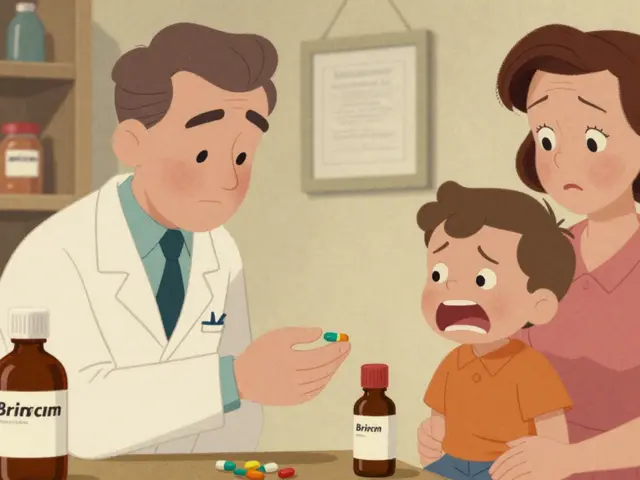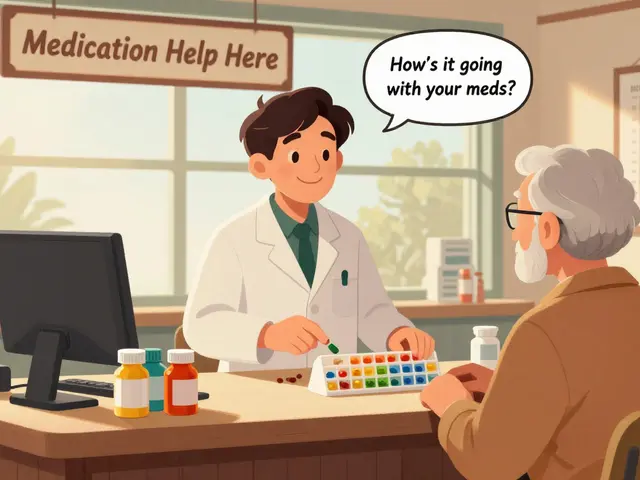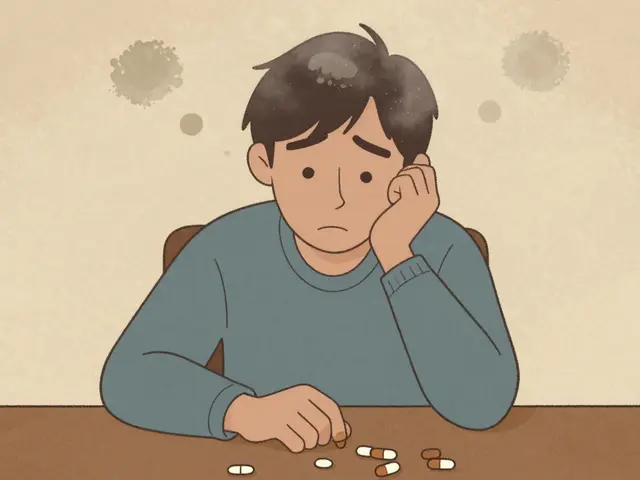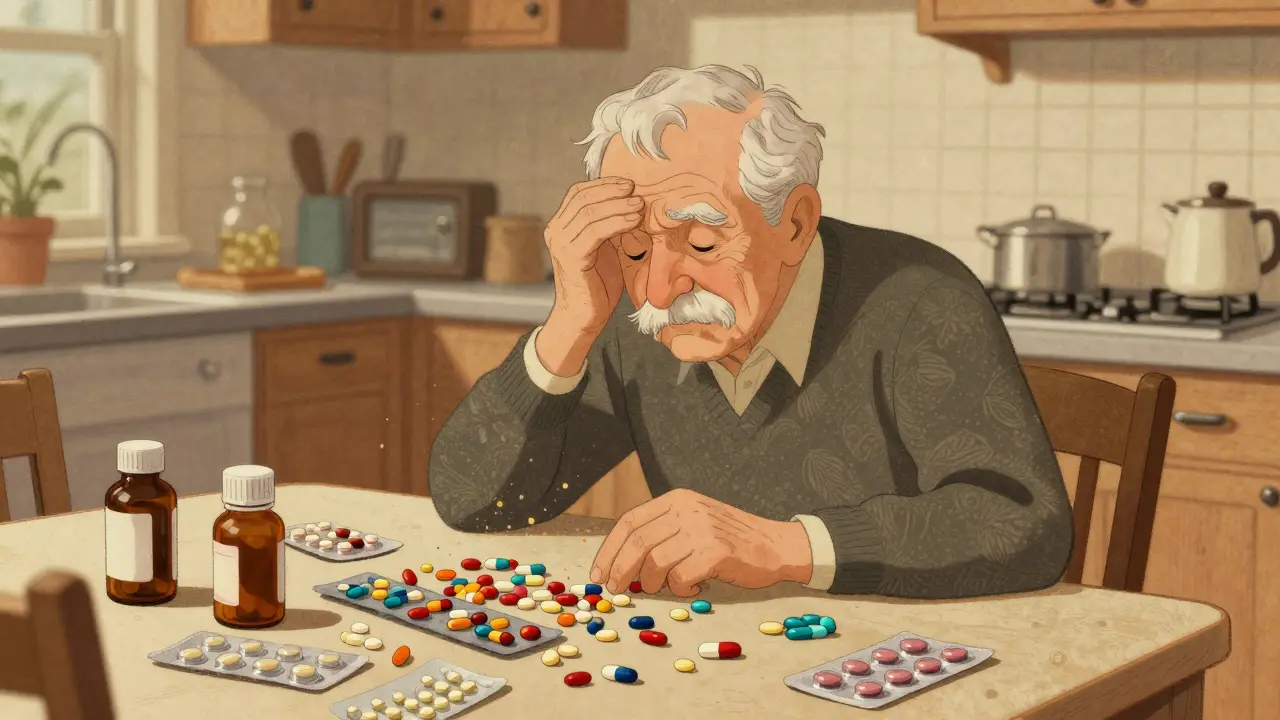
Imagine this: it’s Tuesday morning. You’re sitting at the kitchen table with a pill organizer that looks like a small pharmacy exploded inside it. There are red pills, white capsules, tiny blue tablets, and even some you have to crush or dissolve in water. You’re supposed to take four different medications before breakfast, two more with lunch, and another three before bed. It sounds exhausting, doesn’t it? For millions of older adults, this isn’t just a hypothetical scenario-it’s their daily reality.
The problem is stark. According to data from the Kaiser Family Foundation and Georgetown University School of Nursing, 89% of adults aged 65 and older take at least one prescription medication, while nearly half (54%) juggle four or more prescriptions daily. This practice, known as polypharmacy, creates a perfect storm for mistakes. When managing complex regimens, adherence-the act of taking medication exactly as prescribed-plummets. And when seniors skip doses or stop taking meds entirely, the consequences can be severe, ranging from worsening chronic conditions to preventable hospitalizations.
The Hidden Costs of Skipping Pills
We often hear people say they "forgot" to take their medicine, but the reasons behind non-adherence are rarely that simple. In fact, research suggests that individual choice is often not the main culprit. Instead, systemic barriers like high costs, low health literacy, and confusing instructions play a much larger role.
The economic impact is staggering. The National Institutes of Health (NIH) estimates that medication non-adherence contributes to approximately 200,000 deaths annually in the United States alone. In the European Union, the financial burden hits between €80 billion and €125 billion each year. These aren't just abstract numbers; they represent real lives disrupted by untreated hypertension, unmanaged diabetes, and exacerbated heart disease.
But here’s what many don’t realize: cost is a massive driver. The CDC’s 2021-2022 National Health Statistics Report revealed that 3.6% of older adults failed to obtain needed medications due to cost, while 3.4% didn’t take them as prescribed for the same reason. Even among those with insurance coverage, out-of-pocket expenses force difficult trade-offs. Some seniors choose between buying groceries and filling their prescriptions-a heartbreaking decision that leads to dangerous gaps in treatment.
Why Is It So Hard to Stick to a Regimen?
To fix the problem, we first need to understand why it happens. A comprehensive study published in Brazil broke down adherence challenges into specific categories, offering a clear hierarchy of barriers:
- Social/Family Support Issues (33.6%): Lack of help from caregivers or family members is the biggest hurdle.
- Education Level Limitations (23.7%): Difficulty understanding medical jargon or prescription labels.
- Regimen Complexity (9.92%): Too many pills, too frequent dosing schedules.
- Access & Memory Issues (6.9% each): Physical inability to open bottles or forgetfulness.
Let’s look closer at these factors.
Cognitive Decline and Forgetfulness
As we age, our brains change. Mild cognitive impairment affects memory and executive function, making it harder to remember whether you took your morning blood pressure pill or if you’ll need to take it again in six hours. NIH studies show that cognitive decline increases vulnerability through forgetfulness, incorrect dosing, and failure to recognize the benefits of long-term medication use. Without reminders, it’s easy to double-dose-or worse, miss critical doses entirely.
Physical Barriers: Vision and Dexterity
Have you ever tried opening a child-proof cap with arthritic hands? For many seniors, physical limitations are silent killers of adherence. Decreased vision makes reading small print on labels nearly impossible. Poor manual dexterity prevents proper handling of blister packs or droppers. US Pharmacist reports highlight that these physical barriers prevent proper medication management, leading to frustration and eventual abandonment of the regimen.
Polypharmacy: The More, The Messier
When patients take five or more medications weekly-which applies to 44% of men and 57% of women over 65-the risk of errors skyrockets. Each additional drug adds complexity. Interactions become harder to track. Side effects multiply. And let’s be honest: who wants to swallow ten pills a day if they can avoid it?
| Barrier Type | Specific Issue | Impact Level |
|---|---|---|
| Social Determinants | Lack of caregiver support | High (33.6%) |
| Educational | Low health literacy | High (23.7%) |
| Clinical | Complex dosing schedules | Moderate (9.92%) |
| Financial | Out-of-pocket costs | Variable (up to 6x higher in food-insecure groups) |
| Physical/Cognitive | Forgetfulness, poor dexterity | Moderate (6.9% each) |

Practical Solutions That Actually Work
So, how do we solve this? There’s no single magic bullet, but combining several evidence-based strategies can dramatically improve outcomes. Here’s what works best based on current research and clinical experience.
1. Simplify the Regimen
Kelly A. Thompson-Brazill, director of the Adult-Gerontology Acute Care Program at Georgetown University, emphasizes simplifying dosing schedules. If possible, switch from multiple daily doses to once-daily formulations. Many drugs now come in extended-release versions designed specifically for this purpose. Fewer decisions mean fewer mistakes.
2. Leverage Technology Smartly
Automated dispensers and smartphone apps are game-changers. Devices like Hero or Lively Pill Dispenser lock compartments until the scheduled time, then alert users with lights and sounds. For tech-savvy seniors, apps like Medisafe send push notifications and track refill dates. These tools address the 6.9% of challenges related to memory issues directly.
3. Address Cost Head-On
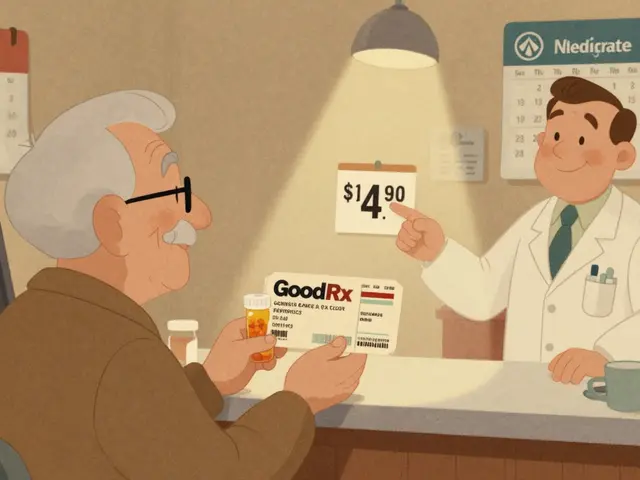
If money is the barrier, talk about it. Pharmacists can often suggest generic alternatives or patient assistance programs. Organizations like NeedyMeds provide resources for free or discounted medications. Remember: skipping doses because of cost usually ends up costing more in emergency room visits later.
4. Strengthen Social Support Networks
Since social support accounts for over a third of adherence challenges, involving family members or professional caregivers is crucial. Regular check-ins, shared responsibility for refills, and gentle reminders go a long way. Retirement status actually helps some seniors adhere better because it provides structure-so creating routine matters.
5. Improve Health Literacy
Use plain language. Avoid medical jargon. Provide written instructions in large font. Visual aids showing which pill goes when can reduce confusion significantly. Educating patients about *why* they’re taking each medication improves motivation to continue.
6. Routine Medication Reviews
US Pharmacist recommends regular evaluations by clinicians to assess utility. Ask: Does this patient still need this med? Are side effects outweighing benefits? Can any drugs be discontinued safely? Reducing unnecessary medications lowers both cost and complexity.

What About Side Effects?
One overlooked issue is adverse reactions. Up to 35% of ambulatory older adults experience adverse drug reactions annually, with 29% requiring hospitalization. Symptoms like falls, confusion, or urinary incontinence may be mistaken for normal aging rather than medication side effects. Patients sometimes self-adjust dosages without consulting doctors, worsening the situation.
Encourage open communication. Tell your doctor if something feels wrong. Never stop or change dosage on your own. Your care team needs to know so they can adjust treatments appropriately.
Looking Ahead: A Systemic Shift Needed
As the population ages, the demand for effective medication management will only grow. Healthcare systems must shift toward value-based models that reward prevention rather than punishment after crises occur. Integrating pharmacists into primary care teams, developing culturally appropriate educational materials, and implementing policy changes to reduce out-of-pocket costs are essential next steps.
Medications simply don’t work if they aren’t taken. By addressing the root causes-cost, complexity, cognition, and connection-we can empower older adults to manage their health confidently and safely. It starts with awareness, continues with action, and succeeds through compassion.
What is polypharmacy and why is it dangerous for seniors?
Polypharmacy refers to using multiple prescription drugs simultaneously, often more than medically necessary. It’s dangerous because it increases the risk of drug interactions, side effects, and confusion. Studies show 35% of older adults experience adverse reactions annually, many requiring hospitalization. Simplifying regimens reduces these risks significantly.
How much does medication non-adherence cost society?
The economic toll is enormous. In the EU, non-adherence costs between €80-125 billion yearly. In the US, it contributes to roughly 200,000 preventable deaths annually. Beyond finances, it leads to worsened chronic diseases, increased ER visits, and reduced quality of life for millions of seniors.
Can technology really help seniors remember their meds?
Yes! Automated dispensers and reminder apps tackle the 6.9% of adherence issues tied to memory loss. Tools like Hero dispense exact doses at set times and alert caregivers if missed. Apps such as Medisafe offer visual cues and refill tracking. Combined with human support, tech boosts compliance dramatically.
Why do some seniors skip medications despite having insurance?
Even with coverage, copays and deductibles add up. CDC data shows 3.4% of seniors don’t take meds as prescribed due to cost. Food insecurity exacerbates this-those struggling financially face six times higher rates of cost-related nonadherence. They’re forced to choose between eating and healing.
What should I do if my parent stops taking their medicine?
First, investigate gently. Don’t accuse. Ask if they’re experiencing side effects, finding pills hard to open, or feeling overwhelmed. Involve their doctor or pharmacist for a medication review. Consider switching to simpler packaging, setting up automatic refills, or hiring a home health aide for supervision. Patience and partnership yield the best results.
Is there a link between education level and medication adherence?
Absolutely. Brazilian research found education level limits account for 23.7% of adherence challenges. Low health literacy means misunderstanding labels, missing key instructions, or misinterpreting test results. Using plain-language guides, pictorial charts, and verbal explanations bridges this gap effectively.
Do retirement and stroke history affect medication habits?
Surprisingly, yes. Some studies indicate retirees adhere better due to structured daily routines. Similarly, individuals with prior strokes may prioritize meds more highly after recognizing health vulnerabilities. While not universal, establishing consistent daily patterns generally supports improved adherence regardless of background.