Every year, half of all people with chronic conditions like diabetes, high blood pressure, or high cholesterol don’t take their meds as prescribed. It’s not because they’re careless. It’s because the system doesn’t make it easy. Missed doses. Confusing schedules. High copays. Side effects they don’t understand. And too often, no one checks in to see if they’re struggling. That’s where pharmacists step in-not just to fill prescriptions, but to make sure those prescriptions actually work.
Pharmacists Are the Most Accessible Healthcare Providers
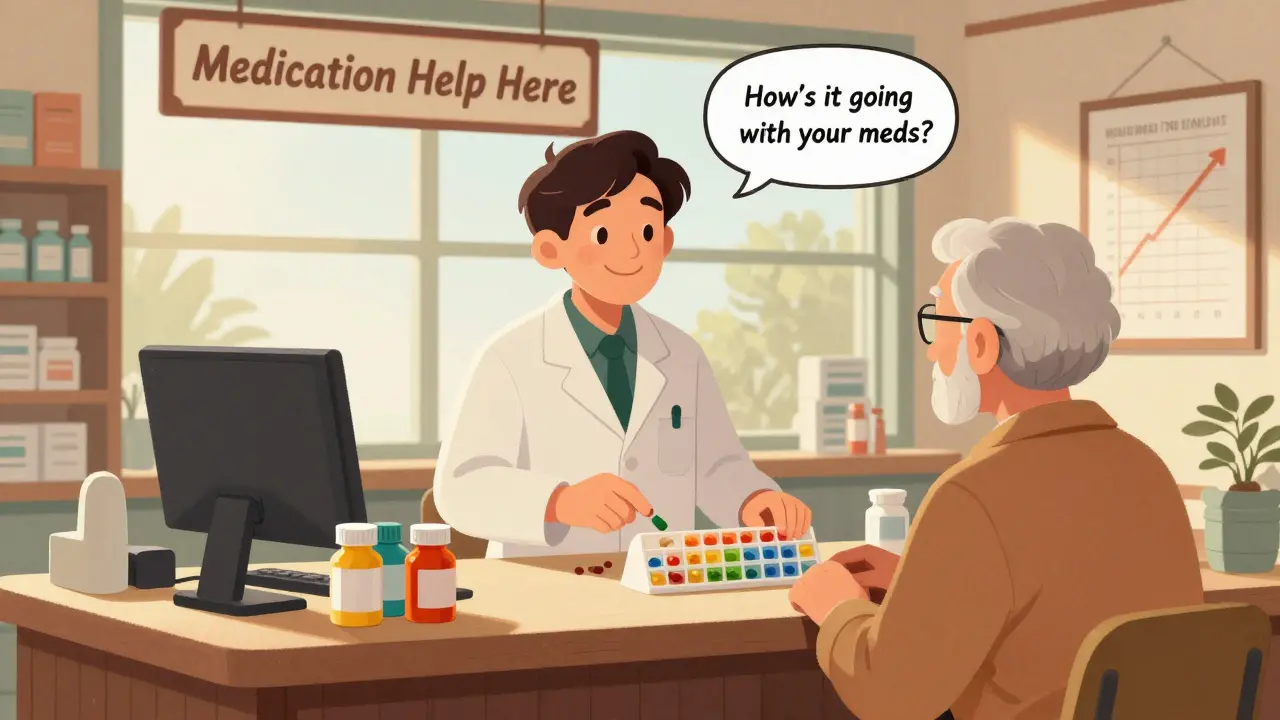
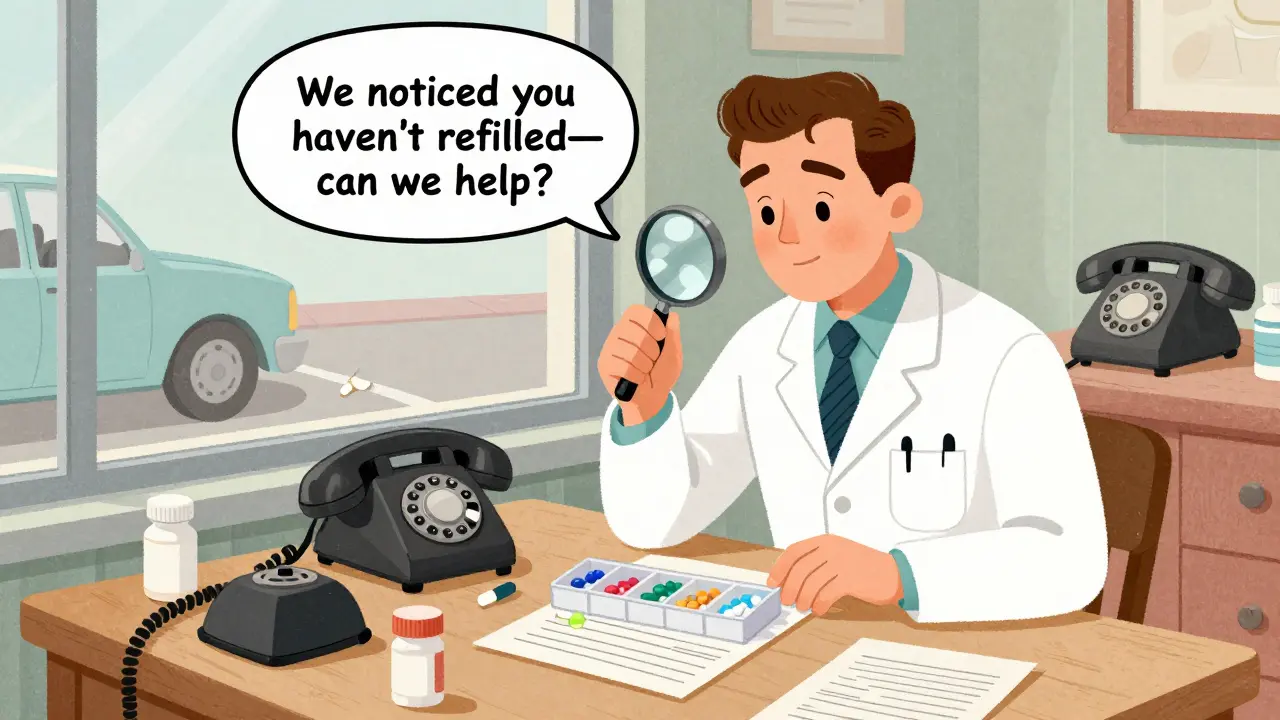
Most people see their doctor once or twice a year. But they visit the pharmacy four to six times a month. That’s not a coincidence. It’s an opportunity. Community pharmacists are the only healthcare professionals who see patients regularly, often without an appointment. When someone picks up their statin, their insulin, or their blood thinner, the pharmacist sees the refill pattern. They notice if a prescription hasn’t been picked up in 45 days. They see the same person coming in for five different medications every week. And they’re trained to ask: "How’s it going with your meds?"
In 2023, a study of over 300,000 patients showed that those who received pharmacist-led counseling had a 6.3% increase in adherence for high blood pressure. Meanwhile, patients who didn’t get that support actually saw their adherence drop by 0.4%. That gap didn’t happen by accident. It happened because pharmacists talked to people-about cost, about side effects, about confusion.
What Pharmacists Actually Do
It’s not just handing out pills. Effective pharmacist interventions include several proven strategies:
- Medication reconciliation: After a hospital stay, patients often go home with a new list of meds. Pharmacists review every pill, compare it to what they were taking before, and fix errors-like duplicate drugs or dangerous interactions.
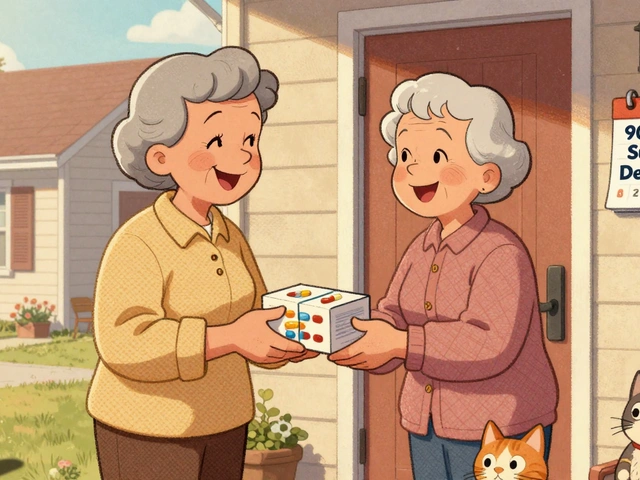
- Medication synchronization: Instead of making someone visit the pharmacy five times a month for five different drugs, pharmacists align refill dates. One visit. One stop. One less reason to skip.
- Personalized counseling: A 2024 study found that 71% of successful adherence programs included one-on-one conversations. Not a script. Not a brochure. A real talk about what’s getting in the way.
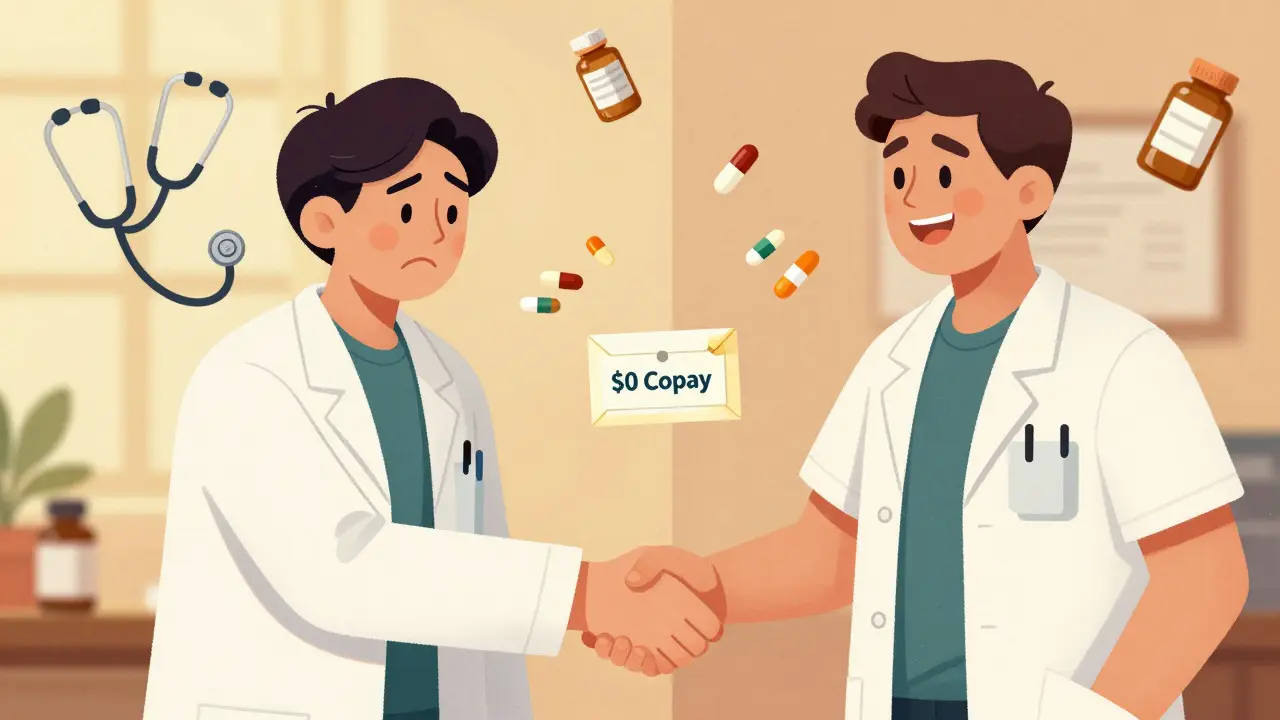
- Cost help: Sixty-eight percent of non-adherence is tied to cost. Pharmacists know patient assistance programs, generic alternatives, and mail-order options. One patient on Reddit shared how his CVS pharmacist found him a $0 copay option for his blood pressure med after realizing he couldn’t afford the $50 co-pay.
- Follow-up calls: Twenty-three studies show that reminder calls improve adherence. But the best ones don’t just say, "It’s time to refill." They ask, "How are you feeling on this med?"
These aren’t guesses. They’re backed by data. A 2024 study in the Journal of Managed Care & Specialty Pharmacy tracked 317,613 people in pharmacist-led programs. Those patients were 30-45% more likely to have their blood pressure under control. For diabetes, adherence went up 4%. For cholesterol, it jumped 6.1%. And the system saved over $63 million in avoided hospital visits and ER trips.
Why Pharmacists Work Better Than Apps or Nurses
You’ve probably seen ads for medication apps that send reminders. They’re handy-but they don’t fix the real problems. An app can’t tell if you’re skipping your pill because you’re scared of side effects. Or if you’re out of money. Or if your kids need you to pick them up from school and you forgot the pill bottle in the car.
Pharmacists do. They use tools like the PHQ-2 and PHQ-9 screens to check for depression, which is a hidden cause of non-adherence. They ask, "Is your pillbox still full?" and listen to the answer. They adjust schedules around work hours. They call your doctor to switch you to a cheaper drug.
Compared to nurse-led programs or digital tools, pharmacist interventions are 18.7% more effective at improving outcomes for chronic disease, according to the same 2024 study. Why? Because pharmacists know drugs inside out. They know how statins interact with grapefruit. They know why your blood thinner might make you bruise. They know which generics work just as well-and which don’t.
The Real Barriers-And How Pharmacists Break Them
Most people think non-adherence is about forgetfulness. It’s not. Here’s what really stops people:
- Cost (68% of cases)
- Complex schedules (57%)
- Poor communication (49%)
- Low health literacy (38%)
Pharmacists tackle each one. For cost, they connect patients to manufacturer coupons, state programs, or 340B discounts. For complex regimens-like someone on five meds for heart disease, diabetes, and depression-they use color-coded pill organizers and simplified dosing times. For communication gaps, they write plain-language instructions and offer to call the doctor together. And for low health literacy? They don’t hand out pamphlets. They show, they demonstrate, they ask, "Can you tell me how you take this?"
One 72-year-old woman in Ohio told researchers she’d been skipping her cholesterol pill because she thought it "made her feel weird." The pharmacist asked her to describe it. She said, "My legs feel heavy." Turns out, it was a known side effect of the brand-name drug. The pharmacist switched her to a generic version. Three weeks later, she was back to taking it every day.
Where It Falls Short
It’s not perfect. Some patients feel judged. One Trustpilot review said, "The pharmacist kept calling about refills but never addressed why I couldn’t afford it-just made me feel guilty." That’s not how it should work. Good pharmacists don’t shame. They problem-solve.
Also, effectiveness varies. About 27% of studies show no significant improvement, especially when pharmacists aren’t trained properly or when the program is rushed. Training matters. The best pharmacists complete 87 hours of certified motivational interviewing. They learn how to listen without interrupting. How to ask open questions. How to build trust.
And in patients with severe dementia or cognitive decline, adherence improvements are minimal-only 4.2% compared to 12.7% in those with normal cognition. That’s not a failure. It’s a signal: some people need more than a pharmacist. They need caregivers, home visits, or pill-dispensing machines.
The Bigger Picture: Cost Savings and Lives Saved
Non-adherence costs the U.S. healthcare system $300 billion a year. That’s more than the entire budget of the Department of Education. But pharmacist interventions pay for themselves. Every $1 spent on pharmacist-led programs saves $7.43 in hospitalizations, ER visits, and long-term care, according to Harvard economist Dr. David Cutler.
For diabetes alone, these programs saved $10.3 million in two years. For hypertension? Over $31 million. That’s not theoretical. That’s real money from real patients who didn’t end up in the hospital because their pharmacist noticed they hadn’t refilled their meds in six weeks.
The CDC now officially recommends pharmacist-led adherence programs for heart disease. The American College of Cardiology calls them a "key component" of hypertension care. Medicare is expanding reimbursement. Ninety-two Fortune 500 companies now include pharmacist adherence services in employee health plans.
What Needs to Change
Still, only 28 states have laws that require insurers to pay pharmacists for these services. Most pharmacists aren’t reimbursed for the time they spend counseling. They do it anyway-out of professionalism. But sustainability needs payment reform.
Some pharmacies are using pharmacy technicians to handle reminder calls, freeing up pharmacists to do the complex counseling. Others are integrating with EHRs so counseling notes automatically appear in the patient’s chart. And 67% of programs now combine phone calls with app reminders-blending human touch with tech.
The future isn’t replacing doctors or nurses. It’s building a team. The doctor prescribes. The pharmacist manages. The patient participates. And when that team works, people live longer, healthier lives.
What You Can Do
If you’re managing a chronic condition, don’t wait for your pharmacist to ask. Walk in. Say: "I’m having trouble keeping up with my meds. Can we talk?" Ask about generics. Ask about cost programs. Ask for a simplified schedule. Bring all your pills in one bag. They’ve seen it all. They’re trained to help.
If you’re a caregiver for someone older or with multiple conditions, offer to go with them. Take notes. Ask questions. Pharmacists are more willing to help when they know someone’s listening.
And if you’re a patient who’s been skipping doses because you’re embarrassed? You’re not alone. One in two people do it. The right pharmacist won’t judge. They’ll help you fix it.
Why do so many people stop taking their medications?
People stop because of cost, confusing schedules, side effects, forgetfulness, or not understanding why the medicine matters. Often, it’s a mix. A 2023 CDC review found that 68% of non-adherence is linked to cost, 57% to complex regimens, and 49% to poor communication with providers. Many assume their doctor already knows they’re skipping doses-but they rarely do.
Can’t an app just remind me to take my pills?
Apps are helpful for reminders, but they can’t solve the real reasons people skip meds. If you’re not refilling because the copay is too high, an app won’t help. If you’re scared of side effects, an app won’t explain what’s normal. If you’re overwhelmed by five different pills at different times, an app won’t simplify your schedule. Pharmacists do all that. They’re the only ones who can adjust your regimen, find cheaper alternatives, and talk you through concerns.
Do pharmacists get paid for helping with adherence?
In most places, no-not directly. Only 28 U.S. states require insurance to reimburse pharmacists for counseling services. Many do this work out of duty, not payment. But things are changing. Medicare is expanding coverage. Some private insurers now pay for Medication Therapy Management (MTM). And 17 Medicare Advantage plans are piloting outcome-based payments, where pharmacists earn more if patients’ blood pressure or A1C improves.
How do I know if my pharmacist is trained to help with adherence?
Ask if they offer Medication Therapy Management (MTM) services. That’s the formal program designed for complex cases. Look for signs they’re doing more than filling scripts: they ask how you feel, check your pillbox, review all your meds together, and offer to call your doctor. Pharmacists who’ve completed 87 hours of certified training in motivational interviewing are especially skilled. You can also ask, "Do you work with my doctor to adjust my meds?" If they say yes, they’re likely part of a formal program.
What if I can’t afford my meds-even with help?
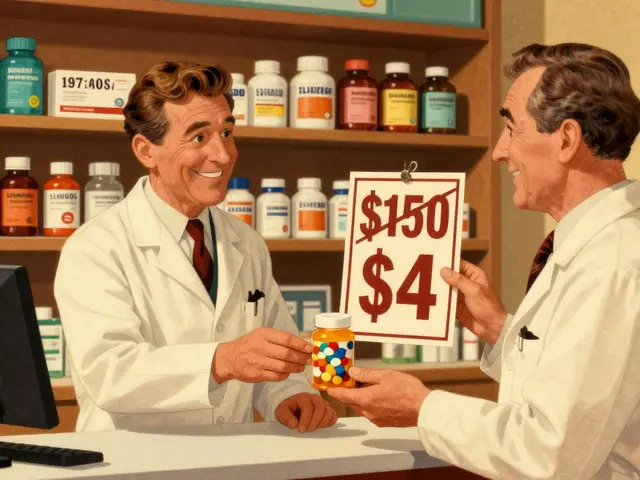
Pharmacists have access to dozens of patient assistance programs run by drug manufacturers, nonprofits, and state agencies. They can help you apply for free or low-cost versions of your meds. Some pharmacies even have internal funds to cover short-term gaps. Don’t be shy-ask. In one case, a patient was paying $200/month for a blood pressure pill. The pharmacist found a generic version covered by Medicaid for $4. That’s the kind of help they’re trained to give.



Write a comment
Your email address will be restricted to us