Postpartum Depression Medication Safety Checker
*Based on current medical data regarding Relative Infant Dose (RID).
Generally, if the Relative Infant Dose (RID) is under 10%, the medication is considered compatible with breastfeeding.
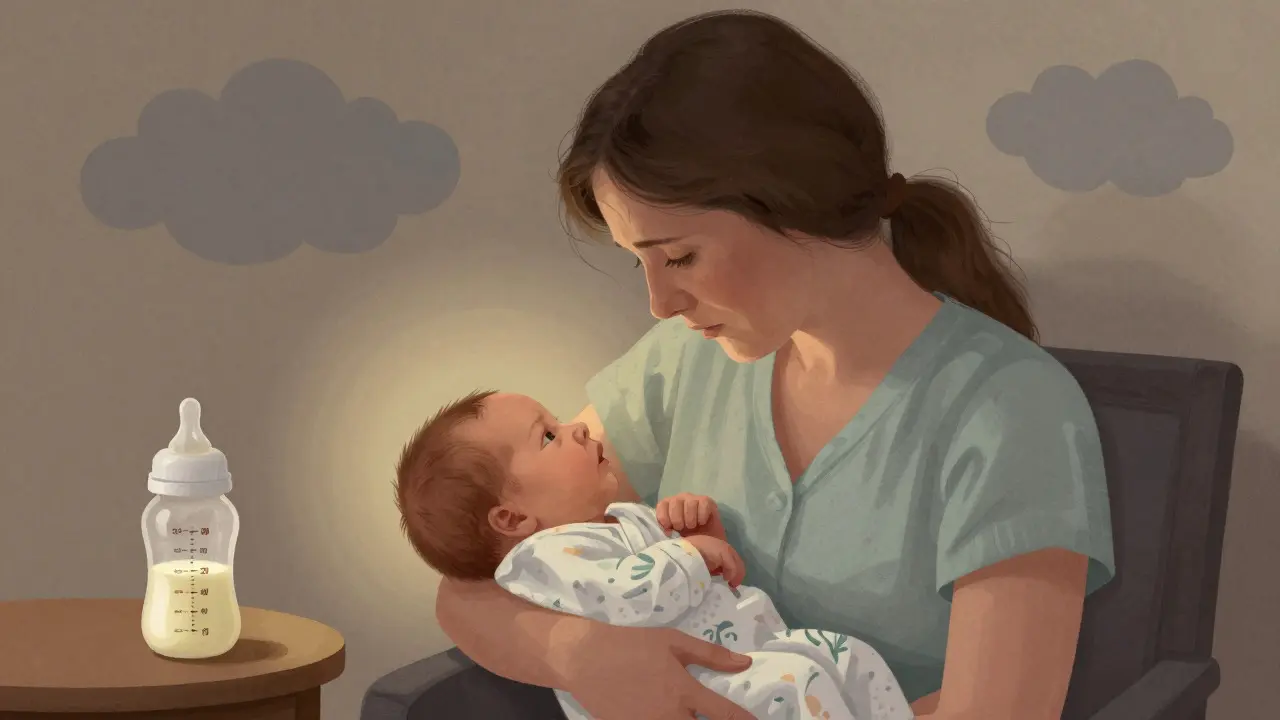
Imagine holding your newborn, feeling that overwhelming wave of sadness hit you hard. You want to bond, but the anxiety is loud. Now, add another layer of stress: you’ve been prescribed an antidepressant for postpartum depression, which is a clinically significant mood disorder affecting approximately 1 in 8 women following childbirth. The doctor says it’s safe, but you’re pumping milk into a bottle and wondering if those pills are passing through to your baby. It is a terrifying dilemma. Do you risk your mental health to keep breastfeeding pure? Or do you medicate and worry about side effects on your infant?
This isn’t just a hypothetical fear. It is the daily reality for thousands of mothers. The good news? Science has moved past the vague “consult your doctor” advice. We now have concrete data on exactly which medications transfer into breast milk, how much gets there, and what signs to watch for in your baby. Untreated depression poses a far greater risk to both you and your child than most antidepressants ever will.
The Core Conflict: Maternal Health vs. Infant Safety
Let’s get one thing straight immediately. Major medical organizations, including the American College of Obstetricians and Gynecologists (ACOG) and the Centers for Disease Control and Prevention (CDC), agree on this: untreated maternal depression is dangerous. It affects your ability to care for yourself and your baby. It can lead to poor bonding, sleep disturbances, and even long-term developmental issues for the child due to the home environment.
The old school of thought was to avoid all medication during lactation. That mindset has shifted. A 2018 systematic review by the Agency for Healthcare Research and Quality (AHRQ) highlighted a bidirectional relationship: women with depression struggle to breastfeed, and women who struggle to breastfeed often develop depression. Breaking that cycle usually requires treatment.
When we talk about risk, we look at the Relative Infant Dose (RID). This is the percentage of your dose that ends up in your baby’s system, adjusted for weight. Generally, if the RID is under 10%, the medication is considered compatible with breastfeeding. Most modern antidepressants fall well below this threshold.
Safety Hierarchy: Which Antidepressants Are Safest?
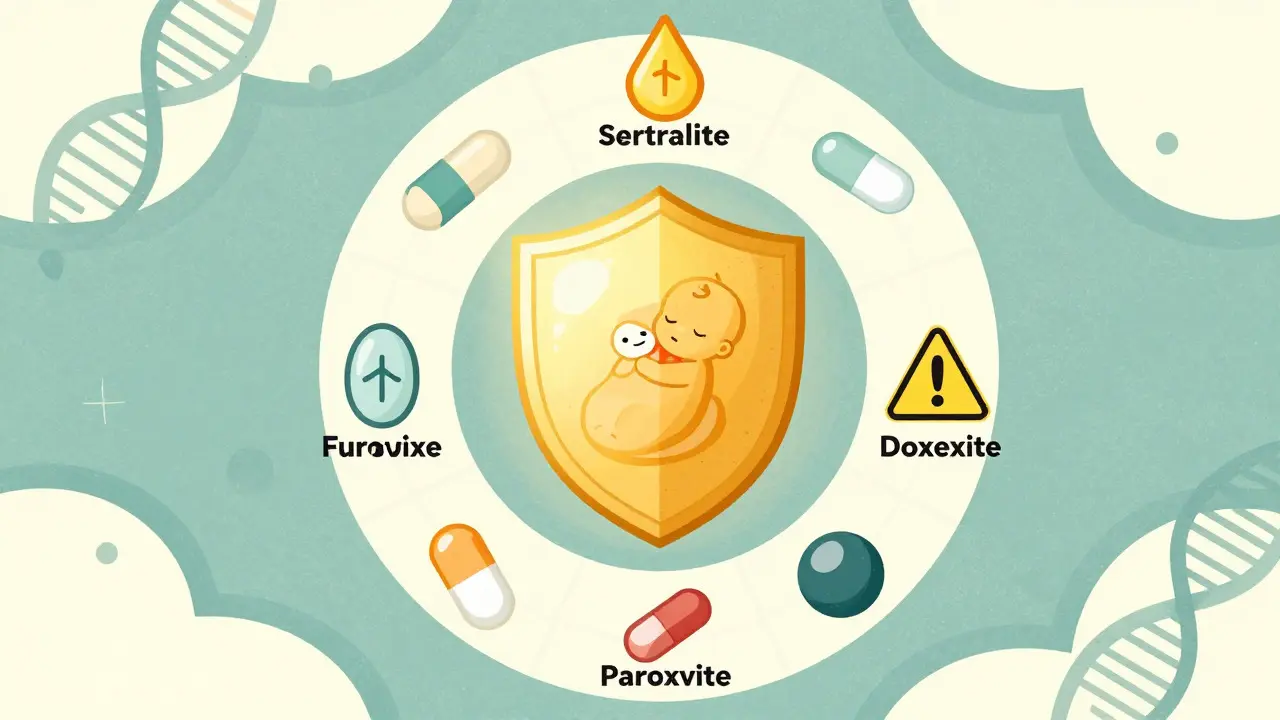
Not all antidepressants are created equal when it comes to lactation. Some pass through milk easily; others stay mostly in your body. Understanding this hierarchy helps you and your provider make the right choice.
| Medication | Relative Infant Dose (RID) | Safety Rating | Key Considerations |
|---|---|---|---|
| Sertraline (Zoloft) | 0.5% - 3.2% | Excellent | First-line choice. Undetectable in 92% of infants. |
| Paroxetine (Paxil) | 0.9% - 8.6% | Excellent | Low transfer rates. Minimal reported infant effects. |
| Citalopram (Celexa) | 3.5% - 8.9% | Good | Moderate safety. Monitor heart rate at high doses. |
| Venlafaxine (Effexor) | 1.4% - 5.9% | Moderate | Limited data. Watch for irritability above 150mg/day. |
| Fluoxetine (Prozac) | 5.9% - 15.2% | Cautious | Long half-life. Risk of accumulation in infant serum. |
| Doxepin | Variable | Avoid | Linked to infant apnea and cyanosis. |
Sertraline is widely regarded as the gold standard here. A 2022 meta-analysis of nearly 2,000 mother-infant pairs found no significant adverse effects in babies exposed to sertraline via breast milk. In fact, serum levels were undetectable in more than nine out of ten cases. Paroxetine is a close second, with similarly low transfer rates.
On the other end of the spectrum, fluoxetine requires caution. Because it has a long half-life, its active metabolite (norfluoxetine) can build up in an infant’s system over time, reaching levels up to 30% of the mother’s concentration. Doxepin is generally recommended to be avoided entirely due to documented cases of breathing difficulties in infants.
New Treatments: Zuranolone and Brexanolone
The landscape of postpartum depression treatment changed significantly in 2023 with the FDA approval of new, targeted therapies. These aren’t traditional antidepressants; they are neuroactive steroids designed specifically for PPD.
Brexanolone (Zulresso) is administered via IV infusion over six days. Because it requires hospitalization or clinical setting administration, breastfeeding logistics are managed differently, often involving pumping and discarding milk during the treatment period and for a short time after.
Zuranolone (Zurzuvae), approved in August 2023, is the first oral option. Clinical trials showed 50% of participants achieved remission within 15 days. However, because these trials required participants to abstain from breastfeeding, real-world data is still emerging. Current guidance from ACOG suggests pumping and discarding milk for one week past treatment completion. Yet, pharmacokinetic models suggest the relative infant dose would be low (0.5-1.5%), leading some experts to believe it may be safer than previously assumed. Always discuss this specific timing with your prescriber.

Recognizing Side Effects in Your Baby
Even with “safe” medications, every baby is different. Genetics play a huge role. A 2022 study in JAMA Pediatrics found that infants with a specific genetic variant (CYP2D6 poor metabolizer status) had 3.2 times higher serum concentrations of venlafaxine when exposed through breast milk. This means personalized risk assessment is becoming part of the conversation.
You don’t need blood tests to monitor your baby. You need observation. What should you look for in the first two weeks after starting or changing medication?
- Excessive Sedation: Is your baby harder to wake up for feeds than usual? Are they unusually lethargic?
- Irritability: Is there inconsolable crying that seems different from normal colic?
- Feeding Difficulties: Is the baby refusing the breast or bottle, or feeding poorly?
- Gastrointestinal Issues: New onset of diarrhea, vomiting, or extreme gasiness.
If you notice these signs, do not panic. First, contact your pediatrician. Often, these symptoms are mild and resolve as the baby’s body adjusts. Sometimes, adjusting the timing of your dose-taking it immediately after a feed so the longest interval passes before the next feed-can reduce peak exposure. In rare cases, switching medications resolves the issue entirely.
Practical Steps for Managing Treatment and Lactation
Navigating this process requires a proactive approach. Here is a practical checklist to ensure you stay supported and informed.
- Screen Early: Use the Edinburgh Postpartum Depression Scale (EPDS). Scores of 13 or higher indicate possible PPD. Many pediatric offices administer this at 1, 2, 4, and 6-month checkups.
- Start Low, Go Slow: Clinicians typically start with the lowest effective dose (e.g., sertraline 25-50mg). Wait at least three to four weeks to assess effectiveness before increasing.
- Use Reliable Resources: Bookmark LactMed, a database maintained by the National Library of Medicine. It provides updated, evidence-based information on drug exposure in human milk.
- Monitor Consistently: Keep a simple log of your baby’s sleep, feeding, and mood for the first month of treatment. This data is invaluable if side effects arise.
- Don’t Stop Abruptly: Stopping antidepressants suddenly increases relapse risk threefold. If you decide to stop, taper off under medical supervision.
Remember, the goal is a healthy mother and a healthy baby. They are interconnected. By treating your depression effectively, you are likely improving your baby’s environment more than any theoretical medication risk could harm them.
Can I breastfeed while taking sertraline?
Yes. Sertraline is considered one of the safest antidepressants for use during lactation. Studies show it transfers into breast milk in very small amounts (0.5-3.2% of the maternal dose), and serum levels are often undetectable in infants. It is frequently the first-line recommendation for postpartum depression.
What are the signs that an antidepressant is affecting my baby?
Watch for excessive sedation (hard to wake for feeds), unusual irritability or fussiness, feeding difficulties, or new gastrointestinal issues like diarrhea or vomiting. These symptoms typically appear within the first two weeks of starting or changing medication. If observed, consult your pediatrician promptly.
Is zuranolone (Zurzuvae) safe for breastfeeding?
Current guidelines advise caution. While clinical trials excluded breastfeeding mothers, pharmacokinetic data suggests low transfer rates. The American College of Obstetricians and Gynecologists currently recommends pumping and discarding milk for one week after completing the 14-day treatment course. Discuss the latest research with your provider, as recommendations may evolve.
Does untreated postpartum depression harm my baby?
Yes. Untreated PPD can impair maternal-infant bonding, affect caregiving quality, and create a stressful home environment. Major health organizations state that the risks of untreated depression outweigh the theoretical risks of most antidepressant exposures through breast milk.
Which antidepressants should be avoided while breastfeeding?
Doxepin is generally recommended to be avoided due to reports of infant apnea and cyanosis. Fluoxetine and bupropion require caution due to higher transfer rates or potential seizure risks, respectively. Tricyclic antidepressants like amitriptyline are sometimes used but require careful monitoring. Always prioritize SSRIs like sertraline or paroxetine unless contraindicated.