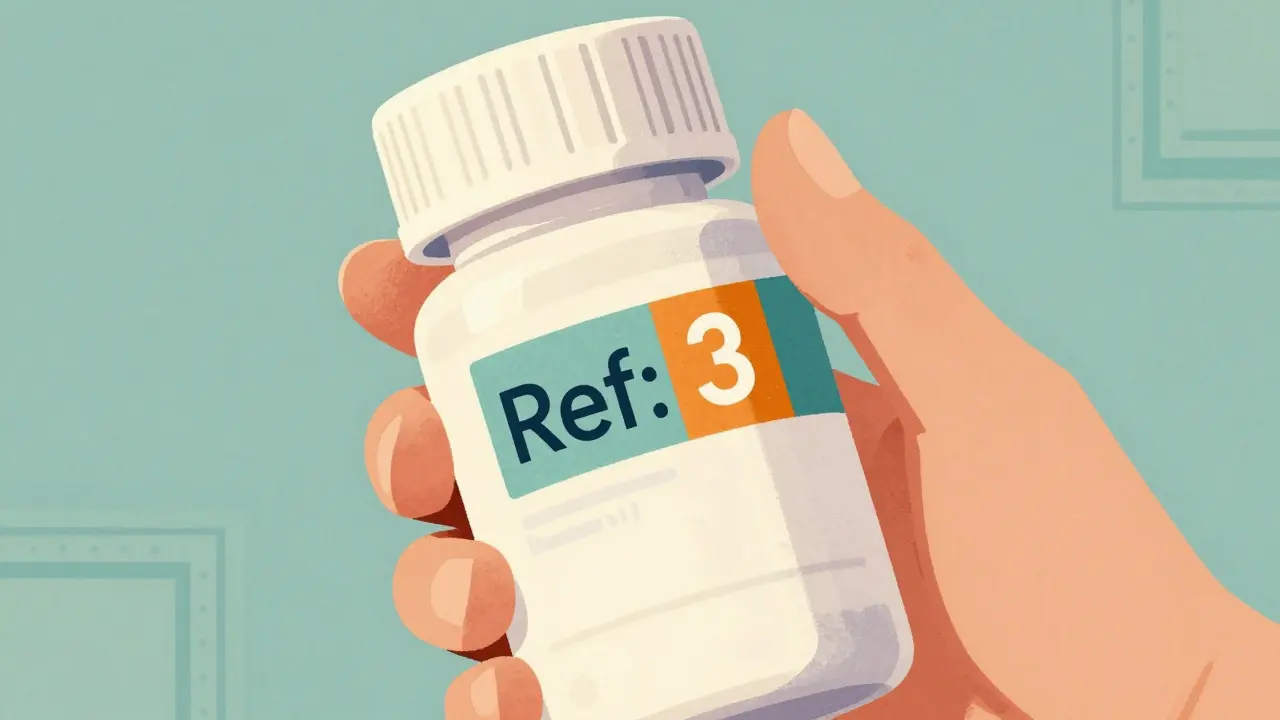
You’ve just picked up your medication. The bottle feels heavy in your hand, and you’re ready to start feeling better. But when you flip it over, the label looks like a wall of tiny text. You scan for the dosage, find that quickly, but then your eyes drift to a line that says “Ref: 3” or maybe “Refills: 0.” What does that actually mean? Do you have three more bottles coming? Or is that zero telling you something alarming?
It’s easy to feel confused. We don’t read these labels every day, and the formatting can vary wildly depending on where you got your medicine. A clear understanding of refill information isn’t just about knowing how many pills are left; it’s about preventing those stressful moments when you run out of medication right before a weekend or a holiday.
What exactly is refill information on a prescription label?
Refill information indicates how many additional times you can obtain your medication without needing a new prescription from your healthcare provider. It typically appears as "Ref: [number]" or "Refills: [number]," where the number represents the remaining refills available. This data helps patients manage their supply and know when to contact their doctor for a renewal.
Decoding the "Ref:" Line
Let’s break down what you’re actually looking at. On most standard prescription labels in the United States and Canada, you’ll see a section dedicated to quantity and refills. This is often labeled simply as “Ref,” “Refills,” or sometimes “Remaining Refills.”
If the label says “Ref: 5,” it means you have five additional fills authorized by your doctor. Each time you pick up a new bottle (or a refill pack), that number goes down by one. So, after your first refill, it will say “Ref: 4.” When it hits “Ref: 0,” it doesn’t necessarily mean you have no medicine left-it means you have no *more* refills left on this specific prescription. You still have the current bottle in your hand, but once it’s empty, you need to call your doctor for a new script.
This distinction is crucial. Many people mistake “Ref: 0” for “Out of Stock” or “No Medicine Left.” In reality, it’s a signal to plan ahead. According to data from the Pharmacy Quality Alliance, nearly 92% of community pharmacies include this information in a standardized location, but the exact wording can shift slightly between chains like CVS, Walgreens, and independent local shops.
Where to Find It on the Label
You might be wondering why the refill info isn’t right next to the dosage instructions. That’s not an accident; it’s a safety feature. The U.S. Pharmacopeial Convention (USP) categorizes refill information as “less critical but important content.” Why? Because if you’re distracted by counting refills while trying to figure out whether to take two pills or one, you might make a dosing error.
Studies show that about 68% of medication errors happen when patients misread label information due to clutter or confusion. To prevent this, regulators and pharmacy associations have pushed for a layout where critical dosing instructions sit at the top, clearly separated from administrative details like refills, which usually appear in the lower section of the label.
For example, NimbleRx, a pharmacy software provider, identifies section “F” on their recommended label format specifically for refill information. They note that this placement ensures patients focus on *how* to take the drug first, and *when* they need more second. If you’re holding a CVS bottle, you might notice color-coded sections. Their “worry-free refills” program uses distinct visual cues to help you spot this info faster, though some users initially found the new design confusing before getting used to it.
Why Clear Refill Info Matters for Your Health
It might seem like a minor detail, but missing your refill window can have real consequences. Dr. Sarah Thompson, Director of Pharmacy Practice at the American Pharmacists Association, highlighted in a 2022 study that clear refill information reduces medication abandonment rates by 23%. Think about it: if you don’t know you only have one refill left, you might wait until the last minute to ask your doctor for a renewal. By then, your doctor might be in surgery, or the pharmacy might be short-staffed, leaving you without essential medication.
A 2022 study published in the *American Journal of Managed Care* tracked over 12,000 patients across 15 states. They found that patients who understood their refill information were 37% less likely to experience medication interruption. That’s a huge difference. For someone managing chronic conditions like hypertension or diabetes, a gap in treatment can lead to emergency room visits or worsening health outcomes.
Insurance plans also play a role here. Medicare Part D plans, for instance, typically allow refills starting 23 days after the previous fill for a 30-day supply. Commercial insurers like UnitedHealthcare might let you refill at 80% of the supply period (so, 24 days for a 30-day supply). Knowing your refill count helps you align with these insurance windows so you don’t get hit with unexpected costs or delays.
Common Mistakes Patients Make
Even with clear labels, misunderstandings happen. Here are a few common pitfalls I’ve seen discussed in pharmacy communities and patient forums:
- Confusing “Ref: 0” with “Empty Bottle”: As mentioned, “Ref: 0” means no *future* refills, not that your current bottle is empty. Don’t panic if you see this; just start planning your next doctor’s visit now.
- Ignoring Expiration Dates: Some labels include a “use by” date alongside refill counts. Controlled substances, in particular, have strict timelines. If your prescription expires before you use all your refills, those refills become void.
- Assuming All Pharmacies Are the Same: While standards exist, formatting varies. California requires explicit “no refills” statements when applicable, while Texas mandates showing both total authorized and remaining refills. If you switch pharmacies, take a moment to learn their specific label layout.
Maria Rodriguez, a patient on the Diabetes Online Community forum, shared a scary story in March 2023: “I almost ran out of my insulin because I didn’t realize my refills had expired-the 'Ref: 0' was printed in tiny text at the bottom of my label.” Her experience highlights why we need to actively check our labels, not just glance at them.

How to Manage Your Refills Proactively
Don’t wait until you’re down to your last pill. Here’s a simple strategy to stay on top of your medication:
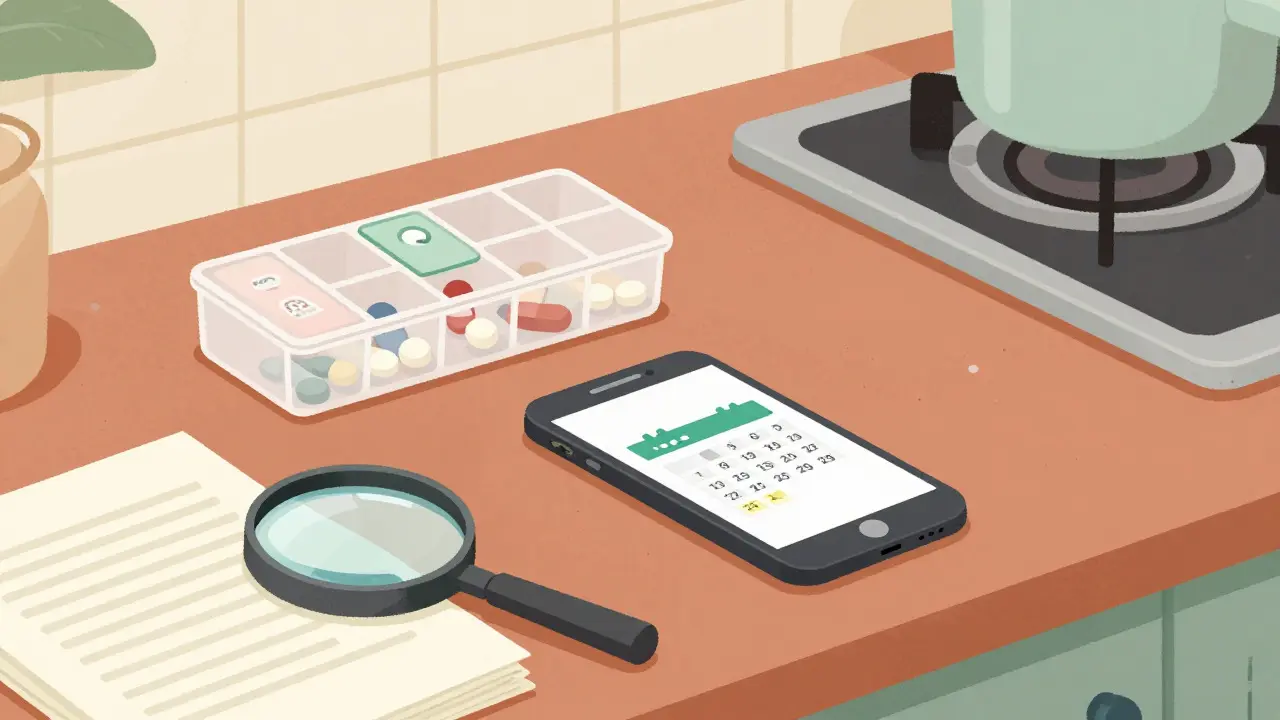
- Check Weekly: The MSKCC patient education guide recommends checking your refill information weekly when organizing your medications. Make it part of your routine, like checking your calendar.
- Call Early: Pharmacists at NimbleRx advise calling your pharmacy 3-5 days before you expect to run out. Some controlled substances require 72-hour processing time, so early action prevents gaps.
- Use Technology: CVS’s Spoken Rx technology, launched in April 2022, allows users to scan their prescription bottles with smartphones to hear medication names and refill instructions read aloud. Over 1.7 million users rely on this feature. If you have vision issues or just prefer audio, this is a game-changer.
- Set Reminders: Most pharmacy apps send push notifications when it’s time to refill. Enable these alerts. GlobalData predicts that by 2025, 85% of U.S. pharmacies will incorporate digital refill reminders, up from 52% in 2022.
Independent pharmacies often score higher on customer satisfaction for refill clarity-averaging 4.1/5 stars on Trustpilot compared to 3.2/5 for major chains like Walgreens in Q2 2023 reviews. If you’re struggling with big-chain labels, consider asking your pharmacist to explain their specific format during pickup.
The Future of Prescription Labels
We’re seeing a shift toward smarter, more patient-friendly labeling. The FDA’s 2021 draft guidance on “Patient-Focused Labeling” has led to 27 state pharmacy boards updating their requirements between 2022 and 2023. The goal? Less clutter, more clarity.
CVS Health invested $12.7 million in 2022 alone to redesign their labels, adding color-coded timing markers (“Morning,” “Evening”) and enhancing the visibility of refill sections. Meanwhile, the American Pharmacists Association is piloting a universal refill icon system. Early tests in 12 community pharmacies showed a 41% reduction in refill-related patient errors. Imagine a simple icon-a circle with a number inside-that instantly tells you how many refills remain, regardless of language barriers or font sizes.
Market research from IQVIA shows that pharmacies with superior refill information systems retain 12.3% more patients. This isn’t just about convenience; it’s about trust. When you understand your label, you feel more in control of your health.
What should I do if my prescription says "Ref: 0"?
If your label says "Ref: 0," it means you have no remaining refills authorized on this prescription. You can still finish your current bottle, but you will need to contact your healthcare provider for a new prescription before your current supply runs out. Start this process 1-2 weeks in advance to avoid running out of medication.
Can I refill my prescription early?
Generally, no. Insurance plans and pharmacy regulations restrict early refills to prevent waste and misuse. Most plans allow refills around 80-90% of the supply period (e.g., day 24 for a 30-day supply). Exceptions may apply for travel or hospitalization, but you’ll need to contact your pharmacy directly to arrange this.
Why does my refill information look different at different pharmacies?
While core elements are standardized by bodies like the USP, individual pharmacy chains and state regulations influence formatting. For example, CVS uses color-coded sections, while independent pharmacies may follow simpler layouts. State laws also vary; Texas requires showing both total and remaining refills, while other states may not. Always ask your pharmacist to point out key info if you're unsure.
Does "Ref: 0" mean my prescription has expired?
Not necessarily. "Ref: 0" means you've used all authorized refills, but the prescription itself may still be valid within its expiration date (usually one year from issuance for non-controlled drugs). However, if the prescription's overall expiration date has passed, even if refills remained, the script would be invalid. Check the "Expires" date on your label for clarity.
How can I avoid running out of medication unexpectedly?
Adopt a proactive habit: check your refill count weekly, set phone reminders for 3-5 days before you expect to run out, and use pharmacy app notifications. If you have a chronic condition, discuss long-term refill options with your doctor to minimize the frequency of renewals.