
Drug Desensitization Eligibility Checker
Assess Your Eligibility for Drug Desensitization
This tool helps determine if desensitization might be appropriate for your situation. It is not a substitute for medical advice. Always consult with a qualified allergist.
Eligibility Assessment
| Protocol Type | Recommended |
|---|---|
| Rapid Desensitization (RDD) | |
| Slow Desensitization (SDD) |
When a life-saving drug makes you break out in hives, swell up, or struggle to breathe, what do you do? Stop the treatment? Risk the disease? Or find a way to safely take the medicine anyway? That’s where drug desensitization comes in - a medical procedure that lets people with severe allergies tolerate medications they’d otherwise be forbidden to take.
What Exactly Is Drug Desensitization?
Drug desensitization isn’t a cure for allergy. It’s a temporary workaround. Think of it like slowly turning up the volume on a speaker until your ears adjust - your body learns, for a short time, not to react to the drug. The process involves giving tiny, gradually increasing doses of the medication under close medical supervision. Over hours, you reach the full therapeutic dose without triggering a dangerous reaction. This isn’t theoretical. It’s been used since the 1960s, and today, hospitals like Brigham and Women’s in Boston have refined it into reliable protocols. Success rates? Around 95-100% for immediate allergic reactions when done right. That means if you’re allergic to penicillin but need it for a bone infection, or allergic to a chemotherapy drug that’s your only shot at beating cancer, desensitization can get you back on track.When Is It Actually Used?
Desensitization isn’t for every allergic reaction. It’s only considered when there are no good alternatives. That usually happens in three situations:- You have a severe allergy to a first-line antibiotic - like penicillin - and the infection won’t respond to anything else.
- You’re on a chemotherapy drug that’s working better than anything else, but your body is reacting to it.
- You need a monoclonal antibody (like those used for cancer or autoimmune diseases) and all other options have failed or aren’t effective.
Two Main Types of Protocols: Fast and Slow
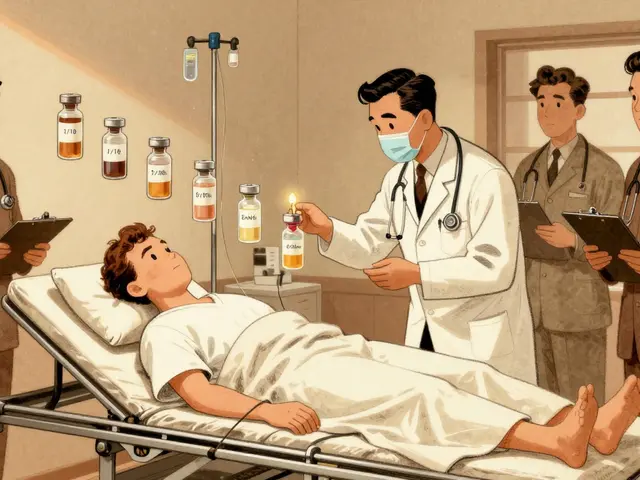
There are two main ways to do this: rapid and slow desensitization. They’re chosen based on the type of reaction you’ve had. Rapid Drug Desensitization (RDD) is used for immediate reactions - the kind that happen within minutes: hives, low blood pressure, trouble breathing. These are usually IgE-mediated, meaning your immune system overreacts quickly. RDD is done intravenously. You start with a dose that’s 1/10,000th of the full amount. Then, every 15 minutes, the dose doubles. By the end of 4 to 6 hours, you’ve reached the full therapeutic dose. At Brigham and Women’s, this protocol has been used on over 40 patients with penicillin allergies - all completed their full antibiotic course with no anaphylaxis. Slow Drug Desensitization (SDD) is for delayed reactions. These show up hours or days later - think rashes, fever, or organ inflammation. These are T-cell driven, not IgE, so they need a slower approach. SDD can be oral or IV. For aspirin or NSAIDs, it might take two or three days, with doses spaced at least an hour apart. There’s no universal rule yet for starting doses or timing, so each protocol is customized.What Happens During the Procedure?
This isn’t something you do at home. You need a hospital setting with trained staff and emergency equipment ready. Before you start:- An allergist confirms the reaction type and rules out conditions like Stevens-Johnson syndrome - which makes desensitization dangerous.
- Your vital signs are baseline-checked: blood pressure, heart rate, oxygen levels.
- Every 15 to 30 minutes (depending on route), you get a new, slightly larger dose.
- Nurses monitor you continuously - watching for flushing, itching, wheezing, or drops in blood pressure.
- Epinephrine, antihistamines, and IV fluids are always on standby.
Why Not Just Use Another Drug or Pretreat?
You might think: “Why not just give me an antihistamine and a steroid before the drug?” That’s called premedication. But it doesn’t work well for true hypersensitivity. Studies show that for chemotherapy drugs like taxanes, premedication fails in about 10% of cases. For penicillin, switching to cephalosporins fails 15-20% of the time due to cross-reactivity. Desensitization, in contrast, succeeds in 98% of penicillin cases and 95-100% of chemo cases when done properly. It’s also the only way to safely use certain drugs if you’ve had a life-threatening reaction before. Premedication doesn’t reset your immune system - it just masks symptoms. Desensitization actually changes how your body responds, temporarily.Who Shouldn’t Try It?
Desensitization isn’t safe for everyone. It’s strictly avoided in:- Patients with a history of Stevens-Johnson syndrome or toxic epidermal necrolysis - these are deadly skin reactions, and restarting the drug can kill you.
- People with severe delayed reactions that involve internal organs (like liver or kidney damage) - the risk is too high.
- Those with unstable heart or lung conditions - the stress of the procedure could trigger a crisis.
The Real Cost: Time, Staff, and Resources
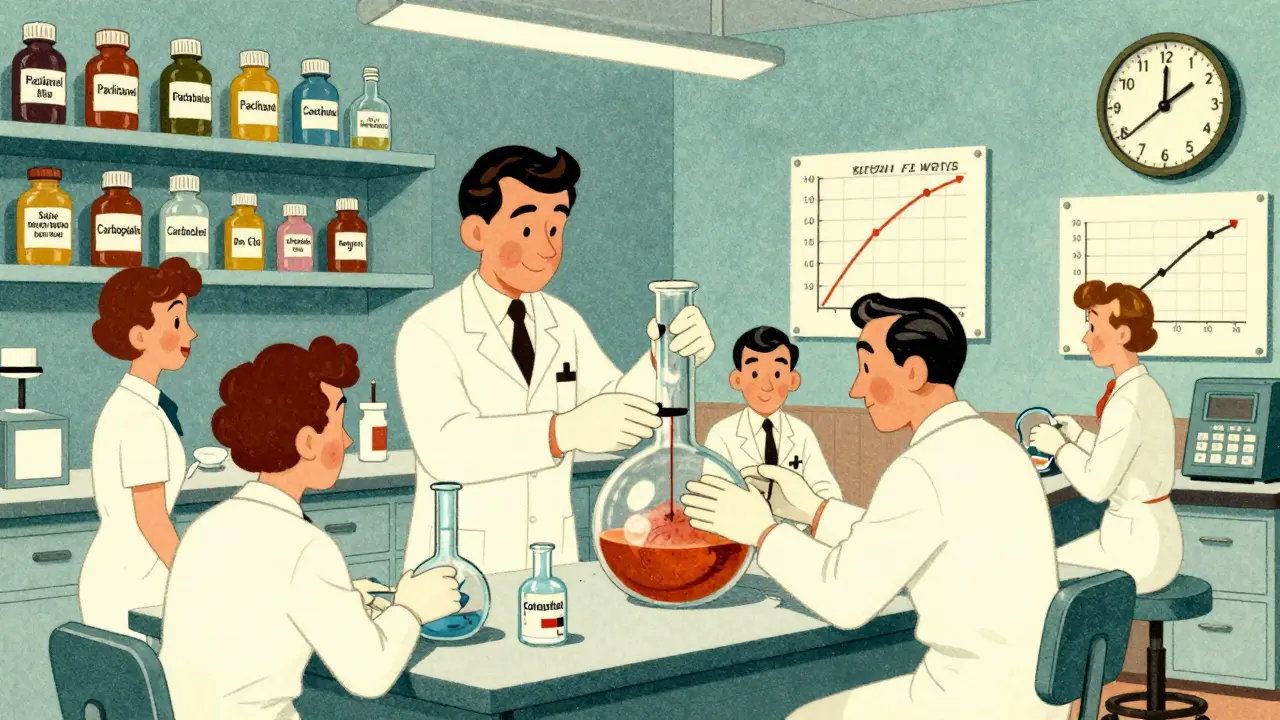
This isn’t a quick fix. Each IV desensitization takes an average of 4.7 hours. That’s 4.2 nursing hours and 1.8 physician hours per patient. In a busy hospital, that’s a major resource drain. Community hospitals often skip it because they lack trained allergists or proper equipment. A 2022 study found that only 35% of community hospitals offer desensitization, compared to over 85% in academic centers. And when it’s done wrong - by staff who haven’t been trained - complication rates triple. To fix this, many centers now use:- Pre-made dilution kits (cut preparation errors by 75%)
- Electronic checklists (reduce patient selection errors by 60%)
- Simulation training (boost protocol adherence from 78% to 96%)
What Do Patients Say?
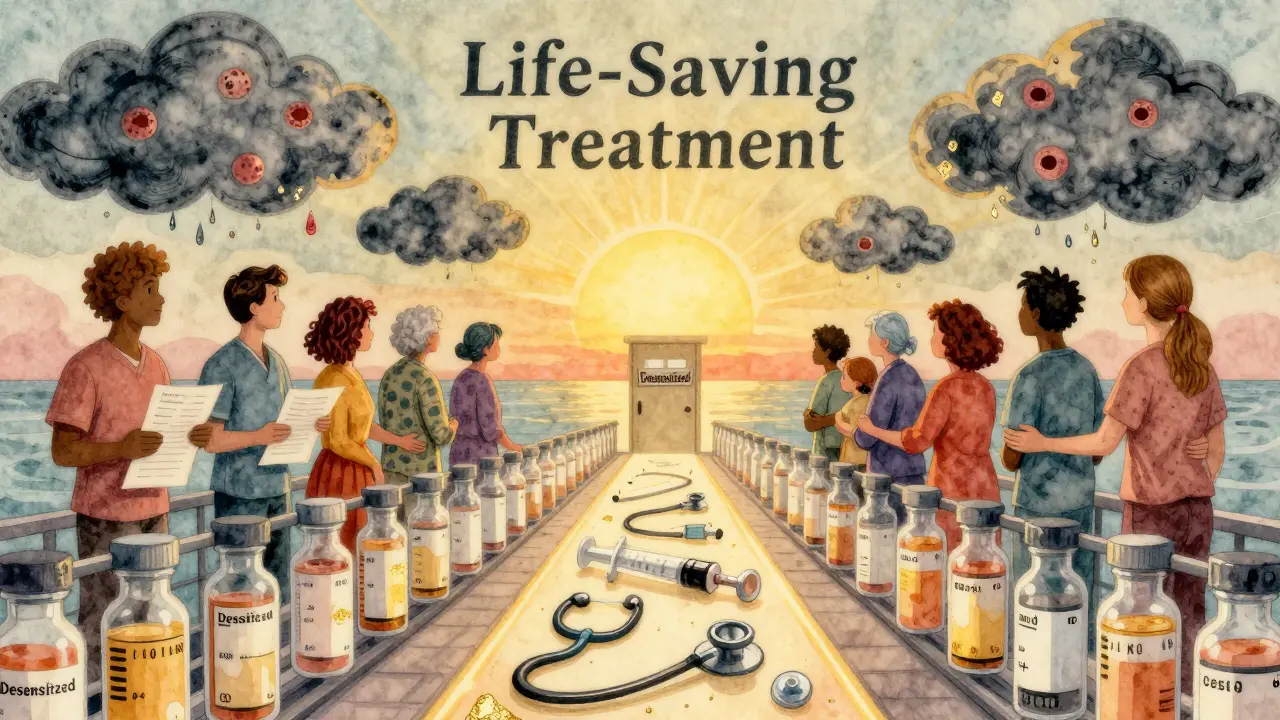
For those who’ve been through it, the results are life-changing. One Reddit user, u/PenicillinWarrior, wrote: “After 20 years of being labeled allergic, the 4-hour protocol let me finally take the best antibiotic for my osteomyelitis.” Another, u/ChemoSurvivor, said: “My hospital didn’t have the proper dilution kits - took 3 attempts before they got it right.” Surveys show 92% of oncology patients call it “life-saving.” But 63% admit they were terrified during the process. The anxiety is real. Waiting for each dose, watching your vitals, hoping you won’t react - it’s emotionally draining. Still, 87% of patients say the trade-off was worth it. They got their treatment. They lived.The Future: Smarter, Safer, Faster
New developments are making desensitization more precise. In 2023, the AAAAI released standardized national protocols, replacing 12 conflicting guidelines. That’s a big step toward consistency. Researchers are also testing:- Biomarker tests that predict success with 89% accuracy by measuring basophil activation.
- Home-based protocols for stable patients - early trials show 92% success.
- Genetic and immunologic profiling to match patients with the right protocol.
Final Thoughts
Drug desensitization isn’t magic. It’s hard work - for doctors, nurses, and patients. It takes time, skill, and resources. But when there’s no other option, it’s the difference between life and death. If you’ve been told you can’t take a life-saving drug because of an allergy, ask: “Is desensitization an option?” Don’t assume it’s too risky or unavailable. Find an allergist who specializes in it. Ask about their protocols. Check if they’ve done it before. Because sometimes, the medicine you’re allergic to is the only one that can save you. And now, there’s a way to take it safely.Can you become permanently tolerant to a drug after desensitization?
No. Desensitization creates temporary tolerance. If you stop taking the drug for more than 48 hours, your body forgets the tolerance. You’ll need to go through the full protocol again if you need the medication later. That’s why it’s only used when you need the drug regularly - like daily antibiotics or weekly chemotherapy.
Is desensitization safe for children?
Yes, when done in specialized centers. Children with allergies to antibiotics or chemotherapy drugs can undergo desensitization, but protocols are adjusted for weight and age. Success rates are similar to adults - around 95-100% for immediate reactions. Pediatric allergists with experience in the procedure must supervise it.
What if I react during the procedure?
The medical team stops the infusion immediately and treats the reaction with antihistamines, steroids, or epinephrine. Once you’re stable, they restart at a lower dose and go slower. Mild reactions like flushing or itching are common and usually manageable. Severe reactions are rare - under 2% - when the procedure is done in a properly equipped setting.
Can I do this at my local clinic?
Most local clinics can’t. Desensitization requires trained allergists, specialized equipment, and staff who know how to handle anaphylaxis. It’s typically only available at academic medical centers or large hospitals with allergy-immunology departments. If your doctor suggests it, ask where they’d refer you - or seek out a specialist directly.
Does insurance cover desensitization?
Medicare and most private insurers cover the procedure, but reimbursement often doesn’t cover the full cost. The procedure requires many staff hours and expensive monitoring - CMS pays only about 60% of actual expenses. This is why smaller hospitals avoid it. Always check with your insurer and ask for pre-authorization.
Are there any long-term side effects from desensitization?
No long-term side effects have been linked to the desensitization process itself. The risks are immediate - during the procedure. Once you complete it and finish your treatment, your immune system returns to its baseline. There’s no evidence it causes new allergies or weakens your immune system. The only lasting effect is that you got the treatment you needed.



Write a comment
Your email address will be restricted to us