Heart Failure Monitoring Adjuster
Enter patient characteristics to generate tailored monitoring recommendations for Guideline-Directed Medical Therapy (GDMT).
Fill out the form and click "Generate Protocol" to see specific adjustments for this patient.
You’ve just started a patient on four new heart failure drugs. The pharmacy label says "take as directed," but the clinical reality is far messier. You’re juggling potassium levels, blood pressure dips, and renal function changes while trying to keep someone out of the hospital. For most patients, standard protocols work fine. But what happens when your patient is elderly, female, or from a non-Caucasian background? The monitoring considerations shift dramatically, and getting them wrong can turn a life-saving regimen into a liability.
Guideline-directed medical therapy (GDMT) for heart failure with reduced ejection fraction (HFrEF) rests on four pillars: ARNIs, beta-blockers, mineralocorticoid receptor antagonists (MRAs), and sodium-glucose cotransporter-2 inhibitors (SGLT2i). While the 2022 AHA/ACC/HFSA guidelines provide a robust framework, they also highlight that one-size-fits-all monitoring doesn’t exist. With 6.2 million Americans living with heart failure and over a million annual hospitalizations tied to it, precision in monitoring isn’t just academic-it’s essential for survival.
The Four Pillars and Their Specific Watchlists
Each class of medication demands its own surveillance routine. Ignoring these nuances leads to either under-treatment or dangerous side effects. Let’s break down what you actually need to watch for each pillar.
- Beta-blockers: These are the backbone of HFrEF treatment. Your primary metric here is heart rate. The goal? A resting heart rate between 50 and 60 beats per minute. If a patient stays above 70 bpm despite max tolerated doses, consider adding ivabradine. But beware: if they have active angina, ivabradine might increase ischemic risks by 28%, according to the SHIFT trial data.
- ARNIs (e.g., sacubitril/valsartan): Hypotension is the main enemy. Check blood pressure within 1-2 weeks of starting or increasing the dose. In the PARADIGM-HF trial, symptomatic hypotension hit 14% of ARNI users versus 9.2% on enalapril. Women, in particular, may experience higher drug exposure, requiring slower titration.
- MRAs (spironolactone/eplerenone): Potassium is king here. Hyperkalemia is the reason many doctors avoid MRAs entirely, missing out on a 30% reduction in all-cause mortality. Check serum potassium before initiation, then again within 3-7 days after any dose change. After that, every 3-6 months is standard, but high-risk groups need more frequent checks.
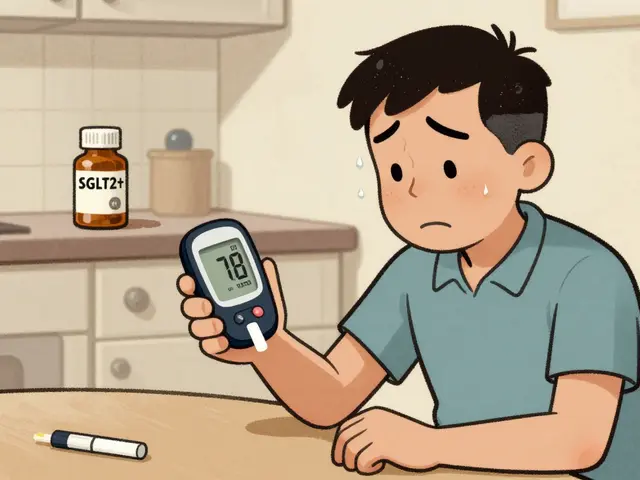
- SGLT2 inhibitors: These are the newcomers with broad indications. Monitor volume status closely, especially in the elderly, due to dehydration risks. Also, watch for genital mycotic infections-clinical trials showed an 11.9% incidence versus 4.5% in placebo groups. Rarely, diabetic ketoacidosis can occur even with normal blood glucose, so keep a low threshold for checking ketones if symptoms arise.
Why Special Populations Need Different Rules
Standard guidelines assume an average patient. But averages don’t treat people. Certain demographics face distinct physiological responses to these drugs, necessitating tailored monitoring strategies.
| Population Group | Key Risk Factor | Specific Monitoring Adjustment | Clinical Evidence |
|---|---|---|---|
| Non-Caucasian Patients | Hyperkalemia | More frequent potassium checks; lower initial MRA doses | 15.3% hyperkalemia rate vs. 8.7% in White patients |
| Women | Drug Exposure | Slower titration of ARNIs; closer BP monitoring | 30% higher exposure to sacubitril/valsartan |
| Elderly (≥75 years) | Hypotension & Volume Depletion | Reduced ivabradine dose (2.5 mg BID); strict fluid balance checks | Higher risk of falls and acute kidney injury |
| Patients with Renal Impairment | Accumulation | Weekly labs during titration; adjust SGLT2i based on eGFR | Risk of worsening renal function with aggressive diuresis |
Take non-Caucasian patients, for instance. Studies show they experience hyperkalemia at nearly double the rate of White patients when on MRAs. If you stick to the standard 3-month follow-up, you might miss a dangerous spike. For women, pharmacokinetics differ. Sacubitril/valsartan levels run about 30% higher, meaning a standard dose might act like a high dose. This doesn’t mean you avoid the drug-it means you titrate slower and check blood pressure more often.
Then there’s the elderly cohort. Age ≥75 isn’t just a number; it’s a physiological state where homeostasis breaks down faster. Ivabradine dosing should start at 2.5 mg twice daily instead of the standard 5 mg to prevent bradycardia. Similarly, SGLT2 inhibitors can cause volume depletion, leading to falls or acute kidney injury. In this group, monitoring isn’t just about lab values-it’s about functional status and hydration cues.

The Implementation Gap: Why We Fail to Monitor
If the science is clear, why are only 22.7% of HFrEF patients on all four GDMT components at target doses? The answer lies in monitoring friction. Clinicians fear the workload. Checking potassium every week feels burdensome compared to writing a prescription and moving on.
A 2023 analysis in JACC: Heart Failure found that 68.3% of eligible patients never receive MRA therapy, largely due to fears of hyperkalemia management. Yet, avoiding MRAs denies patients a 30% mortality benefit. The solution isn’t to skip the drugs-it’s to streamline the monitoring. Pilot studies using standardized protocols reduced hyperkalemia-related discontinuations by 42%. Pharmacist-led titration programs boosted target dose achievement from 28% to 63% in six months.
Electronic health record (EHR) alerts play a crucial role too. Integrated systems that flag potassium trends can decrease inappropriate MRA discontinuations by 35%. Instead of reacting to a crisis, you anticipate it. This shifts the dynamic from firefighting to proactive care.

Technology and the Future of Monitoring
We’re entering an era where monitoring extends beyond the clinic visit. Implantable pulmonary artery pressure sensors, validated in the CHAMPION trial, reduced heart failure hospitalizations by 30% in high-risk patients. However, adoption remains low-only 1.2% of eligible patients use them. Why? Cost, complexity, and lack of widespread infrastructure.
Remote monitoring offers a middle ground. Smartphone apps improved medication adherence by 27% in a JAMA Cardiology study. AI-powered systems now predict hyperkalemia risk with 83% accuracy by analyzing EHR data. Imagine a patch that continuously monitors potassium levels, currently in Phase 2 trials with 92% accuracy compared to serum tests. This could eliminate weekly blood draws, making MRA therapy far more palatable for both patients and providers.
By 2030, experts predict 75% of heart failure patients will have personalized monitoring protocols based on genetic, demographic, and comorbidity factors. This isn’t sci-fi; it’s the logical endpoint of precision medicine. Pharmacogenomic testing may soon tell you exactly how a patient will metabolize their meds before they take the first pill.
Practical Checklist for Daily Practice
So, how do you apply this tomorrow morning? Here’s a simplified approach to ensure you’re covering the bases without burning out.
- Assess Demographics Early: Before prescribing, note age, sex, and ethnicity. Adjust your baseline monitoring frequency accordingly.
- Set Up Structured Follow-ups: Don’t rely on ad-hoc visits. Schedule labs for 3-7 days post-initiation for MRAs and 1-2 weeks for ARNIs.
- Leverage Team Care: Delegate titration and monitoring to specialized nurses or pharmacists. They achieve target doses more consistently than general practitioners alone.
- Watch for Red Flags: Persistent HR >70 bpm? Consider ivabradine (with caution in angina). Genital itching? Suspect SGLT2i side effects. Dizziness? Check BP and volume status.
- Document Trends, Not Just Points: One potassium reading of 5.2 mmol/L matters less than the trend from 4.5 to 5.2 over two weeks. Context saves kidneys.
Remember, the goal isn’t just to prescribe pills. It’s to keep patients stable, active, and out of the hospital. Effective monitoring turns a complex regimen into a manageable routine. By tailoring your approach to the individual’s physiology and leveraging available tools, you close the gap between guideline recommendations and real-world outcomes.
How often should I check potassium for patients on MRAs?
Check serum potassium before starting the medication, then within 3-7 days after initiation or any dose increase. Once stable, monitor every 3-6 months. However, for high-risk groups like those with renal impairment or non-Caucasian patients, more frequent checks (monthly) may be necessary to prevent hyperkalemia.
Do women require different dosing for heart failure medications?
While standard dosing applies, women often have higher drug exposure to certain agents like sacubitril/valsartan (up to 30% higher). This doesn’t necessarily mean lower doses, but rather slower titration and more frequent blood pressure monitoring to manage potential hypotension.
What is the specific monitoring concern for elderly patients on SGLT2 inhibitors?
The primary concern is volume depletion leading to hypotension, falls, or acute kidney injury. Monitor fluid status, weight, and renal function closely. Ensure adequate hydration and consider adjusting diuretic doses when initiating SGLT2 inhibitors in patients aged 75 and older.
When should I consider adding ivabradine?
Consider ivabradine if the resting heart rate remains ≥70 beats per minute despite maximally tolerated beta-blocker therapy. Start at 5 mg twice daily, but reduce to 2.5 mg twice daily for patients aged ≥75 or those with conduction defects. Avoid in patients with activity-limiting angina due to increased ischemic risk.
Are implantable pulmonary artery sensors worth the cost?
For high-risk patients with recent hospitalization, the CHAMPION trial showed a 30% reduction in heart failure hospitalizations. While adoption is low due to cost and complexity, the clinical benefit is significant for this specific subgroup. Evaluate on a case-by-case basis considering insurance coverage and patient eligibility.