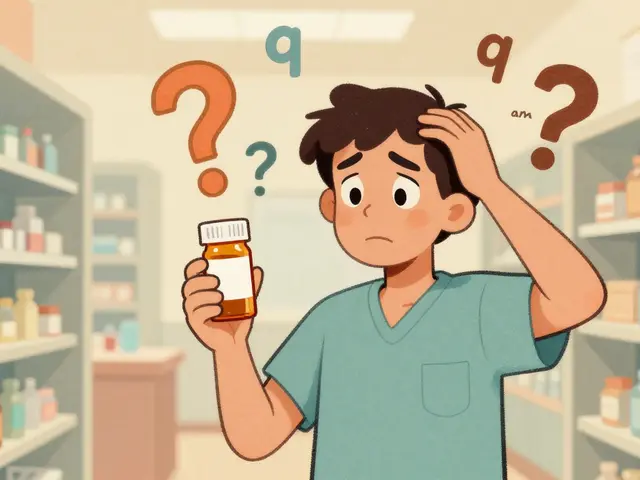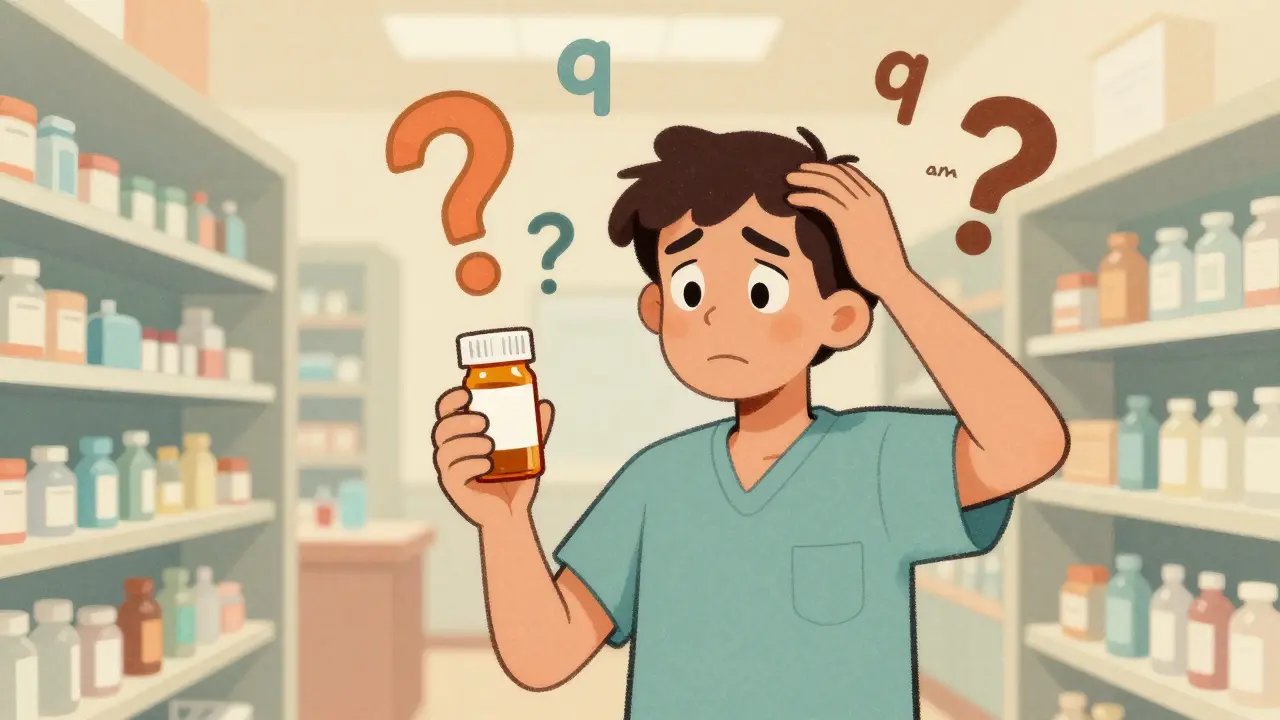
You pick up your prescription. The label says "take one tablet PO q am." You stare at it. What does that mean? Do you take it with food? Is "q am" every morning or just once? If this sounds familiar, you are not alone. Confusing medication instructions are a major safety risk. In fact, unclear directions contribute to about 1.5 million medication-related injuries in the United States every year. That is a staggering number of preventable mistakes. As patients, we often feel too shy to ask questions, but silence can be dangerous. This guide will help you decode medical jargon, understand your rights, and know exactly when to call your provider for clarification.
Why Medical Jargon Exists (And Why It Fails)
Medical professionals use Latin abbreviations because they are fast to write and universally understood within the healthcare industry. However, these shortcuts often fail when they reach the patient. For example, "PO" means "by mouth," and "q am" means "every morning." But if you do not know Latin, these look like random letters. The Institute for Safe Medication Practices (ISMP) has identified this gap as a leading cause of adverse drug events. They argue that ambiguity in prescriptions leads directly to errors. When a doctor writes "QD" for daily, it can easily be misread as "QID" (four times a day). One missing letter changes your dosage by four hundred percent. That is why organizations like the ISMP now recommend writing out words fully instead of using abbreviations.
The problem is not just the language; it is also the inconsistency between manufacturers. The National Institutes of Health (NIH) noted in their 2021 guidelines that different manufacturers of the same generic drug may provide slightly different instructions. One brand might say "take with food," while another says "take on an empty stomach." Without clear guidance from your prescriber, you might follow the wrong set of rules. This inconsistency requires clinician review to determine the best approach for your specific health needs.
Decoding Common Prescription Abbreviations
Let’s break down the most common codes you might see on a bottle. Knowing these can give you immediate clarity, but always double-check with your pharmacist if you are unsure. Here is what those cryptic symbols usually mean:
- PO: Per os, which means "by mouth."
- BID: Bis in die, meaning "twice a day."
- TID: Ter in die, meaning "three times a day."
- QD: Quaque die, meaning "daily." (Note: Many hospitals now ban this abbreviation because it looks like QID.)
- QID: Quater in die, meaning "four times a day."
- PRN: Pro re nata, meaning "as needed."
- HSA: Hypodermic subcutaneous, meaning "under the skin."
Timing matters more than you think. If your label says "BID," do not take both doses at breakfast. MD Anderson Cancer Center specifies that medications taken twice daily should be spaced as close to 12 hours apart as possible, such as 8 am and 8 pm. This keeps steady levels of the drug in your blood. Similarly, Harvard Health points out that cholesterol-lowering statins are often best taken at bedtime because your body produces more cholesterol overnight. Ignoring timing can reduce the drug’s effectiveness significantly.
The "As Needed" Trap
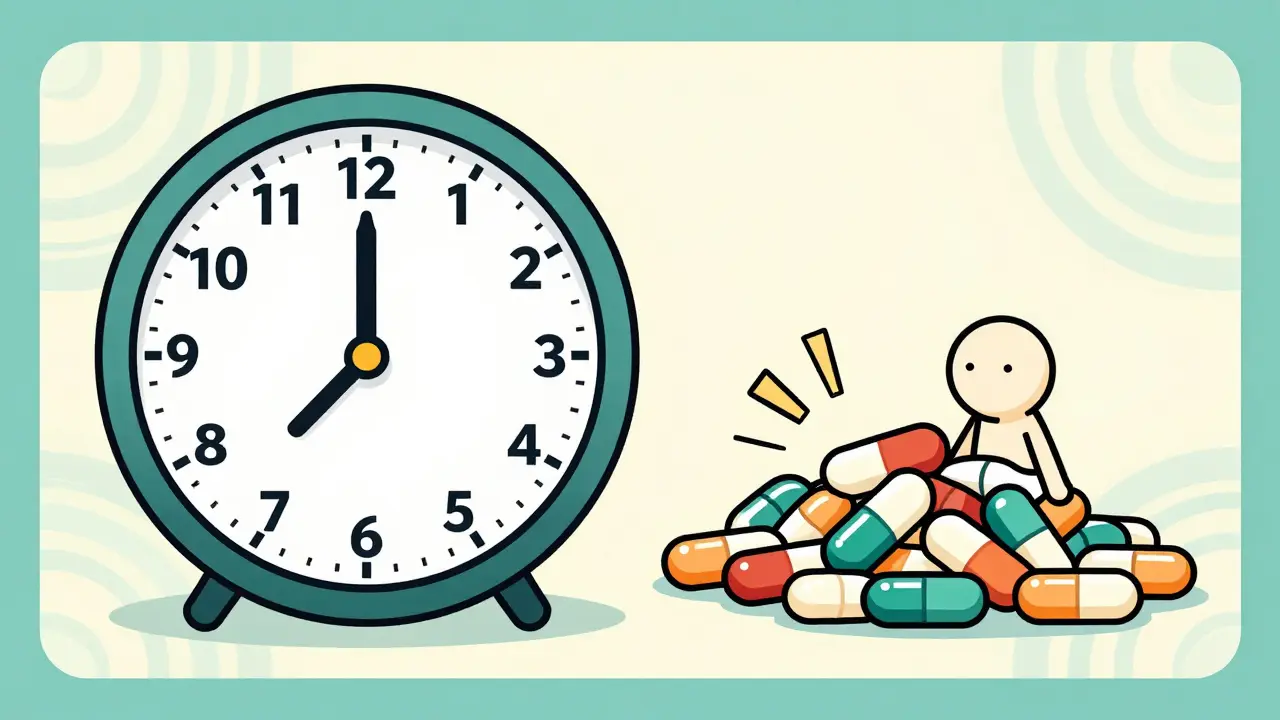
One of the most dangerous instructions is "take as needed" or PRN. Patients often interpret this as "whenever I feel like it." Joanne Doyle Petrongolo, a pharmacist at Massachusetts General Hospital, warns that this is unsafe. "It's not safe to take a medication anytime you feel you need it," she explains. You must know three things before taking a PRN medication: the intent of the drug, the maximum daily dose, and the minimum time between doses. For example, if you have painkillers, you might be allowed four pills a day, but no more than one every six hours. Taking five pills in two hours could lead to an overdose. Always ask your pharmacist: "What is the maximum amount I can have in 24 hours?"
When to Demand Clarification
You should never guess. Dr. Anthony L. Komaroff, Editor in Chief of Harvard Health Letter, states clearly: "If you're unsure exactly how to take a medication, even if it was already explained to you, ask for clarification." Here are specific scenarios where you must seek help immediately:
- Inconsistent Manufacturer Labels: If you switch brands and the new bottle says something different than the old one, call your doctor. The NIH guidelines recommend clinicians review these differences to ensure therapeutic consistency.
- Ambiguous Dosing: If the instruction says "take half a pill" but does not specify when, ask for a schedule. Complex regimens, like Depakote 500 mg "one tab po q am for 1 week, then BID," require precise transcription to avoid errors.
- Missing Context: Does it need food? Alcohol restrictions? Sun exposure warnings? If the label is silent, ask.
The FDA requires pharmacists to provide a Medication Guide for over 200 high-risk drugs, including opioids, isotretinoin (Accutane), and oral contraceptives. These guides are mandatory in outpatient settings. If you did not receive one for a high-risk drug, request it. These documents contain critical safety information that prevents serious adverse reactions.

Your Rights and the Role of Pharmacists
In the UK and the US, pharmacists are your last line of defense. In outpatient settings like community pharmacies, the FDA mandates that pharmacists provide approved Medication Guides each time a high-risk drug is dispensed. They are required to counsel you on appropriate use, side effects, and follow-up care. Do not rush out the door. Stay for the consultation. In hospital settings, nurses must compare the medication picked up to the prescription copy before administration, ensuring the name, purpose, and intended effects are discussed with you. This process, known as the "five rights" of medication administration, is designed to catch errors before they happen.
| Setting | Mandatory Medication Guide? | Primary Clarifier | Patient Action Required |
|---|---|---|---|
| Community Pharmacy | Yes (for high-risk drugs) | Pharmacist | Ask questions during pickup |
| Hospital/Inpatient | No (verbal counseling required) | Nurse/Doctor | Verify dose before taking |
| Telehealth/Virtual | Electronic delivery available | Provider/Remote Pharmacist | Request digital guide via email/app |
Practical Tools for Safe Medication Use
Memory fades. Stress clouds judgment. Relying solely on your brain to remember complex schedules is risky. The CDC recommends setting timers or reminders to help you stay on track. Use your phone’s alarm app or a dedicated pill organizer. Label your containers with large, clear text: "Morning," "Evening," "With Food." If you have multiple medications, create a simple chart. List the drug name, dose, time, and special instructions. Keep this chart visible in your kitchen or bathroom. When in doubt, pause and check the chart or call your pharmacy. Most pharmacies offer free refill reminders and quick advice lines.
Finally, keep an updated list of all your medications, including supplements. Share this list with every provider you see. This helps them spot interactions and ensures consistent instructions across different specialists. Clear communication saves lives. Be proactive, be curious, and never apologize for asking for clarity.
What does "PO" mean on my prescription?
"PO" stands for the Latin phrase "per os," which translates to "by mouth." It indicates that the medication should be swallowed orally rather than injected or applied topically.
Is it safe to take "as needed" medication whenever I want?
No. "As needed" (PRN) medications still have strict limits. You must know the maximum daily dose and the minimum interval between doses to avoid overdose or reduced effectiveness. Always confirm these limits with your pharmacist.
Why do different brands of the same drug have different instructions?
Manufacturers may have slight variations in formulation or testing data, leading to different labeling recommendations. The NIH advises clinicians to review these differences to ensure the chosen instruction aligns with your specific health needs and avoids adverse effects.
Do I always get a paper Medication Guide?
For high-risk drugs designated by the FDA, yes, a paper guide is typically provided in outpatient settings. However, patients may request electronic delivery. In hospital settings, verbal counseling replaces the paper guide, but the information provided must be equally comprehensive.
What should I do if I miss a dose?
General advice is to take it as soon as you remember, unless it is almost time for the next dose. Never double up to make up for a missed dose. Check the Medication Guide or call your pharmacist for drug-specific instructions, as some medications have strict timing requirements.