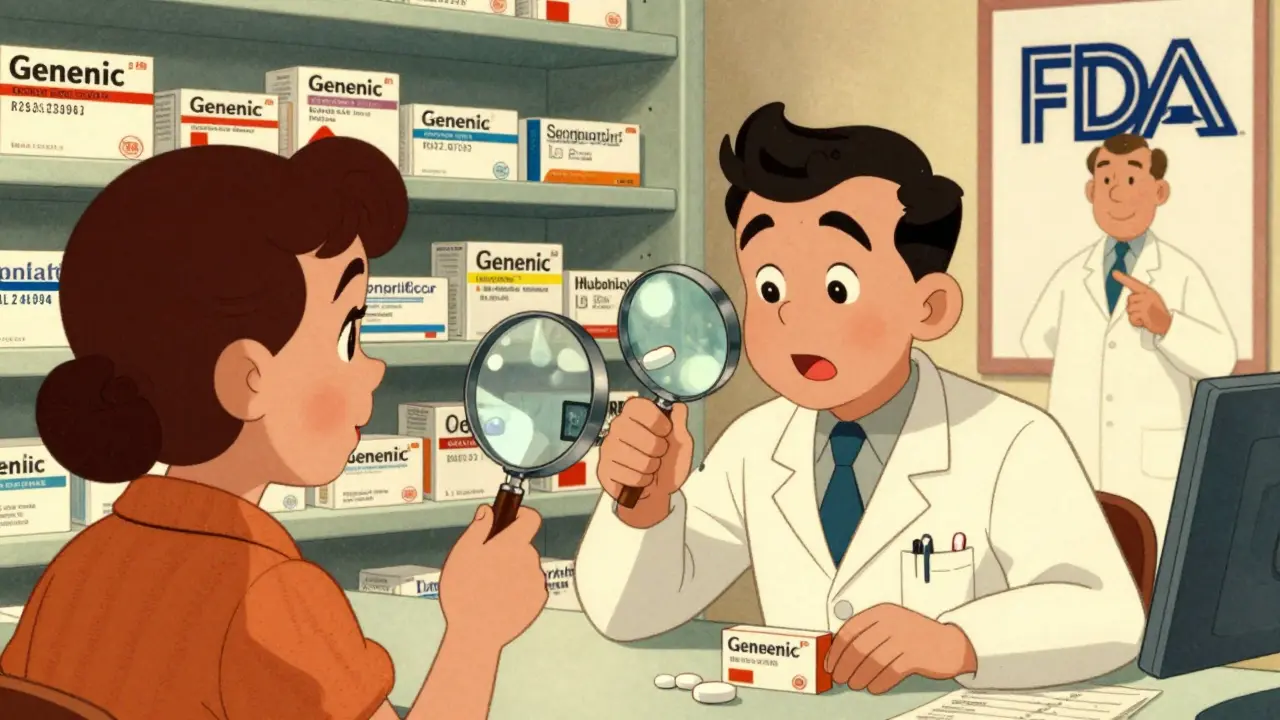
Buying generic drugs should be simple. You walk into the pharmacy, hand over your prescription, and get a much cheaper version of your usual medication. But what if that pill isn’t what it claims to be? Counterfeit drugs are real - and they’re easier to find than most people think. The good news? Legitimate generic drugs are just as safe and effective as brand-name ones. The trick is knowing how to tell them apart.
What Makes a Generic Drug Legitimate?
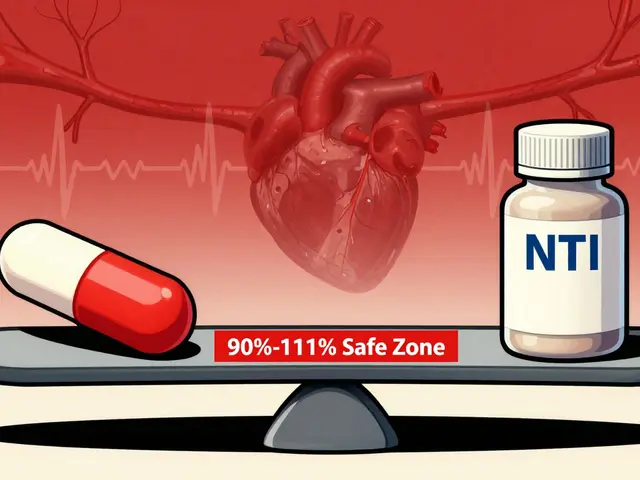
A legitimate generic drug has the same active ingredient, strength, dosage form, and route of administration as the brand-name version. It must meet strict standards set by the FDA, EMA, or other trusted regulators. The key difference? Generics don’t have to repeat expensive clinical trials. Instead, they prove they work the same way in your body through bioequivalence testing. That means the amount of drug absorbed into your bloodstream must be within 80% to 125% of the brand-name drug. Studies show over 98% of approved generics meet this standard - with average absorption rates almost identical to the original. You might notice the generic looks different. It could be a different color, shape, or size. That’s normal. Trademark laws prevent generics from copying the brand’s appearance. So if your brand-name pill was a blue oval and the generic is a white round tablet, that doesn’t mean it’s fake. What matters is the active ingredient - and whether it’s been approved.What to Look for on the Packaging
The packaging is your first line of defense. Legitimate generic drugs always have clear, professional labeling. Check for these details:- The drug name (active ingredient) clearly printed
- The strength (e.g., 10 mg, 500 mg)
- The manufacturer’s name and address
- A lot number
- An expiration date
Check the Pill Itself
Hold the pill up to the light. A legitimate tablet should look factory-made: smooth edges, even color, consistent texture. No cracks. No bubbles. No powdery residue clinging to the surface. Look for an imprint - a letter, number, or logo stamped into the tablet. This is required for all approved generic drugs in the U.S. The imprint helps identify the drug, manufacturer, and strength. You can verify it using the FDA’s Drug Identification Database (though you won’t need to do this yourself - your pharmacist will). If the pill is crumbling, smells odd (like chemicals or mold), or has an unusual taste - bitter, metallic, or too sweet - that’s a warning. One user on Reddit reported their generic blood pressure pill suddenly tasted like metal. They switched back to the brand, and the taste disappeared. The generic was later confirmed as counterfeit.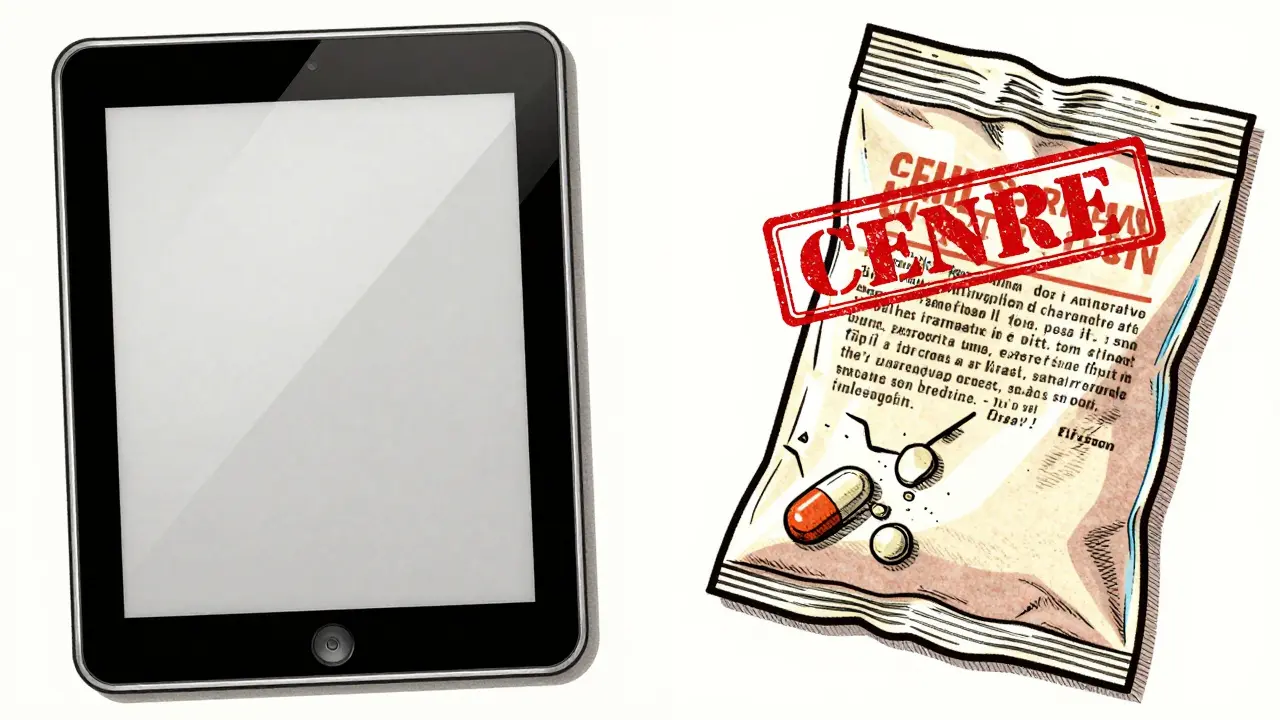
Where You Buy Matters More Than You Think
This is critical: legitimate generic drugs only come through regulated channels. That means:- Your local pharmacy (brick-and-mortar)
- An online pharmacy with the .pharmacy seal (verified by the National Association of Boards of Pharmacy)
- A hospital or clinic dispensary
- Sell prescription drugs without a prescription
- Offer "miracle cures" or huge discounts (e.g., "50% off Viagra")
- Use .biz, .info, or .xyz domains instead of .com or .pharmacy
Use the FDA’s Tools - For Free
The FDA doesn’t just regulate - it gives you tools to protect yourself. The Orange Book is a public database listing all approved generic drugs and their brand-name equivalents. You can search by drug name and see which manufacturers are approved. As of late 2023, it included over 14,800 approved generics. You can also check for recalls. If your drug has been pulled, you’ll see it here. Just enter the lot number from your bottle. It takes less than a minute. Pharmacists have access to real-time manufacturer databases. If you’re unsure, ask them: "Can you confirm this generic is approved and from a verified source?" Reputable pharmacists welcome this question. They check the lot number, the manufacturer, and even the packaging batch against their internal system.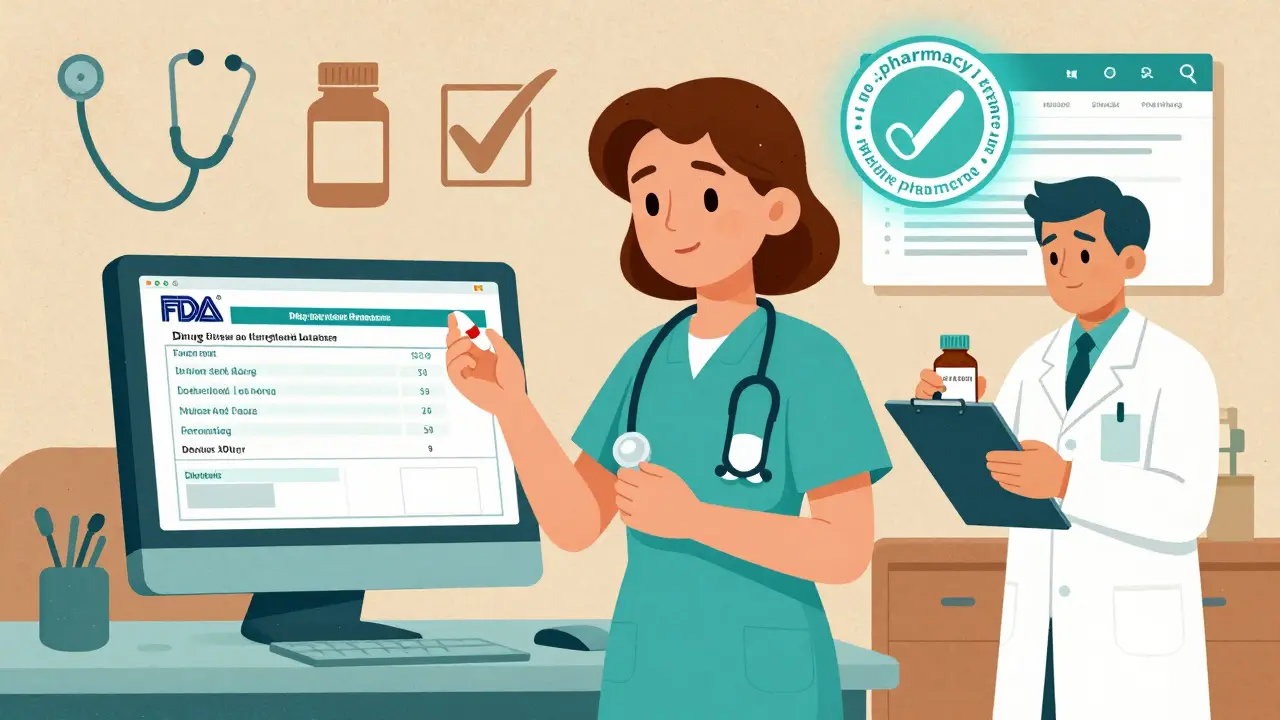
Real-World Red Flags (From Real Cases)
Here’s what actual counterfeit drugs have looked like:- Diabetes pills with no imprint and a strange, chalky texture
- Antibiotics in plastic bags instead of sealed blister packs
- Heart medication with a different color than previous refills - and no lot number
- Pills that dissolved too quickly in water (a sign they’re not the right formulation)
What to Do If Something Feels Off
If you suspect a counterfeit drug:- Stop taking it immediately
- Keep the packaging and pills - don’t throw them away
- Contact your pharmacist or doctor
- Report it to the FDA’s MedWatch program online or by phone
Trust the System - But Verify
The bottom line? Generic drugs are safe. Over 90% of prescriptions in the U.S. are filled with generics. They save the healthcare system over $370 billion a year. Most people never have an issue. But trust isn’t blind. You have the right - and the responsibility - to check what you’re taking. A few seconds of inspection can prevent serious harm. Look at the label. Check the pill. Confirm the pharmacy. Ask questions. You’re not being paranoid. You’re being smart.Are generic drugs as effective as brand-name drugs?
Yes. Legitimate generic drugs must prove they deliver the same amount of active ingredient into your bloodstream at the same rate as the brand-name version. Studies show 98.7% of approved generics meet this standard. The FDA and European regulators require bioequivalence testing before approval. If your doctor prescribed a generic, you can expect the same results - at a lower cost.
Why do generic pills look different from brand-name pills?
Trademark laws prevent generic manufacturers from copying the exact color, shape, or size of brand-name drugs. So while the active ingredient is identical, the appearance may differ. This is normal. What matters is the imprint, the manufacturer, and whether it’s approved by the FDA or equivalent regulator. If the pill looks suspicious - cracked, crumbly, or oddly colored - that’s a red flag.
Can I trust online pharmacies for generic drugs?
Only if they have the .pharmacy seal from the National Association of Boards of Pharmacy. Over 96% of online pharmacies selling drugs without a prescription are illegal. Avoid sites that offer huge discounts, don’t require a prescription, or use odd domain names like .biz or .info. Stick to verified pharmacies - your safety isn’t worth the risk.
What should I do if my generic drug doesn’t seem to work anymore?
Don’t assume it’s your body. A change in effectiveness - like your blood pressure rising, your asthma worsening, or your pain returning - could mean you received a counterfeit or substandard product. Check the packaging for misspellings, odd smells, or unusual texture. Contact your pharmacist and report it to the FDA’s MedWatch program. Keep the pills and box as evidence.
Are all generic manufacturers reliable?
Most are. Major manufacturers like Teva, Sandoz, and Mylan (now Viatris) have decades of FDA-inspected production. They’re held to the same standards as brand-name companies. But not all manufacturers are equal. The FDA inspects over 2,500 facilities annually - and shuts down those that fail. If your drug comes from an unknown or overseas manufacturer with no clear labeling, ask your pharmacist for more details.



Write a comment
Your email address will be restricted to us