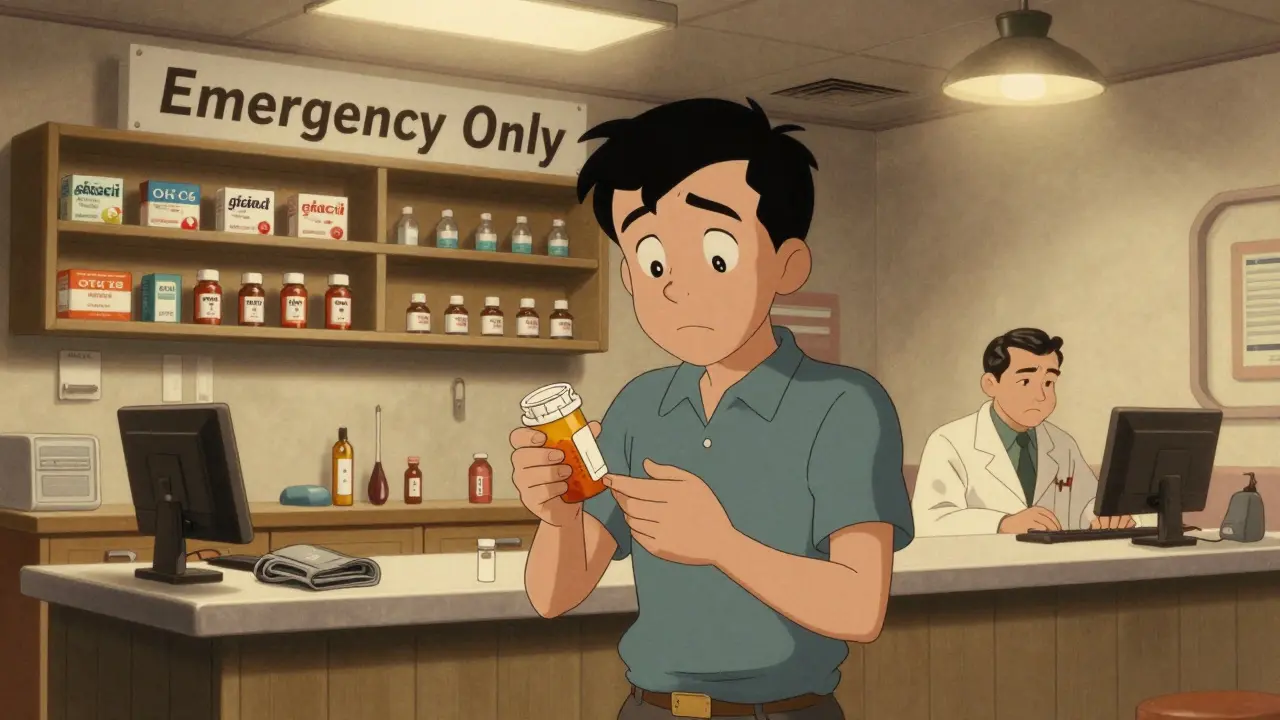
When you're on a cruise, the last thing you want is to run out of your regular medication. But cruise ship medical centers aren't hospitals. They're infirmaries - small, busy, and stocked with only the most common drugs. If you need something specific, like your blood pressure pill, insulin, or even a refill for antibiotics, you can't just walk in and expect it to be there. Cruise ship medical centers are designed to handle seasickness, minor cuts, colds, and emergencies - not your long-term prescription needs.
What You Can Actually Get Onboard
Most cruise ships carry a basic pharmacy with medications for common issues. Think antacids for upset stomachs, anti-nausea pills for motion sickness, pain relievers like ibuprofen or acetaminophen, and maybe a few antibiotics like amoxicillin or azithromycin. Some larger ships might have a few blood pressure or diabetes meds, but don’t count on it. The World Health Organization and the American College of Emergency Physicians both warn: these facilities are not meant to replace your home pharmacy.Here’s what’s typically stocked:
- Antihistamines and decongestants (for colds and allergies)
- Antacids and anti-diarrheal meds (like loperamide)
- Seasickness patches or pills (often free)
- Basic painkillers and fever reducers
- Topical creams for rashes or sunburn
- Occasional antihypertensives or insulin (on very large ships)
But if you need a specialty drug - say, a biologic for rheumatoid arthritis, a controlled pain medication, or a rare thyroid hormone - you’re out of luck. Even Storylines, the cruise line designed for long-term residents, only carries minimal amounts of narcotics and requires prescriptions to be submitted six to twelve months in advance.
Why You Can’t Rely on the Ship’s Pharmacy
Space is limited. So are staff. Most ships have just one doctor and one or two nurses for thousands of passengers. They’re not specialists - they’re general practitioners. If you have a complex condition, they’ll stabilize you and get you to land as fast as possible.Cost is another issue. A single dose of an antibiotic might cost $35-$40 onboard. At your local pharmacy? $5-$15. That’s a 200-300% markup. And you won’t find prices listed anywhere. You’ll only learn them after you’ve already been prescribed something.
Hours are also restricted. Medical centers usually open from 8 a.m. to 10 p.m. - no weekends, no holidays. If you get sick at 1 a.m. and need a refill, you’ll have to wait. And if the ship docks in a port where the pharmacy is closed? You’re stuck.
What You Should Do Before You Sail
The only reliable way to avoid a medical emergency on a cruise is to plan ahead. Here’s exactly what to do:- Bring enough medication for the entire trip - plus 7-10 extra days. Delays happen. Weather. Mechanical issues. Port cancellations. You might be stuck onboard longer than planned.
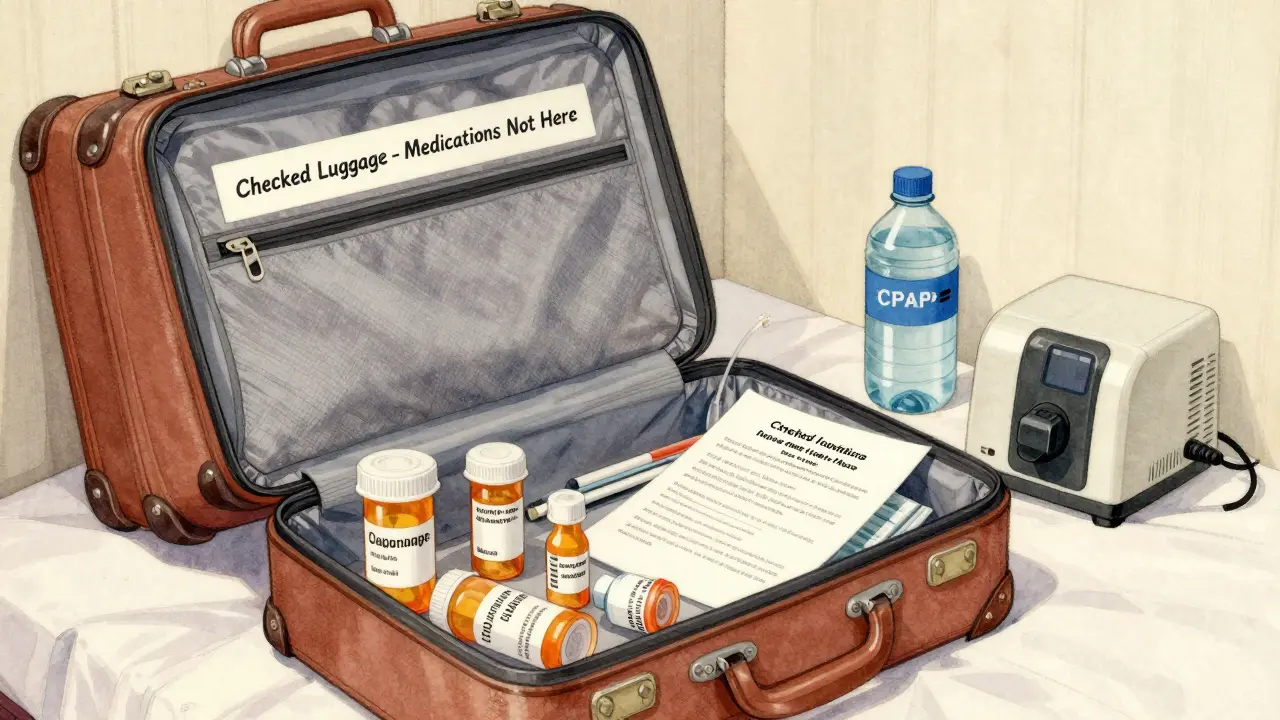
- Keep all meds in their original bottles. Security checks are common. If your pills are in a pill organizer with no label, they might be confiscated. The name on the bottle must match your passport.
- Carry them in your carry-on luggage. Checked bags can get lost. Medications should never be in a suitcase you might not see for 24 hours.
- Bring a printed list of your meds. Include the generic name, dosage, and your doctor’s contact info. This helps if the ship’s doctor needs to verify your prescription.
- Get a doctor’s note for insulin, injectables, or controlled substances. Even if you’re not carrying narcotics, a note from your doctor can smooth things over if you’re questioned.
- For CPAP users: Bring distilled water and an extension cord. Storylines and other long-term cruise operators specifically require this. It’s not optional.
According to Cruise Critic’s analysis of 1,245 passenger reports, 87% of people who had no issues followed these steps. The 13% who didn’t? Most ended up in the medical center, stressed, out of meds, and paying double.
What to Do If You Run Out
If you do run out - and it happens - your first stop is the ship’s medical center. Don’t wait until you’re sick. Go early. Tell them what you need. They might have it. They might not.If they don’t have your medication:
- Ask if they can order it from a port pharmacy - but this takes time and isn’t guaranteed.
- Check if you can get it at the next port. Some ports have 24-hour pharmacies, others don’t open on Sundays.
- Don’t try to buy over-the-counter substitutes. They won’t work the same. Your blood pressure pill isn’t interchangeable with a generic.
- Call your home pharmacy. Some will mail you a 7-day supply if you have a prescription on file.
One Reddit user, u/CruiseMedFail, shared a nightmare: They needed a blood pressure refill on day 7 of a 14-day cruise. The ship didn’t carry it. The next port had a storm. The pharmacy was closed. They had to skip doses for three days. That’s not rare.
How Cruise Lines Differ
Not all cruise lines are the same. Disney Cruise Line requires all prescriptions to be in labeled bottles - no exceptions. Royal Caribbean’s FAQ says they provide “limited professional medical services.” That’s code for: we’ll help with emergencies, not your chronic care.Storylines is the outlier. Designed for people who live on ships, they have a full pharmacy with compounding capabilities. They’ll refill your insulin, adjust your thyroid dose, even make custom formulations. But you have to apply six months ahead. You can’t just show up and ask.
For everyone else - the standard cruise lines - the rule is simple: assume you won’t get your prescription.
What About Over-the-Counter Meds?
You can usually buy basic OTC drugs onboard - painkillers, antacids, allergy pills. But prices are inflated. A box of ibuprofen might cost $15. Same box at CVS? $8. And the selection? Limited. If you need a specific brand - like a certain nasal spray or sleep aid - bring it. Don’t gamble.One bright spot: seasickness medication. Most ships give it away for free. If you’re prone to motion sickness, grab a few doses at check-in. They’re often available 24/7.
Final Reality Check
Cruise ship medical centers are lifesavers for sudden illnesses or injuries. But they’re not pharmacies. You can’t rely on them for your daily meds. The industry knows this. That’s why ACEP, WHO, and cruise lines themselves all say the same thing: Bring your own.Thousands of people cruise safely every year. The ones who have problems? They didn’t bring enough. Or they didn’t label their pills. Or they thought, “I’ll just get it on the ship.” Don’t be that person.
Plan like your health depends on it - because it does. Your cruise is supposed to be relaxing. Don’t let a missing pill ruin it.
Can I get my prescription refilled on a cruise ship?
Maybe, but don’t count on it. Cruise ship pharmacies carry only common medications. If you need something specific - like insulin, blood pressure pills, or antibiotics - bring enough for the entire trip plus 7-10 extra days. Specialty drugs are rarely stocked, and even if they are, you’ll pay 200-300% more than at home.
Do I need to bring my medications in original bottles?
Yes. Security checks are common, and unlabeled pills may be confiscated. The name on the bottle must match your passport exactly. Even if you use a pill organizer, keep the original bottles in your carry-on.
What if I run out of my medication and the ship doesn’t have it?
Contact the medical center immediately. Ask if they can order it from the next port. If not, check if the port pharmacy is open. Never skip doses unless directed by a doctor. If you’re on a long cruise, consider mailing a 7-day supply from home using your pharmacy’s mail service.
Are cruise ship pharmacies more expensive than land pharmacies?
Yes. A single dose of an antibiotic might cost $35-$40 onboard, while it’s $5-$15 at home. Painkillers, antacids, and allergy meds are similarly marked up. You’re paying for convenience - and limited availability.
Can I get narcotics or controlled substances on a cruise ship?
Almost never. Even Storylines, which offers the most comprehensive pharmacy services, states narcotics are only available in minimal quantities and only for emergencies. Most cruise lines do not carry opioids, sedatives, or stimulants. If you rely on these, bring your own supply with a doctor’s note.
Should I bring extra medication for a 7-day cruise?
Yes. Always bring at least 7-10 extra days’ worth. Cruises get delayed. Ports get canceled. Ships get stuck. You could end up at sea for days longer than planned. A 7-day cruise should have at least 14 days’ worth of meds.
Do I need a doctor’s note for my medications?
It’s highly recommended, especially for insulin, injectables, controlled substances, or high-dose medications. A note from your doctor with your name, diagnosis, and medication list helps if you’re questioned by security or the ship’s medical staff.


Write a comment
Your email address will be restricted to us