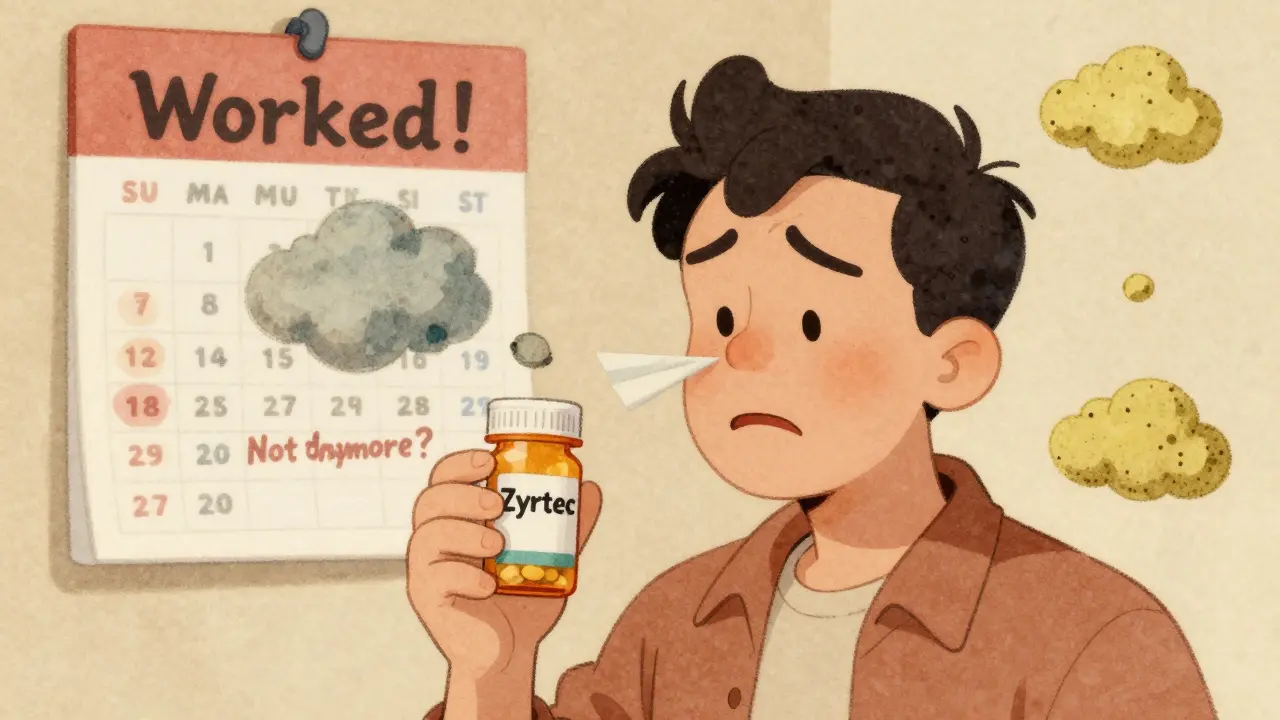
Have you been taking the same antihistamine for months-or years-and suddenly noticed it’s not helping like it used to? You’re not imagining it. Millions of people report the same thing: antihistamine effectiveness fades over time. But is this real tolerance, or something else? The answer isn’t simple, and the confusion is costing people time, money, and relief.
What Happens When Your Antihistamine Stops Working?
You start with Zyrtec, Claritin, or Allegra. It cuts your sneezing, clears your eyes, quiets your itching. After a few months, you notice it’s not doing the same job. You up the dose. You switch brands. You even try Benadryl at night. Still, the sneezes come back. It feels like your body has learned to ignore the medicine. Here’s the catch: medical experts don’t agree on whether your body actually builds tolerance. Some say yes. Others say no. And both sides have data to back them up. Dr. John M. James, a board-certified allergist with over 30 years in practice, says patients on long-term antihistamines often need higher doses because the drugs lose their punch. He’s seen it in his clinic: people who once took one tablet a day now need two or three. Others rotate between Zyrtec, Claritin, and Allegra every few months, hoping to reset their system. But then there’s Dr. Wierzbicki from Texas Health, who says there’s no proof your H1 receptors actually downregulate with long-term use. She points out that environmental changes-new pets, moving houses, pollen seasons getting worse-are far more likely culprits than drug tolerance. So who’s right? Maybe both.The Science Behind the Confusion
Antihistamines block histamine, the chemical your body releases during allergic reactions. First-gen types like Benadryl cross into your brain and cause drowsiness. Second-gen ones like Zyrtec and Claritin were designed to avoid that. They’re safer for daily use. Here’s where things get tricky. In a 2017 study of 178 people with chronic hives, nearly 80% didn’t respond to standard doses. When researchers doubled, tripled, or even quadrupled the dose, nearly half of them finally got relief. That suggests the problem wasn’t tolerance-it was underdosing. But here’s the twist: if you take a higher dose and feel better, does that mean your body was tolerant? Or were you just never on enough to begin with? The line is blurry. Even more confusing: H1 receptors, the targets of antihistamines, don’t typically downregulate like opioid or benzodiazepine receptors do. That means, pharmacologically speaking, your body shouldn’t build tolerance the way it does with sleep aids or painkillers. The European Academy of Allergy and Clinical Immunology (EAACI) says this: if patients report reduced effectiveness, it’s probably because their allergies are getting worse-not because the drug stopped working.Real People, Real Experiences
Reddit’s r/Allergies community ran a poll in 2023. Of 142 people who responded, 78% said their antihistamine lost effectiveness after six months or more. Two-thirds of them started switching between drugs to stay ahead of symptoms. One user wrote: “Zyrtec worked like magic for 10 months. Then, poof. I was back to sneezing at my own dog.” Drugs.com reviews of cetirizine (Zyrtec) show 28% of long-term users (over a year) complained it “stopped working.” The average time before they noticed the drop? Just over eight months. But not everyone sees this. WebMD reviews for loratadine (Claritin) show only 15% of long-term users report the same issue. Why the difference? Possibly because Claritin is weaker than Zyrtec to begin with. People might not notice a subtle decline-they just assume it’s working fine. The Mayo Clinic surveyed 350 chronic allergy sufferers. Over 40% thought their antihistamine had become less effective. But only 17% had tracked symptoms objectively. That’s a red flag. When you feel worse in spring, is it because the drug failed-or because your city had its worst pollen season in a decade?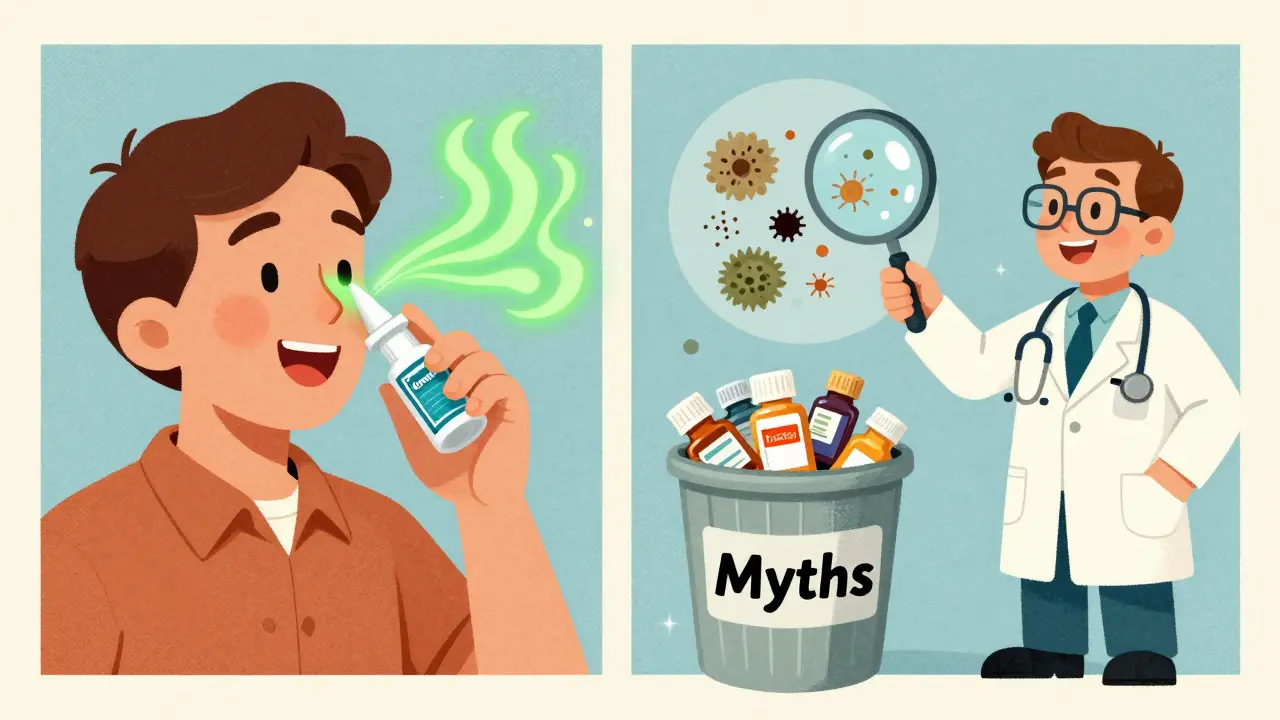
What You Should Do When It Stops Working
Don’t panic. Don’t double your dose without talking to a doctor. And don’t assume you’re broken. Here’s what actually works:- Check your environment. Did you get a new pet? Move? Start gardening? Allergies change. Your triggers might have too.
- Try nasal sprays. Intranasal corticosteroids like Flonase or Nasacort are more effective than antihistamines for nasal symptoms. Studies show 73% of people get better control with them.
- Consider immunotherapy. If your allergies are getting worse every year, allergy shots or under-the-tongue tablets can retrain your immune system. Success rates? 60-80% for shots, 40-60% for tablets.
- Ask about higher doses. EAACI guidelines say it’s safe to go up to four times the standard dose of second-gen antihistamines for chronic hives. Many patients respond. But this should be done under medical supervision.
- Look at alternatives. If antihistamines aren’t cutting it anymore, Xolair (omalizumab) is an option for chronic hives that don’t respond to meds. It’s an injection, not a pill, but it works for about half of those who’ve tried everything else.
Why Rotation Therapy Doesn’t Work
You’ve probably heard: “Switch between Zyrtec and Claritin every few months to reset your system.” It sounds smart. But there’s zero clinical proof it helps. A 2023 market analysis found 35% of long-term users rotate antihistamines. Why? Because they think it works. But no study has shown that cycling drugs improves outcomes. If your body isn’t building tolerance, switching won’t fix anything. In fact, it might make things worse. You’re exposing yourself to more drugs without gaining benefit. And if you’re using first-gen antihistamines like Benadryl for sleep, you’re risking next-day grogginess, memory issues, and even long-term cognitive decline.
The Bigger Picture: Why This Matters
The global antihistamine market hit $7.8 billion in 2022. It’s projected to grow to over $10 billion by 2027. A big reason? People who feel like their meds stopped working start buying more-different brands, combo pills, nasal sprays, even supplements. Pharmaceutical companies know this. That’s why Allegra-D (fexofenadine + pseudoephedrine) sales jumped 12% in 2022. People aren’t just looking for better relief-they’re looking for answers. But here’s the truth: most of the time, the problem isn’t the drug. It’s the allergy. Your immune system isn’t static. It changes with age, stress, pollution, diet, and exposure. What worked last year might not work this year-not because the medicine failed, but because your body’s reaction got stronger.What Experts Are Doing Now
Researchers are finally trying to solve this mystery. A 2023 clinical trial (NCT04876321) is tracking 450 chronic hives patients to see if there’s a biological marker that separates true tolerance from disease progression. The American Academy of Allergy, Asthma & Immunology has even allocated $2.3 million to study this exact problem. Why? Because right now, doctors are guessing. Some escalate doses. Some switch drugs. Some jump straight to biologics. No one knows what’s best. Dr. Sarita Patil from Massachusetts General put it best: “We don’t have objective tools to tell if a patient’s immune system is worsening-or if their receptors are just tired.”Bottom Line: What to Do Next
If your antihistamine isn’t working like it used to:- Don’t assume you’re tolerant.
- Don’t double your dose without talking to your doctor.
- Do track your symptoms for a month-note triggers, severity, timing.
- Do consider switching to a nasal steroid spray. It’s more effective for runny nose and congestion.
- Do ask about allergy testing and immunotherapy if your symptoms are getting worse each season.
Can you really build up a tolerance to antihistamines like Zyrtec or Claritin?
There’s no strong evidence that second-generation antihistamines cause true pharmacological tolerance like opioids or benzodiazepines do. H1 receptors don’t typically downregulate with long-term use. What most people experience is either underdosing, worsening allergies, or environmental changes-not drug tolerance. Some doctors see patients needing higher doses, but studies show this often works because they were never on enough to begin with.
Why does my antihistamine seem to stop working after a few months?
The most common reason is that your allergy burden has increased. You might have been exposed to new allergens-new pets, pollen changes, mold in your home-or your immune system has become more reactive over time. Studies show that 40% of people who think their antihistamine stopped working actually had worsening environmental triggers, not drug failure.
Should I rotate between different antihistamines to avoid tolerance?
No. There’s no scientific proof that switching between Zyrtec, Claritin, or Allegra improves effectiveness or prevents tolerance. It’s a popular myth, especially online. If one antihistamine stops working, it’s more likely due to your allergies changing-not your body adapting to the drug. Switching won’t reset anything. Focus instead on dose, delivery method, or alternative treatments.
Is it safe to take higher doses of antihistamines?
For second-generation antihistamines like cetirizine or fexofenadine, up to four times the standard dose is considered safe for chronic conditions like hives, according to EAACI guidelines. Studies show nearly half of patients who don’t respond to normal doses get relief at higher doses. But always consult a doctor first. Never exceed recommended doses without medical supervision, especially if you have heart conditions or take other medications.
What’s the best alternative if antihistamines don’t work anymore?
For nasal symptoms, intranasal corticosteroids (like Flonase) are more effective than antihistamines. For long-term relief, allergy immunotherapy-either shots or under-the-tongue tablets-can retrain your immune system and reduce symptoms by 40-80%. For chronic hives that don’t respond to antihistamines, Xolair (omalizumab) is an FDA-approved biologic with a 50-60% success rate. Talk to an allergist to find the right next step.





Write a comment
Your email address will be restricted to us