
Imagine you just took a routine antibiotic or received a dose of contrast dye for a scan. Within minutes, your throat feels like it’s closing up, your skin breaks out in hives, and your vision starts to blur. This isn’t just a mild rash; this is anaphylaxis, a severe, life-threatening systemic allergic reaction that can kill you if not treated immediately. While food allergies often steal the spotlight, medication-induced anaphylaxis accounts for approximately 20-30% of all hospital cases, making it a silent but deadly risk for millions of patients every year.
The scary part? You don’t always get warning signs on your skin. Up to 20% of cases present with no visible rash, meaning the only clues are trouble breathing, swelling, or a sudden drop in blood pressure. The clock starts ticking the moment symptoms appear. If you wait too long, the reaction progresses from uncomfortable to fatal in a matter of minutes. Knowing exactly what to do-and what *not* to do-can mean the difference between a hospital visit and a funeral.
Recognizing the Silent Killers: Symptoms of Drug Allergies
To react fast, you first need to spot the signs. Medication-induced reactions often hit hard and fast. According to data from the Australasian Society of Clinical Immunology and Allergy (ASCIA), nearly 90% of people experiencing severe reactions report difficult or noisy breathing. Swelling of the tongue affects 76% of cases, while throat tightness hits 82%. These aren't subtle discomforts; they are airway emergencies.
However, relying solely on skin symptoms is a dangerous trap. A 2022 study published in the *Journal of Emergency Medicine* highlighted that 10-20% of anaphylaxis cases show no skin changes at all. Instead, look for these critical red flags:
- Airway issues: Wheezing, persistent cough, hoarse voice, or difficulty talking.
- Breathing problems: Shortness of breath, chest tightness, or noisy breathing.
- Circulation collapse: Dizziness, fainting, pale or blue skin, and a weak pulse.
- Gastrointestinal distress: Severe vomiting or abdominal cramping (common in children).
If someone has two or more of these systems involved after exposure to a drug, assume it is anaphylaxis until proven otherwise. Do not wait for a doctor to confirm it. Time is tissue, and in this case, time is life.
The Golden Rule: Positioning Matters More Than You Think
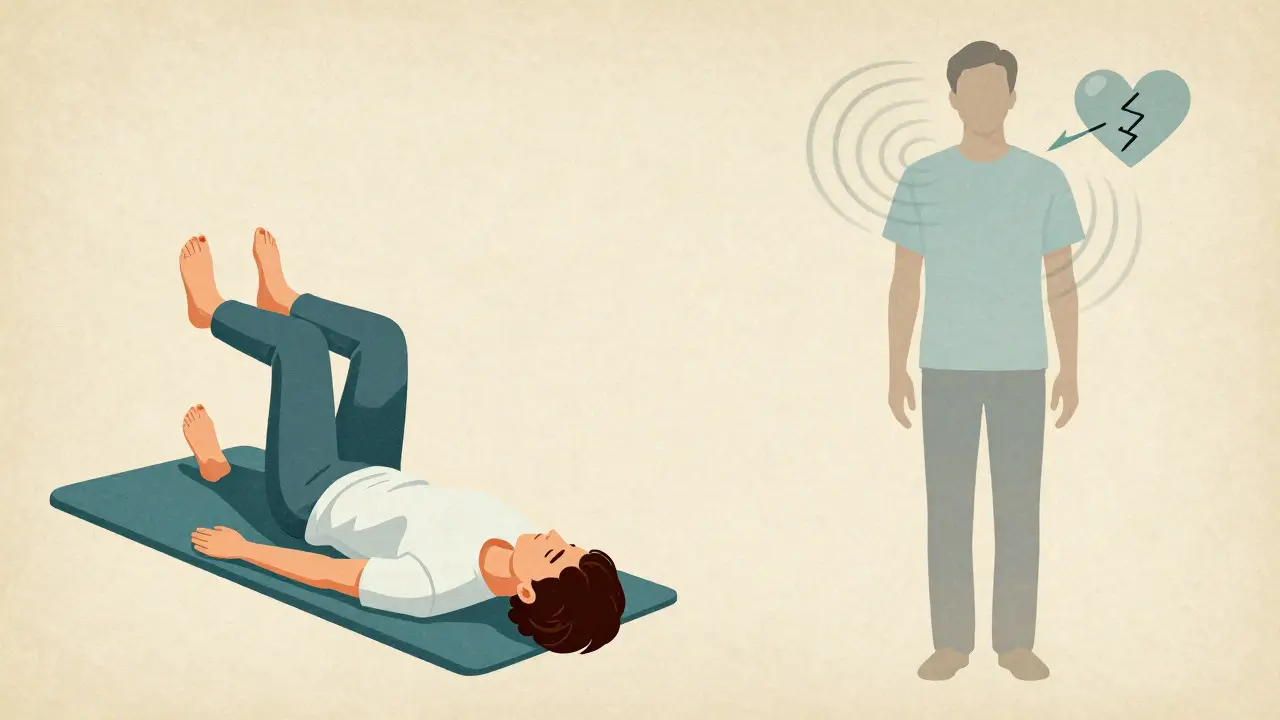
When panic sets in, the natural instinct is to help the person sit up or stand so they can breathe easier. This is wrong. In fact, it could be fatal. The Resuscitation Council UK guidelines strictly prohibit allowing patients to stand or walk during an anaphylactic episode. Posture changes from lying flat to standing are directly linked to cardiovascular collapse in 15-20% of cases.
Here is why: During anaphylaxis, blood vessels dilate rapidly, causing blood to pool in the lower body. If the person stands up, gravity pulls more blood away from the heart and brain, leading to immediate shock and cardiac arrest. Here is how to position the patient correctly:
- Conscious patients: Lay them flat on their back. If they are struggling to breathe, allow them to sit up slightly with legs outstretched, but keep them supported.
- Unconscious patients: Place them in the recovery position (on their side) to keep the airway clear.
- Pregnant women: Always place them on their left side to prevent the uterus from compressing major blood vessels.
- Young children: Keep them flat. Avoid holding them upright, as this restricts diaphragm movement.
A simulation study by ASCIA involving 500 participants found that 55% of lay rescuers incorrectly allowed patients to stand, potentially triggering collapse. Remember: Flat is safe. Standing is risky.
Epinephrine: The Only First-Line Treatment
Forget antihistamines like Benadryl for the initial emergency. They are too slow and do nothing for airway swelling or low blood pressure. The cornerstone of treatment is epinephrine (also known as adrenaline). It works within 1-5 minutes to constrict blood vessels, relax airway muscles, and stabilize heart function.
You must administer intramuscular (IM) epinephrine into the anterolateral thigh using an auto-injector device such as an EpiPen, Auvi-Q, or Adrenaclick. Delaying this step is the single biggest cause of preventable deaths. Dr. Robert Wood of Johns Hopkins University notes that 70% of fatal anaphylaxis cases involve delayed or absent epinephrine administration.
| Weight Category | Dosage | Device Type |
|---|---|---|
| Children 15-30 kg (33-66 lbs) | 0.15 mg | Pediatric Auto-Injector |
| Adults & Children >30 kg (>66 lbs) | 0.3 mg | Standard Auto-Injector |
Inject firmly into the outer thigh. Hold the device in place for 10 seconds to ensure the full dose is delivered. Common technical errors include injecting into subcutaneous fat rather than muscle (18% of cases) or failing to hold the injector long enough (37% of cases). If you’re unsure, give it. As the ASCIA First Aid Plan states: "IF IN DOUBT GIVE ADRENALINE DEVICE."
Common Mistakes That Cost Lives
Even in hospitals, mistakes happen. A 2022 quality improvement study by the Cleveland Clinic found that the average time from symptom recognition to epinephrine administration was 8.2 minutes, exceeding the recommended 5-minute window in 65% of cases. Why the delay? Fear.
Many healthcare providers hesitate because they worry about side effects like rapid heartbeat or high blood pressure. However, data shows that out of 35,000 documented epinephrine administrations between 2015-2020, only 0.03% resulted in significant adverse cardiac events. The risk of death from untreated anaphylaxis far outweighs the risk of the drug itself.
Another major pitfall is relying on corticosteroids like hydrocortisone. Older protocols routinely used these drugs, but current guidance from the World Allergy Organization and the American Heart Association warns against them as primary treatments. Corticosteroids take hours to work and have no proven benefit in preventing immediate collapse or biphasic reactions. Use them only if directed by a specialist in refractory cases.
After the Injection: Observation and Follow-Up
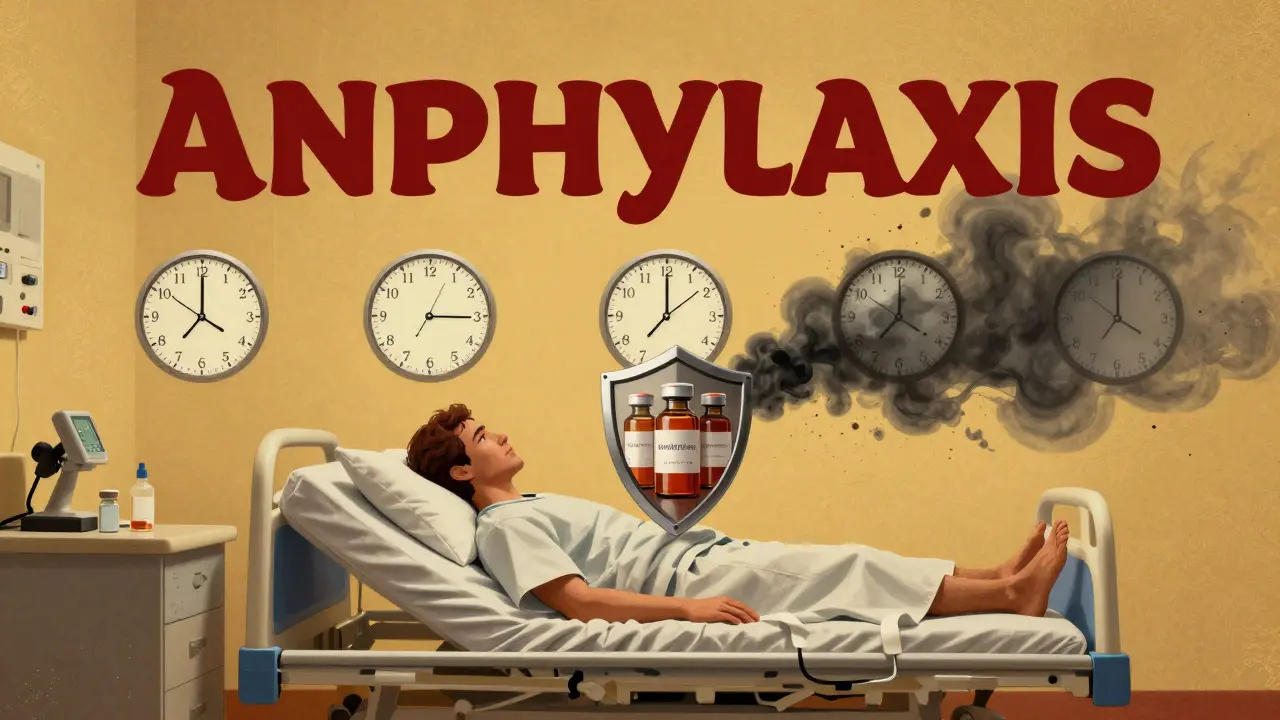
Once the epinephrine is administered, call emergency services immediately (911 in the US, 999 in the UK, 112 in Europe). Epinephrine’s effect lasts only 10-20 minutes. If symptoms persist after 5 minutes, a second dose may be needed. Some protocols suggest repeating doses every 10 minutes if necessary.
Even if the patient feels better, they are not out of the woods. There is a 20% risk of a biphasic reaction-a second wave of symptoms occurring 1 to 72 hours later. For this reason, hospital transfer for a minimum of 4 hours of observation is mandatory per ASCIA guidelines. Patients with medication-induced anaphylaxis may face an even higher risk (25%) of biphasic reactions compared to food-induced cases, requiring extended observation periods of 6-8 hours for high-risk individuals.
Special considerations apply to patients taking beta-blockers, which are used by 25-30% of adults over 40. Beta-blockers can interfere with epinephrine’s effectiveness, sometimes requiring 2-3 times higher doses or alternative medications like glucagon. Inform emergency responders if the patient is on beta-blockers.
Frequently Asked Questions
Can I use an epinephrine auto-injector if there is no rash?
Yes. Up to 20% of anaphylaxis cases present without skin symptoms. If the patient has trouble breathing, swallowing, or feels faint after taking a medication, administer epinephrine immediately. Do not wait for a rash to appear.
Is it safe to give epinephrine to someone with heart disease?
Yes. The benefits of epinephrine far outweigh the risks. Studies show that significant adverse cardiac events occur in less than 0.03% of administrations. Untreated anaphylaxis is far more likely to cause cardiac arrest than the injection itself.
Why shouldn't I let the person stand up?
Standing causes blood to pool in the legs due to dilated blood vessels, leading to sudden cardiovascular collapse and death in 15-20% of cases. Keep the patient flat or in a comfortable seated position with legs outstretched.
How long does epinephrine last?
Epinephrine works within 1-5 minutes but its effects wear off in 10-20 minutes. If symptoms return or persist after 5 minutes, a second dose is required. Always seek emergency medical care afterward.
What is a biphasic reaction?
A biphasic reaction is a recurrence of anaphylaxis symptoms hours after the initial episode has resolved. It occurs in 20% of cases and can happen up to 72 hours later. This is why hospital observation for at least 4 hours is critical.





Write a comment
Your email address will be restricted to us