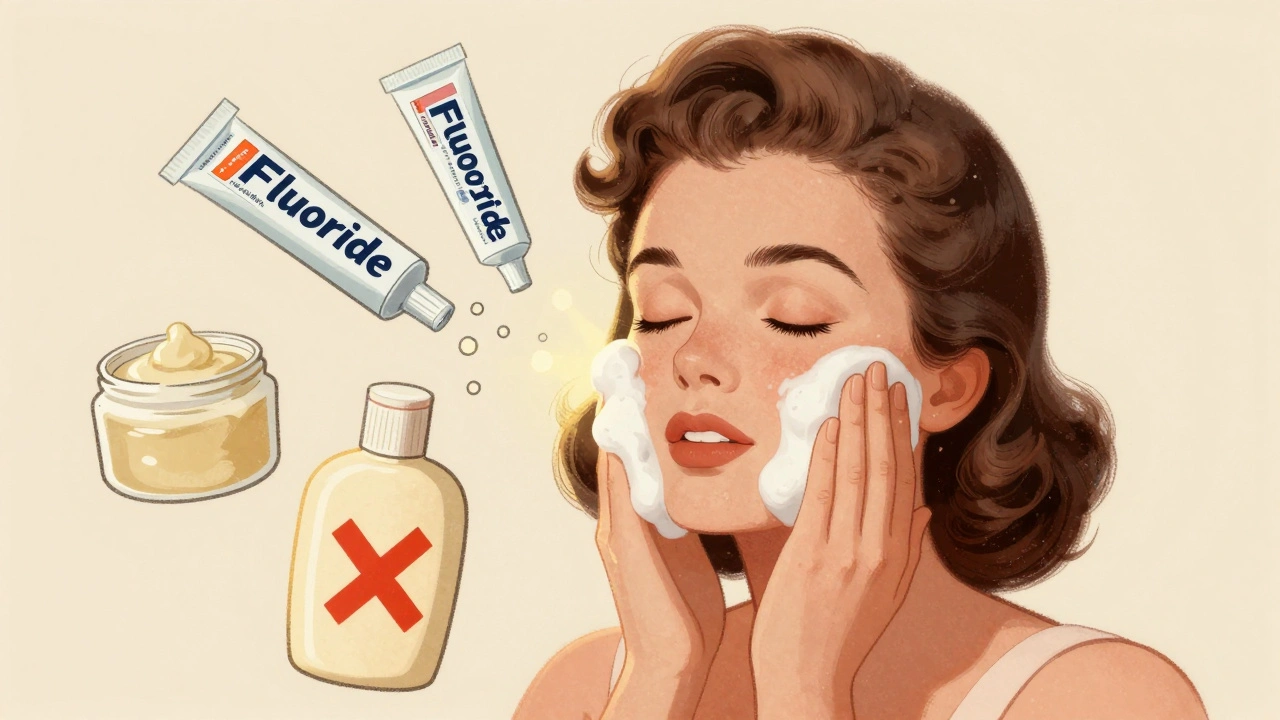
Perioral dermatitis isn’t just a rash around the mouth-it’s a stubborn, recurring flare-up that can make you feel like your skin is betraying you. You’ve tried every moisturizer, skipped makeup, switched cleansers, and still, those tiny red bumps won’t go away. Maybe you even used a hydrocortisone cream to calm it down, only to find it came back worse. You’re not alone. Nearly 85% of cases are tied to topical steroids, even if you didn’t realize you were using them. This isn’t acne. It’s not allergies. It’s a specific inflammatory reaction triggered by everyday products and habits you probably think are harmless.
What Actually Triggers Perioral Dermatitis?
Most people assume it’s stress, diet, or poor hygiene. But the real culprits are far more specific-and often hidden in plain sight. Topical steroids are the #1 trigger. That’s right: the cream you used to soothe a patch of dry skin, even if it was over-the-counter hydrocortisone, can start a cycle that lasts months. When you stop using it, your skin rebounds with intense redness and bumps. This happens in 92% of people who used steroids for more than two weeks. Then there’s your skincare routine. Heavy moisturizers with petroleum jelly, dimethicone, or beeswax? They clog pores and trap irritants. About 45% of flare-ups come from these occlusive ingredients. Even sunscreens can be a problem. Physical sunscreens with zinc oxide or titanium dioxide above 10% concentration trigger reactions in nearly a quarter of patients. That’s why many people think they’re being careful-using ‘natural’ sunscreens-and still get worse. Your toothpaste might be the silent offender. Fluoridated toothpaste, especially with sodium fluoride at 1,000-1,500 ppm, causes reactions in 37% of cases. It’s not the fluoride alone-it’s how it’s applied right next to the skin, then rubbed during brushing. Switching to a non-fluoridated, sulfate-free toothpaste can lead to noticeable improvement in just 4-6 weeks. Hormones play a role too. Over half of women with perioral dermatitis notice flare-ups before their period. Oral contraceptives contribute in nearly 3 out of 10 cases. Even chewing gum (19% of cases) and dental fillings (12%) have been linked, likely due to repeated contact and chemical exposure. UV light and wind? They worsen symptoms in 63% and 41% of cases respectively. And while Demodex mites are found in 83% of affected skin, it’s still unclear if they cause the problem or just thrive in the inflamed environment.Why Gentle Skin Care Isn’t Just About Being Mild
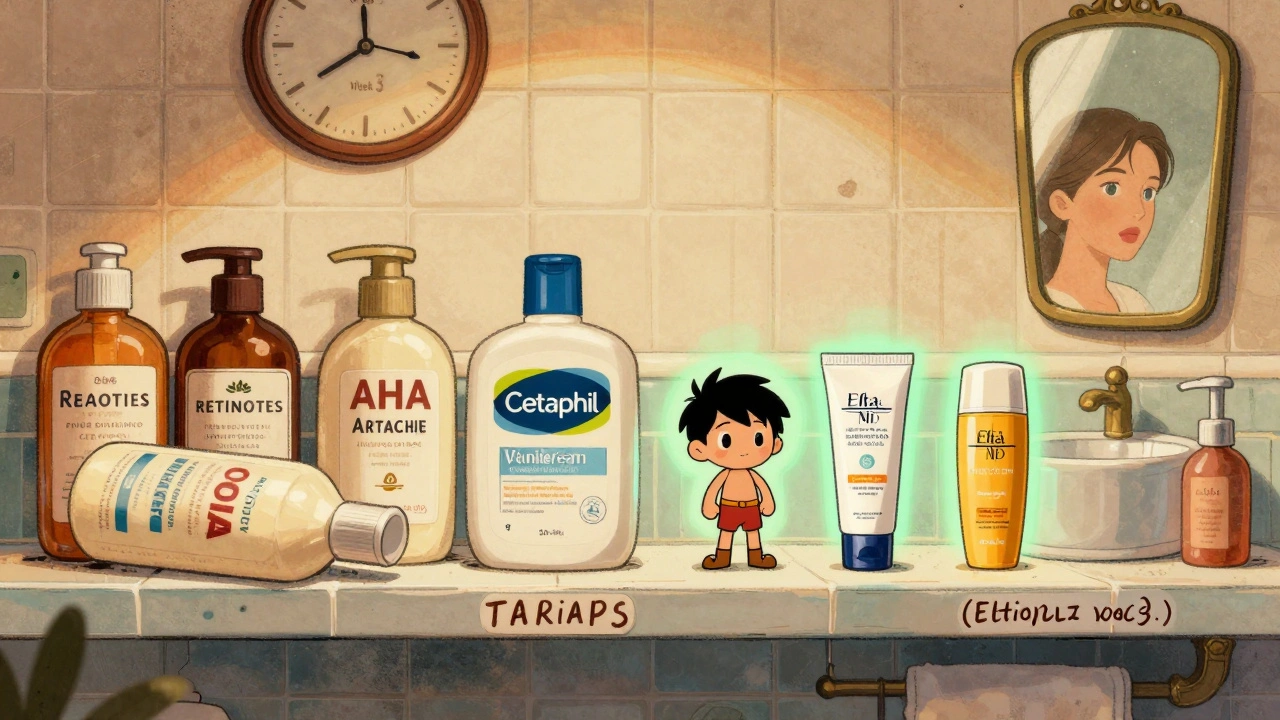
When doctors say “gentle skin care,” they don’t mean switching to a fancy organic brand. They mean stripping everything down to the bare minimum-and choosing products based on exact science, not marketing. Start with your cleanser. Foaming cleansers? Avoid them. They’re too alkaline and strip your skin barrier. Instead, use a non-foaming, pH-balanced cleanser (between 5.5 and 6.5) only once a day. Washing twice daily increases irritation in 88% of patients. Cetaphil Gentle Skin Cleanser is a common recommendation because it’s free of fragrances, soaps, and harsh surfactants. Moisturizing is tricky. You need hydration, but not occlusion. Look for lightweight formulas with ceramides between 0.5% and 2%, and hyaluronic acid under 1%. Avoid anything that feels greasy or leaves a film. Vanicream Moisturizing Cream is one of the few that fits this profile. It doesn’t contain parabens, dyes, or fragrances-and it doesn’t clog pores. Sunscreen is non-negotiable, but most mineral sunscreens are too thick. Go for liquid or gel formulations with zinc oxide below 5%. EltaMD UV Clear Broad-Spectrum SPF 46, with 4.7% zinc oxide, is one of the few that patients report tolerating. If you’re still reacting, try a wide-brimmed hat. Physical barriers are safer than chemical ones. Makeup? Limit it. If you must wear foundation, choose fragrance-free, non-comedogenic formulas with titanium dioxide under 3%. Avoid anything with isopropyl myristate above 0.5%-it’s a common pore-clogger. Many patients do best with just tinted moisturizer or skip it entirely until the rash clears.What to Stop Using Immediately
This is the hardest part. You need to stop everything that’s not essential. That includes:- Topical steroids (even hydrocortisone 1%)
- Retinoids (tretinoin, adapalene)
- Alpha and beta hydroxy acids (glycolic, salicylic)
- Exfoliating scrubs or brushes
- Heavy creams with petrolatum, lanolin, or silicone
- Fragranced lotions, perfumes, and essential oils
- Fluoridated toothpaste (switch to non-fluoride)
- Antibacterial or “acne-targeting” face washes
Medical Treatments That Actually Work
Gentle skin care alone isn’t always enough. For moderate to severe cases, medical help is needed. Topical metronidazole 0.75% gel clears symptoms in 70% of patients after 8 weeks. It’s applied twice daily and has minimal side effects. Pimecrolimus 1% cream is a non-antibiotic alternative with 65% effectiveness and no risk of bacterial resistance. It’s especially useful for people who can’t take oral meds or want to avoid antibiotics. For more widespread rashes, oral antibiotics are prescribed. But not the old-school 100mg doxycycline. That causes stomach upset in 45% of people. Instead, doctors now use low-dose 40mg modified-release doxycycline. It works just as well-85% clearance after 12 weeks-but only 12% of patients report side effects. Treatment should last at least 6-12 weeks. Stopping early leads to a 40% chance of recurrence.Why Recurrence Happens-and How to Prevent It
Perioral dermatitis comes back because most people stop treating it when the rash looks better. But the inflammation is still there under the surface. In fact, 60% of cases return if triggers aren’t fully removed. The key to long-term control is consistency. Even after your skin clears:- Stick to your gentle routine
- Never use steroids on your face again
- Keep using non-fluoridated toothpaste
- Re-check all skincare labels for hidden occlusives
- Use sunscreen daily, even on cloudy days
- Limit makeup to only what’s necessary

Diet, Stress, and Other Myths
Some swear by gluten-free diets. In Dr. Dropin’s clinic, 43% of patients with confirmed gluten sensitivity saw improvement. But Cleveland Clinic says dietary changes only help 12% of unselected cases. So if you suspect food is a trigger, try eliminating gluten for 8 weeks-but don’t assume it’s the answer for everyone. Stress doesn’t cause perioral dermatitis, but it can make it worse. Sleep, exercise, and mindfulness help your skin heal faster, but they won’t fix the root problem if you’re still using the wrong products.What Success Looks Like
Real recovery takes time. Most people see improvement by week 3-4. Full clearance usually happens between 8 and 12 weeks. The most successful patients use just two or three products total: a gentle cleanser, a light moisturizer, and a safe sunscreen. They stop everything else. No new products. No experimenting. One Reddit user wrote: “I thought I was doing everything right-natural products, no makeup, organic everything. But I was still using hydrocortisone every night. Once I stopped, it got worse for two weeks. Then, slowly, my skin came back. Now I only use Cetaphil, Vanicream, and EltaMD. It’s been 10 months and no flare-ups.” That’s the pattern. Not magic. Not expensive serums. Just discipline, patience, and knowing exactly what to avoid.When to See a Dermatologist
If your rash hasn’t improved after 4 weeks of strict gentle care, or if it’s spreading to your eyes, cheeks, or chin, see a dermatologist. You may need prescription medication. Don’t wait. The longer you delay, the harder it is to break the cycle. Also, if you’ve been using steroid creams for more than a month-even if you thought they were helping-you need professional guidance. Stopping abruptly can cause severe rebound. A doctor can help you taper safely.Can perioral dermatitis go away on its own?
It rarely does. Without removing triggers like topical steroids, heavy moisturizers, or fluoridated toothpaste, the rash will likely persist or come back. Even if it looks better temporarily, the underlying inflammation remains. Most cases require active management through gentle skin care and sometimes medication.
Is perioral dermatitis contagious?
No. It’s not caused by bacteria, viruses, or fungi that spread from person to person. It’s an inflammatory reaction to products or habits specific to your skin. You can’t catch it from someone else, and you can’t give it to them.
How long does it take to heal?
Most people see improvement within 3-4 weeks after stopping triggers. Full clearance usually takes 8-12 weeks. If you’re using antibiotics or topical treatments, expect to continue them for at least 6-8 weeks. Rushing the process increases the chance of recurrence.
Can I use coconut oil or tea tree oil for perioral dermatitis?
No. Coconut oil is highly occlusive and can worsen the rash. Tea tree oil is a potent irritant-even in diluted form-and can trigger inflammation in sensitive skin. Both are common “natural” remedies, but they’re not safe for perioral dermatitis. Stick to products proven to be non-irritating.
Will I have to avoid makeup forever?
Not forever. Once your skin is clear and stable for at least 3 months, you can slowly reintroduce makeup-but only if it’s fragrance-free, non-comedogenic, and has minimal mineral content. Start with a tinted moisturizer and test one product at a time. If redness returns, stop immediately.
Why does my skin burn when I use water?
Your skin barrier is damaged. Over-washing, harsh cleansers, and steroids have weakened your natural protective layer. This makes your skin hypersensitive to even plain water. Use lukewarm water, pat dry gently, and avoid rubbing. Stick to one gentle cleanser daily. Over time, your barrier will repair itself.




Write a comment
Your email address will be restricted to us