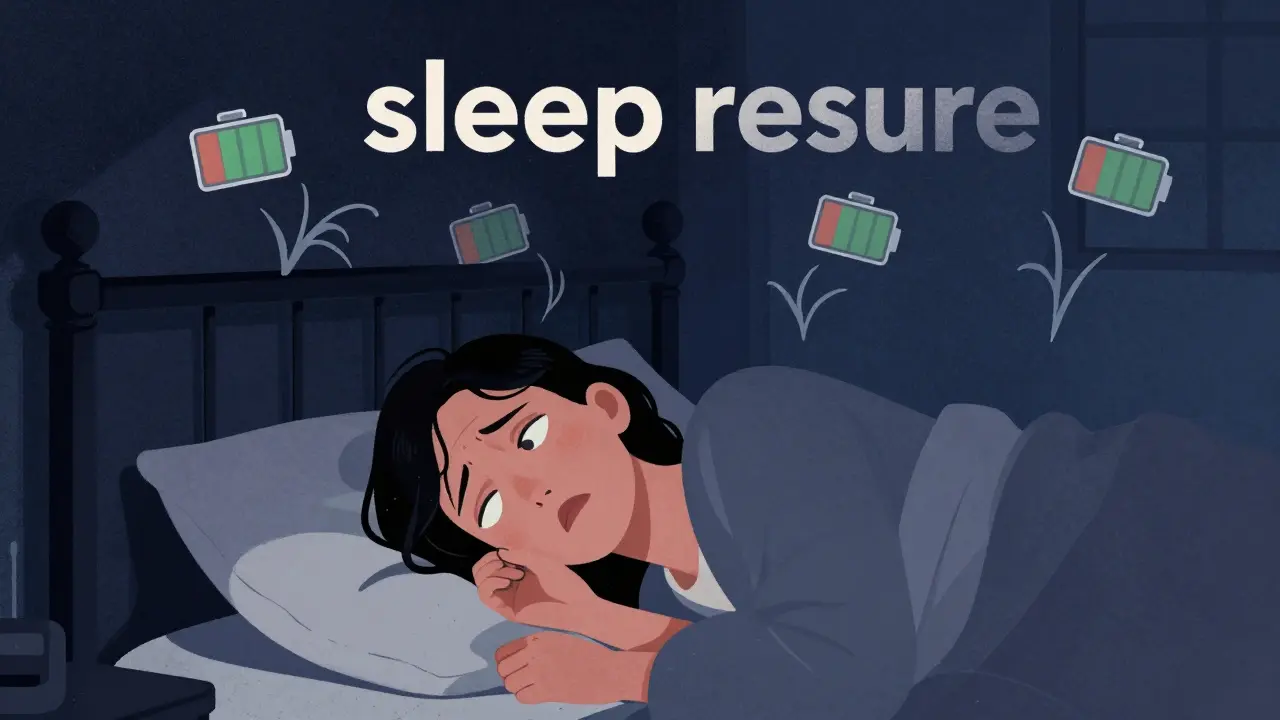
Imagine lying in bed for nine hours but only sleeping for five. You stare at the ceiling, frustrated and exhausted, convinced that if you just stay in bed longer, sleep will eventually catch up with you. It’s a trap. For millions of people with chronic insomnia, spending more time in bed actually makes the problem worse. This counterintuitive reality is exactly why Sleep Restriction Therapy (SRT) exists. SRT is a behavioral technique designed to reset your body's natural sleep drive by temporarily limiting the time you spend in bed to match the amount of time you are actually asleep. It sounds harsh-essentially controlled sleep deprivation-but it is one of the most effective tools available for breaking the cycle of insomnia. Developed as a core component of Cognitive Behavioral Therapy for Insomnia (CBT-I), this method was pioneered by Dr. Arthur Spielman and is now backed by decades of clinical evidence. This guide explains how SRT works, why it feels difficult at first, and how to implement it safely to reclaim restful nights.
Why Spending More Time in Bed Wakes You Up
To understand why SRT works, you have to look at how your brain handles sleep pressure. Think of sleep pressure like hunger. If you snack all day, you won’t be very hungry at dinner time. Similarly, if you spend eight or nine hours in bed but only sleep six, your "sleep hunger" never builds up enough to keep you asleep through the night.
When you lie awake in bed, your brain starts associating the mattress with frustration, anxiety, and wakefulness instead of relaxation. This is called conditioned arousal. SRT breaks this association by making your time in bed precious and limited. By restricting your time in bed, you increase homeostatic sleep drive-the biological pressure to sleep. The result? You fall asleep faster, stay asleep longer, and wake up feeling more refreshed, even if you slept fewer total hours initially.
The American Academy of Sleep Medicine classifies SRT as a guideline treatment with moderate clinical certainty. It isn't just theory; it’s a proven strategy used by clinicians worldwide to treat chronic insomnia without medication.
How to Calculate Your Sleep Window
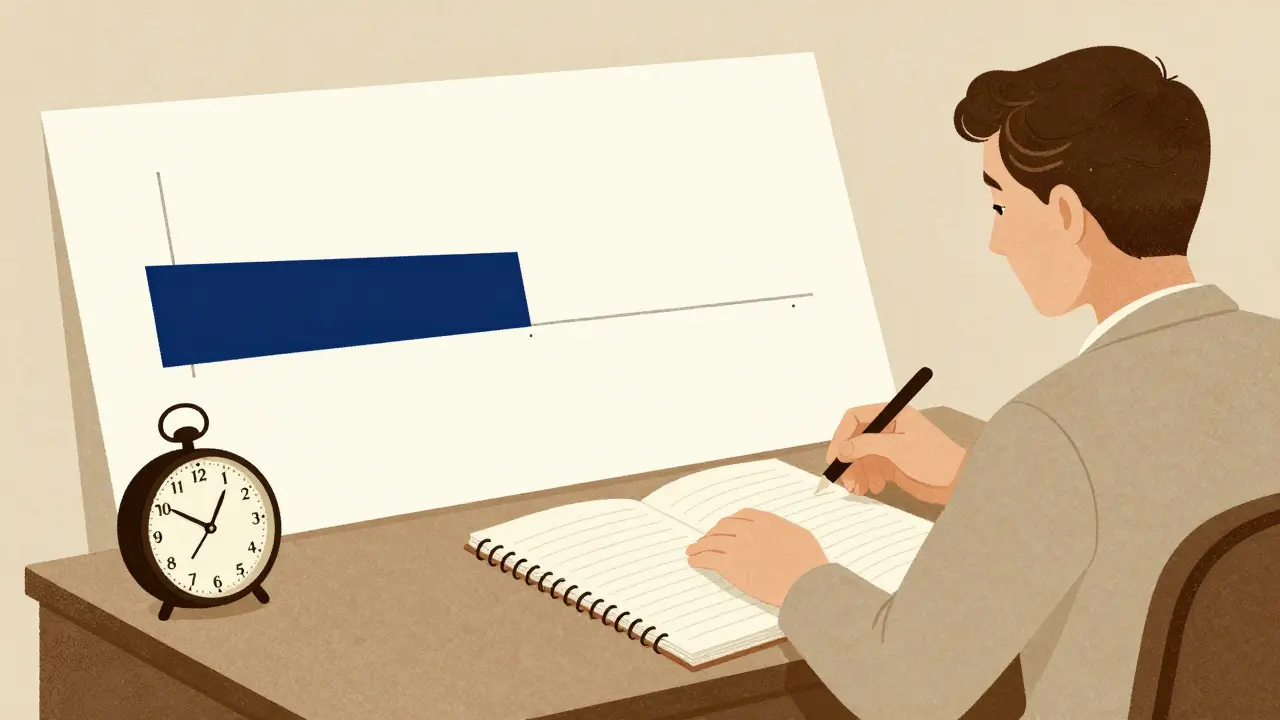
You cannot start SRT without data. Guessing how long you sleep is useless because our perception of sleep is notoriously inaccurate when we are tired. You need objective numbers.
- Track your sleep for one week: Use a paper sleep diary or a reliable digital tracker. Record when you get into bed, when you think you fell asleep, when you woke up during the night, and when you finally got out of bed in the morning.
- Calculate your average Total Sleep Time (TST): Add up the actual hours you slept each night over seven days and divide by seven. Let’s say you averaged 5.5 hours of sleep despite being in bed for 8 hours.
- Set your initial Time-in-Bed (TIB) window: Your new prescription is 5.5 hours. If you always wake up at 7:00 AM, your new bedtime becomes 1:30 AM. You do not go to bed until 1:30 AM, and you must get up at 7:00 AM no matter what.
This creates a tight window where sleep is prioritized. You might feel resistant to going to bed late, but remember: you are building sleep pressure. The goal is to make those 5.5 hours count.
The Step-by-Step Protocol for Success
Sleep Restriction Therapy is not a one-time fix; it is a gradual process. Here is how the protocol typically unfolds over 6 to 8 weeks.
Phase 1: The Restriction (Weeks 1-2)
This is the hardest part. You will be sleep-deprived. Expect daytime fatigue, irritability, and a strong urge to nap. This is normal and necessary. Do not extend your time in bed. Do not go to bed early. Stick to your calculated window strictly, including weekends.
Phase 2: Monitoring Efficiency (Weekly Check-ins)
You need to calculate your Sleep Efficiency. This is the percentage of time you spent in bed that you were actually asleep. Formula: (Total Sleep Time / Time in Bed) x 100.
- If your efficiency is below 85%, keep your current time-in-bed window the same for another week.
- If your efficiency is between 85% and 90%, increase your time in bed by 15 minutes. Usually, this means going to bed 15 minutes earlier while keeping the same wake-up time.
- If your efficiency is above 90%, increase your time in bed by 30 minutes.
Phase 3: Expansion and Stabilization (Weeks 3-8)
As your sleep consolidates, you will gradually expand your window back toward a healthy 7-8 hours. Most people reach their target sleep duration within two months. The key is patience. Rushing this phase can undo your progress.
Combining SRT with Stimulus Control
SRT rarely works best on its own. It is most powerful when paired with Stimulus Control Therapy (SCT). While SRT manages the quantity of time in bed, SCT manages the quality of the association between bed and sleep.
Here are the golden rules of Stimulus Control to use alongside SRT:
- Bed is for sleep and sex only: No reading, no phone, no TV, no worrying in bed.
- The 20-minute rule: If you haven’t fallen asleep after about 20 minutes (don’t watch the clock, just estimate), get out of bed. Go to another room and do something boring in dim light until you feel sleepy again. Then return to bed.
- Consistent wake time: Get up at the same time every day, regardless of how much you slept. This anchors your circadian rhythm.
Dr. Rachel Salas from Johns Hopkins University notes that combining these two approaches creates an immediate impact on sleep consolidation. One limits the opportunity for wakefulness; the other removes the triggers for it.
| Treatment Method | Mechanism | Long-Term Efficacy | Risks/Side Effects |
|---|---|---|---|
| Sleep Restriction Therapy | Increases sleep pressure by limiting time in bed | High (78% sustained improvement at 6 months) | Initial daytime fatigue; requires discipline |
| Sleep Medication (Benzodiazepines) | Chemically induces sedation | Low (32% sustained improvement; high relapse) | Dependency, rebound insomnia, tolerance |
| Sleep Hygiene Education | Lifestyle adjustments (caffeine, environment) | Moderate (often insufficient alone for chronic cases) | Minimal risks | d>
| Melatonin Supplements | Hormonal regulation of circadian rhythm | Moderate (reduces onset latency by ~15 mins) | Drowsiness, headaches, variable effectiveness |
Navigating the Challenges: Daytime Fatigue and Safety
Let’s be honest: the first two weeks of SRT are tough. You will feel tired. A 2023 survey by Sleepstation.org.uk found that 68% of users reported significant daytime fatigue during the initial phase. This is the price of resetting your system.
However, safety is paramount. Because you are intentionally sleep-restricted, you must take precautions:
- Do not drive if you feel drowsy: If you are struggling to keep your eyes open behind the wheel, find alternative transport. This is non-negotiable.
- Avoid heavy machinery: Be cautious with tools or equipment that require sharp focus.
- No napping: Naps release sleep pressure. Even a 20-minute nap can undermine the entire therapy by reducing your drive to sleep at night. If you must rest, limit it to a 10-minute power nap before 3 PM, but ideally, avoid it entirely during the restriction phase.
If you have comorbid conditions like severe depression or anxiety, consult a specialist. Dr. Michael Grandner from the University of Arizona warns that SRT can exacerbate anxiety in some patients if not paired with cognitive therapy components. In such cases, a clinician should guide your progress.
Realistic Expectations and User Experiences
What does success look like? It looks like falling asleep within 15 minutes and staying asleep. On Reddit’s r/Insomnia community, user 'SleepSeeker89' shared that after three weeks of strict SRT, their sleep efficiency jumped from 68% to 89%. They went from lying awake for hours to sleeping soundly.
But failure is common if you cheat. Extending your time in bed on weekends is the number one reason SRT fails. Sleep Education’s 2023 analysis showed that 41% of unsuccessful attempts were due to inconsistent implementation. Your body doesn’t know it’s Saturday. It needs consistency to retrain itself.
Success factors include:
- Strict adherence to wake times (mentioned in 89% of positive reviews).
- Using sleep diaries for accuracy (76% of success stories).
- Combining SRT with stimulus control therapy (63% of positive outcomes).
When to Seek Professional Help
You can try SRT on your own, especially with digital tools like the VA’s CBT-i Coach or apps like Sleepio. However, professional guidance is often better. The Society of Behavioral Sleep Medicine lists over 1,200 certified clinicians in the U.S. alone. A therapist can help you adjust the schedule based on your specific data and provide cognitive support to manage the anxiety that comes with sleeplessness.
In 2024, the American College of Physicians expanded their recommendations to include digital CBT-I platforms as equivalent to in-person therapy. This means access is easier than ever. If insurance coverage is an issue, check local resources, as regulations vary by region. As of early 2024, only a portion of states mandate insurance coverage for CBT-I, so advocacy may be necessary.
Is Sleep Restriction Therapy safe?
Yes, SRT is considered safe for most adults with chronic insomnia. However, it causes temporary sleep deprivation, which can lead to daytime drowsiness. It is crucial not to drive or operate heavy machinery if you feel impaired. People with certain medical conditions, such as epilepsy or bipolar disorder, should consult a doctor before starting, as sleep deprivation can trigger episodes.
How long does it take to see results?
Most people notice improvements in sleep onset (falling asleep faster) within the first week. Significant improvements in sleep continuity and overall quality typically occur within 2 to 4 weeks. Full stabilization of a healthy sleep pattern usually takes 6 to 8 weeks of consistent practice.
Can I use a fitness tracker to monitor my sleep for SRT?
Fitness trackers can provide helpful estimates, but they are not always accurate, especially for detecting light sleep or brief awakenings. For the most precise SRT protocol, a paper sleep diary is recommended because it records your subjective experience of sleep effort and wakefulness, which devices miss. However, many clinicians accept wearable data if a diary is not feasible.
What if I can't fall asleep during my restricted window?
If you don't fall asleep, do not extend your time in bed. Follow the Stimulus Control rules: get out of bed after 20 minutes of wakefulness, do a quiet activity in dim light, and return only when sleepy. Keep your wake-up time fixed. Your next night's calculation will adjust based on your actual sleep time, ensuring you don't stay stuck in a low-efficiency loop.
Does SRT work for shift workers?
SRT can work for shift workers, but it is more challenging due to irregular schedules and social pressures. The principle remains the same: restrict time in bed to match actual sleep time. However, shift workers often report higher rates of discontinuation due to unmanageable daytime sleepiness affecting work performance. Consulting a sleep specialist is highly recommended for this group.





Write a comment
Your email address will be restricted to us