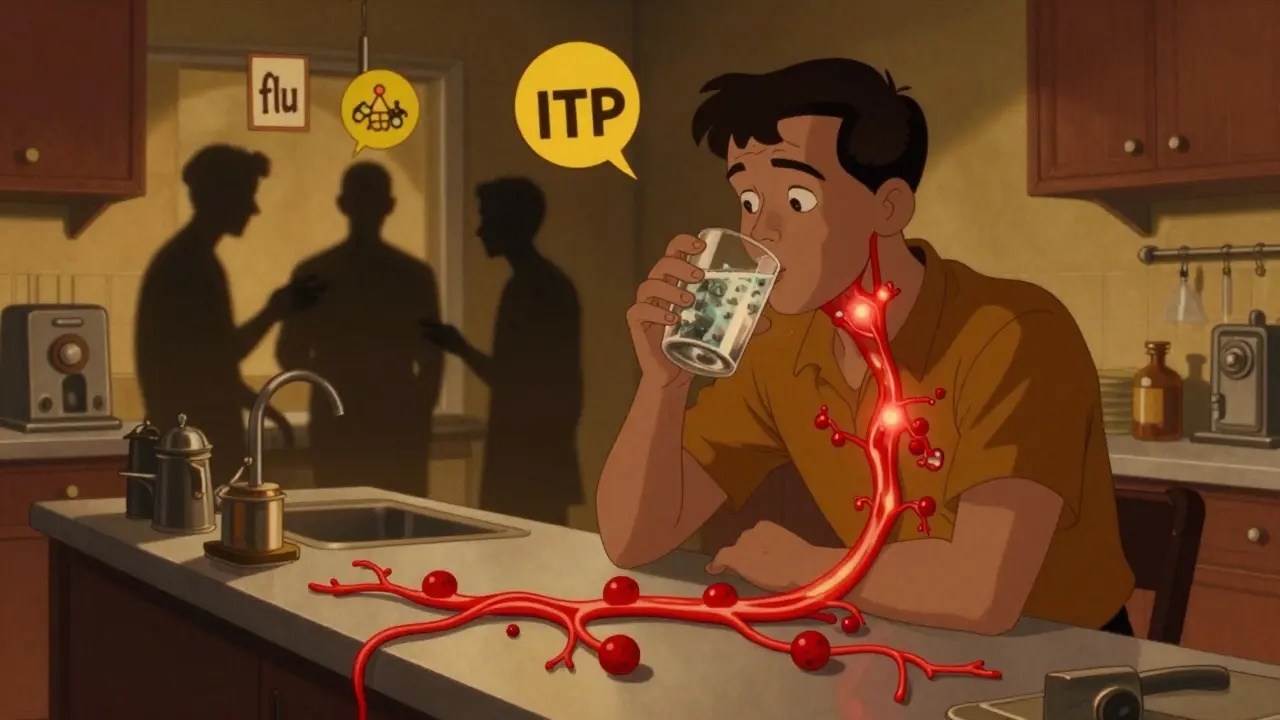
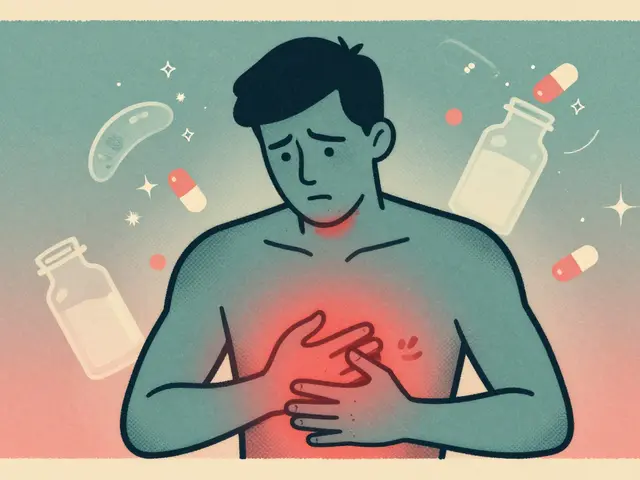
Drug-induced thrombotic thrombocytopenic purpura isn't just a rare side effect-it's a medical emergency that can kill you in days if missed. It doesn't come with a warning label you can easily spot. One moment you're taking a common medication for a routine issue; the next, your blood starts clotting inside tiny vessels, your platelets vanish, and your organs begin to fail. This isn't a theoretical risk. It's happened to people taking quinine in tonic water, clopidogrel after a heart stent, or cyclosporine after a kidney transplant. And too often, doctors mistake it for something else-flu, ITP, sepsis-until it's too late.
What Exactly Is Drug-Induced TTP?
Thrombotic Thrombocytopenic Purpura (TTP) is a blood disorder where small clots form throughout your body, clogging the smallest blood vessels. These clots chew up platelets and shred red blood cells as they pass through. The result? A dangerously low platelet count (thrombocytopenia), severe anemia from destroyed red blood cells, and damage to your brain, kidneys, heart, and other organs.
When it’s caused by a drug, it’s called drug-induced TTP. Unlike inherited forms, this version appears after you start taking a medication. It can strike within days or after months of use. The key is timing: symptoms show up after exposure to the drug, and they usually improve once you stop taking it.
The two main ways drugs trigger TTP are through immune reactions or direct toxicity. In immune-mediated cases, your body makes antibodies that only attack your platelets when the drug is present. Think of it like a lock and key-the drug is the key that turns the lock and lets the antibody bind. In dose-dependent cases, the drug slowly damages the lining of your blood vessels over time, especially with long-term use of drugs like cyclosporine or mitomycin C.
Which Medications Are Most Likely to Cause It?
More than 300 drugs have been linked to TTP, but only a handful carry strong evidence of causing it. The top offenders are well-documented:
- Quinine-found in tonic water, malaria pills, and some leg cramp remedies. Even 2-3 glasses of tonic water a day for a few weeks can trigger it. Cases have been reported from people who thought they were just drinking a soft drink.
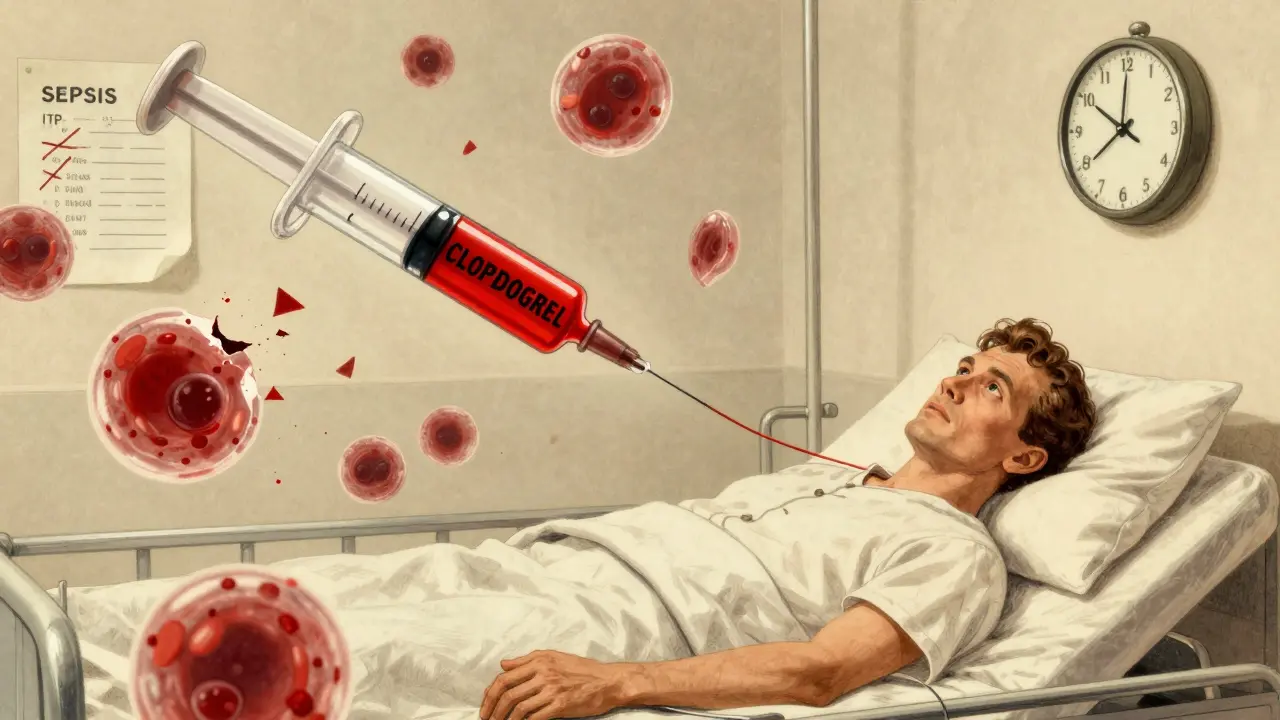
- Clopidogrel (Plavix)-a common antiplatelet drug used after heart attacks or stents. Symptoms usually appear within 1-2 weeks of starting it.
- Ticlopidine-an older drug similar to clopidogrel, now rarely used because of its high TTP risk (1 in 1,600 users).
- Cyclosporine-used in transplant patients. Risk increases with higher doses and longer use, often appearing after 6-12 months.
- Mitomycin C-a chemotherapy drug. TTP here is tied to cumulative dose, not immune response.
- TNF-alpha inhibitors-like adalimumab (Humira) and infliximab. Used for autoimmune diseases, these have become a growing concern in recent years.
What’s surprising is how many cases come from over-the-counter or non-prescription sources. Quinine in tonic water accounts for nearly a quarter of all quinine-related TTP cases. People don’t realize they’re taking a drug with serious risks when they sip it for digestion or leg cramps.
How Do You Know If It’s TTP and Not Something Else?
The classic signs are a five-part pattern:
- Low platelets-usually below 50,000 per microliter (normal is 150,000-450,000).
- Microangiopathic hemolytic anemia-red blood cells are torn apart, seen as fragments (schistocytes) on a blood smear.
- Elevated LDH-a blood enzyme that spikes when cells break down.
- Low haptoglobin-a protein that binds to free hemoglobin; it drops when red cells are destroyed.
- Neurological or kidney problems-confusion, seizures, headaches, vision changes, or rising creatinine levels.
These symptoms overlap with many other conditions. That’s why TTP is often misdiagnosed. A 2021 study in Blood Advances found that 40% of drug-induced TTP cases were initially called something else-most commonly immune thrombocytopenia (ITP) or sepsis.
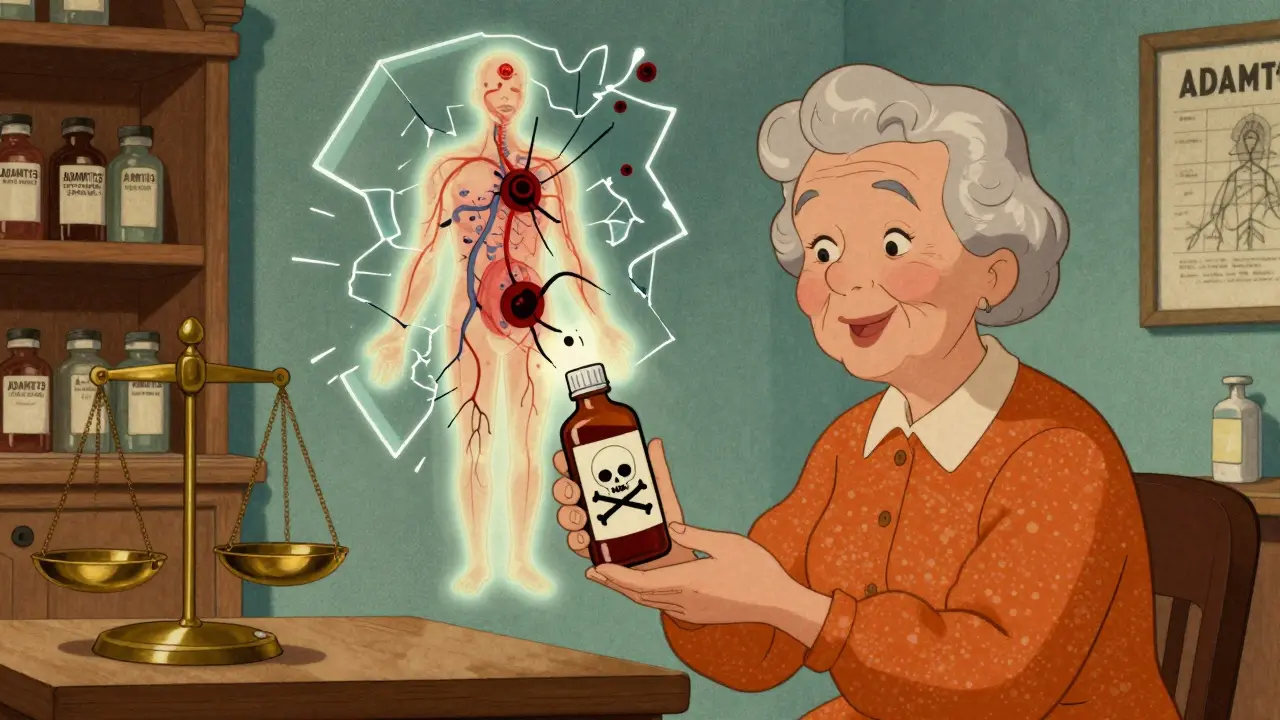
Doctors rely on two key tools to confirm it: ADAMTS13 enzyme testing and clinical history. If ADAMTS13 activity is below 10%, it strongly points to immune-mediated TTP. But you shouldn’t wait for test results. If the clinical picture fits, treatment starts immediately.
What Happens If You Don’t Treat It?
Without treatment, up to 90% of people with TTP die within days. Even with treatment, 10-20% still die. The biggest killers are brain bleeds, heart attacks, and kidney failure.
One case from Medsafe New Zealand involved a 62-year-old woman who took quinine for leg cramps. Within 72 hours, her platelets dropped to 8,000. She developed a brain hemorrhage and died. Her family didn’t know tonic water could be deadly.
Another pattern: patients who survive often have lasting damage. A Reddit thread with 47 patient stories showed 31% still had severe fatigue six months later. Some needed dialysis for months. Others had permanent nerve damage or memory problems.
How Is It Treated?
Time is everything. The first step is always stopping the drug. That’s non-negotiable.
For immune-mediated TTP (like from quinine or clopidogrel), plasma exchange is the gold standard. It removes the harmful antibodies and replaces them with healthy plasma. Treatment starts within 4-8 hours of suspicion. Daily sessions continue until platelets rise above 150,000 for two days in a row.
For dose-dependent TTP (like from cyclosporine or mitomycin C), plasma exchange doesn’t help much. The damage is to the blood vessel lining, not antibodies. Stopping the drug and supporting organ function-like dialysis for kidney failure-is the main approach.
Newer drugs like caplacizumab (a nanobody that blocks clotting) have shown promise. In trials, it cut the time to recovery by nearly half. But it costs $18,500 per course and isn’t widely available.
For the most severe cases, corticosteroids or rituximab (which targets antibody-producing cells) may be added. But none of these work if you don’t stop the drug first.
How Can You Prevent It?
Prevention comes down to awareness and asking the right questions.
- Always tell your doctor about every medication you take-including OTC drugs, supplements, and even tonic water. Many patients don’t think of tonic water as a drug.
- Know the red flags: sudden bruising, unusual fatigue, dark urine, confusion, or shortness of breath after starting a new drug.
- Don’t ignore symptoms if you’re on clopidogrel, cyclosporine, or quinine. If you feel worse after a few days, don’t wait. Get blood work.
- Ask about alternatives. If you’re on ticlopidine, your doctor should have switched you to clopidogrel years ago. If you’re on quinine for cramps, there are safer options like magnesium or stretching routines.
Pharmaceutical companies now screen new drugs for TTP risk during development. The FDA requires testing for endothelial damage in cancer drugs. But for older drugs, the risk remains hidden unless someone gets sick.
What’s Changing in 2025?
Research is moving fast. The FDA’s 2022 analysis confirmed quinine as the highest-risk drug-18.7 times more likely to cause TTP than other medications. That’s why it now carries a black box warning in many countries.
Genetic testing is starting to help. A specific gene variant (HLA-DRB1*11:01) increases risk for quinine-induced TTP by over four times. In the future, doctors might test for this before prescribing quinine.
Point-of-care ADAMTS13 tests are being developed. Right now, it takes 24-72 hours to get results. A rapid test could cut diagnosis time from days to hours.
But the biggest barrier isn’t technology-it’s awareness. Emergency rooms, primary care clinics, and even hematologists still miss this diagnosis. The mortality rate hasn’t improved since the 1990s. That’s not because we lack treatments. It’s because we don’t recognize the signs fast enough.
If you’re taking any of these medications-especially quinine, clopidogrel, or cyclosporine-and you feel off, don’t brush it off. Get your blood checked. A simple CBC and peripheral smear can save your life.
Can tonic water really cause TTP?
Yes. Quinine, the bitter compound in tonic water, is one of the most common causes of drug-induced TTP. Cases have been documented in people who drank 2-3 glasses daily for weeks. Even though it’s sold as a soft drink, quinine is a potent drug with serious risks. The FDA and European regulators have issued warnings about it.
Is TTP the same as ITP?
No. ITP (immune thrombocytopenia) only causes low platelets without red blood cell destruction or organ damage. TTP involves both low platelets AND shredded red blood cells, plus neurological or kidney problems. They look similar on the surface, but TTP is far more dangerous and requires immediate plasma exchange.
How long after taking a drug does TTP appear?
It varies. With immune-triggered drugs like clopidogrel or quinine, symptoms often show up within 1-14 days. For drugs like cyclosporine or mitomycin C, it can take 6-12 months of continuous use. Once you stop the drug, recovery usually begins in 1-2 days.
Can you get TTP from a one-time dose of a drug?
Yes. In immune-mediated cases, you don’t need multiple doses. If your body has already been sensitized (perhaps from a past exposure), even a single dose can trigger a reaction. That’s why some people get TTP after taking a drug they used years ago.
Are there any safe alternatives to clopidogrel or quinine?
For heart protection, aspirin or prasugrel are common alternatives to clopidogrel. For leg cramps, magnesium supplements, stretching, or hydration are safer than quinine. Always talk to your doctor before switching medications. Never stop a prescribed drug without medical advice.
Drug-induced TTP is rare-but it’s not rare enough to ignore. If you’re on one of these medications, know the signs. If you feel something’s wrong, push for blood tests. Your life might depend on it.





Write a comment
Your email address will be restricted to us