Pregnancy Medication Risk Checker
Select a medication and your current stage of pregnancy to view general risk information derived from clinical guidelines. Always consult your healthcare provider for personal medical advice.
General Information
Key Mechanisms & Context
The 5 Ways Drugs Affect Pregnancy
Understanding how drugs interact with the fetus helps explain why "stopping all meds" isn't always safe.
- No Effect: Placenta blocks it or dose is too low (60-70% of meds).
- Direct Impact: Crosses placenta and damages cells directly.
- Indirect Impact: Changes mom's blood pressure/physiology, affecting baby.
- Placental Alteration: Damages the placenta's ability to transport nutrients.
- Uterine Contractions: May trigger preterm labor.
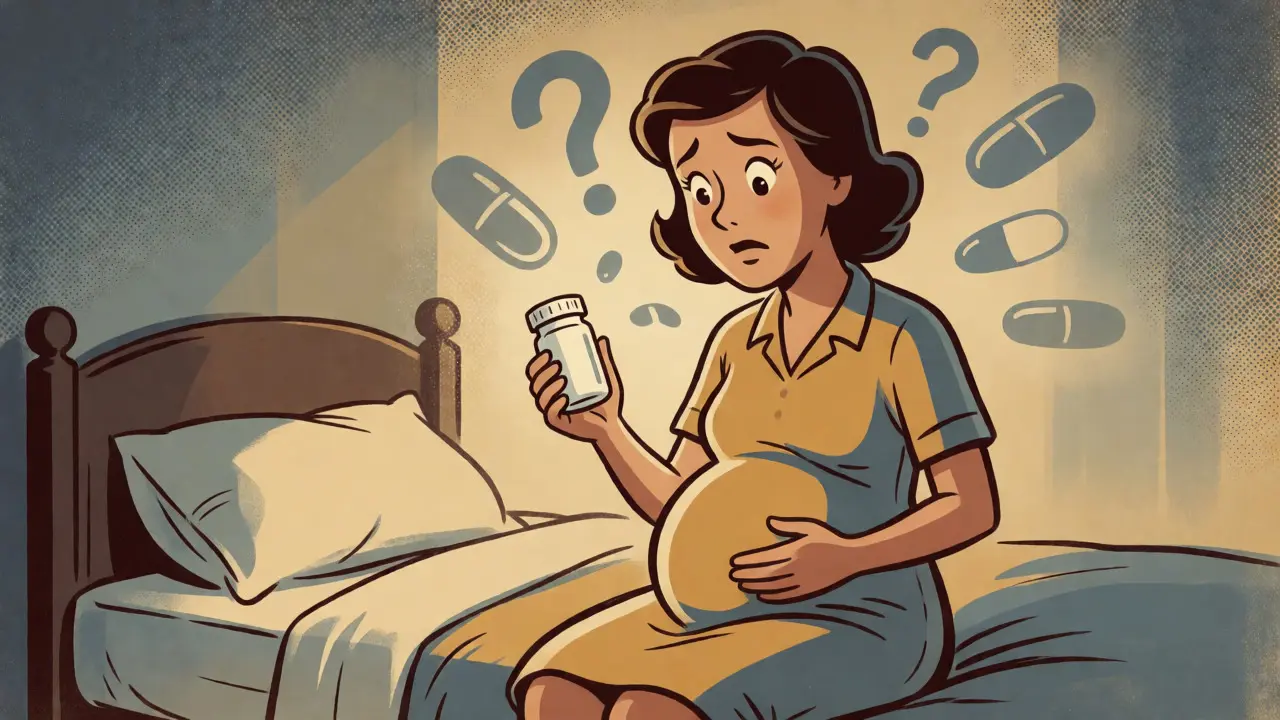
You’re three weeks pregnant. Maybe you haven’t missed a period yet, or maybe you just found out this morning. You’ve been taking an antidepressant for years, or perhaps you popped a few ibuprofen for a headache last week. Panic sets in. Did that pill change everything? It’s a question that keeps millions of expectant parents up at night, fueled by scary headlines and conflicting advice from well-meaning friends.
Here is the reality: teratogenic medications are real, but they aren’t the only factor in your baby’s health. Roughly 2-3% of all birth defects are linked to medication exposure, which means the vast majority of babies born to mothers who took meds are perfectly healthy. The goal isn’t to avoid every single pill-that can be dangerous if you have epilepsy or high blood pressure-but to understand which drugs pose a risk and when those risks are highest. Let’s break down what actually happens inside the womb, which specific drugs to watch out for, and how to navigate the confusing landscape of pregnancy safety data.
The Thalidomide Legacy and Why We Know What We Know
To understand why we are so cautious today, we have to look back at the late 1950s. A sedative called thalidomide was marketed as a safe cure for morning sickness. It wasn’t. By the time it was pulled from the market in 1961, approximately 10,000 infants worldwide had been born with severe limb deformities. This tragedy didn’t just hurt families; it fundamentally changed medicine. It launched the field of teratology-the study of birth defects-and forced regulators to demand better safety data before approving drugs for pregnant women.
Today, our understanding is guided by major bodies like the American College of Obstetricians and Gynecologists (ACOG) and the Centers for Disease Control and Prevention (CDC). But here is a crucial nuance: science moves slowly. For many common medications, we still lack perfect human trial data because it is ethically impossible to run randomized controlled trials on pregnant women. About 95% of our current knowledge comes from observational studies, animal research, and case reports. This gap is why you will often see warnings that say "not enough information" rather than "safe" or "unsafe." It doesn’t mean danger; it means uncertainty.
Timing Is Everything: The Critical Windows of Development
A drug’s impact depends heavily on when you take it. Fetal development follows a strict timeline, and different organs form at different times. Think of it like building a house: you wouldn’t worry about painting the walls while you are still pouring the foundation.
- First Trimester (Weeks 1-12): This is the most vulnerable period. Major organ systems-heart, brain, limbs-are forming. Exposure to teratogens here can cause structural birth defects. The highest risk window is between days 15 and 60 post-conception.
- Second Trimester (Weeks 13-26): Organs are mostly formed but are growing and maturing. Risks shift toward functional defects or minor abnormalities. Some drugs might affect growth rates or specific tissue development.
- Third Trimester (Weeks 27-Birth): Structural defects are less likely, but drugs can still affect organ function. For example, some medications might cause withdrawal symptoms in the newborn or alter neurological development after birth.
If you took a potentially risky medication before you knew you were pregnant, don’t panic. Many drugs have short half-lives, meaning they clear your system quickly. However, always tell your doctor exactly what you took and when.
Common Culprits: Drugs with Documented Risks
Not all medications are created equal. Some have strong evidence linking them to specific problems. Here are a few notable examples you should discuss with your provider:
| Medication Class/Name | Primary Risk Period | Potential Outcomes | Risk Estimate |
|---|---|---|---|
| Warfarin | First Trimester | Fetal Warfarin Syndrome (nasal hypoplasia, bone stippling) | 5-30% of exposed pregnancies |
| Methotrexate | First Trimester | Neural tube defects, craniofacial abnormalities | 10-20% increased risk |
| Carbamazepine | First Trimester | Neural tube defects, hemorrhagic disease of newborn | ~1% risk of neural tube defects |
| Cannabis (THC) | All Trimesters | Low birth weight, preterm birth, potential neurodevelopmental issues | 15-20% increased risk of low birth weight |
| Factor Xa Inhibitors (e.g., Rivaroxaban) | All Trimesters | Bleeding risks, crosses placenta, no known antidote | Data limited; generally avoided |
Notice that warfarin, a common blood thinner, is particularly problematic in the first trimester. If you need anticoagulation during pregnancy, doctors often switch patients to heparin-based options, which do not cross the placenta. Similarly, methotrexate, used for conditions like rheumatoid arthritis and cancer, is a folate antagonist. Since folate is critical for preventing neural tube defects, blocking its action early in pregnancy can have significant consequences.
The Acetaminophen Debate: Safety vs. Caution
If there is one drug causing more confusion than any other, it’s acetaminophen (Tylenol). For decades, it has been the go-to pain reliever for pregnant women. But recent headlines have raised alarms about links to autism and ADHD. So, what’s the truth?
The CDC notes that some studies show an association between chronic acetaminophen use and neurodevelopmental conditions. However, they also emphasize that a direct causal relationship hasn’t been established. On the other side, ACOG issued a statement in September 2025 affirming that acetaminophen plays a safe and important role. Their argument is practical: untreated pain and fever are dangerous. Maternal fever alone carries a 20-30% increased risk of neural tube defects. Leaving a condition untreated might be far riskier than the theoretical risks of the medication.
The takeaway? Use the lowest effective dose for the shortest possible time. Don’t pop Tylenol daily without talking to your doctor, but don’t suffer through high fevers or debilitating migraines out of fear either.
How Medications Actually Harm the Fetus
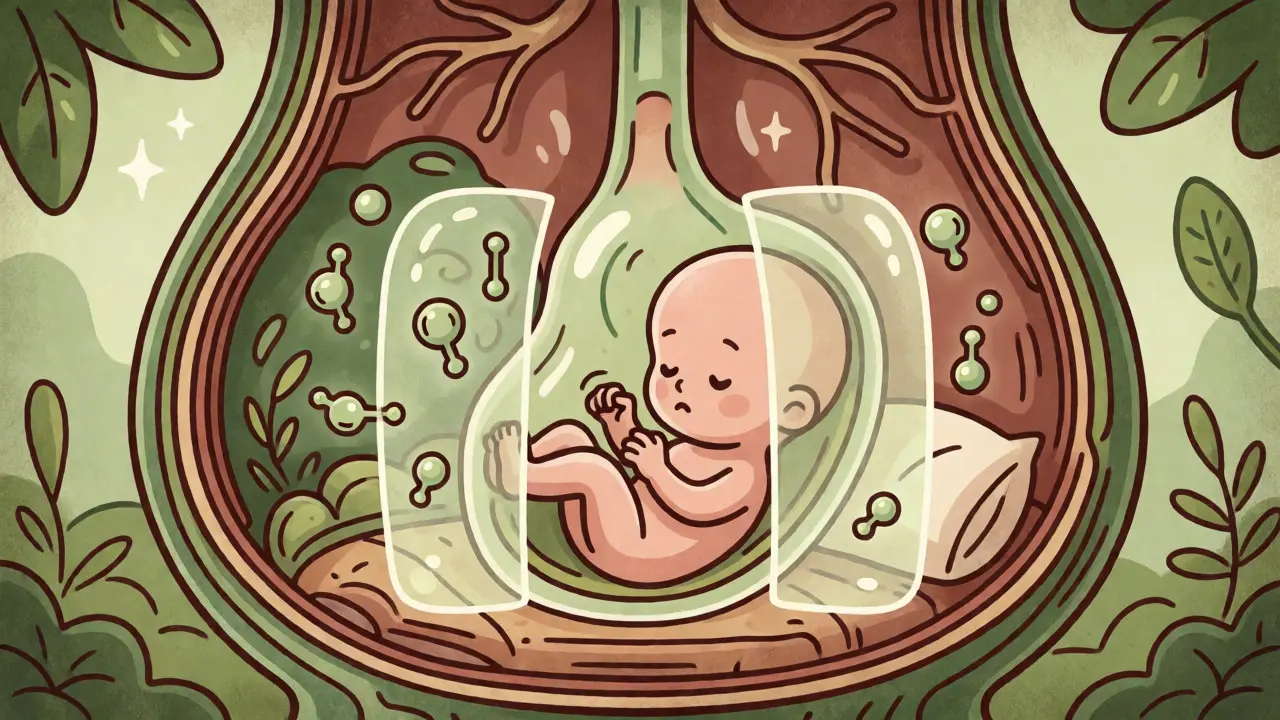
It’s not magic; it’s biology. Medications don’t just "cause defects." They interfere with normal processes in specific ways. Experts identify five primary mechanisms by which drugs affect pregnancy:
- No Effect: Surprisingly, 60-70% of medications have little to no impact on the fetus. The placenta acts as a partial barrier, though not a perfect one.
- Direct Impact: The drug crosses the placenta and directly damages developing cells or tissues.
- Indirect Impact: The drug changes maternal physiology. For example, a medication that drops maternal blood pressure too low reduces blood flow to the placenta, starving the fetus of oxygen.
- Placental Alteration: The drug affects the placenta itself, reducing its ability to transport nutrients or remove waste.
- Uterine Contractions: Some drugs stimulate uterine muscles, potentially triggering preterm labor.
Understanding these mechanisms helps explain why stopping a necessary medication can sometimes be worse than continuing it. If a drug controls seizures, stopping it could lead to a seizure that harms both mother and baby more than the drug ever would.
Navigating the FDA Label Changes
If you looked at a prescription bottle ten years ago, you might have seen a letter category: A, B, C, D, or X. These letters were meant to simplify risk, but they were misleading. A "Category B" drug wasn’t necessarily safer than a "Category C" drug; it just meant animal studies showed no risk, but human data was lacking. Or vice versa. It was a blunt instrument.
In 2015, the FDA replaced this system with the Pregnancy and Lactation Labeling Rule (PLLR). Now, labels provide narrative summaries. They detail the actual risks, clinical considerations, and available data sources. This shift puts the burden on you and your healthcare provider to interpret complex information rather than relying on a simple letter grade. While many older providers still reference the old categories for quick context, the new labels offer a more honest picture of what we know-and what we don’t.
Your Action Plan: How to Stay Safe
So, what do you actually do? You don’t need to become a pharmacologist, but you do need to be proactive. Here is a checklist for managing medications during pregnancy:
- Pre-Conception Review: Ideally, review your medications before you get pregnant. About 40-50% of pregnancies are unplanned, so keep a list handy. Ask your doctor: "Is this drug safe for conception? Do I need to adjust the dose?"
- Consult Specialists: Don’t rely solely on internet forums. Services like MotherToBaby (run by the Organization of Teratology Information Specialists) handle over 10,000 consultations annually. They provide evidence-based counseling based on specific exposures.
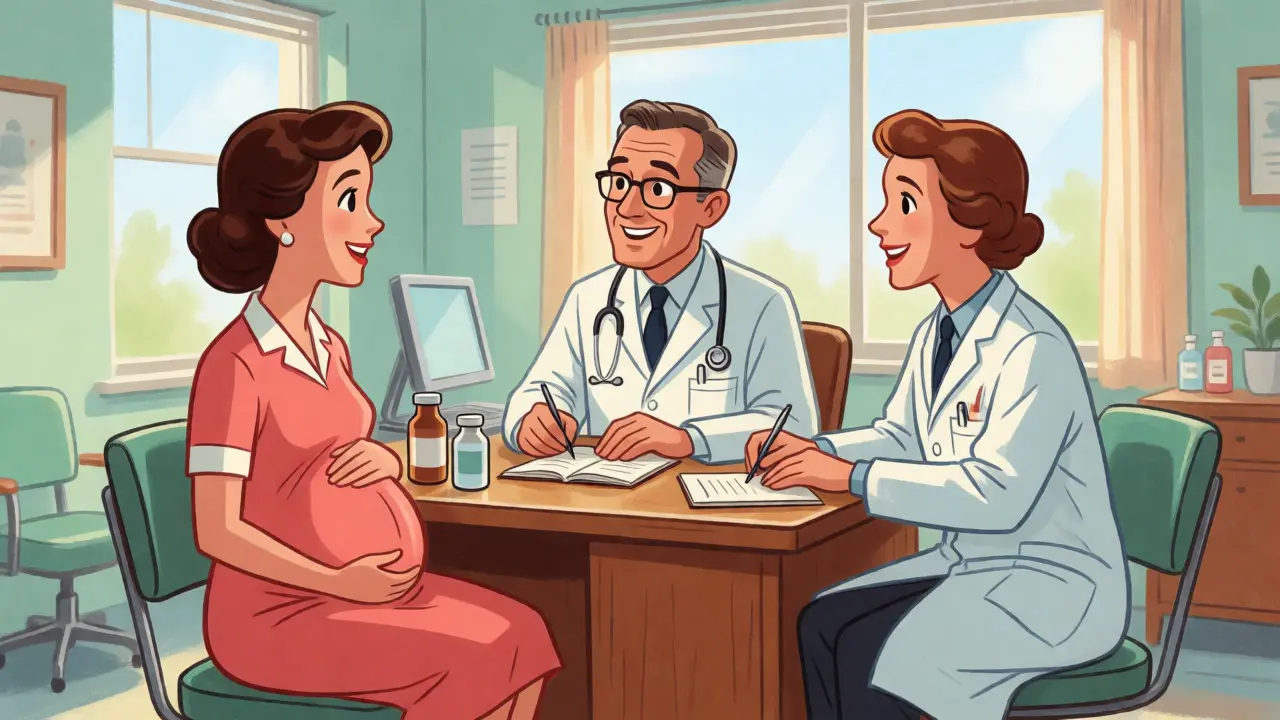
- Interprofessional Care: Your OB-GYN is key, but involve your pharmacist. Pharmacists are experts in drug interactions and safety profiles. ACOG explicitly recommends consulting a pharmacist when medication use is necessary.
- Don’t Stop Abruptly: Never stop psychiatric, cardiac, or anti-seizure medications cold turkey. Withdrawal effects can be harmful. Work with your team to taper or switch if needed.
- Watch for Conflicting Info: You will hear stories about Zofran causing cleft palates or antidepressants affecting behavior. Context matters. A small statistical increase in risk is different from a guaranteed outcome. Always ask for absolute numbers, not just relative risks.
Remember, the goal is a healthy mom and a healthy baby. Sometimes, that means accepting a small, managed risk to treat a serious maternal condition. Other times, it means switching to a safer alternative. It’s a conversation, not a verdict.
What does "teratogenic" actually mean?
Teratogenic refers to agents (like drugs, chemicals, or infections) that disrupt fetal development. When a medication is teratogenic, it can cause structural birth defects, functional disabilities, or even pregnancy loss. The term comes from the Greek word "teras," meaning monster, reflecting the historical fear of abnormal births. Today, it simply describes the potential for developmental interference.
Are herbal supplements safe during pregnancy?
Not automatically. Just because something is natural doesn’t mean it’s safe. Many herbal supplements lack rigorous testing for pregnancy safety. Some, like black cohosh or high-dose vitamin A, can be teratogenic. Always check with your provider before taking any supplement, tea, or essential oil during pregnancy.
If I took a risky drug before knowing I was pregnant, will my baby have defects?
Probably not. Most pregnancies where a woman takes a potentially risky medication before realizing she is pregnant result in healthy babies. The dose, timing, and duration matter. Bring your medication list to your first prenatal visit. Doctors can assess the specific risk based on the drug’s half-life and the stage of development at the time of exposure.
Why did the FDA stop using letter categories (A, B, C, D, X)?
The letter system was too simplistic. It implied that all drugs in a category had the same level of risk, which wasn’t true. It also didn’t distinguish between "no risk" and "no data." The new Pregnancy and Lactation Labeling Rule provides detailed narrative descriptions of risks, helping clinicians make more nuanced decisions based on actual evidence rather than a broad label.
Is cannabis safe for morning sickness in pregnancy?
Current evidence suggests caution. While some women use cannabis for nausea, THC crosses the placenta. Studies indicate a 15-20% increased risk of low birth weight and a 10-15% increased risk of preterm birth. There is also concern about long-term neurodevelopmental effects. Most medical organizations recommend avoiding cannabis during pregnancy due to these potential risks.






Write a comment
Your email address will be restricted to us