Boxed Warning Impact Simulator
Select a drug class and warning type to see estimated impacts on prescribing behavior.
Analysis Results
Select a scenario and click Analyze to view projected outcomes.
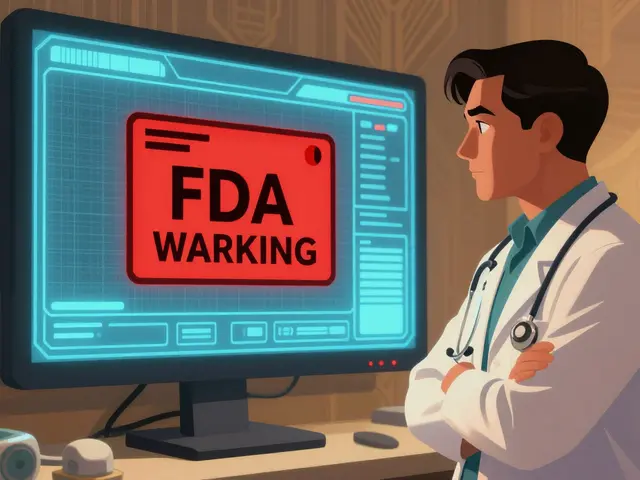
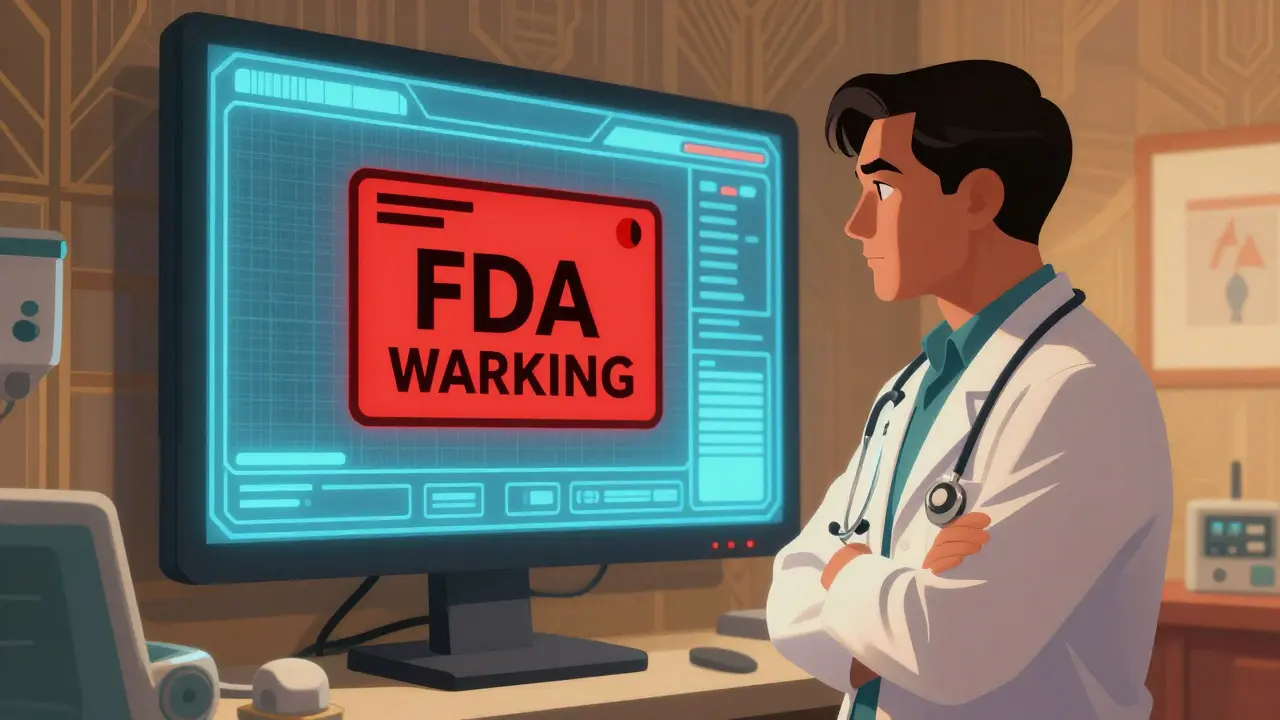
Imagine you are a doctor in the middle of a busy shift. A patient needs urgent treatment for a severe infection. You reach for a standard antibiotic, but your electronic health record flashes a red alert. It’s not just a side effect note; it is a Boxed Warning, formally known as a Black Box Warning. This is the most serious safety alert issued by the U.S. Food and Drug Administration (FDA). It tells you that this drug carries a risk of serious or life-threatening adverse effects. In 2025, these warnings have become sharper, more specific, and harder to ignore. But do they actually save lives, or do they just slow down care? The answer depends on how well we understand what changed recently.
The Shift from Vague Alerts to Actionable Data
For years, boxed warnings were often broad statements like "monitor for liver damage." That is helpful in theory, but vague in practice. Does that mean check once a year? Every month? Since January 2024, the rules have tightened significantly. The FDA now requires that new boxed warnings include quantified risk data. Instead of saying "there is a risk of heart inflammation," a label might now state "1.2% incidence of myocarditis in patients under 30." This change forces manufacturers to be precise.
This shift comes from the FDA Modernization Act passed in 2023, which mandates risk mitigation action plans for all new warnings. These plans must specify exact monitoring parameters. For example, instead of a generic warning about hepatotoxicity, a drug label must now require "obtain ALT/AST levels baseline and monthly for the first 6 months." This specificity helps clinicians make faster decisions because they know exactly what tests to order and when. It turns a scary warning into a checklist.
What Changed in 2025?
If you look at the annual summary of regulatory changes, three major trends stand out. First, there is a surge in warnings related to immunomodulators. These drugs, used for autoimmune diseases and cancer, accounted for 23% of all new or revised boxed warnings in recent cycles. As we see long-term safety data emerge, the FDA is catching up with risks that only appear after years of use.
Second, the focus has shifted toward real-world evidence. The FDA Sentinel Initiative, which monitors over 200 million patient records, identified 18 drugs requiring new boxed warnings in 2022 alone. Compare that to just 7 identifications in 2015. The system is getting better at spotting problems outside of controlled clinical trials. This means warnings are appearing faster, based on how people actually use medications in daily life.
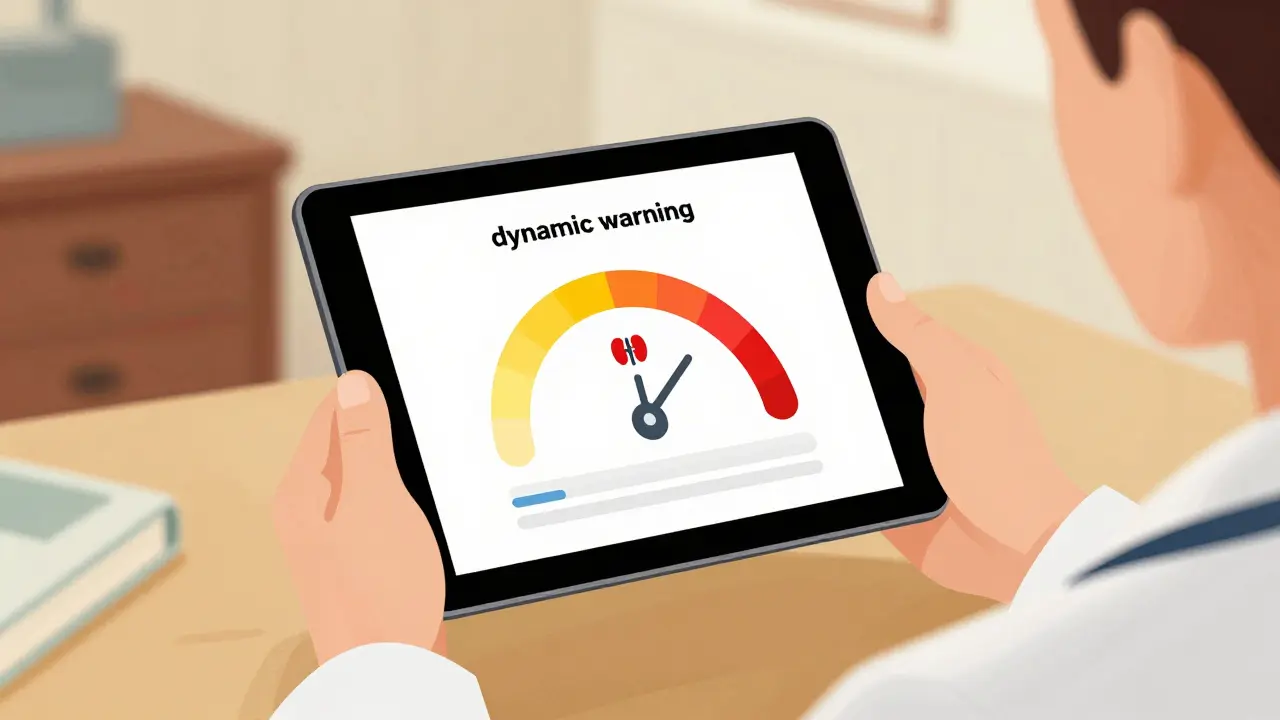
Third, there is a pilot program testing "dynamic boxed warnings." Imagine an alert that changes severity based on the patient’s history. If a patient has no kidney issues, the warning might be yellow. If they have renal failure, it turns red. Early trials showed this reduced alert fatigue by 37%. Alert fatigue is real-doctors see so many warnings that they start ignoring them. Making warnings smarter could help doctors pay attention to the ones that truly matter.

The Impact on Prescribing Behavior
Do boxed warnings stop doctors from prescribing dangerous drugs? Sometimes, yes. A 2020 study published in the Journal of the American Medical Informatics Association found that prescription rates can drop between 15% and 70% after a boxed warning is added. Take rosiglitazone, a diabetes drug. After a cardiovascular risk warning was issued, prescriptions dropped by 70%. However, pioglitazone, a similar drug with a similar warning, saw almost no change in usage. Why? Media exposure played a huge role. When the public hears about a danger, doctors feel pressure to avoid the drug.
Economic impacts are also significant. Drugs receiving new boxed warnings see an average revenue decline of 22% within 12 months. Stock prices for the manufacturing companies often drop by nearly 9% in the first week. Yet, essential medications like warfarin maintain stable usage despite carrying a "major or fatal bleeding" warning. There are simply no good alternatives for some conditions. In these cases, the warning serves as a reminder to monitor closely rather than a reason to stop treatment.
| Drug Class | Typical Risk Addressed | Prescription Rate Change | Clinical Utility of Warning |
|---|---|---|---|
| Oncology Agents | Fatal if given via wrong route (e.g., IV vs Oral) | Minimal (-2%) | Critical for administration safety |
| Immunomodulators | Long-term immune suppression/infection | Moderate (-15%) | High due to emerging data |
| NSAIDs | Gastrointestinal bleeding/Cardiovascular events | Negligible (0-5%) | Low due to "background noise" effect |
| Opioids | Respiratory depression/Addiction | Significant (-30%) | High, drives strict monitoring protocols |
The Debate: Are They Too Many?
Not everyone agrees that more warnings are better. Dr. Thomas J. Moore from Johns Hopkins noted that only 43% of boxed warnings include specific, actionable monitoring parameters. When a warning is too vague, it becomes useless. On the other hand, the American Medical Association surveyed 1,200 physicians and found that 68% consider boxed warnings very useful for high-risk drugs like clozapine, which requires strict blood count monitoring to prevent agranulocytosis.
However, 52% of those same doctors believe warnings for common drugs like NSAIDs have become "background noise." We have been warned about stomach bleeding from ibuprofen for decades. Doctors know the risk. Repeating it every time doesn’t add value; it adds clutter. This is why the push for specificity is so important. A warning that says "do not use in patients with eGFR <30 mL/min" is three times more effective at changing practice than a general statement about kidney risk.
Real-World Challenges in Clinical Settings
In the hospital, boxed warnings trigger extra steps. Pharmacists must verify patient-specific risk factors. For fentanyl patches, this means confirming opioid tolerance. For valproic acid, it means checking liver function tests within the first six months. These checks take time. A 2022 thread on Sermo, a physician networking site, revealed that 73% of respondents routinely override boxed warning alerts in palliative care patients. When a patient is dying, the theoretical risk of a side effect matters less than immediate symptom relief.
Electronic Health Records (EHRs) play a big role here. Sometimes the system flags a warning because of incomplete data. For example, a pharmacist might override a warfarin warning because the INR history isn’t fully loaded in the system yet. This highlights a gap between regulatory intent and technical reality. The Joint Commission now mandates that healthcare organizations establish clear protocols for managing these warnings, including triple-check systems for high-alert medications like methotrexate, which can be fatal if taken daily instead of weekly.
What This Means for Patients and Providers
For patients, clearer warnings mean better understanding. In an FDA patient forum, 78% of participants said that clearly explained warnings, such as those for isotretinoin (which requires enrollment in the iPledge program to prevent birth defects), increased their adherence to medication. When patients understand *why* a test is needed, they are more likely to get it done.
For providers, the landscape is shifting toward precision. The days of generic warnings are ending. Expect to see more data-driven labels that tell you exactly who is at risk and how to manage them. If you are a clinician, stay updated on the latest revisions, especially for immunomodulators and GLP-1 agonists, which are under heavy scrutiny for long-term risks. If you are a patient, ask your doctor to explain any black box warning associated with your prescription. It’s not meant to scare you; it’s meant to keep you safe through proper monitoring.
What is the difference between a boxed warning and a regular warning?
A boxed warning, or black box warning, is the most stringent safety alert mandated by the FDA. It appears in a black border at the beginning of a drug's package insert and indicates a significant risk of serious or life-threatening adverse effects. Regular warnings list potential side effects but do not carry the same legal weight or emphasis on critical, preventable harm.
Why did the FDA change the requirements for boxed warnings in 2024?
The FDA updated requirements to increase specificity and clinical utility. Previously, many warnings were vague (e.g., "monitor for liver damage"). The new rules require quantified risk data and specific monitoring parameters (e.g., "check ALT/AST levels monthly for 6 months") to help clinicians make precise, actionable decisions rather than just being aware of a general risk.
Do boxed warnings reduce the number of prescriptions written?
Yes, but the impact varies. Studies show prescription rates can drop between 15% and 70% depending on the drug and media attention. For example, rosiglitazone saw a 70% drop after a cardiovascular warning, while pioglitazone saw minimal change. Essential drugs with no alternatives, like warfarin, maintain stable usage despite warnings.
What are dynamic boxed warnings?
Dynamic boxed warnings are a pilot program tested by the FDA where alert severity adjusts based on patient-specific factors. For instance, a warning might be less prominent for a low-risk patient and highly visible for a high-risk patient. This approach aims to reduce "alert fatigue" among clinicians, ensuring they pay attention to the most critical risks.
How do boxed warnings affect pharmaceutical company revenues?
Drugs receiving new boxed warnings typically experience an average revenue decline of 22% within 12 months. Additionally, the manufacturing company's stock price often drops by approximately 8.7% within five trading days of the announcement, reflecting investor concern over reduced sales and potential liability.
Why are immunomodulators seeing more boxed warnings?
Immunomodulators accounted for 23% of recent boxed warning changes because long-term safety data is only now becoming available. These drugs alter the immune system, and risks like chronic infections or secondary cancers may not appear in short-term clinical trials but emerge in real-world usage monitored by initiatives like the FDA Sentinel Initiative.