HIV Medication & Statin Interaction Checker
How to use: Select the statin you are currently taking or considering to see its risk level and guidance when combined with HIV boosters (like Cobicistat or Ritonavir).
Clinical Guidance
Guidance text goes here.
Managing your heart health while living with HIV often means taking a statin to keep cholesterol in check. But here is the catch: some HIV medications can change how your body processes these cholesterol drugs. If a statin builds up too much in your bloodstream, it doesn't just stay in your veins-it can attack your muscle tissue, leading to a serious condition called rhabdomyolysis. The good news is that you don't have to choose between your heart and your HIV treatment; you just need the right combination and the right dose.
Why do HIV drugs and statins clash?
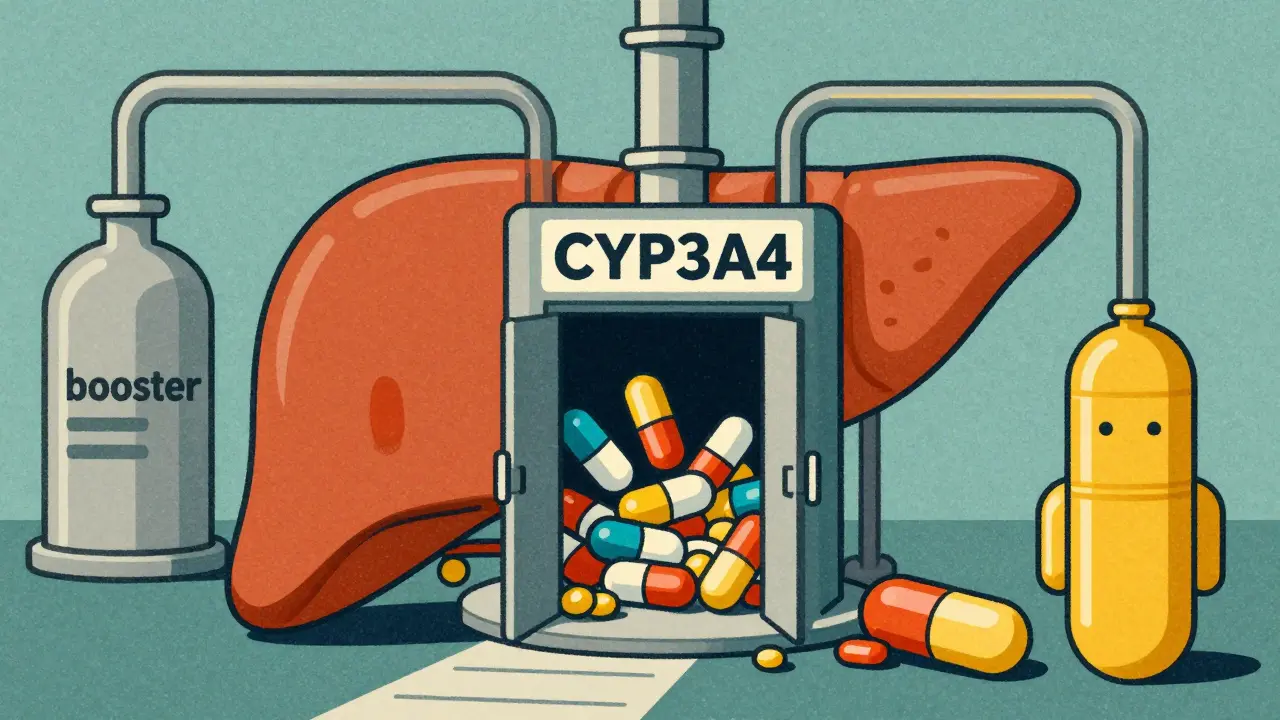
To understand the risk, you have to look at how your liver clears medication. Most statins are broken down by a specific enzyme system called CYP3A4 a critical enzyme in the liver responsible for metabolizing a vast array of medications, including many statins and protease inhibitors. Many HIV medications, specifically those known as "boosters," are designed to block this enzyme so that your HIV meds stay active in your system longer.
When you take a booster like Cobicistat or Ritonavir, they essentially "clog" the exit door for certain statins. This can cause the level of the statin in your blood to skyrocket-sometimes by over 300%. When levels get that high, the drug stops being a helpful cholesterol reducer and starts becoming toxic to your muscles.
The Danger Zone: Statins to Absolutely Avoid
Some combinations are simply too dangerous to risk. If you are on a regimen that includes protease inhibitors or cobicistat, there are two specific statins you should never use. Simvastatin (Zocor) and Lovastatin (Mevacor) are strictly contraindicated. Because they rely so heavily on the CYP3A4 pathway, combining them with HIV boosters can increase their concentration in your blood up to 20-fold.
This extreme spike dramatically increases the risk of rhabdomyolysis, where muscle fibers break down and leak into the bloodstream, potentially causing permanent kidney damage. If you are currently taking one of these, talk to your doctor immediately about switching to a safer alternative.

Making Safe Choices: The Statin Hierarchy
Not all statins are created equal. Some bypass the problematic liver enzymes entirely, making them much safer for people on Antiretroviral Therapy (ART). Depending on your specific HIV meds, your doctor will likely follow a hierarchy of safety.
| Statin Type | Risk Level | Guidance / Dose Limits |
|---|---|---|
| Pitavastatin / Pravastatin | Lowest | Minimal interactions; generally safe. |
| Rosuvastatin | Moderate | Limit to 10mg with Ritonavir/Lopinavir. |
| Atorvastatin | Moderate | Limit to 20mg-40mg depending on the ART regimen. |
| Fluvastatin | Moderate | Use caution with Ritonavir; exposure can double. |
| Simvastatin / Lovastatin | Highest | Contraindicated; do not use. |
If you are taking newer "anchor" drugs like Dolutegravir or Bictegravir, you're in a better position. These integrase inhibitors have very few drug interactions, meaning standard statin dosing is often perfectly fine.
Spotting the Red Flags: Side Effects to Watch For
Even with a safe choice, you need to be your own health detective. Statin toxicity doesn't always happen overnight; it can creep up on you. The most common warning sign is unexplained muscle pain, tenderness, or weakness. This isn't just the "soreness" you feel after a gym session; it's often a deep ache in the large muscle groups like your thighs or shoulders.
Another critical sign is dark-colored urine-sometimes described as looking like tea or cola. This happens when myoglobin from damaged muscles enters the urine and can be a sign of acute kidney distress. If you notice these symptoms, you shouldn't wait for your next appointment. Contact your provider immediately to have your Creatine Kinase (CK) levels checked via a blood test.

Beyond the Basics: Other Interaction Triggers
It isn't just HIV meds that can interfere with your statins. Other common prescriptions can add to the risk, creating a "stacking" effect. For example, some calcium channel blockers used for high blood pressure (like felodipine) also use the CYP3A4 pathway. If you're taking a booster, a statin, and a specific blood pressure med, you're putting a lot of pressure on one single enzyme system.
The same goes for triglycerides. While many people use Gemfibrozil to lower fats, it is known to significantly increase statin toxicity. Experts generally recommend using fenofibrate or omega-3 fatty acids instead, as they don't carry the same dangerous interaction profile.
Staying Safe in a Changing Landscape
The world of HIV treatment is moving toward long-acting injectables. While these are convenient, they introduce a new variable: the "long tail" of interactions. Because these drugs stay in your system for weeks or months, a potential interaction with a statin doesn't disappear the day you stop the medication. It can linger long after your last injection.
Because no doctor can memorize every single interaction-there are nearly 100,000 documented combinations-the gold standard for safety is using a real-time interaction checker. Tools like the University of Liverpool's HIV Drug Interactions database are essential. Every time you start a new medication, even an over-the-counter supplement, it's worth asking your pharmacist to run a check against your specific ART regimen.
Can I take a statin if I am on a protease inhibitor?
Yes, but you cannot take just any statin. You must avoid simvastatin and lovastatin. Safer options like pravastatin or pitavastatin are preferred, while atorvastatin and rosuvastatin can be used but usually require lower, capped doses to prevent muscle toxicity.
What are the symptoms of statin-induced muscle damage?
Look for unexplained muscle aches, tenderness, or weakness, particularly in the thighs and upper arms. A key danger sign is dark, tea-colored urine, which indicates that muscle breakdown products are affecting your kidneys.
Why is Cobicistat a concern for statin users?
Cobicistat is a potent inhibitor of the CYP3A4 enzyme. Since many statins rely on this enzyme to be cleared from the body, Cobicistat causes the statin levels to build up in the blood, which increases the risk of severe side effects like rhabdomyolysis.
Are there any statins that don't interact with HIV meds?
While no drug is entirely without risk, pitavastatin and pravastatin are known for having minimal interactions because they are processed through different pathways in the liver, making them the safest first-choice options for many people on ART.
How often should my liver and muscles be monitored?
Your doctor will typically establish a baseline for liver function and Creatine Kinase (CK) levels before you start a statin. Periodic checks follow, especially during the first few months of therapy or when your HIV medication dose is adjusted.







Write a comment
Your email address will be restricted to us