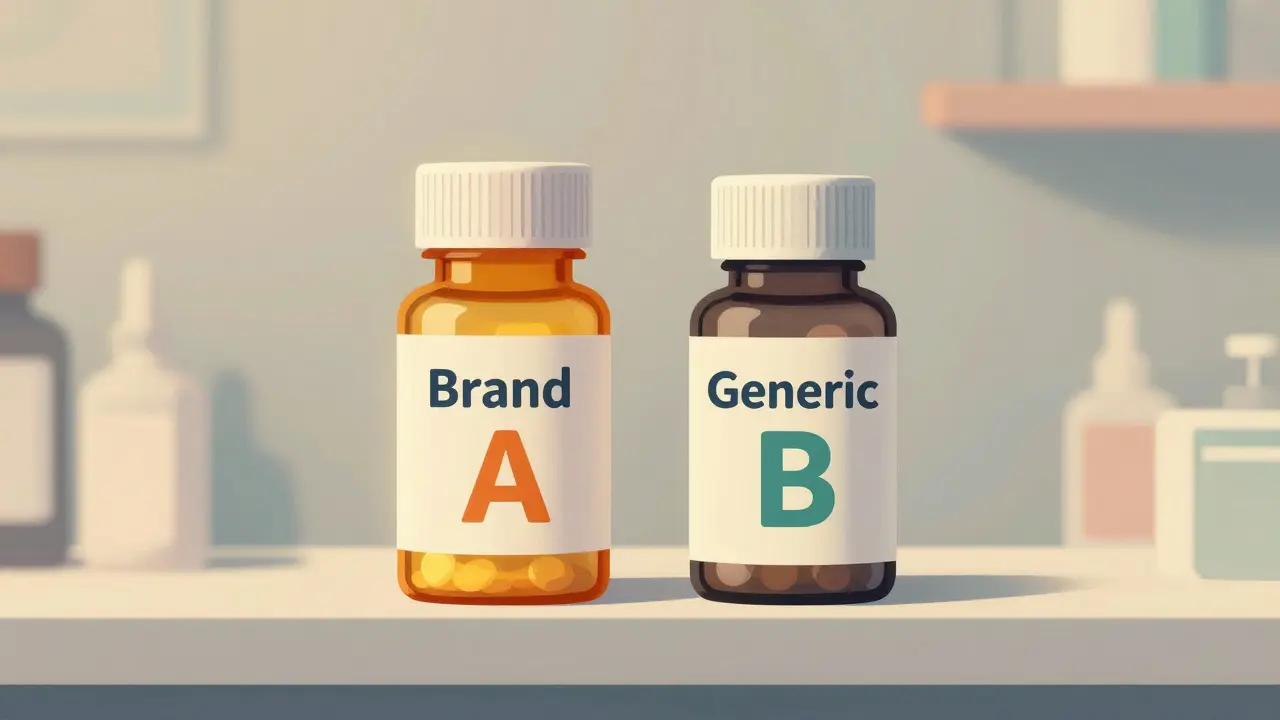
Imagine you buy a bottle of painkillers from Brand A. Two months later, you buy the same drug from Brand B. They look identical. The price is lower. But what if the second bottle doesn't work quite the same way? This is the core promise of generic drugs, which are medicinal products intended to be equivalent to an innovator or reference listed drug product in dosage form, safety, strength, route of administration, quality, performance characteristics, and intended use. Regulatory agencies like the FDA and EMA ensure this equivalence through rigorous testing called bioequivalence (BE). However, a hidden variable often complicates this picture: batch-to-batch variability.
Manufacturing isn't a perfect science. Even with strict controls, slight differences occur between production runs. Current standard BE tests often ignore these differences, leading to potential inaccuracies. Understanding how batch variability impacts acceptable limits is crucial for manufacturers, regulators, and anyone relying on consistent medication performance.
The Core Concept of Bioequivalence
Bioequivalence is the statistical proof that a generic drug behaves in the body just like the original brand-name drug. It does not mean the drugs are chemically identical molecule-for-molecule, but rather that they deliver the active ingredient to your bloodstream at the same rate and extent.
The gold standard for this assessment is the Average Bioequivalence (ABE) approach. Here is how it works:
- Pharmacokinetic Parameters: Scientists measure two key metrics: Area Under the Curve (AUC), which represents total exposure to the drug, and Peak Concentration (Cmax), which shows how high the drug levels get.
- The 80-125% Rule: For a generic to pass, the 90% confidence interval of the ratio between the test (generic) and reference (brand) geometric means must fall within 80.00% to 125.00%.
- Crossover Design: Studies typically use a two-way crossover design where subjects receive both the test and reference products in random order.
This framework was established in the 1992 FDA guidance and adopted globally by bodies like the European Medicines Agency (EMA). It assumes that the variability seen in the study comes mostly from human biological differences, not from differences in the pills themselves.
The Hidden Problem: Batch-to-Batch Variability
Here is where things get tricky. A single manufacturing run produces one "batch" of tablets. But drugs are made in thousands of batches over their lifetime. Do all batches perform identically?
Research published in Clinical Pharmacology & Therapeutics (2016) revealed a startling fact: between-batch variance can constitute 40-70% of the estimated residual error in pharmacokinetic metrics. That means most of the "noise" in a BE study might not come from human biology, but from the manufacturing process itself.
When a standard BE study compares only one batch of the generic against one batch of the brand, it creates a phenomenon known as "confounded bioequivalence." If the specific generic batch chosen happens to be slightly stronger, and the brand batch is slightly weaker, the study might show excellent equivalence. But if you swap the batches, the results could fail. The outcome depends on luck of the draw, not true product performance.
| Variability Source | Description | Impact on Standard BE |
|---|---|---|
| Within-Subject Biological | Differences in how individual people metabolize drugs due to genetics, diet, or health status. | Accounted for in statistical models. |
| Between-Batch Manufacturing | Slight variations in compression force, coating thickness, or raw material purity across different production runs. | Often ignored, inflating error rates. |
| Assay Error | Inaccuracies in laboratory testing methods used to measure drug concentration. | Minimized through calibration, but still present. |

Current Acceptable Limits and Guidelines
Regulatory bodies have specific rules for selecting batches, though they don't always account for the variability issue fully.
FDA Requirements: The US Food and Drug Administration requires that the test product batch be representative of commercial scale. Typically, this means a batch of at least 1/10 of production scale or 100,000 units. The assayed content of the test batch must not differ by more than 5% from the reference batch.
EMA Requirements: The European Medicines Agency follows similar principles. Their 2010 guideline specifies that reference batches must demonstrate representative dissolution and assay content. For highly variable drugs (where within-subject coefficient of variation >30%), the EMA allows a widened acceptance range using Scaled Average Bioequivalence (SABE), but this applies only to Cmax, not AUC.
The problem remains: these limits apply to the *selected* batches. They do not guarantee that *future* batches will behave similarly. As Dr. Robert Lionberger, former Director of the Office of Generic Drugs at FDA, noted in a 2019 presentation, ignoring batch-to-batch variability creates unacceptably high risks of false-negative and false-positive findings.
New Approaches: Addressing the Gap
To fix this, statisticians and regulators are developing new methodologies. The goal is to separate manufacturing noise from biological noise.
Between-Batch Bioequivalence (BBE)
Proposed in 2020, the BBE approach changes the comparison metric. Instead of just comparing Test vs. Reference means, it compares the mean difference to the Reference's own between-batch variability.
Think of it like this: If the brand-name drug itself varies wildly from batch to batch, the generic is allowed to vary a bit too, as long as its average performance matches. If the brand is extremely consistent, the generic must be equally precise.
Simulations show that BBE increases the true positive rate (correctly identifying equivalent drugs) from ~65% with three reference batches to over 85% with six batches when variability is high. This method is particularly useful for complex products like nasal sprays and inhalers, where minor manufacturing tweaks significantly alter drug delivery.
Replicated Crossover Designs
Another solution is to test multiple batches. The EMA’s 2022 reflection paper on complex generics suggests using at least three reference batches and two test batches for products with known high manufacturing variability. This allows statisticians to use mixed-effects models to estimate:
- Within-subject, between-batch variance
- Within-subject residual variance
By isolating these components, regulators can make a more accurate call on whether the generic is truly equivalent across its entire lifecycle, not just for the specific bottles tested in the clinic.

Implications for Complex Generics
Not all drugs are created equal. Simple oral tablets dissolve predictably. But complex generics-such as extended-release formulations, transdermal patches, and inhalation products-are much more sensitive to manufacturing nuances.
The FDA has already taken steps here. In its 2022 guidance on nasal spray products, applicants must provide evidence of batch-to-batch consistency for at least three production-scale batches of both test and reference products. This acknowledges that for these devices, the hardware (the spray mechanism) interacts closely with the software (the liquid formulation), making batch consistency critical.
The International Council for Harmonisation (ICH) is also working on Guideline Q13 regarding continuous manufacturing. While focused on modernizing production lines, it indirectly addresses batch variability by proposing enhanced statistical methods for assessing product consistency across manufacturing scales.
Future Outlook: What Changes Are Coming?
The regulatory landscape is shifting. The FDA released a draft guidance in June 2023 titled "Consideration of Batch-to-Batch Variability in Bioequivalence Studies." This document proposes formally incorporating between-batch variability into statistical models for certain product categories. Final guidance is expected soon.
Similarly, the EMA’s Biostatistics Working Party is evaluating modifications to include specific requirements for batch selection. Industry experts predict that by 2026, multi-batch equivalence testing will become mandatory for complex generics. Dr. Jennifer Bright of the Critical Path Institute forecasts a fundamental shift from single-batch to multi-batch frameworks over the next few years.
For patients, this means greater assurance. For manufacturers, it means higher upfront costs and more complex studies. But ultimately, it ensures that the generic drug you take today performs just as reliably as the one you’ll take next year.
What is the standard acceptance limit for bioequivalence?
The standard acceptance limit is a 90% confidence interval of the Test/Reference ratio falling within 80.00% to 125.00% for key pharmacokinetic parameters like AUC and Cmax. This rule applies to most narrow therapeutic index drugs unless scaled approaches are authorized.
Why is batch-to-batch variability important in generic drugs?
Batch variability matters because it can account for 40-70% of the error in bioequivalence studies. If ignored, a single lucky batch match might pass a study while future batches fail, or vice versa. Accounting for it ensures consistent performance across all manufactured units, not just the ones tested.
How does Between-Batch Bioequivalence (BBE) differ from Average Bioequivalence (ABE)?
ABE compares the mean performance of one test batch against one reference batch using fixed limits (80-125%). BBE compares the mean difference relative to the reference product's inherent batch-to-batch variability. BBE dynamically adjusts the margin based on how variable the reference drug actually is, providing a more realistic assessment for complex products.
Do FDA and EMA require multiple batches for bioequivalence studies?
Currently, standard guidelines often rely on single batches for simple drugs. However, for complex generics like nasal sprays, the FDA requires evidence of consistency across at least three production-scale batches. The EMA recommends multi-batch testing for products with high manufacturing variability, and both agencies are moving toward stricter multi-batch requirements.
What is Scaled Average Bioequivalence (SABE)?
SABE is a regulatory approach used for highly variable drugs (within-subject CV >30%). It widens the acceptance limits beyond the standard 80-125% range, proportional to the variability of the reference product. This prevents rejecting generics simply because the reference drug itself has high natural variability, though it currently applies mainly to Cmax, not AUC.








Write a comment
Your email address will be restricted to us