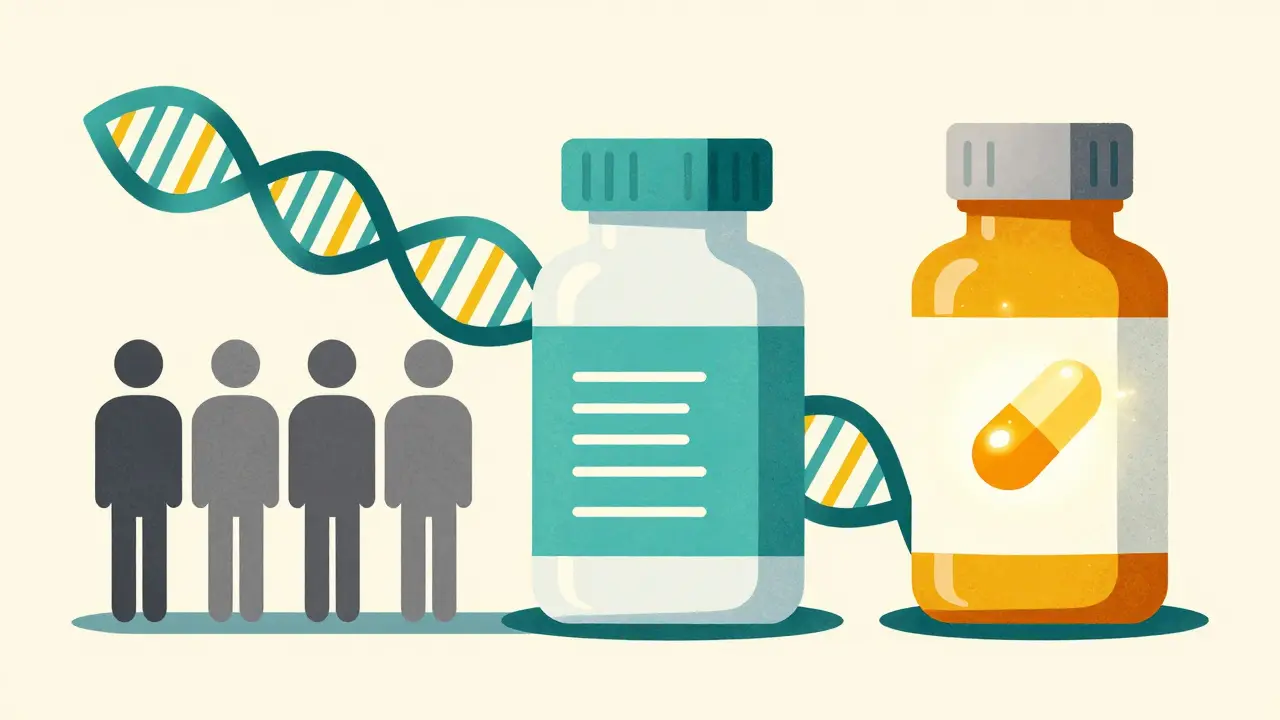
Ever wonder why a medication that works wonders for your neighbor makes you feel sick, or why some people need a much lower dose of a common painkiller to avoid a dangerous reaction? It isn't just bad luck; it's written in your DNA. While doctors have always known that people react differently to medicine, Pharmacogenomics is the study of how your unique genetic makeup affects your body's response to drugs. Often abbreviated as PGx, this field is changing the game by moving us away from "one-size-fits-all" dosing and toward a future where your prescription is tailored to your genes.
The real danger comes when your genetics clash with your medication, especially if you're taking multiple drugs. This creates a complex web of drug interaction risk that traditional pharmacy checkers often miss. When we talk about drug interactions, we usually think of two medicines fighting each other. But there's a hidden third player: your genes. When a drug, another drug, and your specific genetic variants all collide, you get what experts call drug-drug-gene interactions (DDGIs). This can lead to adverse drug reactions (ADRs), which cost the U.S. healthcare system roughly $30 billion every year.
How Your Genes Change Drug Metabolism
To understand how this works, we need to look at the "engine room" of your metabolism. Most drugs are processed by enzymes in the liver. Cytochrome P450 is a superfamily of enzymes responsible for metabolizing the vast majority of medications. Within this group, specific enzymes like CYP2D6 and CYP2C19 do the heavy lifting for antidepressants and antipsychotics.
Depending on your genetics, you might fall into one of several categories:
- Ultra-rapid Metabolizers: Your body breaks down the drug so fast it never reaches a therapeutic level. The medicine basically vanishes before it can help you.
- Normal Metabolizers: You process the drug as expected.
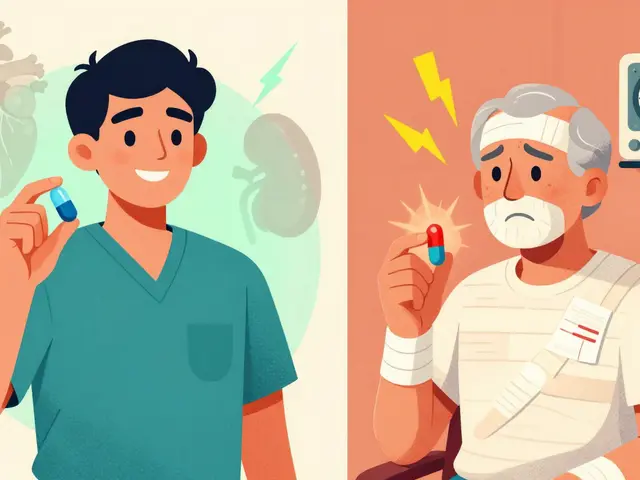
- Poor Metabolizers: Your body struggles to break the drug down. This causes the medicine to build up in your bloodstream, leading to toxicity and severe side effects even at a "standard" dose.
A concrete example is the enzyme TPMT is an enzyme that breaks down thiopurine drugs used for autoimmune diseases. If you are a TPMT poor metabolizer and take a standard dose of azathioprine, you risk severe myelosuppression-a dangerous drop in bone marrow activity. For these patients, the dose must be slashed to 10% or less of the usual amount to keep them safe.
The Three Ways Drugs and Genes Clash
When you're on multiple medications, the risk isn't just about your baseline genetics. Drugs can actually change how your genes "behave." There are three primary ways these interactions happen:
- Inhibitory Interactions: This is where a "perpetrator" drug blocks an enzyme. Imagine you have a genetic variant that already makes you a slow metabolizer, and then you take a second drug that inhibits that same enzyme. You've just created a bottleneck, causing the first drug to spike to dangerous levels.
- Induction Interactions: Some drugs tell your body to produce more of an enzyme. This speeds up metabolism, potentially making your other medications ineffective because your body is flushing them out too quickly.
- Phenoconversion: This is a fascinating (and risky) process where a drug temporarily changes your genetic phenotype. For example, if you have a "gain-of-function" genotype for CYP2D6 (meaning you're naturally a fast metabolizer) but take a powerful inhibitor, your body starts acting like a poor metabolizer. Your DNA says one thing, but your clinical reality is another.
| Feature | Traditional DDI Checkers | PGx-Integrated Analysis |
|---|---|---|
| Data Source | General drug-drug databases | Drug-drug + Patient genetic profile |
| Detection Rate | Identifies standard interactions | ~34% increase in relevant interactions found |
| Accuracy | Population average | Individual-specific probability |
| Risk Assessment | Generic warnings | Specific dose adjustments (e.g., 10% dose for TPMT) |
The Real-World Impact on Common Medications
Pharmacogenomics isn't just theoretical; it's saving lives in specific medical fields right now. Take cardiovascular health, for instance. Warfarin is a widely used anticoagulant medication used to prevent blood clots. It is notoriously difficult to dose because it's affected by two different genes: CYP2C9 (which handles metabolism) and VKORC1 (which handles the drug's target). When doctors use PGx-guided dosing, major bleeding events drop by 31% compared to standard guessing-and-checking.
Another critical area is neurology. The drug carbamazepine is used for seizures, but for people with the HLA-B*15:02 is a genetic allele strongly associated with severe hypersensitivity reactions allele, the risk of developing Stevens-Johnson Syndrome-a life-threatening skin reaction-is 50 to 100 times higher. A simple genetic test before prescribing can completely avoid this catastrophe.
For those dealing with mental health, antidepressants and antipsychotics are the most common culprits for drug-drug-gene interactions. Because these drugs often rely on the same narrow set of enzymes (like CYP2D6), the probability of a major interaction is significantly higher than in other drug classes.
Moving from the Lab to the Pharmacy
If this is so effective, why isn't every doctor doing it? The gap between science and the clinic is still quite wide. The Clinical Pharmacogenetics Implementation Consortium is a global group (CPIC) providing peer-reviewed, evidence-based guidelines for translating genetic tests into clinical action. They've mapped over 100 drug-gene pairs, but only about 22% of FDA-labeled associations actually have these gold-standard guidelines.
Implementation is also expensive and technically difficult. Integrating PGx data into electronic health records requires significant investment-sometimes over $1 million per system. Furthermore, many pharmacists feel undertrained. A survey of 1,200 pharmacists found that only 28% felt comfortable interpreting these complex genetic results. We're essentially asking clinicians to become geneticists overnight.
However, early adopters are seeing huge wins. At the Mayo Clinic, preemptive testing revealed that 89% of patients had at least one "actionable" genetic variant. By using alerts for DDGIs, they reduced inappropriate prescribing by 45%. This proves that when the system works, the safety payoff is massive.
What the Future Holds for Personalized Medicine
We are moving toward a world of "preemptive" testing. Instead of testing you after a drug fails or causes a reaction, your genetic profile will be on file before you ever get sick. The NIH's All of Us Research Program has already returned results to over 250,000 people, building a massive database to refine these guidelines.
The next frontier is Artificial Intelligence. AI models are now being used to combine PGx data with other variables (like weight, age, and kidney function) to predict dosing with incredible accuracy. A recent study showed that AI improved warfarin dosing accuracy by 37% over traditional algorithms. This removes the human error and the "trial and error" phase of prescribing.
There is still a hurdle: equity. Only 2% of PGx research participants represent African ancestry populations. If we only study one group of people, the guidelines won't work for everyone. To truly eliminate drug interaction risks, the science needs to be as diverse as the people it's trying to treat.
Does pharmacogenomics mean I can't take certain drugs?
Not necessarily. In most cases, it doesn't mean a drug is "forbidden," but rather that the dose needs to be adjusted. For some, it might mean choosing a different medication entirely to avoid a high risk of a severe reaction, like in the case of HLA-B*15:02 and carbamazepine.
How is a PGx test different from a 23andMe test?
While some consumer tests provide limited PGx reports, clinical-grade PGx tests used in hospitals are more comprehensive and validated for medical decision-making. They focus on specific alleles (like the *1, *2, or *3 variants of CYP2D6) and are interpreted by pharmacists or doctors using CPIC guidelines to change a prescription.
What is a "Poor Metabolizer" exactly?
A poor metabolizer is someone whose genetic variants result in enzymes that have little to no activity. Because the body can't break down the drug at a normal rate, the medication stays in the system longer, which can lead to toxic build-up even at doses that are safe for most people.
Can drugs change my genetic code?
No, drugs do not change your DNA sequence. However, they can cause "phenoconversion." This means a drug can block an enzyme so effectively that your body behaves as if you have a different genetic makeup, even though your DNA remains the same.
Why aren't all my medications checked for genetic interactions?
The science is still catching up. While thousands of drugs exist, only a fraction have well-documented gene-drug pairs with clinical guidelines. Additionally, many healthcare systems lack the software to integrate genetic data into the prescribing process.
Next Steps and Troubleshooting
If you are taking multiple medications (polypharmacy) and are concerned about your interaction risk, here is how to handle it:
- Audit your meds: Create a full list of all prescriptions, over-the-counter drugs, and supplements. Some supplements can also act as enzyme inhibitors.
- Ask about PGx: Ask your doctor or pharmacist, "Are any of these medications known to be heavily influenced by CYP450 enzymes or other genetic variants?"
- Request a consultation: If you've had unexpected side effects from standard doses of antidepressants or blood thinners, ask for a referral to a clinical pharmacologist or a center that offers preemptive PGx testing.
- Watch for "Red Flags": If you experience sudden, severe skin rashes or extreme drowsiness after starting a new med, contact your provider immediately; these can be signs of a genetic mismatch.





Write a comment
Your email address will be restricted to us