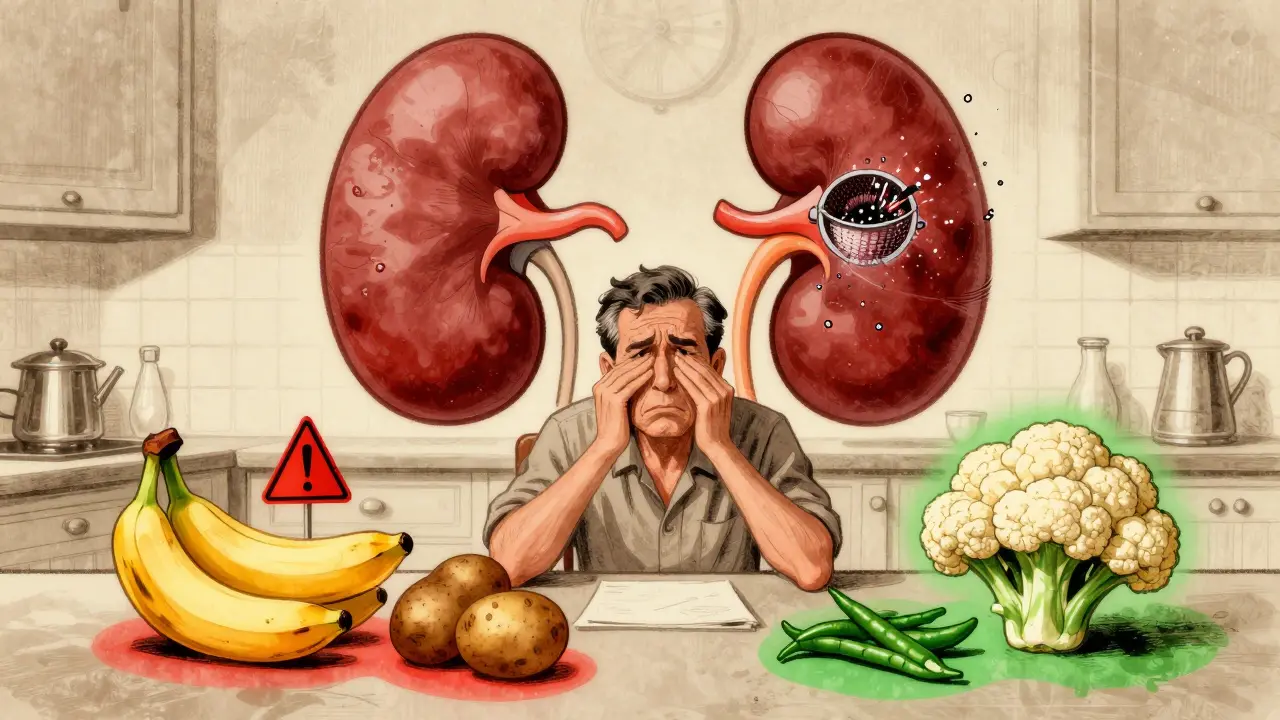
When your kidneys aren't working well, even normal foods can become dangerous. For people with chronic kidney disease (CKD), high potassium levels - called hyperkalemia - can trigger heart rhythm problems, muscle weakness, or even sudden cardiac arrest. It’s not rare: up to half of those with advanced CKD have elevated potassium, often because of medications that protect their heart and kidneys but also raise potassium. The good news? You don’t have to stop those life-saving drugs. With the right diet, monitoring, and newer treatments, most people can keep potassium in a safe range - and live better.
Why Hyperkalemia Is Dangerous in CKD
Your kidneys normally flush out extra potassium through urine. But when kidney function drops below 30% (eGFR <30 mL/min), that system breaks down. Potassium builds up slowly, often without symptoms - until it doesn’t. At levels above 5.5 mmol/L, your heart’s electrical signals start to misfire. ECG changes like tall, peaked T-waves appear. Above 6.5 mmol/L, the QRS complex widens. That’s when you’re at real risk of cardiac arrest. What makes this worse is that many CKD patients are on RAAS inhibitors - drugs like ACE inhibitors, ARBs, or mineralocorticoid receptor antagonists (MRAs). These drugs reduce protein in the urine and slow kidney damage. But they also block the body’s natural way of excreting potassium. So you’re caught: take the meds and risk high potassium, or stop them and risk faster kidney decline or heart failure.Dietary Limits: What You Can and Can’t Eat
Dietary potassium advice isn’t one-size-fits-all. It depends on your kidney stage.- Stages 1-3a (mild to moderate CKD): No need to go on a strict low-potassium diet. Focus on balance. Avoid excessive bananas, potatoes, or salt substitutes.
- Stages 3b-5 (advanced CKD, not on dialysis): Limit potassium to 2,000-3,000 mg per day (51-77 mmol). That’s about half what a healthy person eats.
- Bananas: 422 mg per 100g
- Oranges and orange juice: 181 mg per 100g
- White potatoes: 421 mg per 100g
- Spinach, tomatoes, avocados, dried fruit, nuts, and beans
Emergency Treatment: What Happens When Potassium Spikes
If your potassium hits 5.5 mmol/L or higher and you have ECG changes, you need immediate treatment. This isn’t something to wait on. The first step is protecting your heart:- Calcium gluconate (10 mL of 10% solution IV): Given over 2-5 minutes. It doesn’t lower potassium - it just stabilizes heart muscle cells so they don’t go into dangerous rhythms. Effects start in 1-3 minutes and last about an hour.
- Insulin and glucose: 10 units of regular insulin with 50 mL of 50% dextrose. This pushes potassium into cells. Levels drop by 0.5-1.5 mmol/L within 30 minutes. But there’s a catch: 10-15% of patients get dangerously low blood sugar. Blood glucose must be checked every 30 minutes for at least 2 hours.
- Sodium bicarbonate: Only if you also have metabolic acidosis (bicarbonate <22 mmol/L). Works in 5-10 minutes, but it’s not effective alone for most cases.

Chronic Management: New Drugs, Better Outcomes
For long-term control, potassium binders are now standard. These drugs trap potassium in your gut so it leaves through stool instead of building up in blood. There are three main types:- Sodium polystyrene sulfonate (SPS): The old standard. Taken 15-30 grams daily. But it’s slow (takes 24-48 hours to work), causes constipation, and carries a rare but deadly risk of colonic necrosis. It also adds 11 mmol of sodium per gram - bad for people with heart failure or high blood pressure.
- Patiromer (Veltassa): Approved in 2015. Works over 4-8 hours. Sodium-neutral, so it doesn’t worsen fluid retention. But it can cause low magnesium (18.7% of users) and constipation (14.2%). Many patients dislike its chalky texture - 22% stop taking it because of taste.
- Sodium zirconium cyclosilicate (SZC, Lokelma): Approved in 2018. Works faster - potassium drops by 1.0-1.4 mmol/L within just one hour. Better for emergencies. But it adds sodium (1.2 g/day), which can cause swelling in 12.3% of heart failure patients.
- If you’re in acute danger or need fast correction: SZC.
- If you’re managing long-term and have heart failure: Patiromer.
- If cost is a major issue: SPS is cheaper - but the risks may not be worth it.
Monitoring and Coordination: The Real Key to Success
You can’t just start a binder and forget about it. Regular monitoring saves lives.- Check potassium within 1-2 weeks after starting or increasing RAASi.
- Every 3-6 months if stable - more often if you’re on binders or have other conditions like diabetes or heart failure.
- Test immediately if you feel weak, have palpitations, or notice unusual fatigue.
- A nephrologist to manage medications and kidney health.
- A renal dietitian for personalized food plans (45-60 minute initial visit, then follow-ups every 2-6 weeks).
- A clinical pharmacist to check for drug interactions. Patiromer can reduce levothyroxine absorption by 23% if taken too close together - they need to be spaced at least 4 hours apart.
What’s Coming Next
The future of hyperkalemia management is smarter and more personalized.- Researchers are testing apps that scan food barcodes and instantly calculate potassium content. Early trials show a 32% improvement in diet adherence.
- New drugs like tenapanor (already approved for phosphate control) are being studied for potassium - it works differently, by blocking potassium absorption in the gut.
- The European Renal Association is proposing lowering the treatment threshold to 5.3 mmol/L for advanced CKD, because even small rises above 5.0 mmol/L increase death risk.
- By 2027, experts predict 75% of CKD patients on RAASi will be on a potassium binder - it’s becoming standard care, not an afterthought.
Frequently Asked Questions
Can I still eat fruit if I have CKD and high potassium?
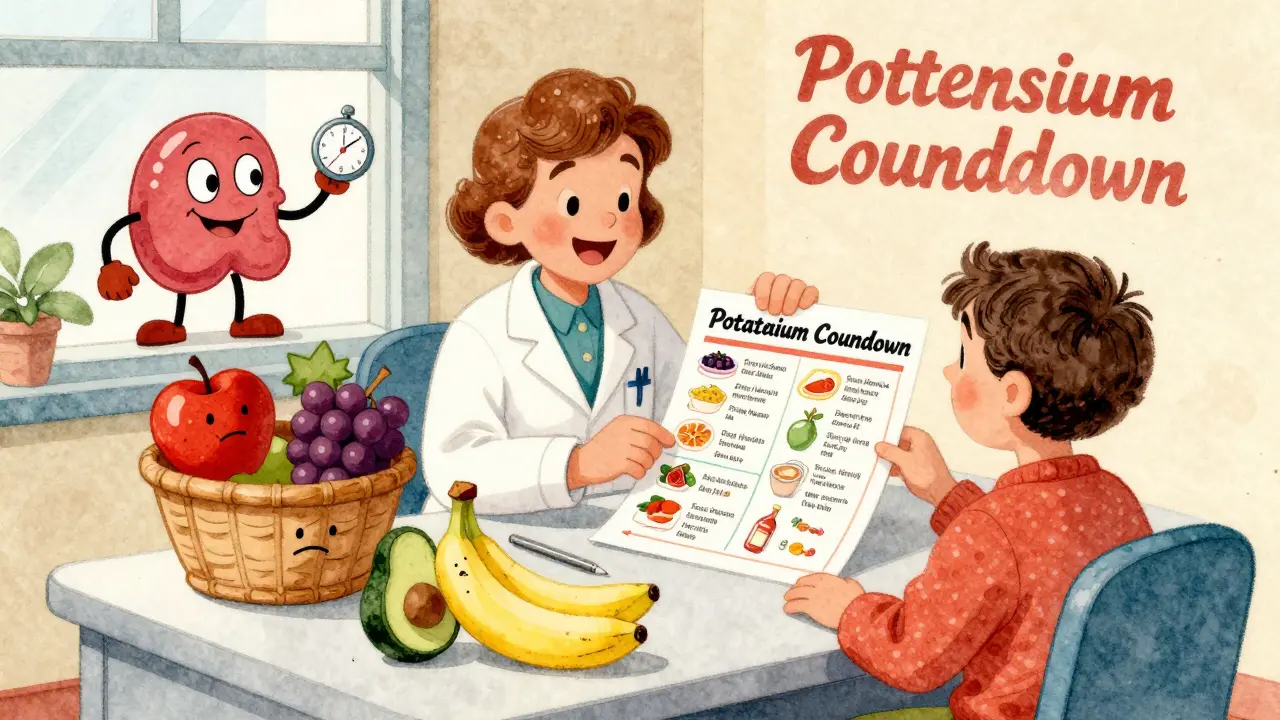
Yes - but choose wisely. Apples, berries, grapes, and pineapple are lower in potassium. Avoid bananas, oranges, kiwi, and dried fruit. Portion size matters: one small apple is fine; three is too much. Boiling high-potassium fruits like peaches can reduce their content. Always check with your dietitian.
Why can’t I just stop my blood pressure medicine if my potassium is high?
Stopping RAAS inhibitors may lower potassium, but it increases your risk of heart attack, stroke, and faster kidney failure. Studies show discontinuing these drugs raises mortality risk by 2.1-fold in heart failure patients. The goal isn’t to stop the meds - it’s to manage potassium so you can keep taking them safely.
Are potassium binders safe long-term?
Current data shows patiromer and SZC are safe for up to 2 years. Long-term effects beyond that are still being studied. Both are much safer than older binders like SPS, which can cause bowel damage. Watch for side effects: patiromer can lower magnesium; SZC can cause swelling. Regular blood tests help catch these early.
How do I know if my potassium binder is working?
Your doctor will check your serum potassium level 1-2 weeks after starting the binder. A drop of 0.5-1.0 mmol/L is a good sign. You should also feel better - less fatigue, fewer muscle cramps. If your potassium stays above 5.5 mmol/L, your dose may need adjusting, or you may need a different binder.
Can I use salt substitutes to flavor my food?
Absolutely not. Most salt substitutes are made of potassium chloride - sometimes over 500 mg of potassium per pinch. That’s more than a banana in one teaspoon. Use herbs, garlic, lemon juice, or vinegar instead. Always read labels - if it says "potassium chloride," avoid it.




Write a comment
Your email address will be restricted to us