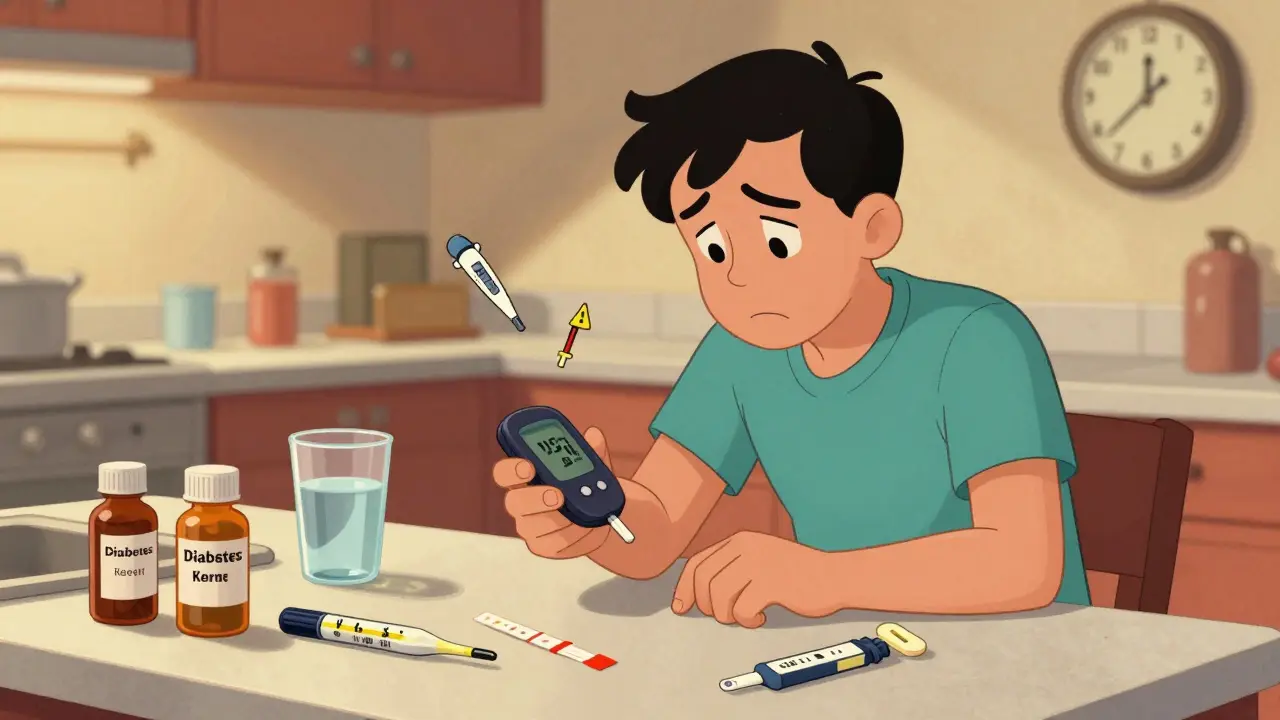
When you’re sick with a cold, flu, or stomach bug, your body is under stress. For people with diabetes, that stress can turn a simple illness into a medical emergency. Diabetic ketoacidosis (DKA) and acute kidney injury (AKI) don’t just happen out of nowhere-they’re often triggered by the wrong choices around diabetes medications during illness. And the worst part? Many people don’t realize they’re at risk until it’s too late.
Why Illness Is Dangerous for People with Diabetes
When you’re sick, your body releases stress hormones like cortisol and adrenaline. These hormones make your liver pump out more glucose, even if you’re not eating. At the same time, illness can reduce your appetite, cause vomiting or diarrhea, and lead to dehydration. All of this creates a perfect storm for people taking diabetes medications.
Studies show that during illness, people with diabetes have a 300% higher risk of developing DKA and a 200% higher risk of AKI. In 2023, over 1.2 million diabetes-related hospitalizations in the U.S. were tracked-and nearly 13% of them were directly linked to improper medication use during sickness. That’s not a small number. That’s preventable.
Which Medications Are Risky During Illness?
Not all diabetes meds are created equal when you’re sick. Some need to be stopped, others need to be adjusted, and a few can be dangerous if you keep taking them.
- Metformin: This common type 2 diabetes pill is safe most of the time-but during vomiting, diarrhea, or fever, it can cause lactic acidosis. Your kidneys can’t clear it properly when you’re dehydrated. The risk spikes 8 times higher if your creatinine level rises above 1.5 mg/dL. Stop metformin immediately if you can’t keep fluids down or have a fever.
- SGLT2 inhibitors (like empagliflozin, dapagliflozin, canagliflozin): These drugs make your kidneys flush out sugar through urine. Sounds good, right? But when you’re sick and not drinking enough, they can trigger euglycemic DKA-a dangerous form of ketoacidosis where your blood sugar isn’t sky-high, but your body is still breaking down fat for fuel. The FDA found these drugs increase DKA risk by 7.2 times during illness. Stop them at the first sign of vomiting, fever, or reduced fluid intake.
- ACE inhibitors and ARBs (like lisinopril, losartan, valsartan): These are blood pressure meds, but they’re often prescribed to people with diabetes because they protect the kidneys. However, when you’re dehydrated, they can cause your kidneys to shut down fast. If you’re drinking less than 1,500 mL (about 6 cups) of fluid in 24 hours, pause these meds. Your creatinine can jump 0.3 mg/dL in just 48 hours-enough to cause AKI.
- Insulin: This one’s different. You never stop insulin, even if you’re not eating. In fact, you often need more. Type 1 patients may need to increase their basal insulin by 10-20% every 4 hours if blood sugar stays above 15 mmol/L (270 mg/dL). Type 2 patients on insulin often need higher doses too-68% do, according to a 2023 clinical trial. Skipping insulin during illness is one of the biggest causes of DKA.
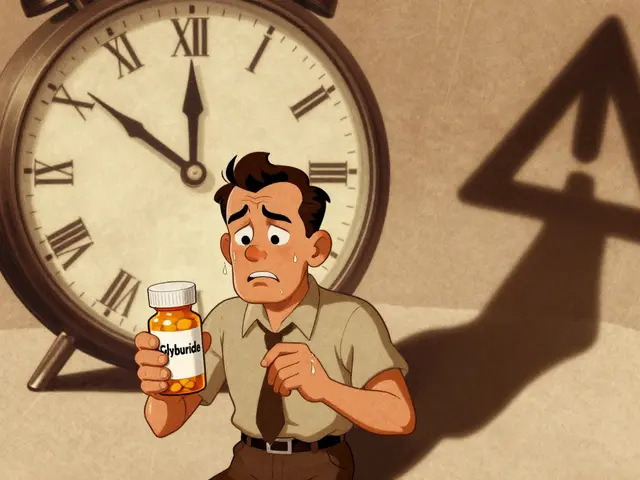
- Sulfonylureas (like glipizide, glyburide): These can cause low blood sugar during illness because you’re not eating. But stopping them isn’t always the answer-some experts argue the risk of hypoglycemia is higher than the risk of lactic acidosis from metformin. Talk to your doctor about whether to reduce the dose.
What You Must Do Every Day When You’re Sick
There’s no room for guesswork. Here’s your daily checklist:
- Check your blood sugar every 2-4 hours. That’s at least 6 times a day. Don’t wait until you feel bad. Set alarms on your phone. Write down each reading.
- Test for ketones if your blood sugar is above 240 mg/dL (13.3 mmol/L). Use urine strips or a blood ketone meter. If your ketones are above 0.6 mmol/L (blood) or 1.5 mmol/L (urine), call your doctor or go to the ER. Don’t wait.
- Stay hydrated. Drink at least 1,500 mL (6-8 cups) of fluid daily. Water is best. Sugar-free drinks like unsweetened tea, broth, or electrolyte solutions (Nuun, Liquid IV) help replace lost salts. Avoid sugary drinks unless you’re treating low blood sugar.
- Keep eating. Even if you’re nauseous, try small bites of carbs: crackers, toast, soup, or applesauce. Your body still needs fuel. If you can’t eat solid food, sip on juice or regular soda (15g carbs every 15 minutes if your sugar is low).
- Never stop insulin. This is non-negotiable. If you’re unsure how much to take, call your provider. Err on the side of giving too much rather than too little.
When to Go to the Hospital
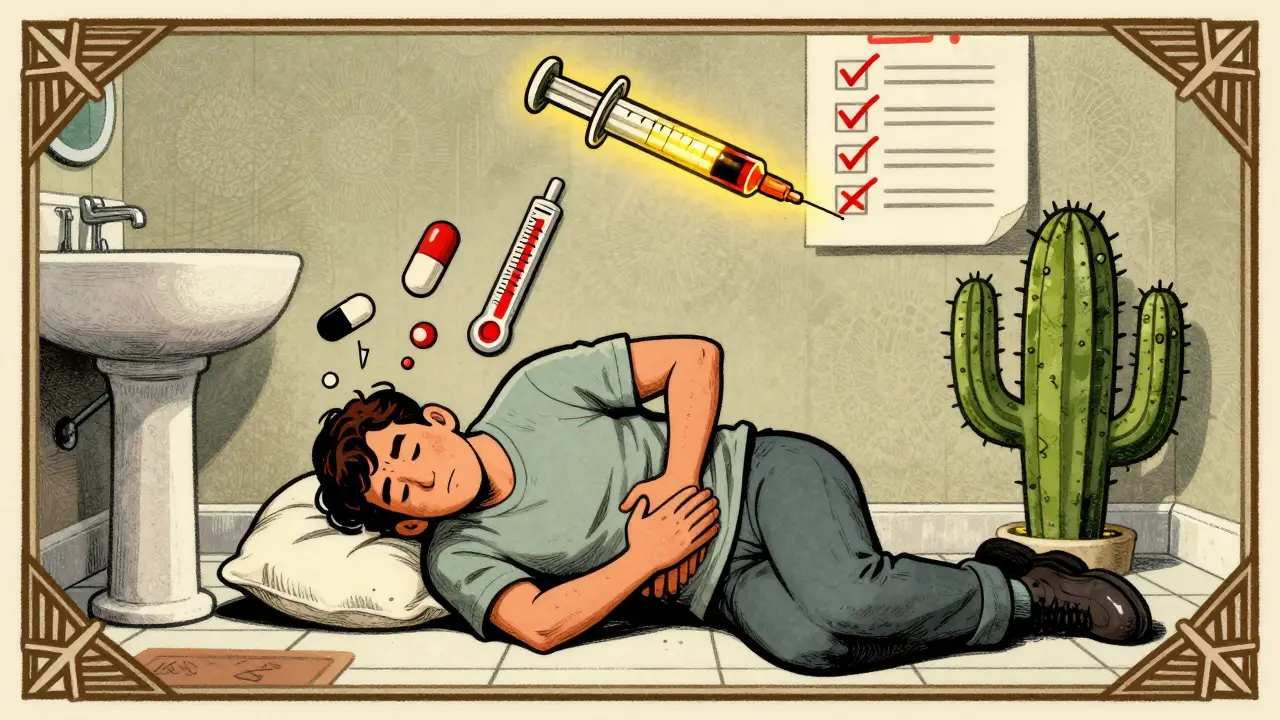
Some signs mean you’re in danger right now. Don’t wait. Don’t call your doctor first-go to the ER.
- Blood sugar below 70 mg/dL and doesn’t improve after 30g of fast-acting carbs (like juice or glucose tabs)
- Ketones above 1.5 mmol/L that don’t drop after 2 hours of fluids and insulin
- Vomiting for more than 4 hours
- Diarrhea for more than 6 hours
- Difficulty breathing, fruity-smelling breath, or confusion
- Little or no urine output, swollen ankles, or extreme fatigue
These are signs of DKA or AKI. Both can kill you within hours if untreated. Emergency rooms see these cases every week. You don’t want to be one of them.
Prepare Before You Get Sick
The best sick day rule? Don’t wait until you’re sick to figure this out.
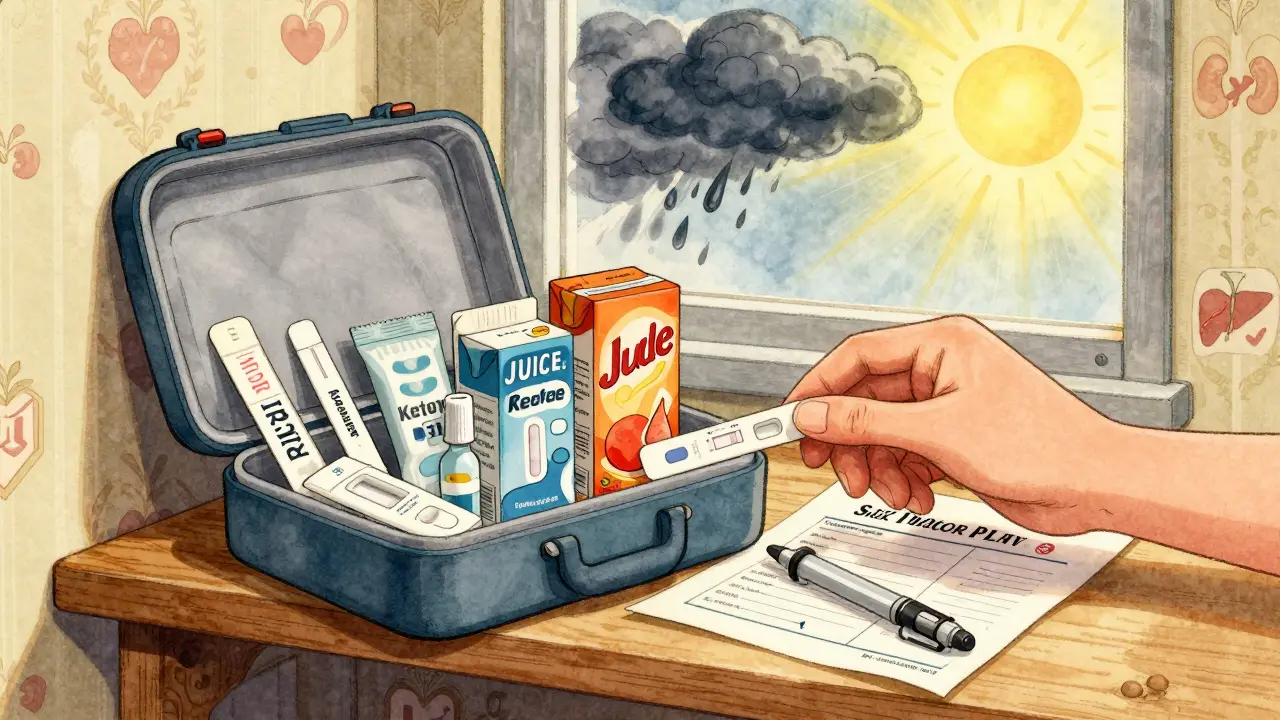
Build a sick-day kit now. Do it before flu season starts. Here’s what to include:
- Glucose meter with 50+ test strips
- Ketone test strips (urine or blood)
- 7-day supply of all your diabetes meds (in original bottles)
- 6 bottles of sugar-free drinks (water, tea, electrolyte solutions)
- 15g fast-acting carbs (glucose tabs, juice boxes, honey packets)
- Electrolyte packets (Nuun, Pedialyte)
- A printed copy of your sick day plan from your doctor
Store it in an easy-to-reach spot. Tell a family member where it is. Practice using the ketone strips. Know your numbers.
Conflicting Advice? You’re Not Alone
Here’s the frustrating part: you might get different advice from your endocrinologist, your primary care doctor, and the ADA website. One provider says keep metformin. Another says stop it. The ADA says stop it during vomiting. The Joslin Clinic says “always take your meds unless told otherwise.”
A 2024 survey found 41% of patients got conflicting instructions from different providers. That’s not your fault. It’s a system failure.
So what do you do? Go with the safest, most evidence-based advice:
- If you’re vomiting or dehydrated → stop metformin and SGLT2 inhibitors
- If you’re drinking less than 1,500 mL/day → pause ACE inhibitors/ARBs
- If your blood sugar is high → keep insulin and test ketones
- If you’re unsure → call your doctor or go to the ER
Don’t let confusion cost you your health. Write down your own plan and keep it in your phone and your sick-day kit.
What About Newer Medications?
GLP-1 receptor agonists (like semaglutide, tirzepatide) are now used by over 22 million Americans. But there’s no clear sick day guidance yet. They don’t cause hypoglycemia or DKA on their own, but they can slow digestion. If you’re vomiting or have nausea from illness, you might not absorb them properly. Most experts say: pause GLP-1 meds during acute illness until you’re eating and drinking normally again.
Watch for updates in 2025-the ADA is expected to release new guidelines for these drugs. Until then, err on the side of caution.
Final Thought: This Is Your Life, Not a Guideline
Diabetes doesn’t take a day off when you’re sick. Neither should your care. Sick day rules aren’t just paperwork-they’re your safety net. The data is clear: following them cuts DKA risk by 73%. But only if you actually do them.
Don’t wait until you’re in the hospital to learn this. Start today. Make your kit. Write your plan. Talk to your doctor. Know your numbers. Your future self will thank you.
Should I stop metformin if I have a stomach bug?
Yes. If you’re vomiting, have diarrhea, or have a fever, stop metformin immediately. These conditions raise your risk of lactic acidosis, a rare but life-threatening condition. Restart metformin only after you’re eating and drinking normally for 24-48 hours, and only after checking your kidney function with your doctor.
Can I still take my blood pressure meds when I’m sick?
It depends. ACE inhibitors and ARBs (like lisinopril or losartan) can cause acute kidney injury if you’re dehydrated. If you’re drinking less than 1,500 mL (6 cups) of fluid in 24 hours, pause these meds until you’re rehydrated. Check with your doctor about when to restart.
Do I need to test for ketones if my blood sugar is normal?
Yes-if you’re on an SGLT2 inhibitor and you’re sick, test for ketones even if your blood sugar is below 240 mg/dL. These drugs can cause euglycemic DKA, where ketones build up even when glucose levels seem okay. Don’t wait for high sugar to check.
What if I can’t keep fluids down?
If you’ve been vomiting for more than 4 hours or can’t sip water without throwing up, go to the ER. You’re at high risk for DKA and AKI. IV fluids and medical supervision are needed. Don’t try to tough it out.
Is it safe to take insulin if I’m not eating?
Yes, it’s safer to take insulin than to skip it. Your body still needs insulin to stop fat breakdown and prevent ketoacidosis. You may need less than usual, but never stop. Talk to your provider about adjusting your basal dose. Skipping insulin during illness is the leading cause of DKA hospitalizations.
How do I know if I’m developing AKI?
Early signs include reduced urine output, swelling in your legs or ankles, extreme fatigue, nausea, or confusion. If you’re on an ACE inhibitor or ARB and you’re dehydrated, your risk goes up fast. If you notice these symptoms, stop your blood pressure meds and get checked immediately.



Write a comment
Your email address will be restricted to us