
ACE Inhibitor Risk Calculator
Assess Your Risk
This tool helps you understand if you're at risk of kidney damage when taking ACE inhibitors. Based on the latest medical guidelines and research.
Risk Factors
Risk Assessment Results
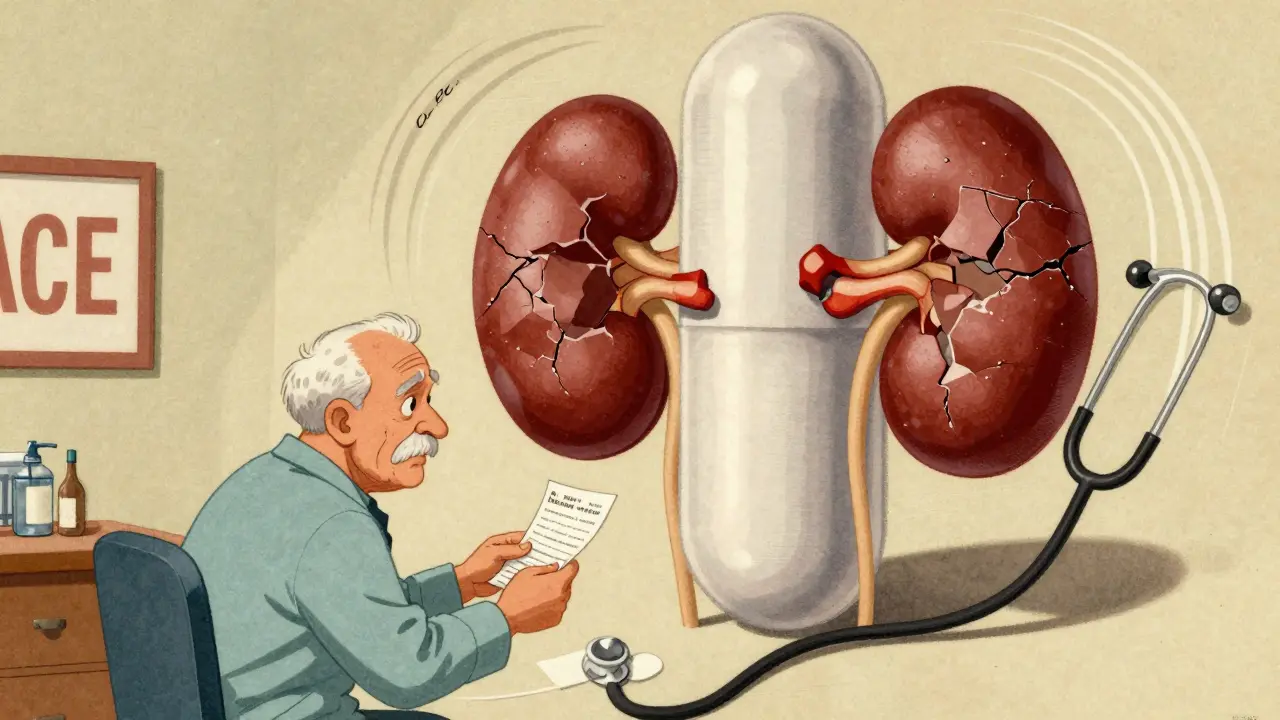
When you take an ACE inhibitor for high blood pressure or heart failure, you expect it to help. But for some people, it can do the opposite - cause sudden, serious kidney damage. This isn’t rare. It’s a well-known, well-documented risk that still catches doctors off guard. If you have renal artery stenosis, taking an ACE inhibitor can shut down your kidney’s ability to filter blood. And once that happens, the damage can be fast, severe, and sometimes permanent.
How ACE Inhibitors Work (and Why That’s a Problem)
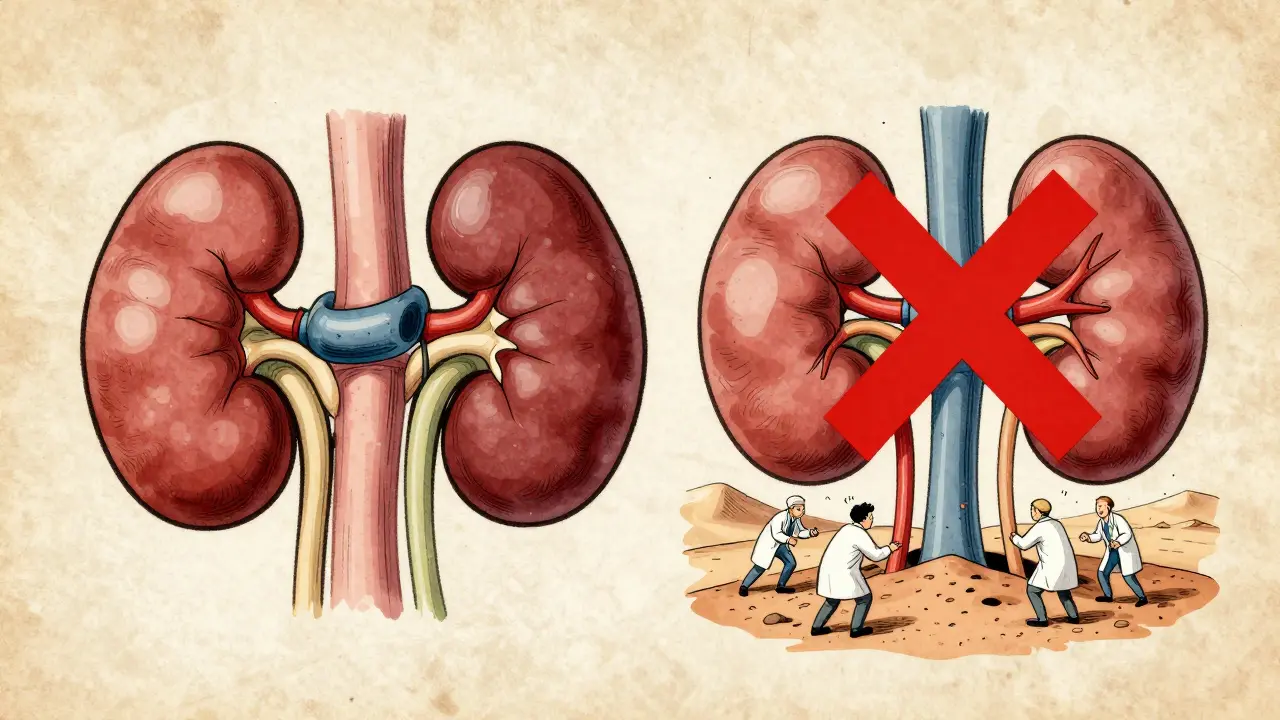
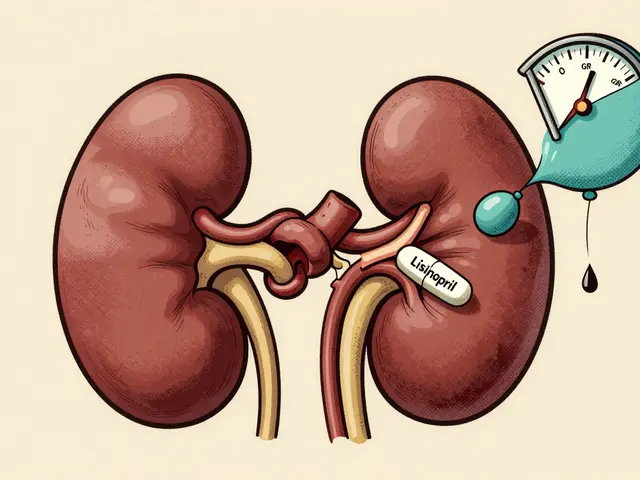
ACE inhibitors - drugs like lisinopril, enalapril, and ramipril - lower blood pressure by blocking a chemical called angiotensin II. That’s good for most people. It relaxes blood vessels, reduces fluid buildup, and takes pressure off the heart. But in the kidneys, angiotensin II does something critical: it keeps the outflow tube (the efferent arteriole) tight. This tightness maintains pressure inside the filtering units (glomeruli), so the kidney can still clean blood even when blood flow is low.
Now imagine one or both of your renal arteries are narrowed. That’s renal artery stenosis. Blood can’t flow in easily. Your kidney senses this and pumps out more renin. That triggers angiotensin II production. That angiotensin II squeezes the efferent arteriole. That squeeze keeps the glomerular pressure high enough for filtration. It’s a survival trick.
When you take an ACE inhibitor, you block angiotensin II. The efferent arteriole relaxes. Pressure drops. Suddenly, the kidney’s filtering system loses its pressure support. Glomerular filtration rate (GFR) can plunge 25-30%. Serum creatinine - a marker of kidney function - spikes. In some cases, it jumps more than 30% in just 7-10 days.
Who’s at Risk?
This isn’t a risk for everyone. It’s specific:
- Bilateral renal artery stenosis - narrowing in both kidneys
- Unilateral stenosis in a single functioning kidney - if you only have one working kidney and it’s narrowed
If you have one narrowed kidney and the other one is normal, ACE inhibitors are usually safe. The healthy kidney picks up the slack. But if both sides are affected - or if you’re relying on just one - the system collapses when you block angiotensin II.
Who’s most likely to have this? People with:
- Severe, sudden high blood pressure (especially over 60)
- Unexplained kidney function decline
- An abdominal bruit - a whooshing sound heard with a stethoscope over the belly
- Diabetes with worsening kidney function
- History of atherosclerosis or smoking
Studies show that about 6.8% of hypertensive patients with kidney problems have significant renal artery narrowing. In people with these risk factors, the chance of kidney injury from an ACE inhibitor jumps to 15-20% if the stenosis is undiagnosed.
The Science Behind the Danger
This isn’t guesswork. It’s been proven in lab studies for decades. In 1988, researchers used micropuncture techniques in dogs with induced renal artery stenosis. They gave captopril - one of the first ACE inhibitors. In the narrowed kidney, glomerular pressure dropped from 48.5 mm Hg to 35.7 mm Hg. That’s a 26% fall. In normal kidneys? Almost no change.
Later studies confirmed this in humans. One 2001 study using micropuncture in patients found that angiotensin II increased efferent arteriolar resistance by 37.5% in stenotic kidneys - compared to just 8.3% in healthy ones. That’s how critical it is. Block that, and you lose the pressure cushion.
When GFR drops this fast, creatinine rises. That’s the red flag. NICE guidelines in the UK recommend checking kidney function 10 days after starting an ACE inhibitor. If creatinine jumps more than 30%, you stop the drug. That’s not a suggestion - it’s a safety rule.
What Happens If You Ignore It?
Most of the time, the kidney damage is reversible. Stop the ACE inhibitor, and function often returns to baseline within days or weeks. But if low blood flow to the kidney lasts more than 72 hours, scarring can begin. Permanent loss of kidney function is possible.
A 2019 study tracked 43 patients with bilateral renal artery stenosis who were started on ACE inhibitors. Eighteen of them developed acute kidney injury. Three needed dialysis. Two never recovered full kidney function. All of them had no prior diagnosis of stenosis.
Even more troubling: a 2020 study found that over 22% of patients with known bilateral renal artery stenosis were still being prescribed ACE inhibitors in primary care. That’s not ignorance - it’s oversight. And it’s dangerous.
What About ARBs?
Some doctors think switching to an ARB (like losartan or valsartan) is safer. It’s not. ARBs block the same receptor angiotensin II binds to. The result? The same drop in efferent arteriolar resistance. The same risk of acute kidney injury.
The 2019 KDIGO guidelines are clear: bilateral renal artery stenosis or stenosis in a single kidney is a contraindication for both ACE inhibitors and ARBs. There’s no safe alternative in this scenario.
How to Stay Safe
If you’re being considered for an ACE inhibitor, ask:
- Have I been checked for renal artery stenosis?
- Do I have a history of sudden high blood pressure or kidney issues?
- Was an ultrasound done before starting this drug?
Screening is simple. A renal artery duplex ultrasound is non-invasive, widely available, and 86% sensitive, 92% specific for detecting significant narrowing. It’s recommended before starting ACE inhibitors in high-risk patients.
And if you’re already on an ACE inhibitor:
- Get your creatinine and potassium checked before starting
- Check again at day 7-10
- Check again after any dose increase
If creatinine rises over 150 micromol/L, NICE says you need specialist supervision. If it jumps more than 30%, stop the drug immediately.
The Bottom Line
ACE inhibitors are powerful, life-saving drugs - for most people. But they are not safe for everyone. Renal artery stenosis turns them from protectors into threats. The mechanism is clear, the evidence is solid, and the risk is real.
If you have high blood pressure and kidney problems, don’t assume the medication is automatically right for you. Ask for screening. Ask for testing. Ask if your kidneys are at risk. The answer could save your kidneys - and your life.







Write a comment
Your email address will be restricted to us