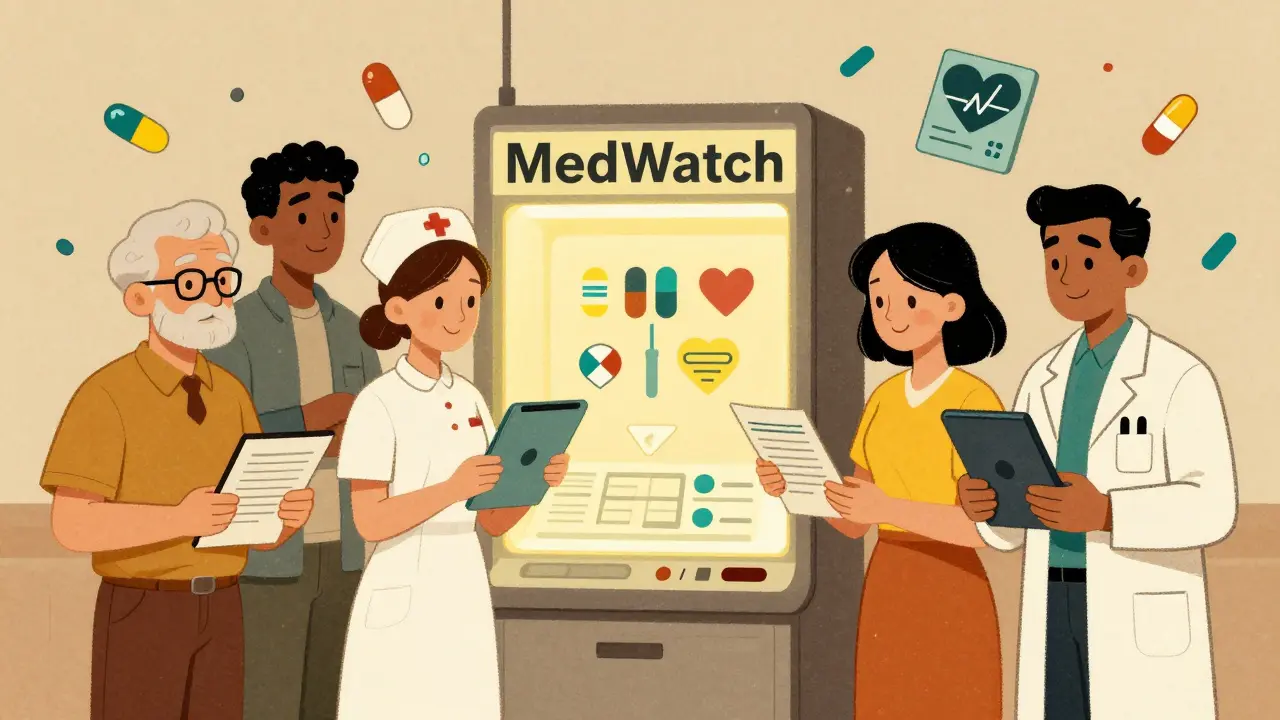
Every year, millions of people take prescription drugs, over-the-counter medicines, and medical devices without issue. But for some, things go wrong. A rash that won’t go away. A sudden drop in blood pressure. An unexpected reaction after taking a new pill. These aren’t just bad luck-they’re adverse drug events, and they matter. The FDA needs to know about them. That’s where MedWatch comes in.
MedWatch isn’t a hidden government project. It’s the official system the FDA uses to track harmful side effects from drugs, medical devices, and other products. Think of it as a national early warning system. Without reports from people like you, the FDA wouldn’t know when a medicine becomes dangerous after it’s already on the market. Clinical trials only catch the most common side effects. The rare ones? The ones that show up after years of use? Those come from real-world reports. And right now, fewer than 1 in 10 adverse events are reported. That’s a huge gap. Your report could be the one that triggers a safety update, a warning label, or even a drug recall.
Who Can Report to MedWatch?
You don’t need to be a doctor or a pharmacist to report. Anyone can. That includes patients, family members, caregivers, nurses, pharmacists, and other healthcare workers. The FDA encourages reports from everyone because different people see different parts of the story. A patient might notice a new headache after starting a pill. A nurse might see a pattern of low blood pressure in several patients on the same drug. A pharmacist might spot a dangerous interaction between two medications. All of it counts.
There’s one important exception: vaccines. If you’re reporting a side effect from a vaccine like flu, COVID-19, or shingles, you must go to VAERS (Vaccine Adverse Event Reporting System), not MedWatch. Same goes for animal drugs-those go to the Center for Veterinary Medicine. MedWatch covers human prescription drugs, over-the-counter medicines, medical devices, dietary supplements, cosmetics, and even some cannabis-derived products.
How to Report: Two Main Ways
There are two ways to report: online or by mail. Both are free, confidential, and available 24/7.
Online reporting (recommended): Go to FDA.gov/MedWatch. Click on “Voluntary Reporting.” You’ll be guided through a form that asks for:
- Your contact info (name, phone, email-optional if you’re a patient)
- The patient’s age, sex, and weight
- The name of the drug or product you’re reporting
- When you started and stopped taking it
- A clear description of what happened: symptoms, how long they lasted, and if they improved after stopping the drug
- Any other medications or supplements the patient was taking
- Any lab tests or hospital visits related to the event
You don’t need to prove the drug caused the problem. Just describe what happened. The FDA doesn’t expect you to be a medical expert. They just want the facts. The form takes about 15 to 20 minutes to complete. You can save your progress and come back later-unlike older versions, the online system now has an auto-save feature.
By mail or fax: If you prefer paper, download FDA Form 3500 (for healthcare professionals) or Form 3500B (for consumers). You can find both on the MedWatch site. Fill them out, sign them, and mail them to:
FDA MedWatch
5600 Fishers Lane
Rockville, MD 20857-0001
You can also fax them to 1-800-FDA-0178. Keep a copy for your records.
What Information Matters Most?
Not every detail is equally important. The FDA says the most helpful reports include:
- Timing: When did the reaction start? Did it happen hours after the first dose? Or after a month of use?
- What happened: Be specific. “Dizziness” is vague. “Sudden loss of balance, fell, hit head, needed stitches” is useful.
- What changed: Did symptoms get better after stopping the drug? Worse after restarting it? That’s a big clue.
- Other meds: List everything-prescription, OTC, supplements, herbal products. Drug interactions are common causes of adverse events.
- Medical history: Did the patient have kidney disease, liver issues, or allergies? These can affect how the body handles drugs.
Don’t worry if you don’t have all the lab results or doctor’s notes. Just write what you know. The FDA has teams that follow up when more information is needed. But if you have access to a medical record, include it. Even a photo of a prescription label can help.
What Happens After You Submit?
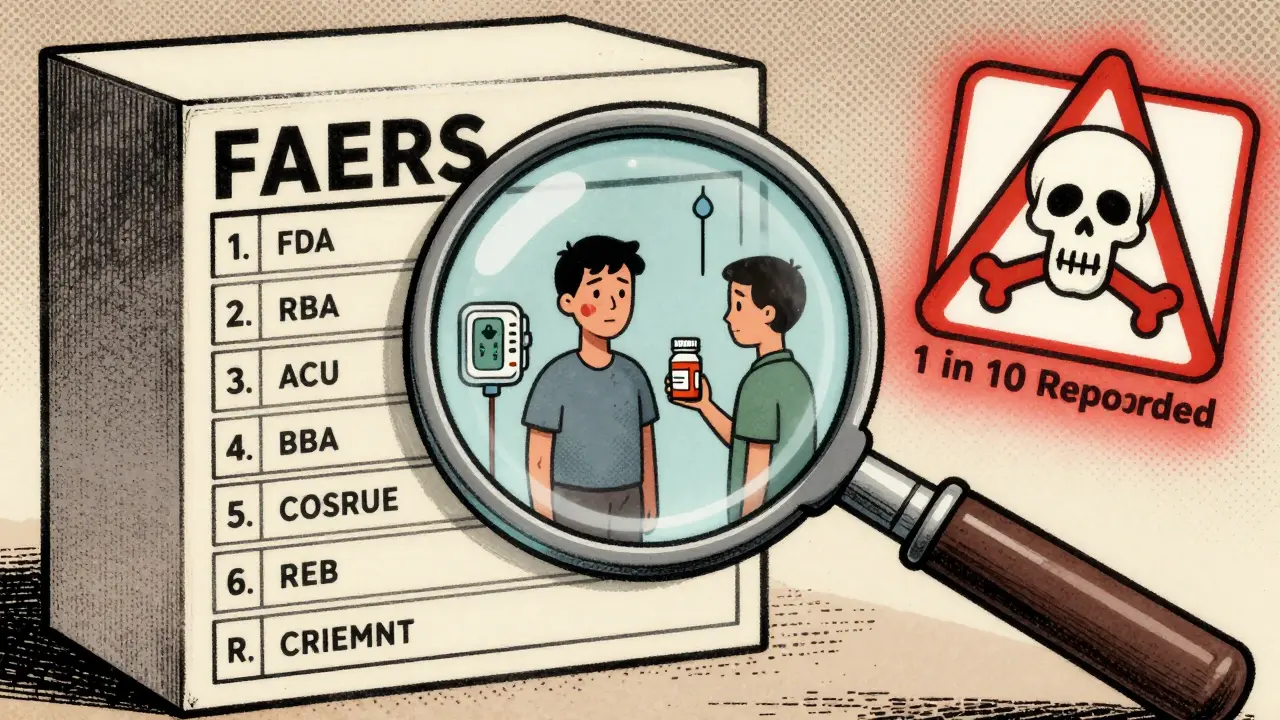
Once you submit your report, it goes into the FDA’s database called FAERS (FDA Adverse Event Reporting System). This system receives over 1.3 million reports every year. About 95% of them come in electronically now. Each report is coded using a standardized medical dictionary called MedDRA. This lets the FDA spot patterns-like if 50 different people report the same rare skin reaction after taking the same drug.
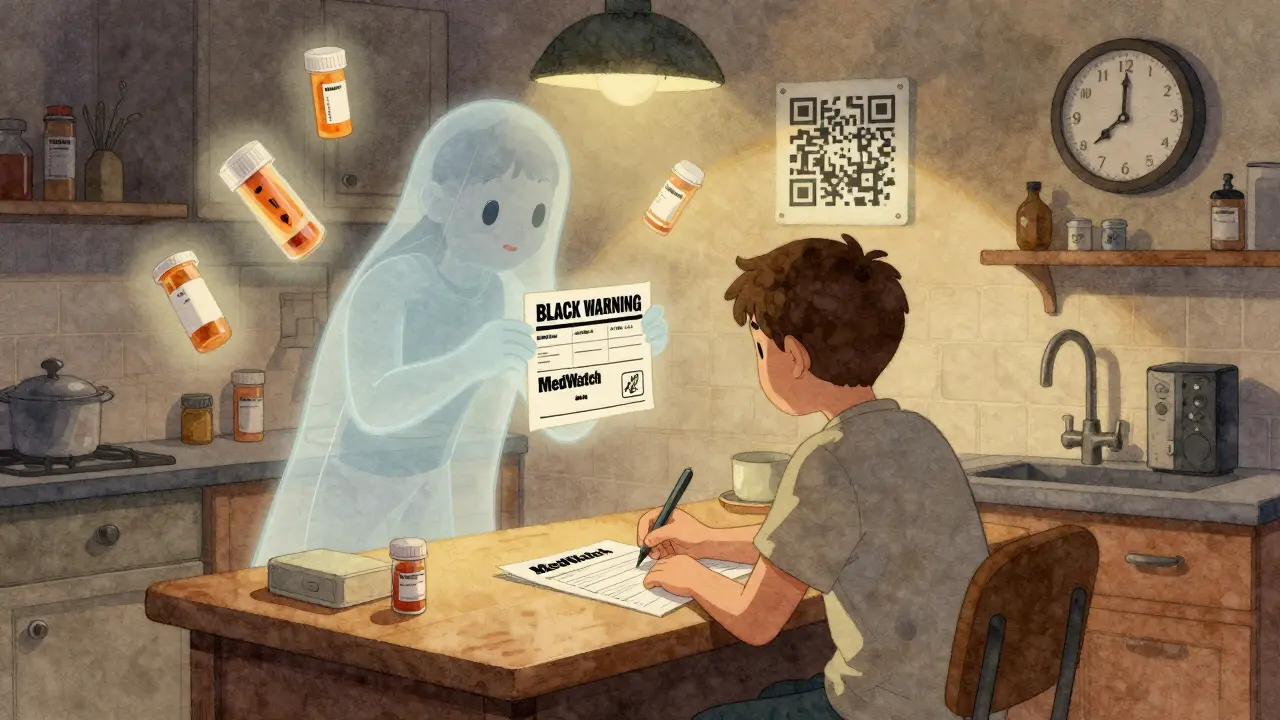
You’ll get an email confirmation within 21 days. That’s it. The FDA doesn’t call you back. They don’t tell you if your report led to a change. But here’s the thing: your report is part of a bigger picture. In 2021, MedWatch data led to 47% of all drug safety label updates. One example? A black box warning added to SGLT2 inhibitors after 1,247 reports linked them to a rare, life-threatening infection called Fournier’s gangrene. That warning could save lives.
And if your report is part of a pattern? The FDA may issue a safety alert, update the drug’s label, or even require the manufacturer to do more studies. Sometimes, a drug gets pulled. All of it starts with a report.
Why So Many Reports Are Still Missing
Despite how simple it is, most adverse events go unreported. The FDA estimates only 1% to 10% of real events are reported. Why?
- Time: Doctors say filling out forms takes too long. One study found it took 22 minutes for paper reports. Even online, it’s 15-20 minutes. That’s a lot in a busy clinic.
- Uncertainty: “Was it the drug or something else?” Many people don’t report because they’re not sure.
- Confusion: Some think the FDA will contact them. Others fear legal trouble. Neither is true.
- Low awareness: Only 28% of consumers even know MedWatch exists.
But here’s the fix: you don’t need to be certain. The FDA says: if you think a drug might have caused harm, report it. Even if you’re wrong. Better to report and be wrong than to stay silent and miss a pattern.
Special Tools for Healthcare Providers
If you’re a doctor, nurse, or pharmacist, you’re not alone. Many hospitals and clinics now integrate MedWatch reporting directly into their electronic health records (EHR). Systems like Epic, Cerner, and the Indian Health Service’s RPMS can auto-generate a MedWatch form when you document an adverse reaction. One hospital reported cutting reporting time from 25 minutes down to 8 minutes.
Some providers use the FDA’s SPL gateway, which lets EHRs send reports automatically. But even if your system doesn’t do it, you can still use Form 3500 online. It’s designed for professionals and asks for more detail-like lot numbers, device models, and exact dosing. If you’re reporting a device, like a pacemaker or insulin pump, include the model number and serial number if you have them.
What’s Changing in 2026?
The FDA isn’t standing still. In 2023, they launched a pilot AI tool that reads clinical notes and auto-fills half the MedWatch form. By 2025, all healthcare facilities will be required to report electronically. The 21st Century Cures Act is pushing this change hard.
They’ve also added new fields to Form 3500B for cannabis-derived products. Reports for these have jumped 327% since 2020. And starting in 2024, 30 major pharmacy chains are handing out QR codes at the counter. Scan it, report in 90 seconds. The goal? Boost consumer reporting by 15-20%.
There’s still work to do. Experts warn that if we don’t fix underreporting, we’ll keep missing warning signs. But every report counts. Even one.
Need Help? Here’s Where to Go
- MedWatch website: FDA.gov/MedWatch - all forms, guides, and training
- Toll-free number: 1-800-FDA-1088 - staffed 24/7, 95% of calls answered in under 30 seconds
- MedWatch Learn: Free online training with 12 modules. Over 42,000 healthcare workers completed it in 2022.
- MedWatch Express: A new mobile app pilot in 15 teaching hospitals. Reduces reporting time by 65%.
If you’re unsure whether to report, just do it. The FDA says: better safe than silent.
Do I need to prove the drug caused the adverse event?
No. You don’t need to prove causation. The FDA only asks for a clear description of what happened, when it happened, and what the patient was taking. Even if you’re unsure, report it. The FDA’s experts analyze patterns across thousands of reports to determine if a drug is likely involved.
Can I report anonymously?
Yes. If you’re a patient or family member, you can leave out your name and contact info. The FDA doesn’t require personal details for voluntary reports. However, if you leave contact info, they may follow up if they need more information, which can help improve the accuracy of the report.
What if I report and nothing happens?
Your report still matters. The FDA doesn’t act on single reports. They look for trends. One report might seem insignificant, but if 50 others report the same issue, it becomes a red flag. Your report adds to the evidence. Many drug safety updates come from dozens or hundreds of similar reports over time.
Are there penalties for not reporting?
For patients and consumers: no. Reporting is voluntary. For manufacturers, hospitals, and pharmacies: yes. By law, they must report serious adverse events within 10 days. Failure to do so can result in fines or legal action. But if you’re a regular person, you’re not legally required to report-even though your report could save someone’s life.
Can I report side effects from supplements or herbal products?
Yes. MedWatch accepts reports for dietary supplements, herbal remedies, and even cosmetics. These products aren’t reviewed by the FDA before sale, so adverse event reports are especially important. Include the product name, brand, lot number (if available), and ingredients if you have them.
How long does it take for the FDA to act on a report?
There’s no fixed timeline. The FDA reviews reports continuously. If a pattern emerges-say, 20 reports of liver damage linked to a new diabetes drug-they may issue a safety alert within weeks. But if the issue is rare or unclear, it could take months or years to confirm. That’s why consistent reporting matters.





Write a comment
Your email address will be restricted to us