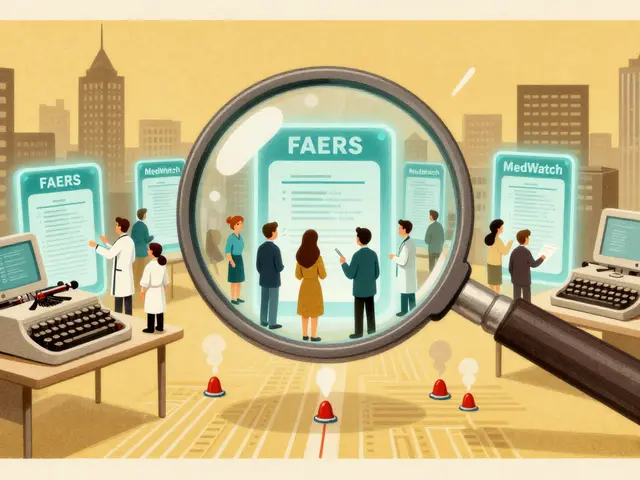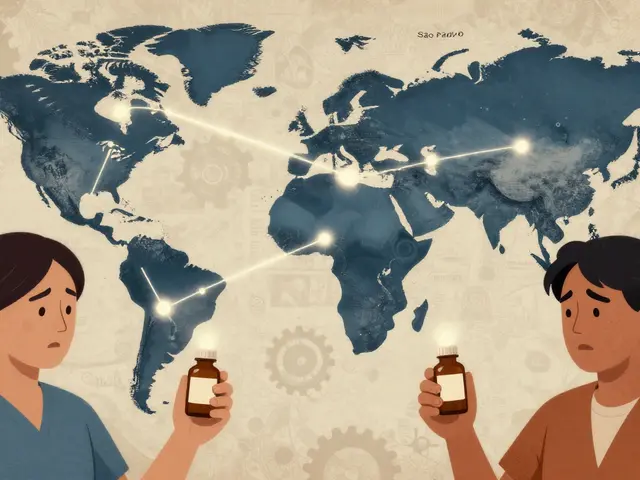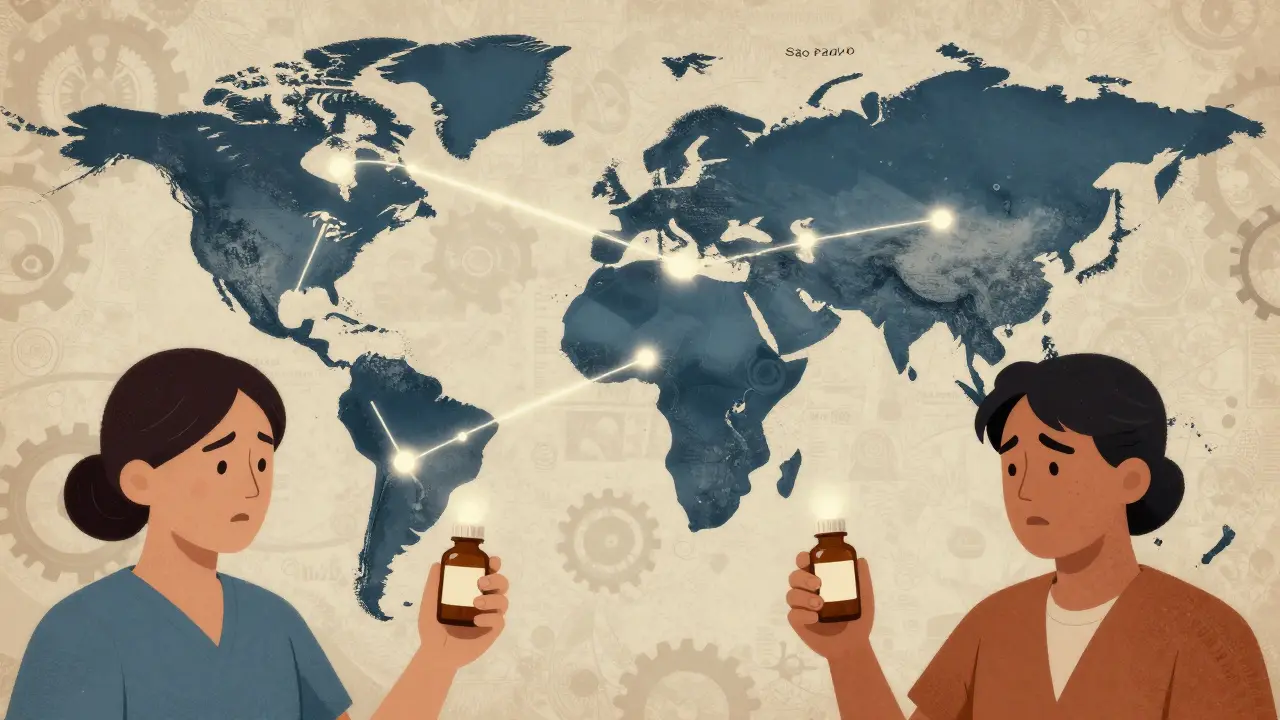
Imagine a patient in Brazil takes a new medication and experiences a severe reaction. Now imagine that same reaction happening to a patient in Japan. If these two events aren't connected quickly, thousands more people could be at risk before anyone realizes the danger. This is exactly why international pharmacovigilance matters. It’s not just about paperwork; it’s about connecting the dots across borders to keep medicines safe for everyone.
We’ve made huge strides since the International Council for Harmonisation (ICH) was formed in 1990. But here’s the reality: we still have a fragmented system. Different countries use different rules, timelines, and data formats. This creates delays, costs billions of dollars, and most importantly, slows down our ability to detect safety signals. The good news? We’re finally moving toward true harmonization, driven by technology and urgent global health needs.
The Core Goal: Why Harmonization Matters
At its heart, pharmacovigilance is the science of detecting, assessing, understanding, and preventing adverse effects or any other drug-related problems. When this process is harmonized internationally, we eliminate redundancy. Instead of submitting five different versions of the same safety report to five different agencies, companies can submit one standardized report that meets global criteria.
The impact is measurable. The FDA estimates that harmonization reduces time-to-market by 15-20%. More critically, it prevents unnecessary duplication of clinical trials involving approximately 2.5 million patients annually. That means fewer people are exposed to potential risks during testing phases, and safer drugs reach patients faster. For generic medications, which make up the bulk of prescriptions worldwide, this efficiency is vital. It ensures that when a brand-name patent expires, the generic version undergoes rigorous, consistent safety scrutiny without bureaucratic bottlenecks.
Regional Differences: The Current Landscape
Despite progress, significant gaps remain. Let’s look at how major regulators handle serious unexpected adverse events:
- United States (FDA): Enforces a strict 15-day rule for serious unexpected adverse events. However, expedited reporting is often restricted to key sponsor-adjudicated related events. Risk Evaluation and Mitigation Strategies (REMS) are reserved for high-risk products, affecting only about 1.2% of approved drugs.
- European Union (EMA): Mandates comprehensive expedited reporting of all serious events under Good Pharmacovigilance Practices (GVP) Module V. Every new drug requires a detailed Risk Management Plan (RMP).
- Japan (PMDA): Uses the J-STAR system to process real-world data from 12 million patient records. They launched AI-powered prediction models in 2023 that reduced false positive signals by 25%.
- China (NMPA): Requires local adverse event reporting within 15 days, creating duplication for multinational companies who must also meet global standards.
This divergence creates operational chaos. A 2023 PharmaExec survey found that 82% of pharmacovigilance managers cite persistent challenges with regional variations. One professional on Reddit noted spending 35-40% of their time just adapting safety reports for different regions. That’s nearly half a workweek lost to formatting, not analysis.
| Region/Agency | Reporting Timeline (Serious Events) | Risk Management Requirement | Real-World Data Integration |
|---|---|---|---|
| USA (FDA) | 15 days (strict) | REMS for high-risk only (~1.2% of drugs) | Sentinel Initiative (300M records) |
| EU (EMA) | Variable (GVP Module V) | Mandatory RMPs for all new drugs | DARWIN EU (100M records) |
| Japan (PMDA) | Aligned with ICH | Post-market surveillance via J-STAR | AI-driven ADR prediction models |
| China (NMPA) | 15 days (local) | Evolving framework since 2020 | Limited infrastructure integration |

Technology as the Great Equalizer
If regulations are lagging, technology is sprinting ahead. Artificial intelligence and machine learning are transforming how we detect safety signals. Since 2022, both the EMA and FDA have implemented ML algorithms that detect signals 30-40% faster than traditional manual methods. Japan’s PMDA took it further in 2023 with AI models that cut false positives by 25%, allowing toxicologists to focus on genuine threats rather than noise.
But technology isn’t just about speed; it’s about standardization. The Individual Case Safety Report (ICSR) electronic transmission standard has been adopted by 89% of the top 50 pharmaceutical companies since 2020. This shift reduced transmission errors by 63%. Imagine if every hospital, clinic, and pharmacy used the same digital language to report side effects. That’s the promise of the WHO’s Global Smart Pharmacovigilance Strategy, currently being revised after a major meeting in New Delhi in October 2024. The goal? Common data standards across 150 member states by 2027.
However, there’s a catch. Real-world data (RWD) utilization varies wildly. The EU mandated electronic health record (EHR) integration for signal detection in 2021. In contrast, emerging markets like Brazil and South Africa still lack the infrastructure to process more than 15% of potential RWD sources. This digital divide means that safety signals originating in low-resource settings may go unnoticed until they become crises.
The Human Element: Skills and Resources
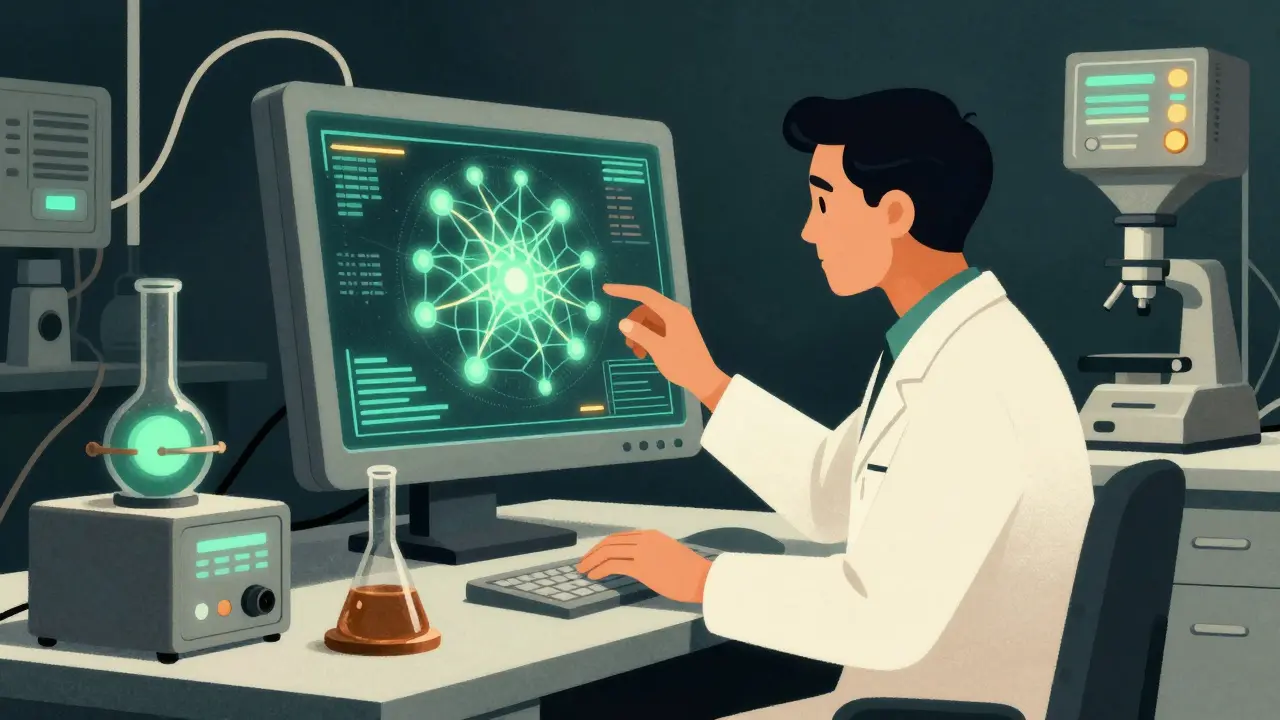
Harmonization isn’t just a tech problem; it’s a people problem. The role of a pharmacovigilance specialist has changed dramatically. In 2024, 76% of leading pharmaceutical companies required staff to have basic machine learning literacy. You can’t manage an AI-driven safety database if you don’t understand how the algorithm weights data points.
Yet, resource gaps persist. A 2022 Access to Medicine Foundation survey revealed that 74% of pharmacovigilance staff in low- and middle-income countries reported insufficient resources to implement even basic ICH standards. Compare that to only 8% in high-income countries. This disparity threatens the integrity of global safety monitoring. If a drug causes issues primarily in regions with weak reporting systems, those signals might never reach the global database.
Data standardization remains another hurdle. MedDRA coding inconsistencies caused 18-22% of rejected safety reports in EMA submissions analyzed in 2023. When coders disagree on whether a symptom is "headache" or "migraine," the signal gets buried. Training and unified terminology are essential fixes.
Market Dynamics and Future Outlook
The pharmacovigilance industry is booming. Valued at $5.8 billion in 2023, it’s projected to hit $11.2 billion by 2028, growing at a CAGR of 14.1%. Five major players-Parexel, IQVIA, PPD, ICON, and Syneos Health-control 62% of the outsourcing market. But the fastest-growing segment is AI-driven safety monitoring, expanding at a 28.5% CAGR.
Looking ahead, convergence is accelerating. In January 2024, the FDA, EMA, and PMDA established a Joint Pharmacovigilance Task Force. They’ve already aligned 78% of their risk management plan requirements for novel biologics. The ICH announced a new initiative in March 2024 to harmonize AI validation standards, with implementation expected by Q2 2026. Dr. Sabine Strauss, Chair of the ICH Safety Expert Working Group, emphasized that AI integration could reduce signal validation time from 60 days to under 15 days.
Deloitte projects that successful harmonization could save $2.3 billion annually in global pharmacovigilance costs while preventing 1,200-1,500 adverse drug reaction-related deaths per year through faster detection. But achieving this requires addressing the $1.8 billion funding gap for infrastructure in low- and middle-income countries. Without closing this gap, global harmonization will remain incomplete.
What is the primary purpose of international pharmacovigilance harmonization?
The main goal is to create consistent safety monitoring standards that prevent redundant reporting, accelerate signal detection, and enhance global patient safety. By aligning regulations, we reduce the time it takes to identify dangerous side effects and ensure that medicines are safe across all borders, not just in specific regions.
How do reporting timelines differ between the FDA and EMA?
The FDA enforces a strict 15-day rule for serious unexpected adverse events but often limits expedited reporting to key adjudicated events. The EMA, under GVP Module V, mandates comprehensive expedited reporting for all serious events and requires Risk Management Plans for every new drug. This difference forces companies to maintain separate workflows for each region.
What role does AI play in modern pharmacovigilance?
AI and machine learning are revolutionizing signal detection. Algorithms used by the FDA and EMA detect safety signals 30-40% faster than manual methods. Japan’s PMDA uses AI to reduce false positive signals by 25%. AI helps process vast amounts of real-world data, identifying patterns that human reviewers might miss or take weeks to find.
Why is there a disparity in pharmacovigilance infrastructure between developed and emerging markets?
Emerging markets often lack the financial resources and technical infrastructure to implement advanced safety monitoring systems. While 95% of EU and US companies fully implement ICH E2 guidelines, only 42% in emerging markets do. This gap means safety signals from these regions may be delayed or missed, posing a risk to global public health.
What is the ICH E2 series of guidelines?
The ICH E2 series defines international standards for clinical safety data management. It includes guidelines for adverse event reporting (E2B), risk management plans (E2E), and periodic safety update reports (PSURs). These guidelines help ensure that safety data is collected and presented consistently across different regulatory jurisdictions.
How does harmonization benefit generic drug manufacturers?
For generic manufacturers, harmonization simplifies the approval process by reducing duplicate safety assessments. It ensures that generics undergo the same rigorous safety scrutiny as brand-name drugs but without redundant bureaucratic steps. This leads to faster market entry and lower costs, making affordable medicines more accessible globally.