Have you ever looked at the expiration date on a medicine bottle or a food package and wondered what actually happens after that day passes? It is not just a random number picked by a manufacturer. That date represents the end of a product's guaranteed safety and effectiveness. When we talk about stability and shelf life, we are really discussing how long a product can hold up against time, temperature, and light before it starts to break down. This breakdown, known as degradation, is the silent enemy of quality control in both pharmaceuticals and food.
For consumers, this means trusting that the pill you take for your heart condition or the soup you heat up for dinner is exactly what it says it is. For manufacturers and regulators, it is a complex web of science designed to prevent harm. If a drug degrades, it might stop working entirely or, worse, turn into something toxic. If food spoils, it can cause serious illness. Understanding these processes helps us see why those storage instructions matter so much.
The Science Behind Stability Testing
At its core, stability testing answers one question: Does this product stay safe and effective over time? According to definitions used by major labs like Kappa Laboratories, a product must retain its original properties within specified limits throughout its storage period. This isn't guesswork. It follows strict international rules set by the International Council for Harmonisation (ICH). The current standard, ICH Q1A(R2), has been the backbone of global stability testing since 2003.
Regulators like the U.S. Food and Drug Administration (FDA) and the European Medicines Agency (EMA) require manufacturers to prove their products are stable before they hit the shelves. The FDA mandates this under 21 CFR 211.166. Essentially, companies cannot sell a drug without showing data that proves it will remain potent and pure until the expiration date printed on the label. This protection is critical because patients rely on consistent dosing to manage chronic conditions.
Who sets the rules for stability testing?
Global standards are largely defined by the International Council for Harmonisation (ICH), specifically guideline Q1A(R2). National bodies like the FDA in the US and EMA in Europe enforce these rules through regulations such as 21 CFR 211.166.
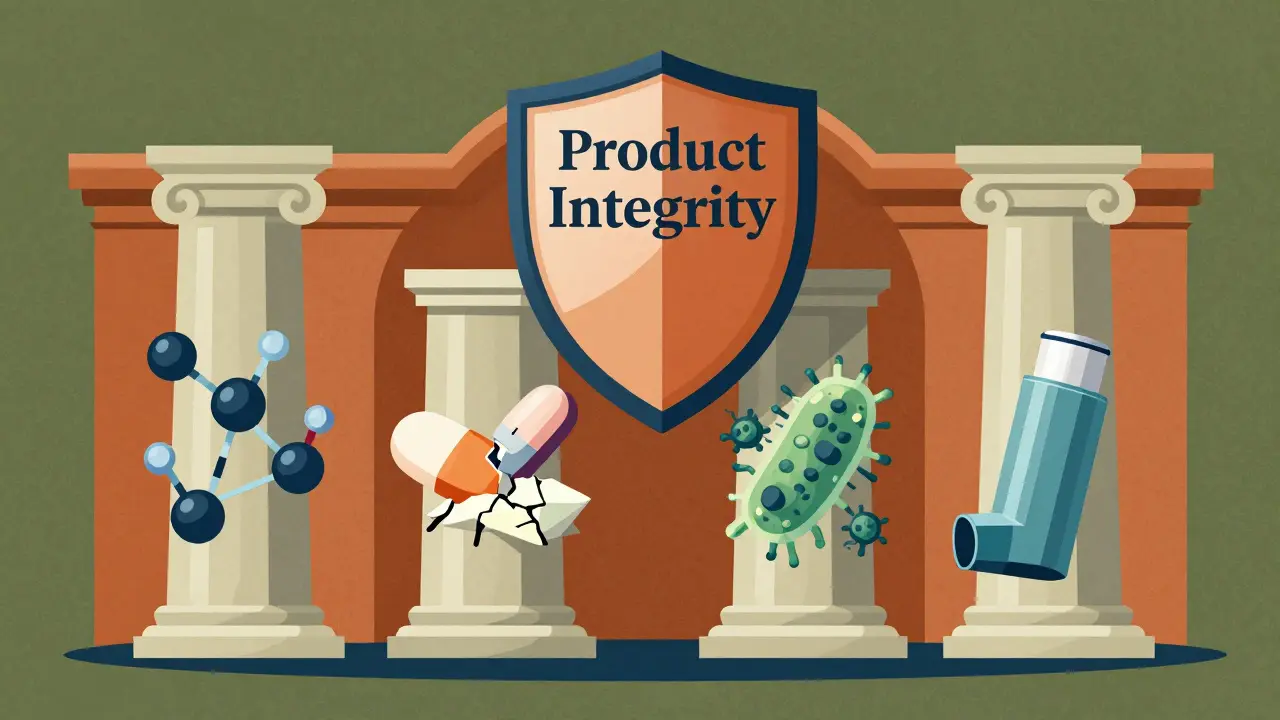
Four Pillars of Product Integrity
When scientists test a product, they look at four specific areas of stability. Ignoring any one of these can lead to dangerous failures. First is chemical stability. This checks if the active ingredients are breaking down into other compounds. Labs use High Pressure Liquid Chromatography (HPLC) to detect even tiny amounts of impurities. For unknown impurities, the limit is often set at 0.1% according to ICH Q3B guidelines. If a drug molecule splits apart, it might lose its ability to treat disease.
Second is physical stability. A tablet should look like a tablet, not a powder. This includes checking color, smell, and texture. For newer medicines like nanomedicines, particle size is crucial. Dr. Mansoor Khan from Texas A&M University notes that if nanoparticles clump together beyond 200nm, they can no longer reach target cells effectively. Third is microbiological stability. This ensures bacteria and mold don't grow in the product. Non-sterile items must have fewer than 100 colony-forming units per gram (CFU/g), while sterile injectables need a sterility assurance level of 10^-6.
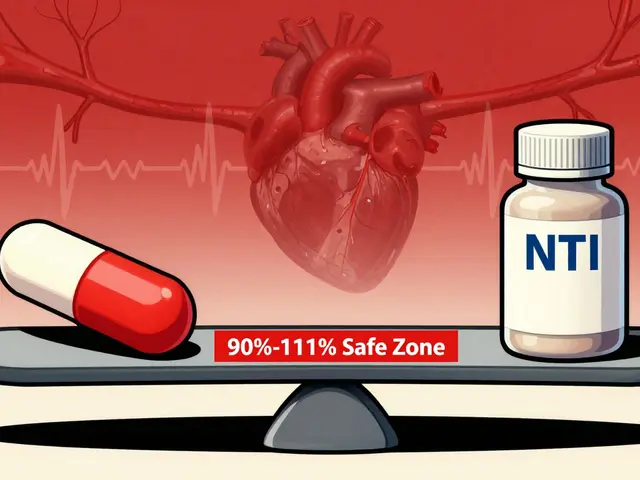
The fourth pillar is functional stability. This applies mostly to delivery systems like inhalers or insulin pens. Even if the drug inside is chemically perfect, the device must deliver the right dose. For metered-dose inhalers, the dose must be between 90% and 110% of the label claim. If the mechanism fails, the patient gets the wrong amount of medicine, which can be life-threatening.
Generic Drugs: The Hidden Risks
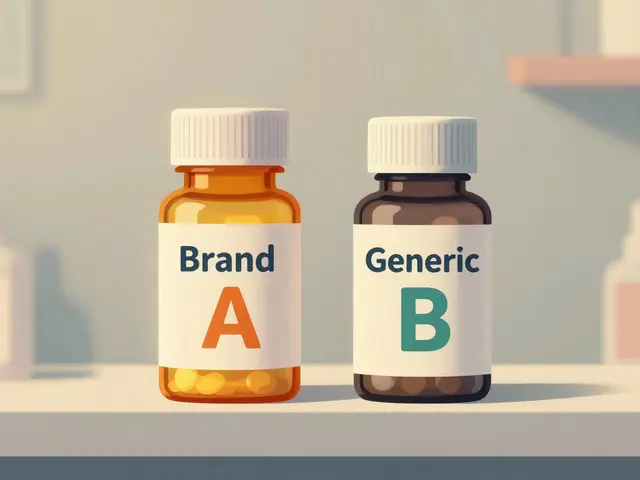
Here is where things get tricky. Generic drugs are supposed to be identical to brand-name drugs, but they often use different inactive ingredients (excipients) or manufacturing methods. These differences can change how a drug degrades. A 2020 FDA study found that 17.3% of generic levothyroxine products had stability issues that the brand-name version (Synthroid) did not have. The main culprit was often poor moisture protection.
This matters because thyroid medication requires precise dosing. If a generic tablet absorbs moisture and breaks down faster than expected, a patient’s hormone levels could swing wildly. While generics are essential for affordability, they face unique stability challenges. Manufacturers must prove that their specific formulation holds up just as well as the reference product, even if the packaging or fillers differ slightly.
| Factor | Brand-Name Drugs | Generic Drugs |
|---|---|---|
| Excipients | Consistent, proprietary formulas | Vary by manufacturer, affecting stability |
| Moisture Protection | Highly optimized packaging | Often less robust, leading to higher failure rates |
| Regulatory Scrutiny | Extensive clinical history | Relies on bioequivalence studies |
Accelerated Testing vs. Real-Time Reality
Manufacturers want to bring drugs to market quickly, so they often use accelerated stability testing. This involves storing samples at high temperatures (like 40°C) and high humidity (75% RH) for six months to predict how they will behave over two years. However, this method has flaws. Experts like Dr. Kim Huynh-Ba warn that degradation mechanisms at extreme temperatures can differ from those at room temperature. You might miss slow changes like crystallization or polymorphic transitions.
A real-world example highlights this risk. A quality assurance professional reported wasting $250,000 and 18 months when an accelerated study showed no problems, but a real-time study revealed crystallization at 24 months. This happened because the high heat didn't trigger the same structural change that slow, real-time storage did. This is why regulators still require long-term data. Accelerated tests can give a false sense of security.
Safety Protocols and Common Failures
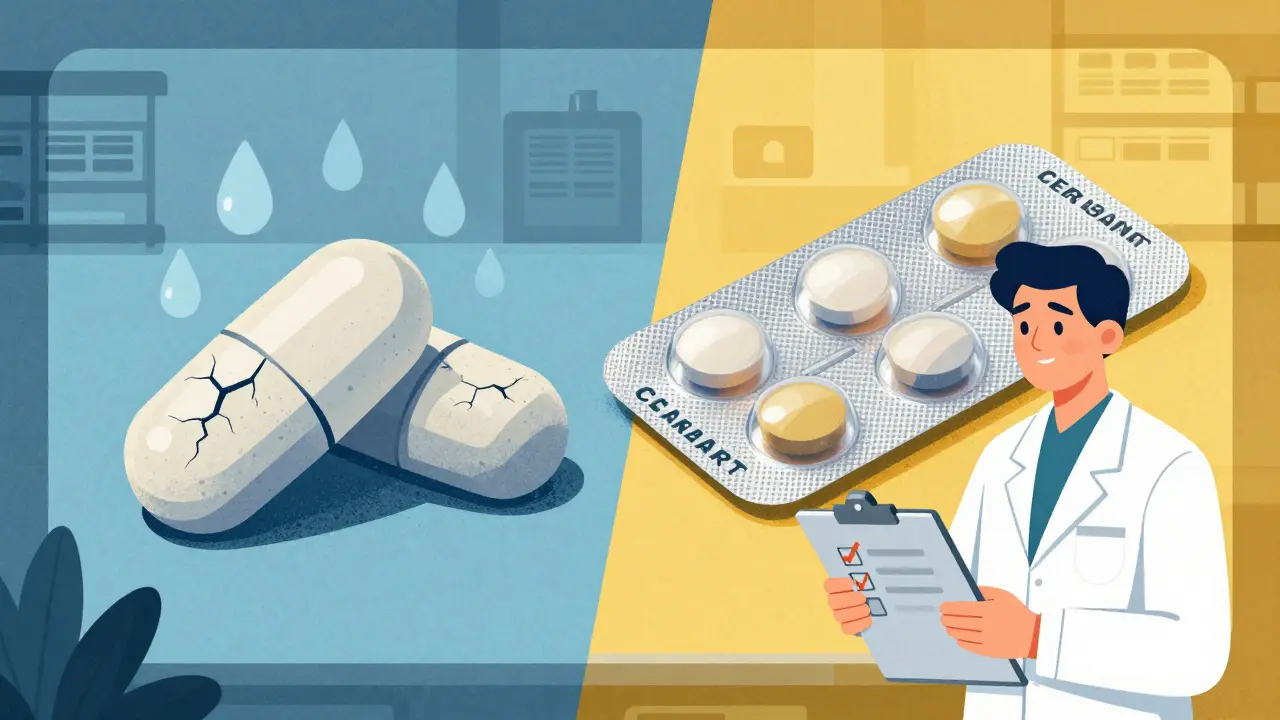
So, what goes wrong most often? Inadequate documentation is a huge issue. About 80% of FDA Form 483 observations (official warning letters) cite poor storage condition records. Simply writing "room temperature" is not enough. You must document exact ranges, typically 15-30°C (59-86°F). Another major cause of recalls is microbial growth. A survey by the Parenteral Drug Association found that 41.3% of stability-related recalls were due to microbes growing in preservative systems because water activity changed during storage.
For food products, the stakes are similar but the metrics differ. Water activity (aw) and pH are critical controls. One food scientist noted that using customized monitoring for these factors extended the shelf life of refrigerated soups by 22%. In contrast, ignoring these factors leads to spoilage and potential food poisoning. Whether it is a pill or a pasta sauce, controlling the environment is key to safety.
The Future of Stability Science
Technology is changing how we approach shelf life. New guidelines like ICH Q12 allow for more flexible post-approval commitments, reducing the burden on manufacturers. Predictive modeling is also gaining traction. The IQ Consortium predicts that by 2027, 75% of new drug applications will use some form of predictive stability modeling. This could cut development time significantly. However, climate change poses a new threat. Rising global temperatures mean warehouses may exceed safe storage limits more often, potentially shortening shelf lives by nearly five months by 2050 in some regions.
For now, the best defense is adherence to proven protocols. Manufacturers must invest in rigorous testing, and consumers must respect storage instructions. Keeping medicines out of humid bathrooms and storing them at room temperature isn't just advice-it is a safety requirement.
Why do generic drugs sometimes have stability issues?
Generic drugs often use different inactive ingredients (excipients) or packaging materials than brand-name drugs. These differences can affect how the drug interacts with moisture or light, leading to faster degradation or instability, as seen in studies of generic levothyroxine.
What is the difference between accelerated and long-term stability testing?
Accelerated testing uses high heat and humidity to predict shelf life quickly, while long-term testing stores products at normal conditions for years. Accelerated tests can miss slow degradation pathways like crystallization, making long-term data essential for accurate expiration dating.
How does temperature affect drug stability?
Temperature directly impacts chemical reaction rates. Higher temperatures speed up degradation. Most drugs require storage between 15-30°C. Deviations, especially in hot climates or poorly monitored warehouses, can reduce potency and increase impurity levels.
What are the main causes of stability-related recalls?
The top causes include microbial growth due to water activity changes, inadequate storage documentation, and undetected physical changes like crystallization or polymorphic transitions that occur during real-time storage.
Can expired medicine still be safe?
While some drugs may retain potency past their expiration date, safety is not guaranteed. Degradation products can become toxic, or the drug may simply become ineffective. Regulatory agencies advise against using expired medications due to these unpredictable risks.





Write a comment
Your email address will be restricted to us