
Prescription Transfer Eligibility Checker
Add Medication
My Medications
- No medications added yet. Use the form to check eligibility.
You walk into your new neighborhood pharmacy, ready to hand over your list of medications. You expect the pharmacist to pull up your history with a few clicks and have everything sorted by lunchtime. Instead, you’re handed a clipboard, asked for dates of birth you barely remember, and told that one of your prescriptions can’t be moved at all. It’s frustrating, confusing, and happens more often than you’d think.
Switching pharmacies isn’t just about picking up where you left off; it’s a regulatory minefield, especially when controlled substances are involved. Since August 2023, federal rules in the United States have shifted significantly, making some transfers easier while tightening restrictions on others. If you don’t know what information to provide-and why-it can delay your access to medication or result in denied transfers.
This guide cuts through the noise. We’ll break down exactly what personal details, prescription specifics, and documentation you need to provide to ensure your switch goes smoothly, whether you’re moving across town or changing healthcare providers entirely.
The Basics: Personal Information You Must Provide
Before any medication moves, the new pharmacy needs to verify who you are. This isn’t just bureaucracy; it’s a legal requirement to prevent fraud and ensure patient safety. When you initiate a transfer request, you must provide specific personal identifiers that match the records at your previous pharmacy.
- Full Legal Name: Exactly as it appears on your insurance card and previous prescriptions. Nicknames or maiden names can cause system mismatches.
- Date of Birth: A primary key in most pharmacy databases. An incorrect year here is the most common reason for failed lookups.
- Current Address: Used for verification and mailing purposes. If you’ve recently moved, update this before initiating the transfer.
- Insurance Policy Number: While not always required for the transfer itself, providing this ensures the new pharmacy can bill correctly from day one.
Without these four data points, the receiving pharmacist cannot legally locate your profile in the national prescription database (PDMP) or contact the previous pharmacy effectively. Think of this as the foundation-if it’s shaky, the rest of the process collapses.
Prescription-Specific Details: What to Have Ready
Once your identity is verified, the focus shifts to the medications themselves. You don’t need to memorize every dosage, but having a clear list helps the pharmacist navigate potential issues quickly. For each medication, try to provide the following:
- Medication Name and Strength: e.g., Lisinopril 10mg. Brand vs. generic matters less here, but clarity does.
- Prescriber’s Name: Knowing which doctor wrote the script helps if the pharmacy needs to call for clarification.
- Refill Status: Do you have refills remaining? If you’ve exhausted all refills, the transfer will fail. You’ll need a new prescription from your doctor.
- Last Fill Date: Helpful for determining if the prescription is still active under state laws, which often limit validity periods.
If you’re unsure about any of these details, check your old pharmacy’s app or portal first. Many patients assume pharmacists can see everything instantly, but manual entry errors or outdated records can block the process. Providing accurate initial data reduces back-and-forth calls between pharmacies, speeding up your access to care.
The Controlled Substance Hurdle: Understanding Schedule II-V Rules
Here’s where things get complicated. Not all pills are created equal in the eyes of the law. Medications are classified into schedules based on their potential for abuse. How you transfer them depends entirely on this classification.
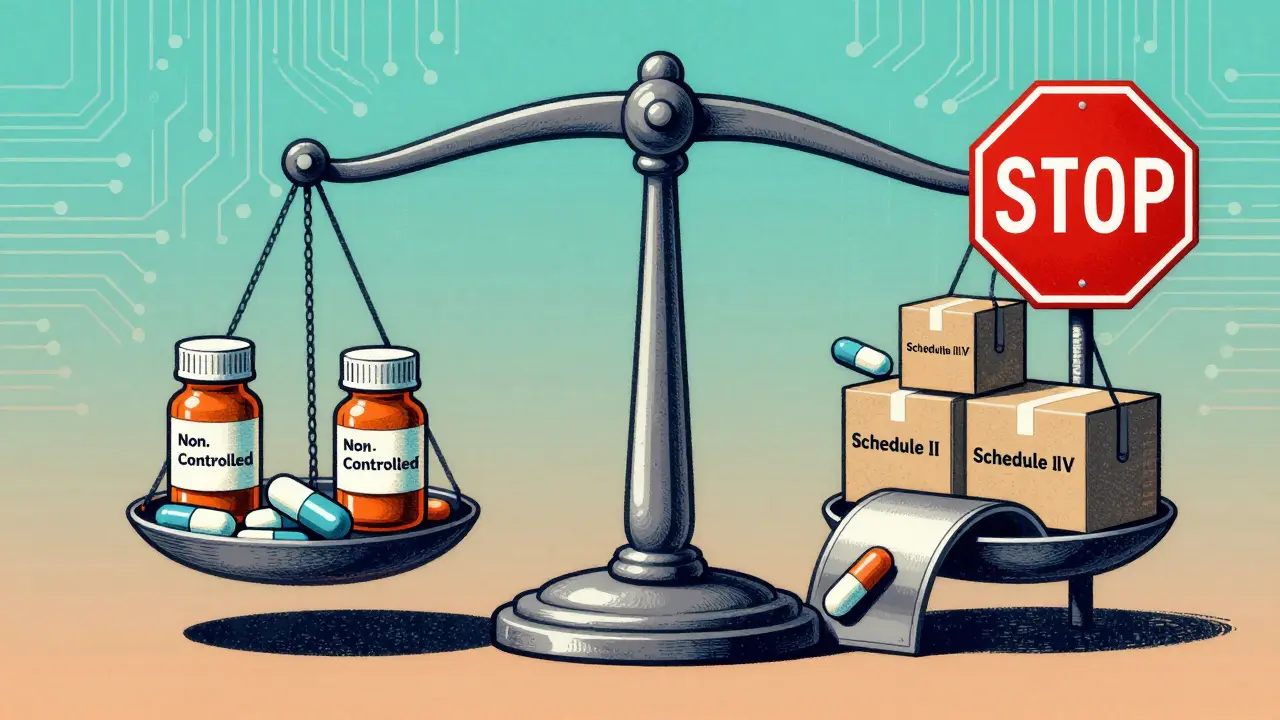
| Schedule | Examples | Transfer Allowed? | Key Restrictions |
|---|---|---|---|
| Schedule II | Oxycodone, Adderall, Xanax | No | Cannot be transferred under any circumstances. Requires a new prescription from the prescriber. |
| Schedules III-V | Tylenol with Codeine, Ambien, Vicodin | Yes (One-Time Only) | Electronic transfer only. One-time transfer per prescription. Must remain electronic throughout. |
| Non-Controlled | Metformin, Atorvastatin, Lisinopril | Yes (Multiple Times) | Can be transferred multiple times as long as refills remain. Fewer documentation hurdles. |
The DEA’s Final Rule, effective August 28, 2023, changed the game for Schedules III-V. Previously, transferring these meds was a nightmare involving phone tags with doctors. Now, you can request an electronic transfer directly between pharmacies without seeing your prescriber again. However, this is a one-time-only transfer per prescription. Once moved, it cannot be transferred again. If you switch pharmacies twice, you’ll need a new prescription from your doctor for those specific meds.
For Schedule II drugs, there is no shortcut. They cannot be transferred electronically or otherwise. You must contact your healthcare provider to issue a fresh prescription. This rule remains strict to prevent diversion and misuse.
Documentation Behind the Scenes: What Pharmacists Must Record
While you’re waiting for your pills, your pharmacists are busy filling out paperwork. You don’t need to fill this out, but understanding it helps you advocate for yourself if something goes wrong. Under 21 CFR 1306.25, both the transferring and receiving pharmacies have strict documentation duties.
The Transferring Pharmacist is responsible for invalidating the original prescription and recording the transfer details must:
- Mark the original prescription as "VOID" in their system.
- Record the name, address, and DEA registration number of the receiving pharmacy.
- Note the date of the transfer and their own full name.
The Receiving Pharmacist is required to annotate the new record with complete transfer history must:
- Add the word "transfer" clearly to the prescription record.
- Annotate the transferring pharmacy’s name, address, and DEA number.
- Record the transferring pharmacist’s name and the date of the request.
- Keep these records for at least two years from the last refill date.
If your transfer is delayed, it’s often because one of these steps was missed. Pharmacists are human, and busy floors lead to oversight. If you’re stuck, politely ask if the previous pharmacy has completed their end of the documentation. Sometimes, a gentle nudge from the patient resolves the bottleneck.
Common Pitfalls and How to Avoid Them
Even with perfect information, transfers can hit snags. Here are the most frequent roadblocks patients face and how to sidestep them.
State Laws Override Federal Rules
Federal regulations set the baseline, but states can impose stricter limits. For example, some states prohibit electronic transfers of certain controlled substances entirely, regardless of the DEA’s allowance. Before switching, call your new pharmacy and ask: "Do you accept electronic transfers for [Specific Medication] under current state law?" This saves hours of frustration later.
Exhausted Refills
A prescription with zero refills remaining cannot be transferred. Period. If you’ve used your last refill at the old pharmacy, the new one cannot pull it. You must contact your doctor for a renewal. Check your refill count via your pharmacy’s app before initiating the switch.
System Incompatibilities
While 87% of U.S. pharmacies use compliant electronic systems, rural or independent pharmacies may lag behind. If your old pharmacy uses a legacy system that doesn’t interface with the new one, the transfer might require faxing or manual entry, increasing error risk. Ask both pharmacies if they have direct electronic links.
Missing Prescriber Contact Info
If the new pharmacy can’t reach your doctor to clarify ambiguous instructions (e.g., "take as needed" without specific limits), the transfer stalls. Ensure your new pharmacy has your prescriber’s office phone number and fax on file.
Timeline Expectations: How Long Does It Take?
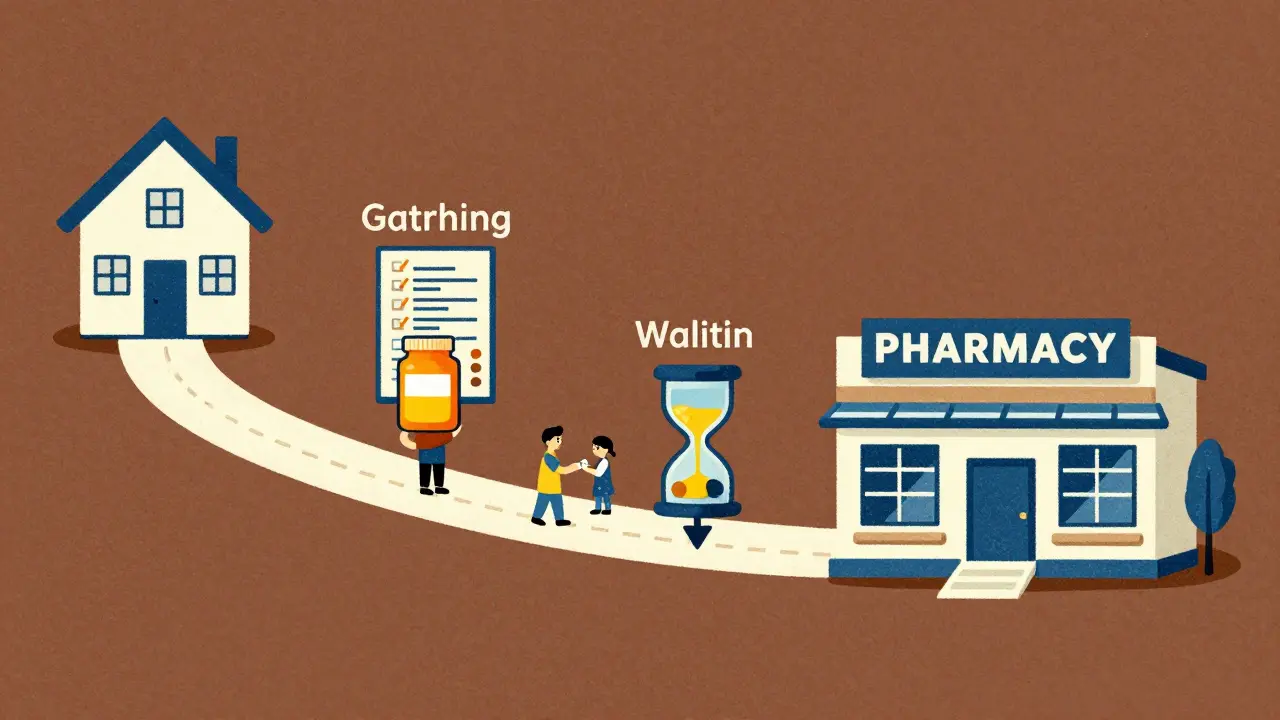
Patience is key. Don’t expect instant gratification. Here’s a realistic timeline based on industry standards:
- Non-Controlled Substances: Typically 24-48 hours. Often faster if both pharmacies are part of the same chain (e.g., CVS to CVS).
- Schedule III-V Controlled Substances: 1-3 business days. Additional verification steps slow this down.
- Cross-State Transfers: Can take longer due to varying state PDMP integration speeds. Plan ahead.
If it’s been more than three business days and you haven’t heard back, call the new pharmacy. Ask specifically if they’ve received the transfer authorization from the previous location. Silence usually means the ball is still in the old pharmacy’s court.
Next Steps for a Smooth Transition
To make your pharmacy switch as painless as possible, follow this checklist:
- Gather Your Info: Write down your DOB, address, and a list of all current medications with strengths.
- Check Refill Counts: Use your old pharmacy’s app to confirm you have refills left.
- Identify Controlled Substances: Know which meds are Schedule II (cannot transfer) vs. III-V (one-time transfer).
- Call Ahead: Verify the new pharmacy accepts electronic transfers for your specific meds under local state laws.
- Initiate the Request: Provide your personal details and prescription list to the new pharmacist.
- Follow Up: If no update after 48 hours, call to check status.
Switching pharmacies is a logistical task, not a medical emergency-but treating it with preparation prevents unnecessary stress. By knowing what information to provide and understanding the regulatory landscape, you stay in control of your healthcare journey.
Can I transfer my prescription if I’ve already filled it once at the new pharmacy?
No. Once a prescription is filled at a pharmacy, it is considered "active" at that location. You cannot transfer an active prescription back to another pharmacy. You would need to wait until the current supply is nearly depleted or contact your prescriber for a new prescription if you urgently need to switch back.
Why can't Schedule II medications be transferred?
Schedule II drugs have a high potential for abuse and addiction. Federal law strictly prohibits their transfer to prevent diversion and ensure that a licensed practitioner personally evaluates the patient's need for each new prescription. This safeguard requires you to see your doctor for any new Schedule II script.
What if my previous pharmacy refuses to transfer my prescription?
Pharmacies are generally required to transfer prescriptions upon patient request, provided they have valid reasons. If they refuse, ask for the specific reason in writing. Common valid reasons include exhausted refills or lack of proper documentation. If the refusal seems unjustified, you can contact your state board of pharmacy or your health insurer for assistance.
Does switching pharmacies affect my insurance coverage?
Usually, no, as long as the new pharmacy is in-network with your insurance plan. However, some plans have preferred pharmacy networks with lower copays. Always verify that your new pharmacy participates in your specific insurance network to avoid unexpected costs.
How many times can I transfer a non-controlled prescription?
Non-controlled prescriptions can be transferred multiple times as long as there are refills remaining. There is no federal limit on the number of transfers for these medications, though individual state laws or pharmacy policies may vary slightly.





Write a comment
Your email address will be restricted to us